It has been a challenging month for the domestic new vehicle market. In a performance described as "a 7-year low", vehicle sales dropped by 17% in comparison with July 2015, while passenger car sales have plummeted by almost 21%.
It has been a bad month for new vehicle sales in South Africa, with fewer vehicles sold in all four segments of the market. The chief economist at Econometrix, Azar Jammine said sales were “horrible and far worse than expected. It shows that people are just not in a position to buy big ticket items. Retail sales up to May were relatively positive, but people are diverting their spending away from big ticket items to afford to buy everything else.”
Wesbank pointed out that 44 883 new vehicles were sold in July 2016, 9 222 less than the same period last year.
“This is the biggest sales decline since 2009, at the height of the global economic recession,” said Simphiwe Nghona, CEO of WesBank Motor Retail. “Despite the Rand’s recent strength, what we’re experiencing now are the after effects of the currency’s weakness in recent months. This is compounded by distressed household budgets and low economic growth that is also trending downwards.”
New car sales summary – July 2016
44 883 aggregate new vehicle sales (54 105 – July 2015)
29 007 new passenger car sales (36 527 – July 2015)
13 575 light commercial sales (15 065 – July 2015)
29 042 export sales (28 358 – July 2015)
Top-selling car brands in South Africa – July 2016
The next generation A-Class is under development and will be enhanced to offer higher levels of practicality and interior appeal.
Much of the current A-Class’ success has been attributed to its stylish good looks, but a facelifted version was introduced earlier this year with improvements to its design and interior quality. The next iteration will shift the goalposts, however. Spy images of the next generation A-Class, which is set to arrive in 2018, emerged last month. According to reports, Mercedes will focus on incorporating more technologies and improving the hatchback's practicality.
Key changes to the A-Class
New platform
The current A-Class isn’t the most spacious vehicle in its segment: although the driver and front passenger are seated in comfort, rear passengers aren't afforded generous head- and legroom. Benz will reportedly solve this issue by building the new A-Class on a heavily revised MFA platform (called MFA2), which will see the wheelbase (and overall length) of the A-Class increase. The roofline will likely be extended to improve rear headroom and the rear-end will be reshaped to increase the hatchback's luggage capacity. You can also expect to see new headlight and taillight clusters when the new model arrives.
Engines
The 2.1-litre turbodiesel unit in the A-Class is likely to be replaced by Mercedes’ newly developed 2.0-litre turbodiesel. There’s also the possibility of a new 2.0-litre turbopetrol engine joining the lineup and there’s even talk of a new 3-cylinder turbodiesel motor making an appearance. A plug-in hybrid version, combining a small capacity 3-cylinder petrol engine and an electric motor driven through a new 9-speed dual clutch transmission, is also on the cards.The big engine news, however, pertains to the potent Mercedes-AMG A45 where engineers are hoping to inject a further 18 kW of power into the hot hatch, which will hike the power output of the 2.0-litre turbocharged engine up to at least 294 kW. The current 7-speed automatic transmission will make way for a new 9-speed dual-clutch ‘box. Furthermore, the all-wheel drive system will be revised with the aim of achieving a 0-100 kph sprint time of less than 4 sec.
Revamped interior
Notable interior changes are expected in the new A-Class to bring the model's layout in line with those of the C- and E-Class. A new cabin architecture with high-quality materials, a new dashboard design and enlarged display screen/s will make the interior even more appealing. The new A-Class will also be offered with numerous standard and optional safety features that may include Distronic Plus with steering assist Stop & Go Pilot and park assist.
We will keep you updated as more information becomes available.
Many motorists are tempted to change wheel and tyre sizes, but it is often done for the wrong reason. It’s only worthwhile if you want to improve a car’s appearance. It will seldom affect a car’s performance or fuel consumption because the percentage change in the overall gear ratios is usually very small…
Furthermore, if your car is equipped with ABS brakes or 4-wheel drive such a change is not recommended. An ABS-enhanced braking system is calibrated to respond to wheel speed information obtained from a sensor at each wheel. This implies that any deviation from the factory-equipped tyre size and aspect ratio will upset the calibration. In fact, it is even possible that a badly worn tyre will upset the calibration and render the ABS ineffective.
With a 4-wheel-drive vehicle, another problem arises. Non-standard tyre sizes and worn tyres cause the small gears inside the differentials to work a lot harder than normal. The viscous couplings or multi-plate clutches on some part-time 4WD vehicles are especially at risk because they’re not designed to slip all the time.
On most less exotic vehicles a tyre and wheel size change is perfectly feasible, provided you…
Keep the following aspects in mind:
1. A number of tyre companies make a range of tyres that enable you to change in one-inch steps from 13 to 17-inch diameter wheels while keeping the running circumference of the tyres more or less the same. This is done by changing the aspect ratio.
2. Dividing the section width (the widest part of the tyre) into the section height (the distance from the rim to the tread) will reveal the tyre's aspect ratio. For example, if the height is 120.25 mm and the width is 185 mm then the aspect ratio is 120,25/185 = 0.65. This is usually expressed as a 65-profile tyre, or a 65% aspect ratio tyre. A smaller ratio implies a shorter sidewall and a wider tread. Tyre designers increase the width on low profile tyres to maintain a suitable contact area.
3. Aspect ratios have changed over the years from 60 to 50 and now even 45, 40 and 35. Shorter ratios lower the ride height and widen the tyre so that there is less flexing during cornering. This is supposed to improve tyre grip, but the tyre is less able to absorb road shocks.
4. Tyre circumference determines the speedometer and odometer (distance travelled) readings. Any change will affect these readings as well as the shift points on automatic transmissions, so that it makes sense to change the circumference as little as possible.
5. Larger diameter tyres will rotate at a slower speed compared to the vehicle speed, so that the speedometer and odometer will under-read. A smaller diameter tyre will have the opposite effect.
6. Any proposed tyre/wheel change must be planned in consultation with a tyre dealer. He will have a chart that will enable suitable wheel and tyre combinations to be planned, and he will also steer you way from changes that will cause the bigger tyres to interfere with the bodywork or suspension.
Watch the following video for more information:
Volkswagen Crafter Revealed
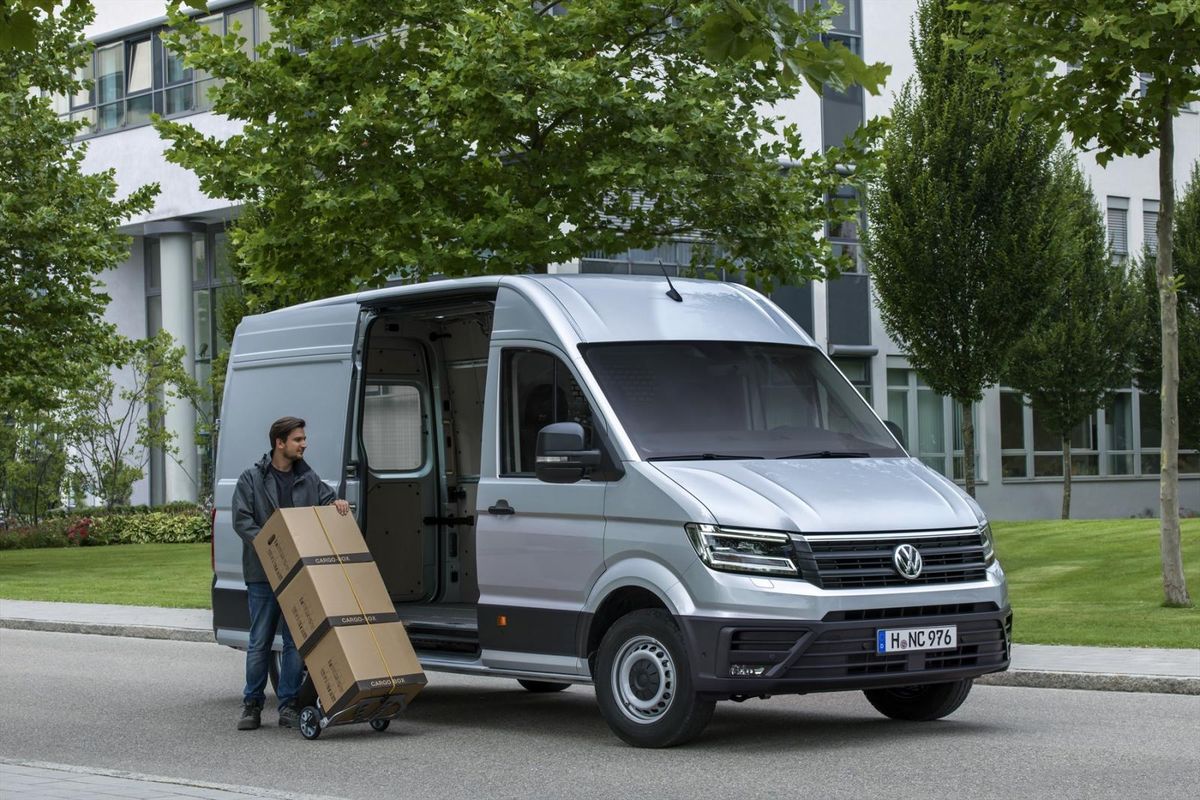
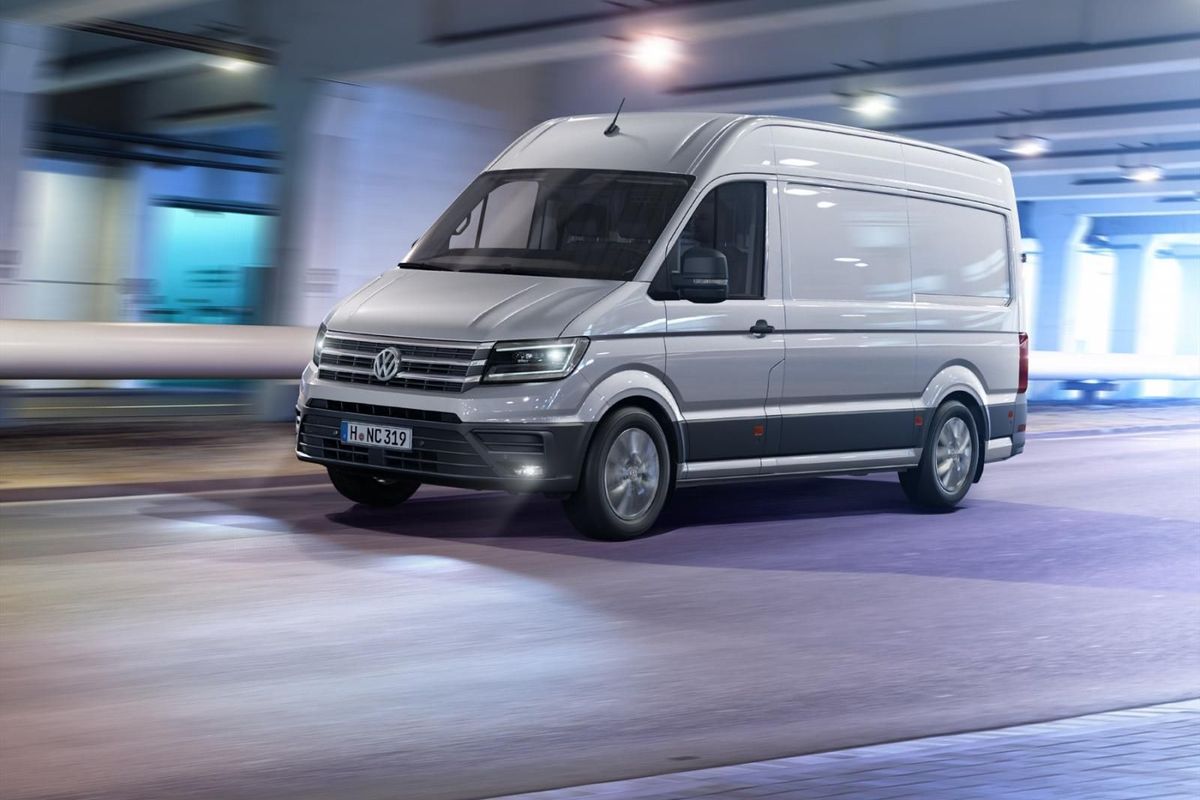
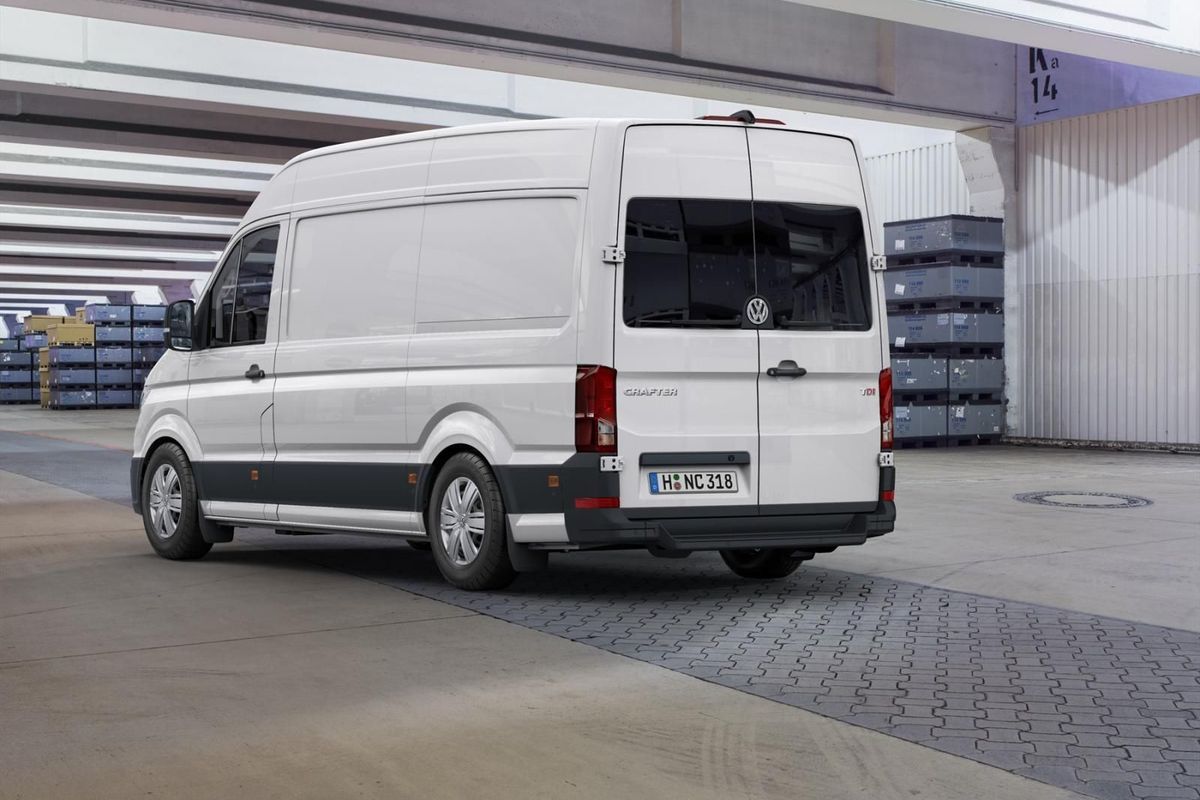
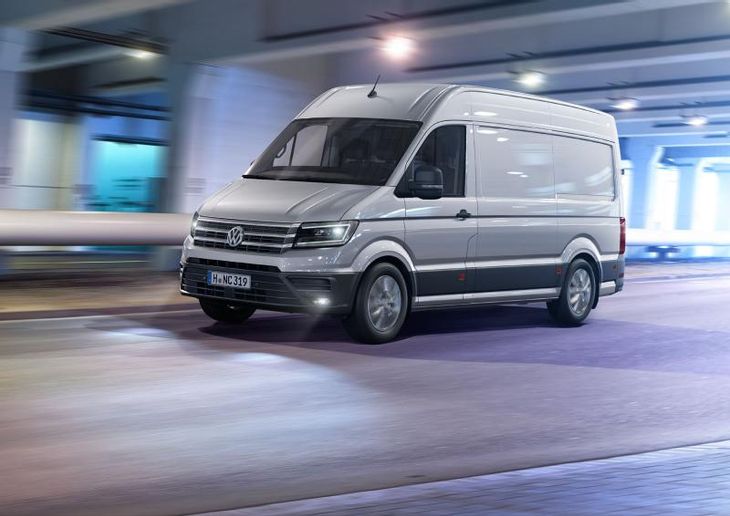
Volkswagen Commercial Vehicles has revealed the all-new Crafter panel van that offers flexibility and practicality for a wide range of applications.
Images of Volkswagen’s new Crafter panel van have surfaced on the internet showing a modern and well-equipped commercial vehicle that will compete against products such as the Ford Transit, Fiat Ducato and Mercedes-Benz Sprinter. The Crafter previously shared its underpinnings with the Mercedes-Benz Sprinter, but the new Crafter will now be built on its own platform at a newly-constructed plant in Wrzesnia, Poland.
The new Crafter will go on sale in Europe soon and a local Volkswagen representative has confirmed that the Crafter will only be available in South Africa in the first half of 2018.
Key Features
The new Volkswagen Crafter is well-equipped with safety features.
The Crafter will be powered by a 2.0-litre turbodiesel engine offering either 75 kW, 89 kW and 103 kW while a 2.0-litre bi-turbodiesel engine will produce 133 kW. Manual and automatic transmissions will be available and buyers will be able to choose between front and rear-wheel-drive as well as 4MOTION all-wheel-drive.
The flexibility and versatility of the Crafter is further emphasised with three vehicle lengths on offer as well as three different height options. With so much choice, customers will be able to purchase a Crafter that’s perfectly suited to their commercial needs. With a drag coefficient of 0.33 (the lowest in its class), the Crafter will slice through the air efficiently, reducing consumption and cutting costs.
In terms of features, the Crafter will be well-equipped with both active and passive safety features. These include Electronic Stability Control (ESP) with trailer stabilisation, adaptive cruise control, cross-wind assistance and a trailer manoeuvring system. A total of six airbags are also fitted and the Crafter is also equipped with a reversing camera, parking sensors and rear traffic alert.
We will keep you updated as local specification and pricing becomes available.
Car companies will go to extraordinary lengths to ensure that you, the customer, are completely satisfied with its product. However, if you want to spend a bit more on accessories, there’s no limit to what car makers are prepared to create. Here are five outrageous car accessories.
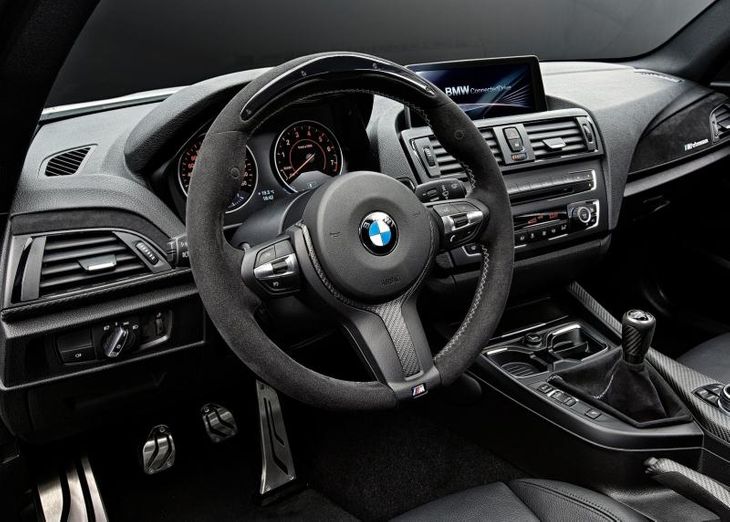
BMW M Performance Steering Wheel
This performance steering wheel looks the part with its Alcantara finish and white cross stitching, but the real magic happens when you switch the vehicle on. The embedded LED display shows efficiency and performance readouts. The various modes (Eco, Sport, Race) have different displays.
In Sport mode you get a stopwatch, fuel consumption and a G-meter. Switch to Race mode and you get a lap-timer which can be used for acceleration runs as well. The LEDs on the outside of the wheel act as a rev counter too. This wheel is perfect for enthusiasts.
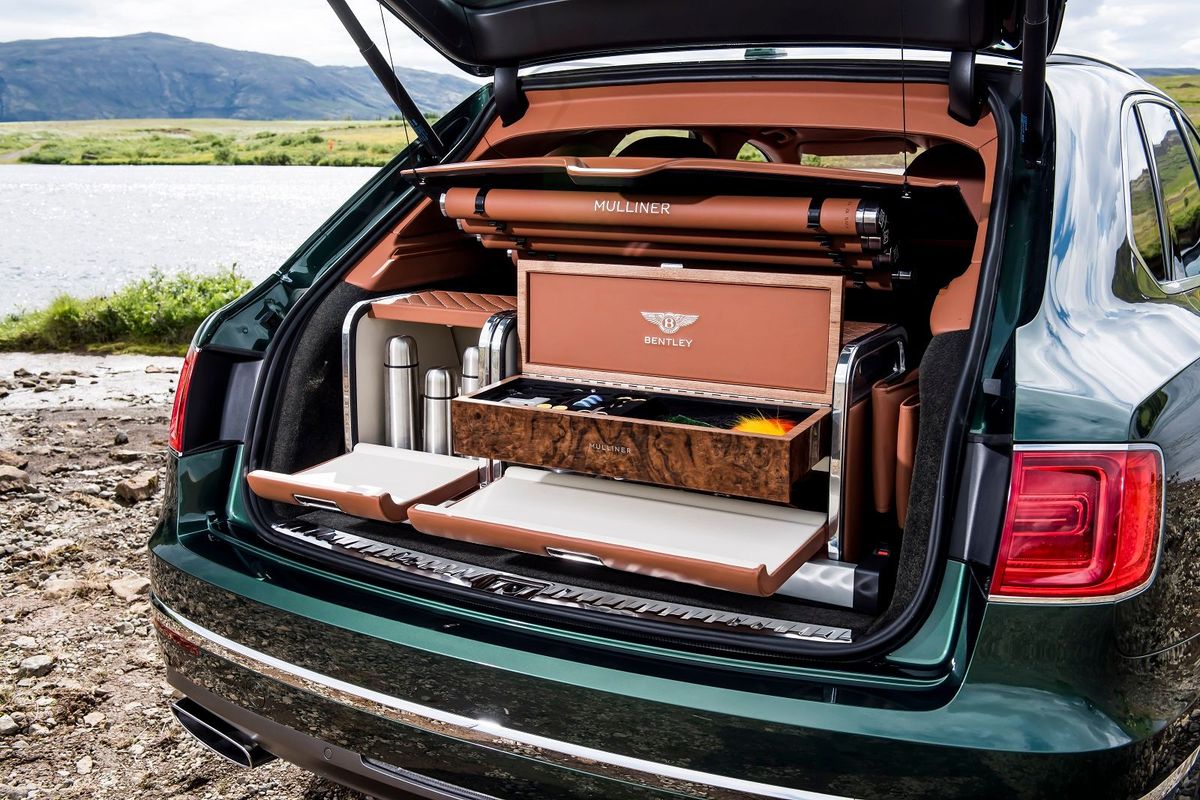
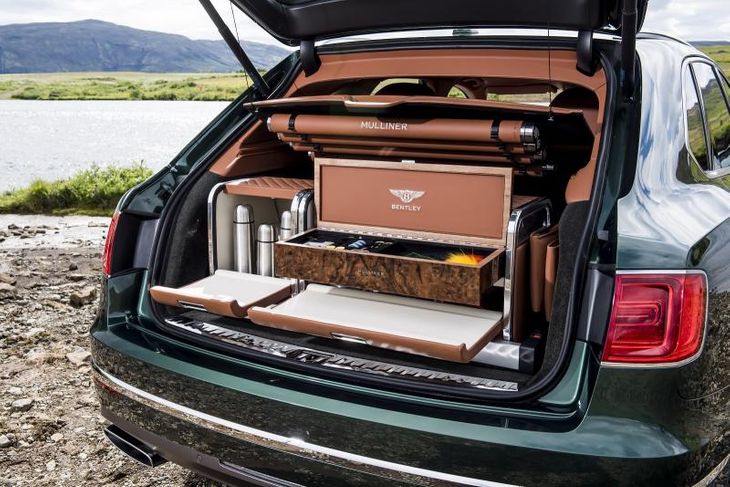
Bentley Bentayga Fly Fishing by Mulliner
The Bentley Bentayga luxury SUV has just reached our shores (see how much it costs here), but overseas Bentley’s bespoke coachbuilding division Mulliner has been hard at work creating the ultimate vehicle for fishermen. Essentially the luggage area has been converted into a master tackle station complete with rod storage, refreshment and a waterproof area to store your wading boots should you venture into the water.
The craftsmanship is exquisite and the materials used are of exceptionally high quality. There’s plenty of wood and leather here.
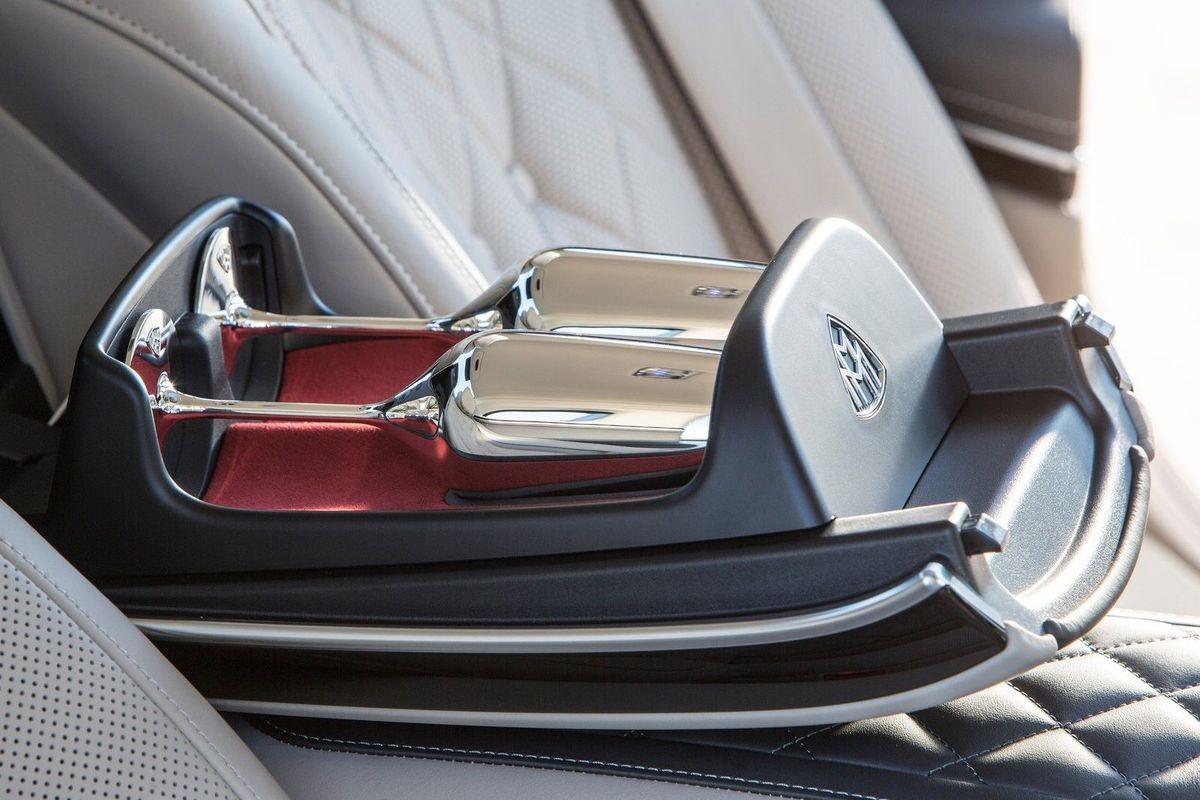
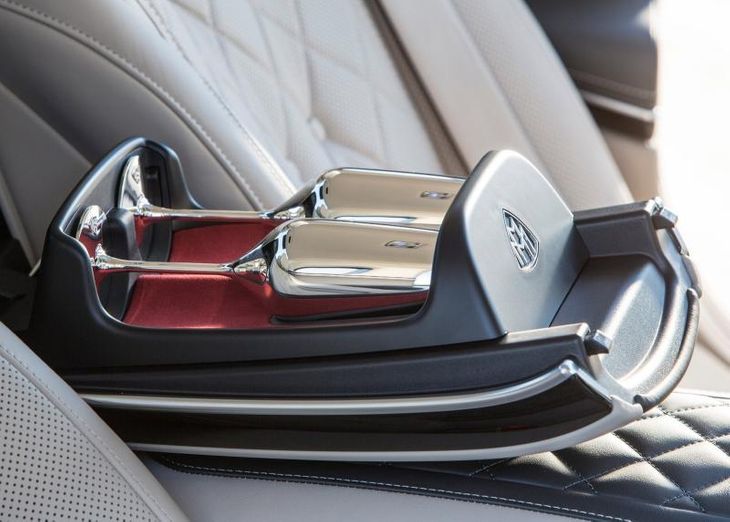
Mercedes-Maybach Champagne Flutes
We were quite chuffed to see super luxury brand Maybach make a return to the market, albeit as a subset of the S-Class, not a stand-alone brand. Essentially it’s a stretched-out and more luxurious version of the already premium Mercedes-Benz S-Class. It can be customised to the client’s exact requirements, meaning the only limit is your bank balance. Anything goes here, but one particular accessory which caught our eye is the R57 000 champagne flutes package.
These branded flutes sit neatly in the rear centre armrest and are designed to fit perfectly into holders to ensure they don’t spill. They’re made from 925 sterling silver and are hand-polished by precious metal specialists Robbe and Berking.
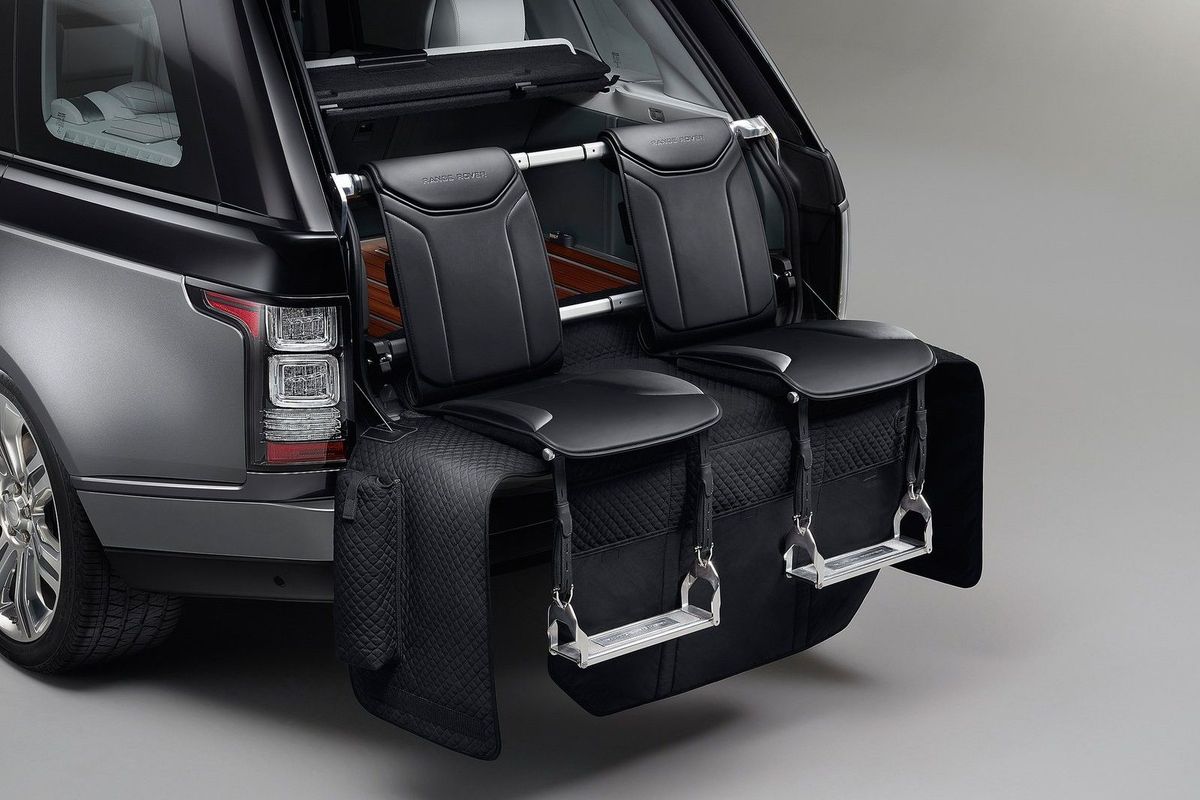
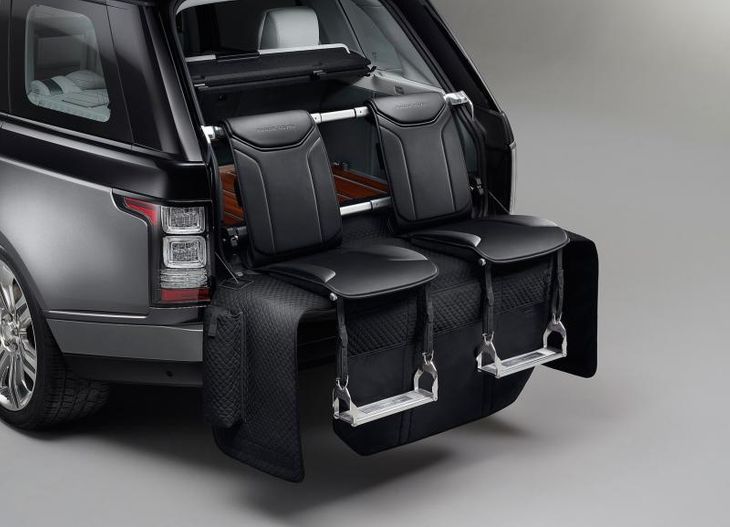
Range Rover SV Autobiography LWB Event Seating
The Range Rover flagship vehicle can be equipped with two clever packaged seats. They’re stowed in the luggage compartment but can be quickly and easily deployed for customers. Perfect for the client who enjoys equestrian events… They feature stitched leather wrapped around a strong aluminium frame.
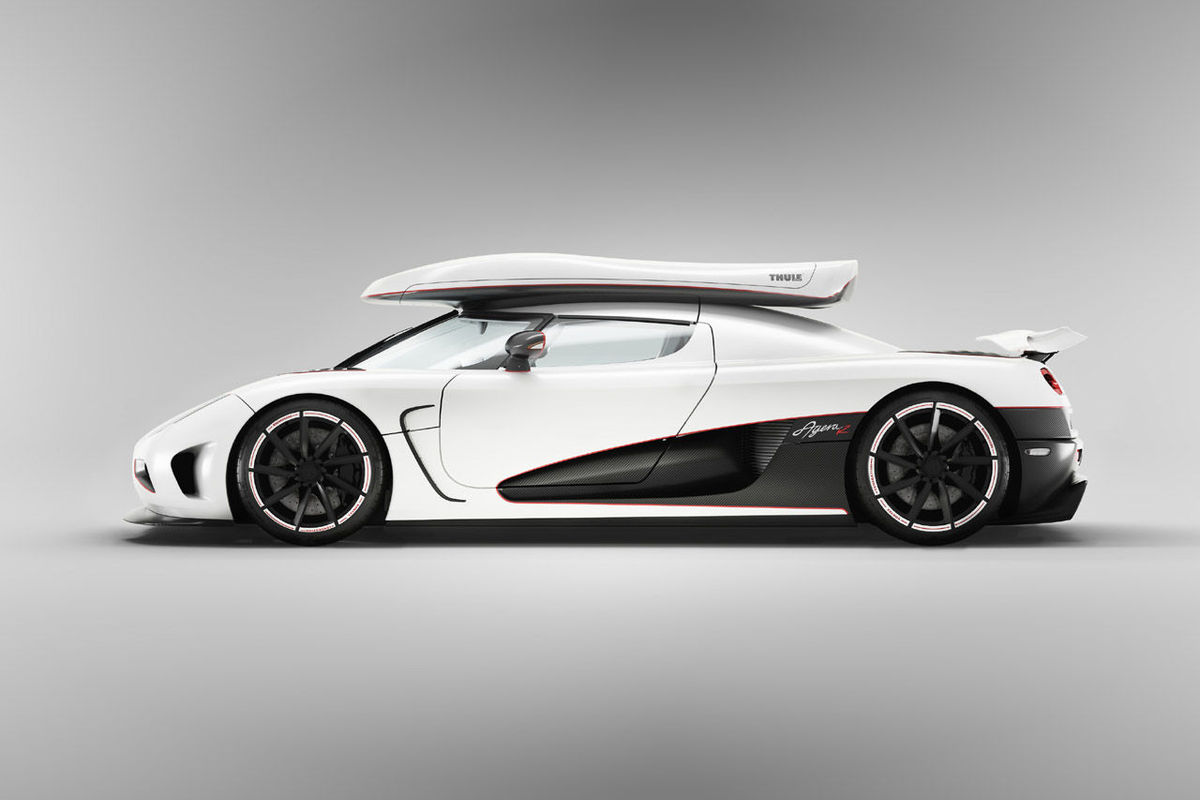
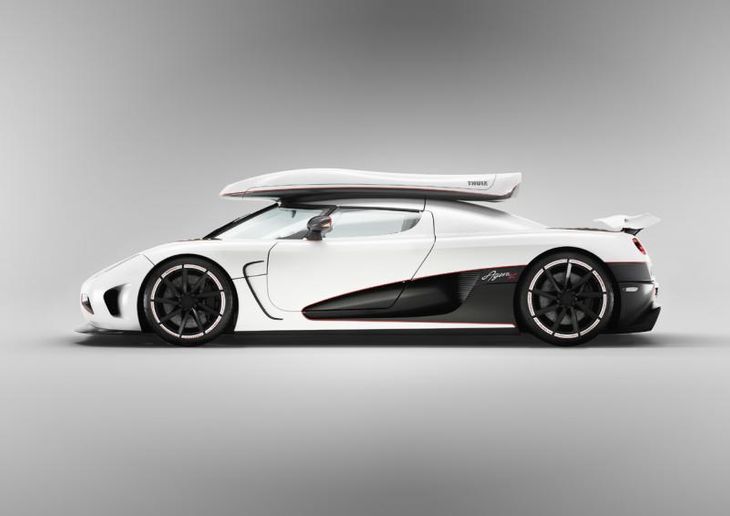
Thule Roof Box for the Koenigsegg Agera R
Supercars are great things, but if they have one major drawback, it has to be the lack of cargo space. Cargo specialists Thule came up with a roof-mounted box that could withstand the high performance associated with a supercar. The Thule Lightning is made from pure carbon fibre so not only is it very light, but it’s also strong enough to handle savage top speeds. This one is purpose built for the Swedish Koenigsegg hypercar and costs a reported $20 000 (R300 000) and it includes a set of custom skis. Thule also makes roof boxes for most model of cars, but it's nice to see they cater for the super elite too.
Fuel Price Cut for August 2016
Motorists in South Africa will experience some relief in August 2016 as the price of fuel is set to decrease substantially.
Fuel prices have been soaring in recent months due to the weakening Rand/dollar exchange rate as well as the rising price of oil and motorists across the country have been hit hard at the pumps. You will, however, be pleased to know that some relief is on the way.
According to the Automobile Association (AA), the UK’s decision to exit the European Union has resulted in the strengthening of the Rand while international petroleum prices have retracted amidst economic uncertainty. These developments are likely to translate into substantial fuel cuts come August 2016.
The AA says that the price of petrol could decrease by as much as R1 per litre, while diesel could decrease by 70 c/l. The AA has, however, expressed uncertainty at what the final outcome will be at the beginning of August.
The AA commented, "The Rand has continued its recent march against the US dollar, with an almost uninterrupted two-month streak of gains," the AA said. "The local currency was pegged at R15.70 to the dollar at the end of May, but is now sitting around the R14.20 mark."
The predicted drop in the fuel prices comes amid industrial action in the petroleum sector affecting refineries and depots of petroleum companies.
Regarding this strike, the South African Petroleum Industries Association (SAPIA) indicated fuel was in supply, and that it had contingency plans in place for the strike. Via Twitter it said: “Motorists are advised to stick to their normal refuelling patterns to assist the petroleum industry in ensuring security of supply.”?
Volkswagen Overtakes Toyota as Largest Carmaker for First Half of 2016
The first half of 2016 belongs to Volkswagen as it overtook Toyota to become the largest carmaker in the world.
Volkswagen achieved a similar feat last year where they claimed the lead at the six-month mark during 2015. However, the diesel emissions scandal stunted its challenge in the second half of the year meaning that Toyota held onto the crown for another year. Toyota has held the title since 2012, with Volkswagen and General Motors in hot pursuit.
For the first half of 2016, Volkswagen recorded 5.26 million cars produced, of which, 5.19 million vehicles were sold. Toyota currently sits at 5.03 million cars produced and 4.99 million sold. GM has not released its production figures but claims sales of 4.76 million vehicles.
All three manufacturing giants have multiple brands in its arsenal to help boost production. Volkswagen has Audi, Bentley, Lamborghini, Skoda, Seat and Porsche. Toyota has Lexus, Daihatsu and Hino bolstering its production. On GM’s side, there are many American brands such as Buick, Cadillac and Chevrolet, as well as German giant, Opel.
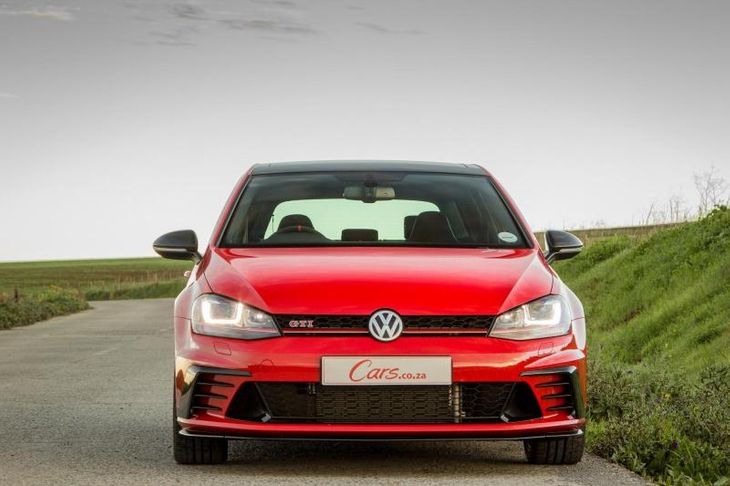
Volkswagen South Africa celebrates the 40th anniversary of the birth of the iconic Golf GTI with the introduction of the GTI Clubsport. It’s far more potent than the standard car, but, given how closely it is priced to its Golf R sibling, can the Clubsport justify its higher premium?
We like: Outright power, pin-sharp handling, doesn’t lose that typically GTI premium-but-practical feel.
We don’t like: Priced dangerously close to a Golf R, Clubsport S is on its way, pricey options.
Alternatives
A good all-rounder:Ford Focus ST ST3 The Ford represents the entry point to the compact hot hatch segment, but it's a potent machine nonetheless. A 184 kW turbocharged 2.0-litre engine and ST3 specification should satisfy most enthusiasts, but the Focus lacks adaptive driving modes and its ride quality is firm.
Track specialist:Renault Megane RS275 Trophy The Trophy was the ultimate track-oriented hot hatch, replete with a superb (201 kW) engine and benchmark-setting handling prowess. Although it's long in the tooth now (and due for replacement in the next 18 months), it remains a formidable machine.
Something different, but similarly priced: Opel Astra OPC The OPC is a conundrum. It’s tremendously fast, loud and looks the part, but it’s prohibitively expensive. On paper, there’s enough grunt to match the Clubsport; enthusiasts will appreciate its rawness, but the arrival of the new Astra forebodes the OPC’s (temporary) departure.
Track specialist:Honda Civic Type R Honda gatecrashed the hot hatch club with its new turbocharged Civic. It looks like an extra from the Fast and the Furious franchise, but it definitely has the go to match the show. While it’s a bit too crashy and firm for the public road (at least in some people’s opinion), it’s phenomenally quick on a racetrack. It’s also priced quite high.
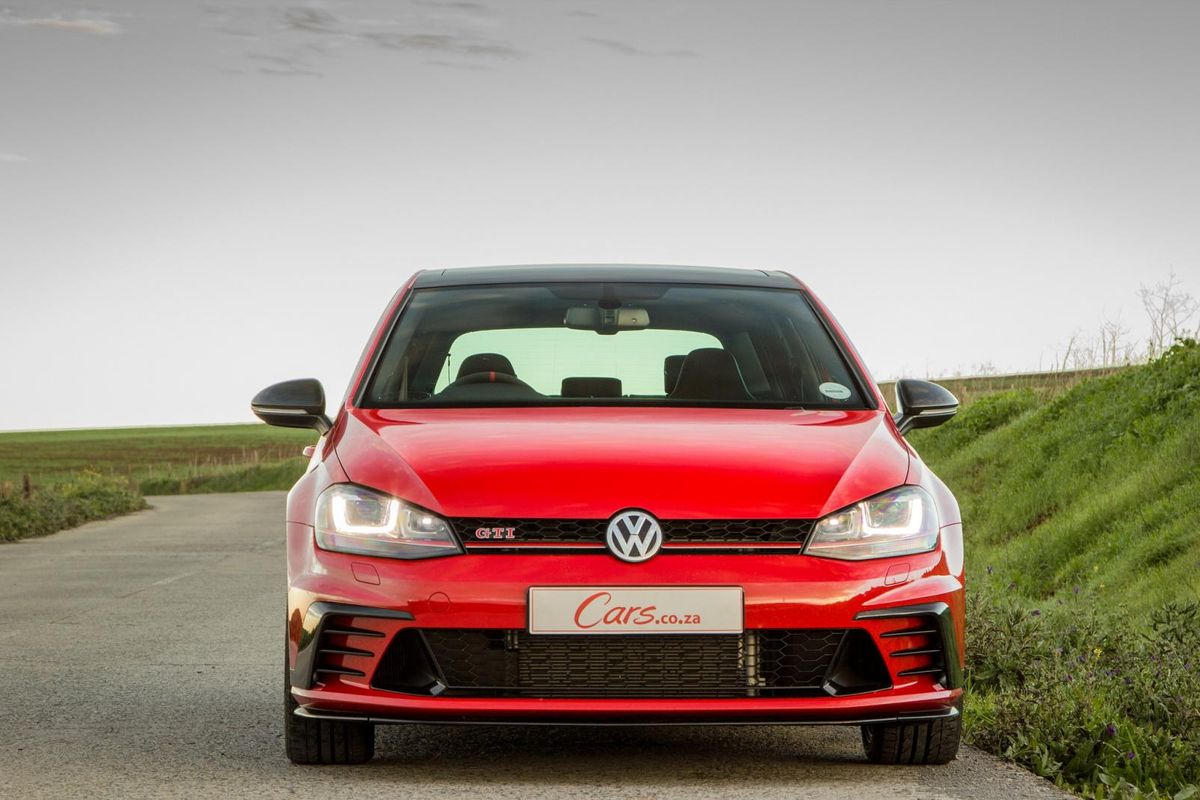
The black fins on the front bumper aren't just for show: they provide some downforce.
What is a Clubsport?
Forty (mostly glorious) years have elapsed since the first Volkswagen Golf GTI rolled off the line and to commemorate this milestone, the Wolfsburg-based firm has taken a standard GTI and turned the wick up in all departments. As good as the Golf GTI is, it’s not perfect. It may offer an excellent blend of performance and everyday usability, but it doesn’t offer the exhilaration/driver involvement of a track-oriented product. Isn’t a hot hatch supposed to be thoroughly enthralling and rival a sportscar for entertainment value, but at a fraction of the asking price?
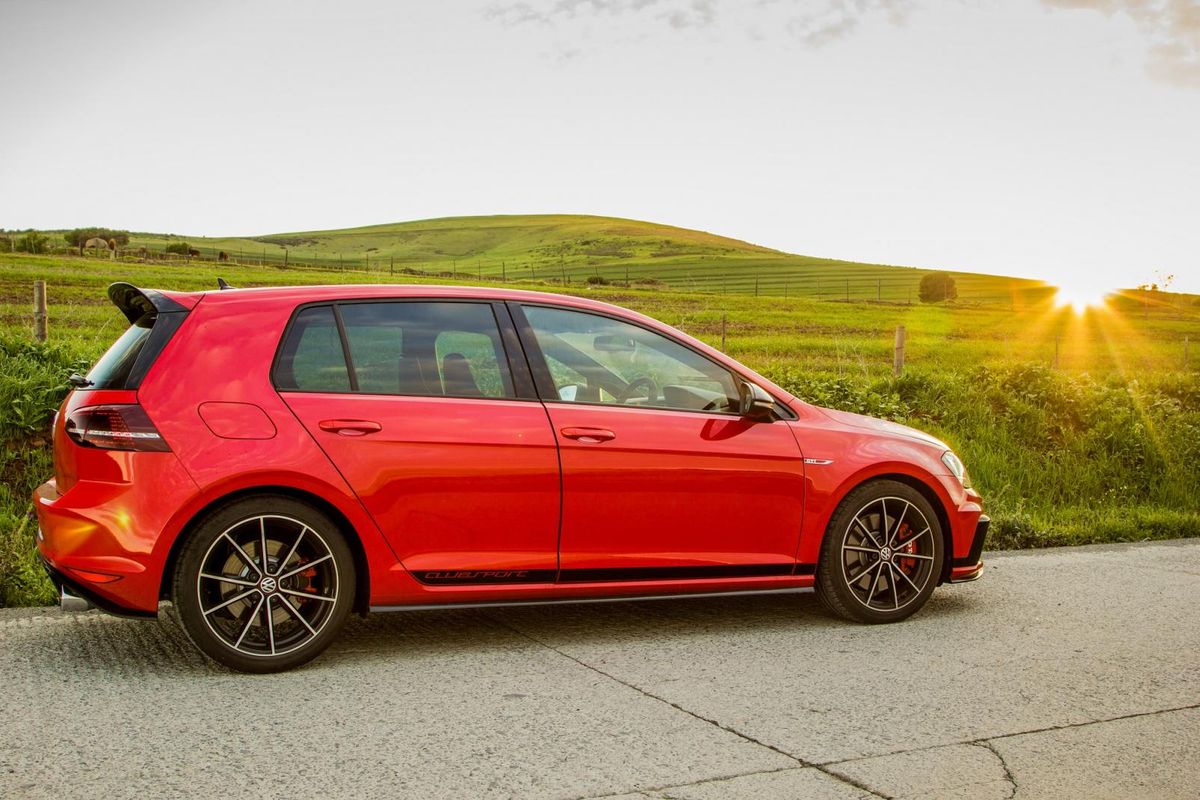
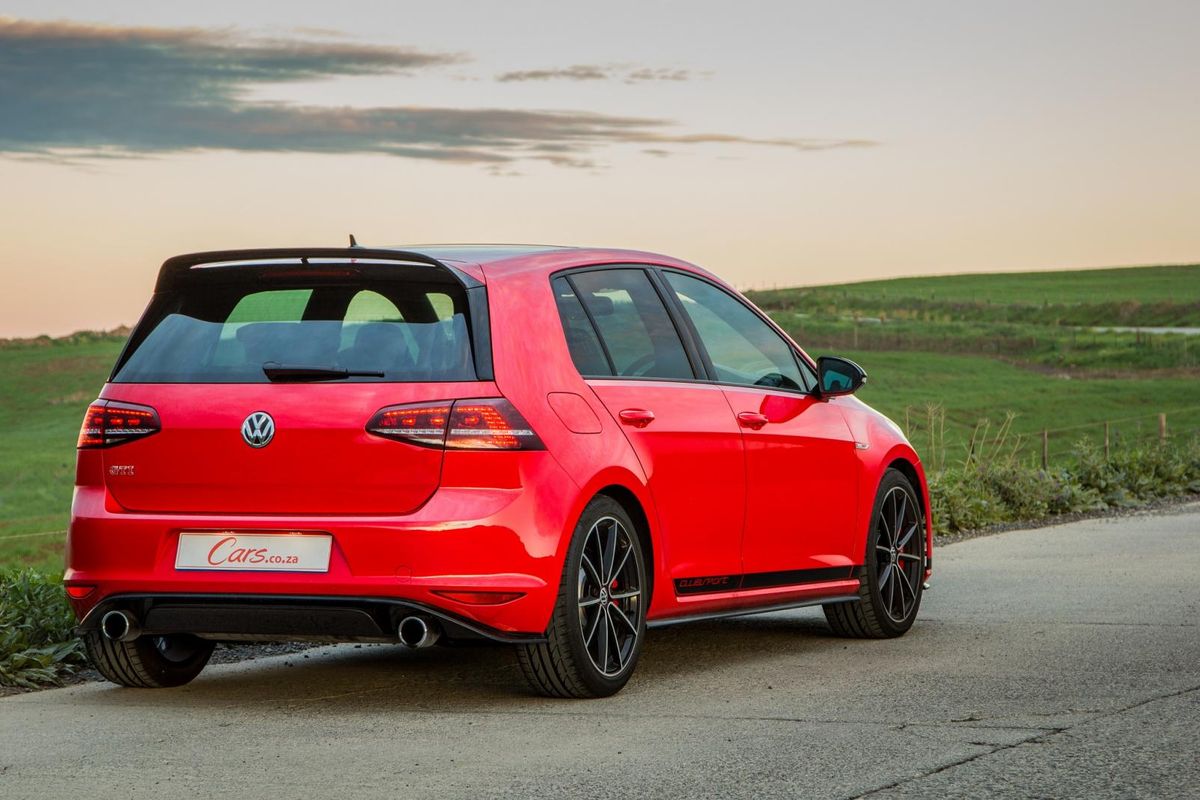
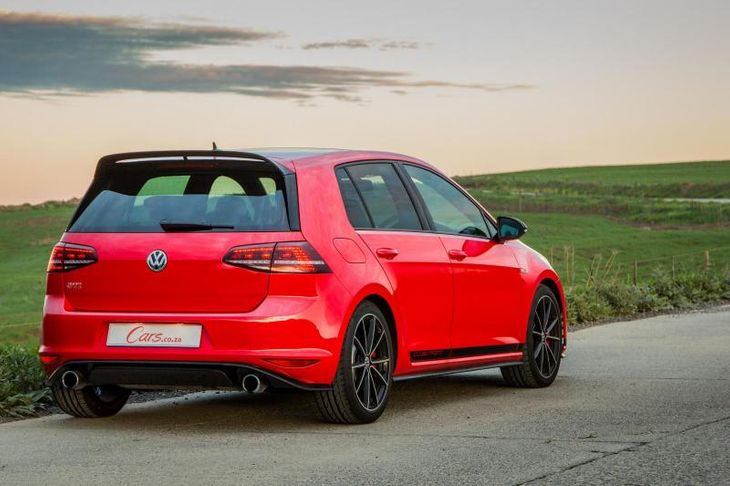
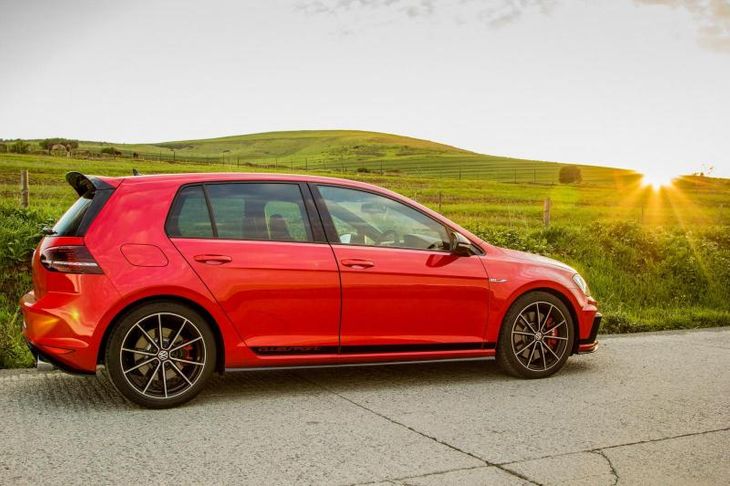
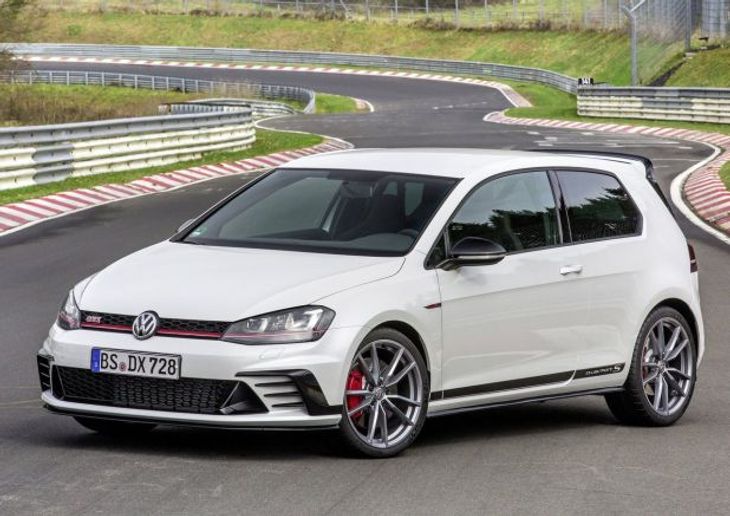
Enter the Clubsport. It’s essentially a heavily revised Volkswagen Golf GTI, but, based on its appearance, it will require a dedicated petrolhead to tell the difference between the former and a standard GTI. Note the rear spoiler, which is not just for show: it generates additional rear downforce to aid roadholding. Similarly, the front bumper features aerodynamic mods that help push the nose down for additional grip. We’d swear the exhaust tips are fractionally larger than the standard car’s, too.
The serious changes have occured under the sheet metal, where various upgrades to the 2.0-litre turbocharged engine sees the motor’s outputs climb to 195 kW and 350 Nm. There’s also an overboost function that will see the engine produce as much as 213 kW and 380 Nm for ten seconds. The Clubsport’s suspension has also been revamped with retuned dampers and a new spring configuration, while the XDS+ electronic limited-slip differential receives a bespoke setup. The steering has been revised as well — it’s claimed to turn in sharper with less input. Finally, the newcomer sits 15 mm closer to the road (than a standard GTI) for extra handling ability.
How does it fare in terms of…
Performance?
Volkswagen claims the GTI Clubsport will reach 100 kph from standstill in 5.9 seconds, which is deeply impressive… What’s more, a blistering standing start is easy to execute: dial in launch control, hold the brake, mash the accelerator pedal to the end of its travel, and release the brake. Initially, the front wheels scrabble somewhat, but once they grip, the Clubsport shifts to second gear and a mighty surge of torque ensues. If you’re not prepared for it, that sudden lump of torque comes as a (very welcome) surprise. The overboost function is available from 4th gear and up.
From our analysis, the Clubsport’s launch control should enable the Golf to see off a Ford Focus ST and a Renault Megane RS275 Trophy in a straight-line sprint. This can be attributed to the engineering marvel that is VW’s Direct Shift Gearbox (DSG), which actuates gear shifts with rapid precision. The Clubsport is also significantly louder than the GTI, with plenty backfires on downshifts and upshift pops (so typical of twin-clutch performance cars) are more distinct.
If you’re impressed by the standing start prowess, the Clubsport’s in-gear performance is no less stellar. Those additional kilowatts and Newton metres activate in gears 4 to 6, so for 10 seconds the Clubsport pushes out 213 kW and 380 Nm.
Ride and handling?
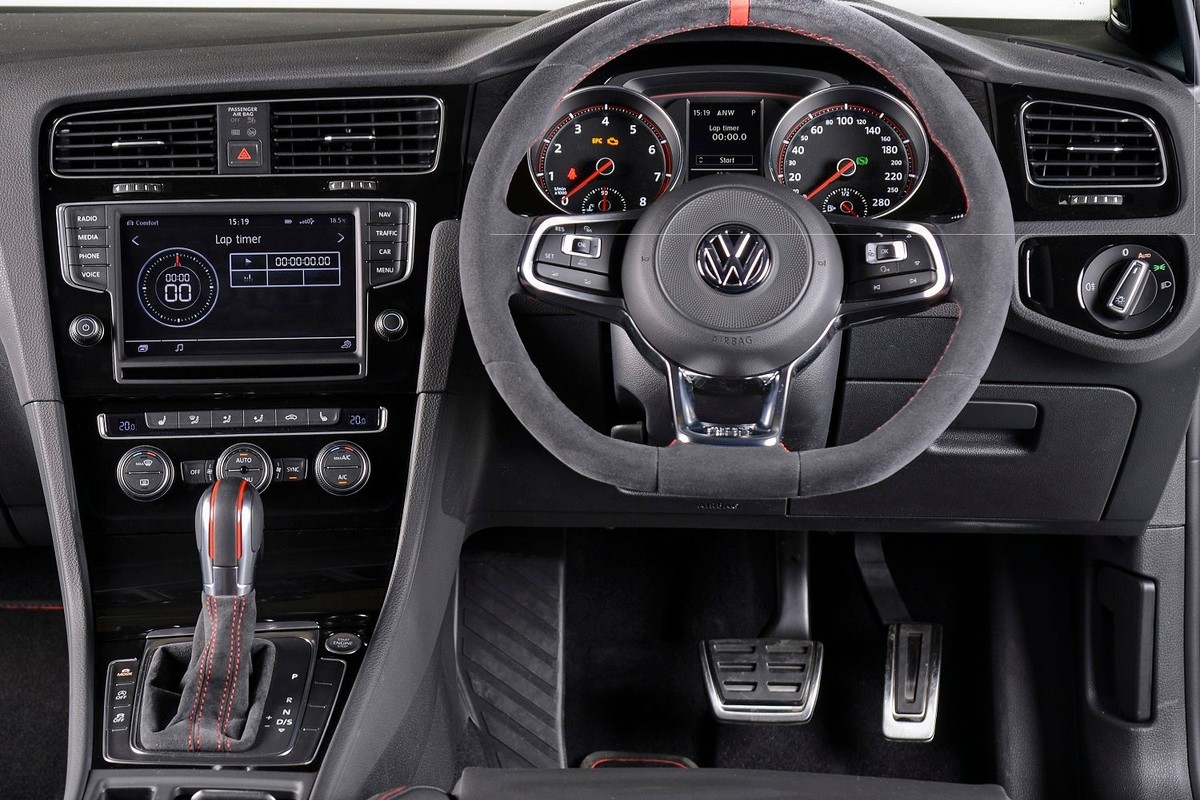
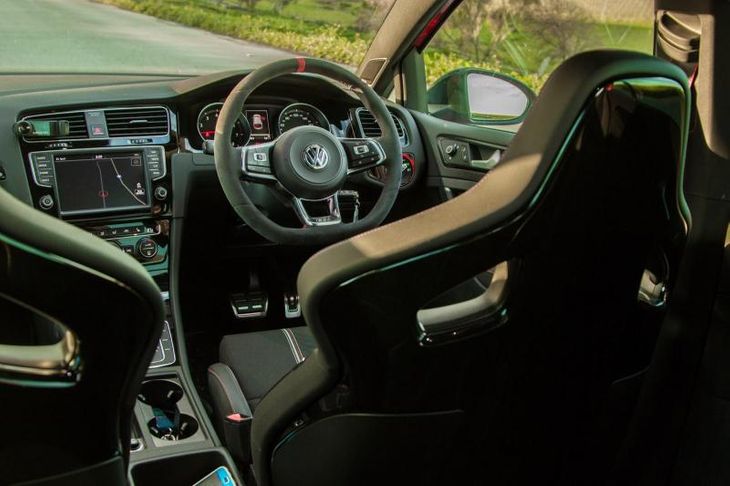
At idle, there’s no discernible audio note that suggests the newcomer is anything more than a standard GTI. Find yourself a demanding sequence of corners on a serpentine road, however, and the Clubsport will swiftly demonstrate its mettle. The first thing we noticed was how quick and agile this fettled GTI feels. Compared with the standard GTI, this is a palpably precise driving weapon. The revisions to the steering are definitely apparent and we appreciated the tactile feel of the Velour-wrapped wheel, which is adorned with a red notch in the 12 'o clock position. Body roll has been reduced too and the Clubsport is enthusiastically responsive, yet still retains that GTI “daily driver” comfort that its competitors sacrifice.
Revised chassis and tweaked steering make the Clubsport the most agile GTI yet.
Our testers were unanimous: (so-called) super hatchbacks aside, the Clubsport is the market’s definitive compact hot hatch. It’s the most focused/best-balanced performance machine in Volkswagen SA’s arsenal (at least until the very exclusive Clubsport S arrives) and everything that driving enthusiasts criticised about the GTI has seemingly been rectified. Is it fast? Yes. Does it obliterate corners? Definitely. Will it reward the enthusiastic driver and flatter the novice? Absolutely. The Clubsport’s suspension is tempered, its powertrain is responsive and the brakes are excellent.
Value for money?
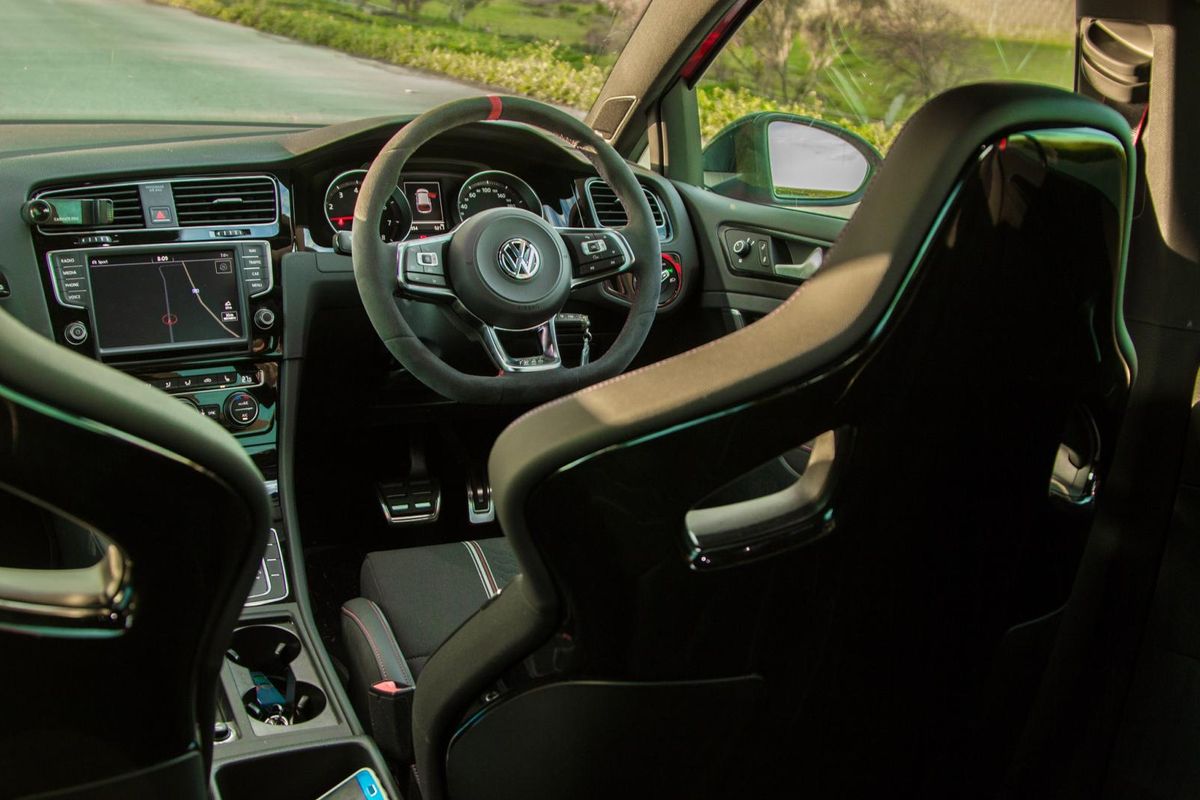
Bucket seats are beautifully designed, supportive and incorporate a heating function. They're not standard, but we recommend you tick that box.
The Golf GTI Clubsport retails for just over R540 000 and while you’re probably shocked by that markup, bear in mind this is the fastest stock GTI money can buy (at least right now, the more hard-edged Clubsport S will probably arrive by the end of the year) and the newcomer (only available for 2016) is pretty exclusive, as demand will comfortably outstrip supply.
However, you have to consider where this product sits in the performance Golf family as well. For not much more money you can purchase a Golf R (R591 800 for the Auto): an all-wheel-driven charger with just a tad more power, but it’s neither as involving nor as exciting to drive as the Clubsport.
As impressive as the R is, we’d stake money on the flagship Golf coming off second best in a head-to-head tussle with the Clubsport. Of course the former would have the upper hand off the line and in low-grip conditions due to its all-wheel-drive configuration, but on a dry twisty road (or if the driver of the latter managed to ambush an R pilot during an in-gear acceleration run), the tables would probably be turned. The lighter Clubsport is just a more exciting car to drive.
Meanwhile, the Clubsport’s standard specification is fairly generous, but our test unit did come specced with some nice-to-have options, including Tornado Red paint (R6 200), sunroof (R10 000), light assist (R1 150), rear assist camera (R3 150), uprated audio system (R8 600), satellite navigation (R20 200), adaptive chassis control R11 850) and Clubsport Racing shell seats (R18 000). That’s nearly R80 000 in extras, which pushed the total price to just under R620 000. The seats are superb, however, and the adaptive chassis control undoubtedly adds considerable dynamism to the driving experience.
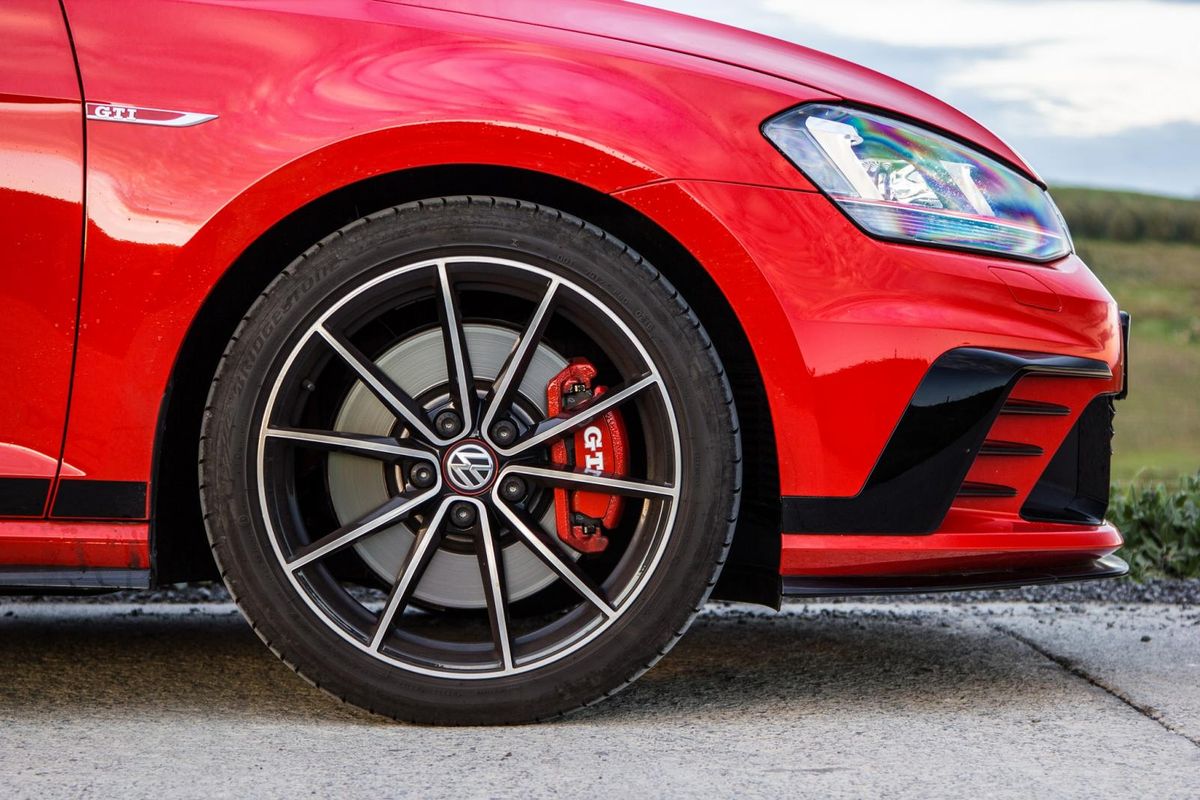
Unique wheels, bespoke rear spoiler and Clubsport decals differentiate this GTI from lesser models.
Volkswagen Golf GTI Clubsport price in South Africa
The Volkswagen Golf GTI retails from R540 200. The price includes a three-year / 120 000 km warranty and a five-year / 90 000 km maintenance plan with intervals every 15 000 km.
The Golf GTI Clubsport is a very accomplished package; given the vast performance potential and agility it has on tap, we happily give it a double thumbs-up. The standard Golf GTi is very capable, but its outputs are good, rather than impressive, and it can be argued that it favours refinement and poise over a seat-of-the-pants driving experience. The Clubsport, in turn, takes an already good package and makes it so much better. Yes, it is about R60 000 more expensive than a standard car, R40 000 dearer than the GTI Performance package and does not cost much less than a Golf R.
Nonetheless, the Clubsport offers something that its aforementioned track-focused rivals cannot… a superb balance between driving thrills and on-road comfort/refinement. Good has become great – this is the Golf GTI you need in your life.
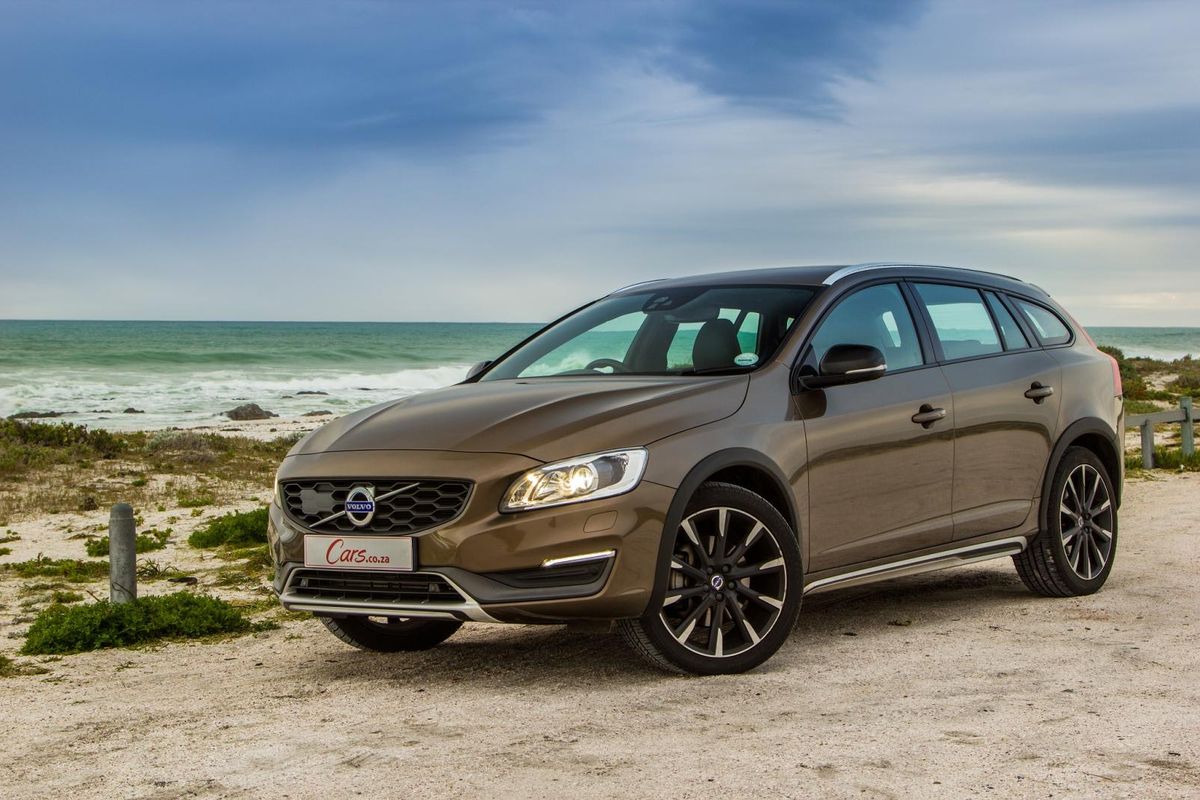
Volvo V60 Cross Country D4 AWD Inscription Review (2016)
These days, South African car buyers favour SUVs above just about any other type of vehicle even though in most instances a traditional station wagon would do fine. So, what about a station wagon with a raised ground clearance and some macho SUV bits? If this sounds like an appealing recipe, then Volvo's V60 Cross Country could be the car for you.
We like: Solidity, good looks, comfortable cabin, good performance
We don’t like: Overly firm low-speed ride, grumbly engine sound, not that efficient
Alternatives:
Similar execution, but petrol: Consider the Subaru Outback, another excellent product that doesn't sell in big enough numbers. Unfortunately, the Subaru is no longer available with a diesel engine, so the relatively thirsty 2.5-litre petrol may have to do. Similarly specified and priced, the Subaru offers more space inside and a bulletproof reputation. However, it can't match the Volvo's maintenance plan and warranty. Read our review of the turbodiesel model here.
A popular SUV: The Toyota RAV4 is one of the country's favourite SUVs and can be had with the refined and punchy 2.2-litre turbodiesel as well as all-wheel drive and an automatic transmission. Spacious inside and loaded with features, the only area where the wagon possibly trounces the RAV4 is in style, on-road refinement and "exclusivity".
A "normal" station wagon: There are very few station wagons on the market these days, but Mercedes-Benz persists with a variety of wagon models in its C-Class range. The C220d Avantgarde Auto is similarly priced and powerful.
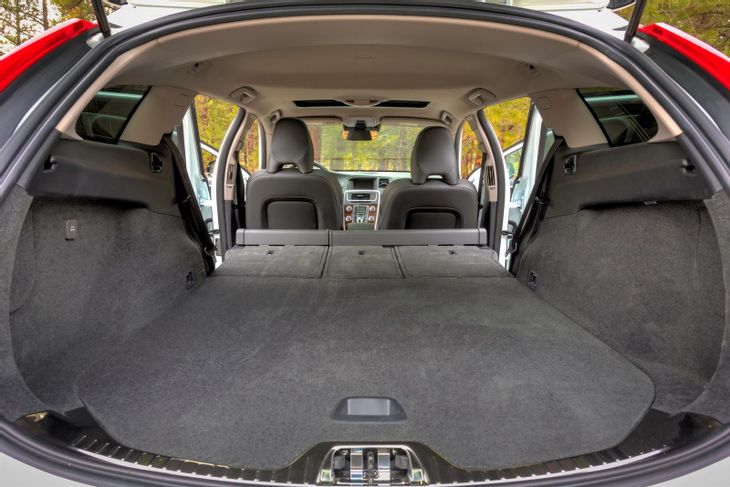
The V60 offers very usable space once the seats are dropped.
The era of boxy Volvo station wagons is long gone and so is a degree of ultimate practicality. This is only to be expected, as the V60 attempts to please with regards to style as much as usability. Nevertheless, underneath the V60's swoopy lines is a cabin that offers commendable space. The boot is claimed to hold 430 L, which is unlikely to give most SUVs of similar pricing sleepless nights, but we found it well shaped to accept bulky items. Certainly, it proved more than spacious enough for a family of five's weekend getaway luggage (and toys). Fold down those rear seats, however, and the V60 is transformed into quite a load lugger that would please antique furniture salesmen (a group who used to favour Volvos in the '80s). The floor is flat and the load area is long. Ultimately, however, the V60 Cross Country is not quite as practical as the Subaru Outback, for example. The Subaru isn't only bigger inside but also offers clever swivelling roof rails that boosts its overall versatility immensely.
In terms of rear legroom, too, the Volvo can't compete with the Outback, and the cabin does feel rather narrow, so three adults in the back might be a squeeze.
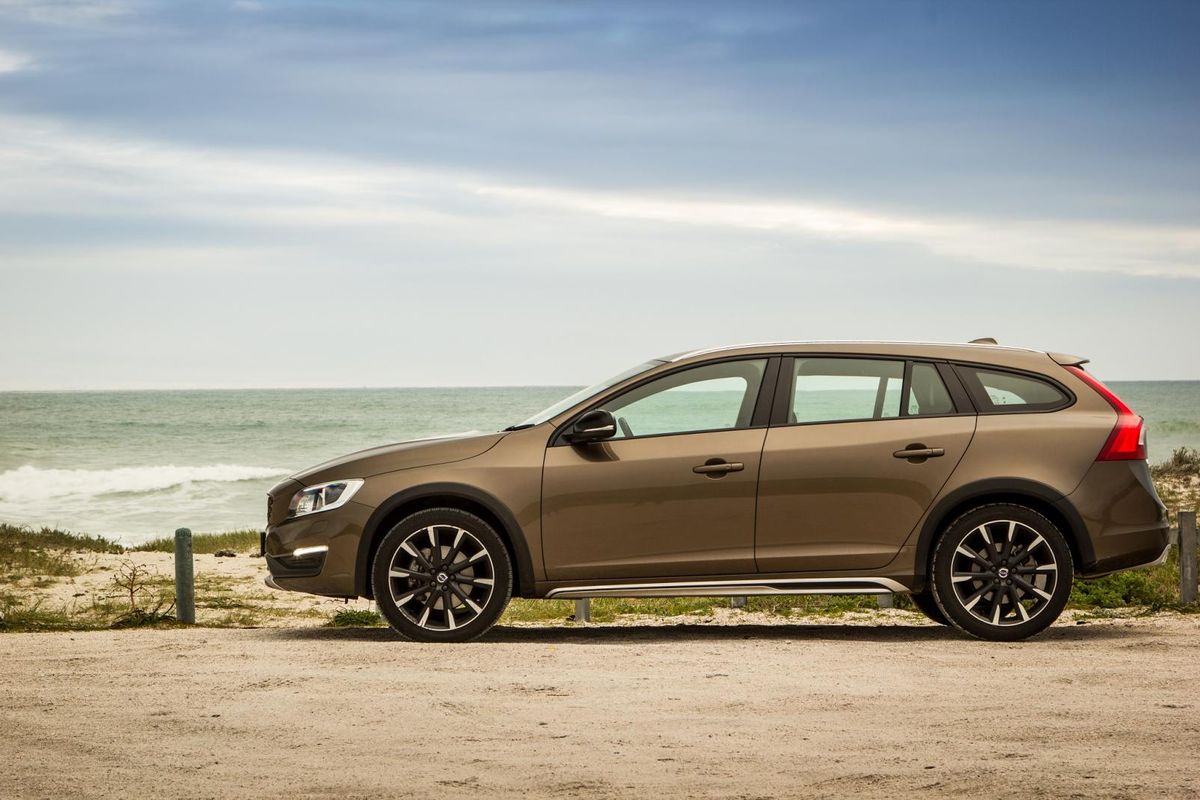
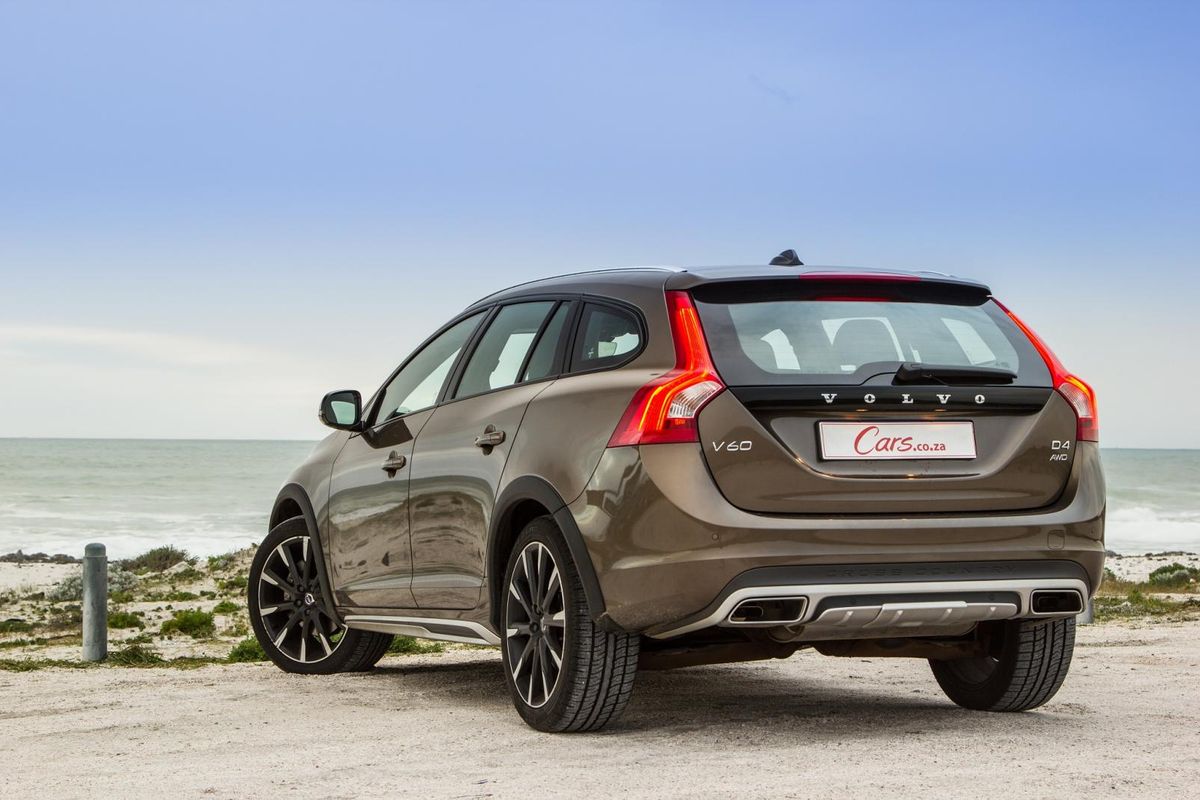
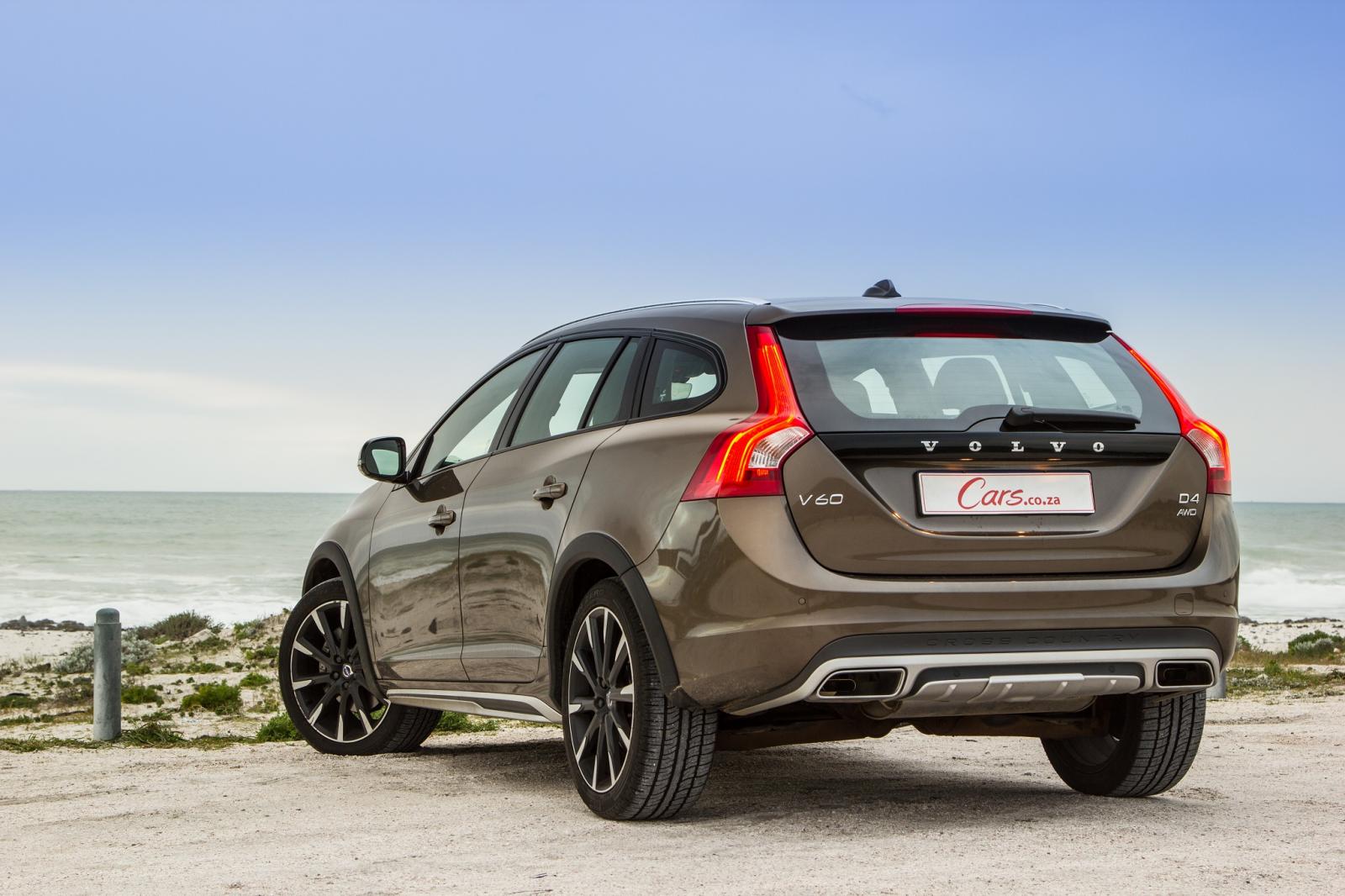
Design-wise the V60 has aged remarkably well and the addition of the Cross Country bits have made it even more appealing. As standard, it rides on smart 18-inch wheels, but our test unit had very attractive optional (R15 600) 19-inch Bor wheels, while the metallic Twilight Bronze metallic was a further option (R2 350). Compared with a standard V60, the Cross Country rides 65 mm higher and also features skid plates at the front and rear, fender extensions and a rear valance that has integrated exhaust tailpipes.
Ultimately, however, it is the standard fitment of all-wheel drive (in addition to the raised ground clearance) that gives the V60 Cross Country the edge over traditional station wagons.
Performance and Efficiency?
Though the D4 variant is considerably more economical than the T5, it's not exactly miserly.
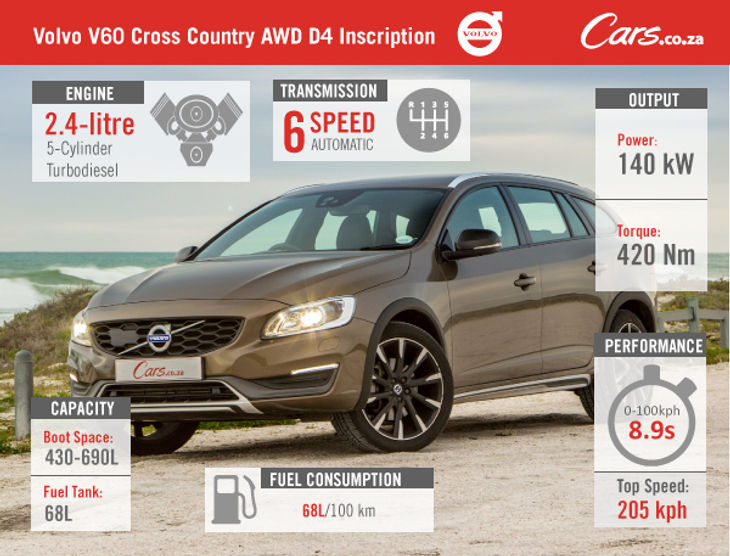
Giving the V60's age away somewhat is its engine. Under the bonnet isn't one of the new 2.0-litre, 4-cylinder turbocharged marvels that do duty so impressively in the XC90 and S90, but the 2.4-litre, 5-cylinder turbodiesel that has served in a variety of Volvo models in the past decade. It is not short on power, delivering 140 kW at 4 000 rpm and a meaty 420 Nm of torque from 1 500 to 3 000 rpm. Drive goes to all four wheels via a six-speed automatic Geartronic transmission. Our test unit featured the optional Sport Pack (R11 500) which adds a host of niceties, including gearshift paddles. Most testers, however, felt that these are somewhat superfluous in a diesel vehicle that offers manual shifting on the lever anyway.
Push down on the throttle and the V60 D4 responds eagerly, as evidenced by a 0-100 kph time of 8.9 seconds. The engine is a beauty out on the open road, too, where it lends a heavily loaded (with people and luggage) V60 the character of a long-legged cross-country tourer that still has power in reserve to execute swift overtaking manoeuvres.
So what's the problem? Well, in its more likely daily usage scenario (traffic, highway, town), the engine is not only rather gruff, but also not terribly economical. The best we could achieve was around 7.9 L/100 km, and that took some very careful driving. Volvo claims an average of 5.7 L/100 km but we could get nowhere near that, and our test average worked out to 9.1 L/100 km for the duration of the test.
Comfort and Features?
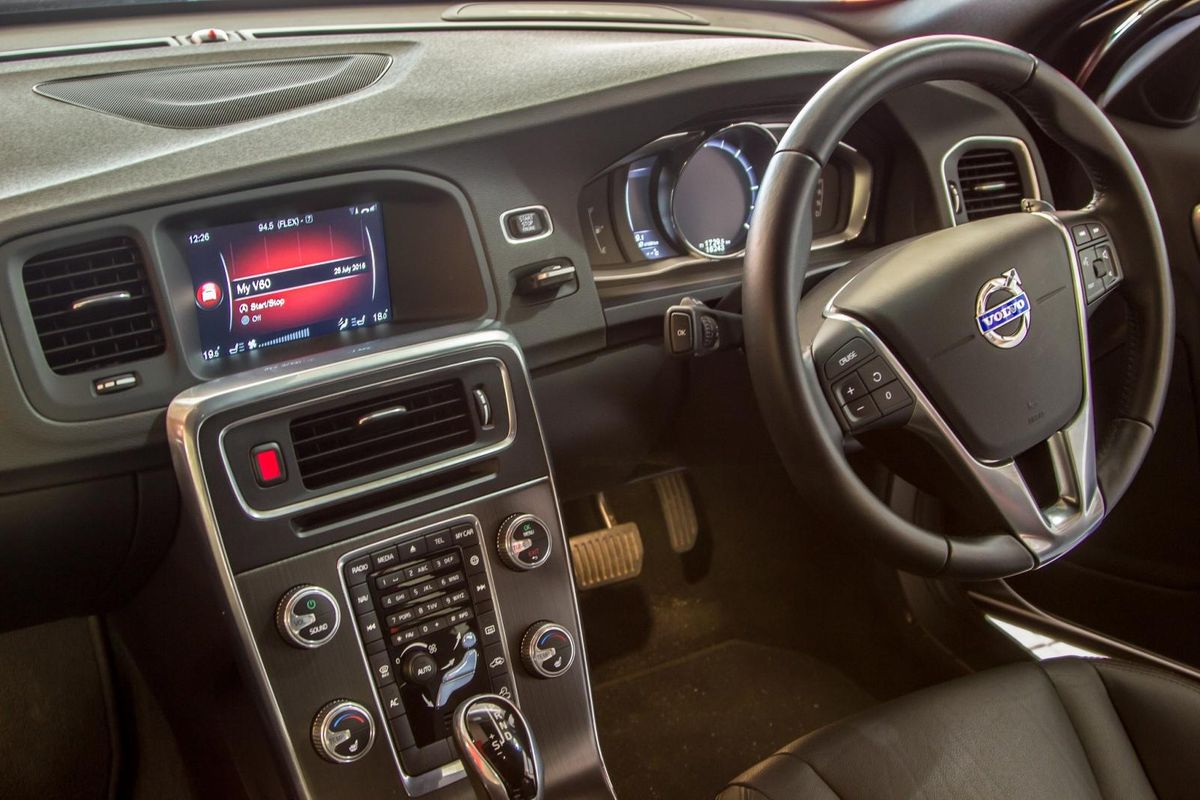
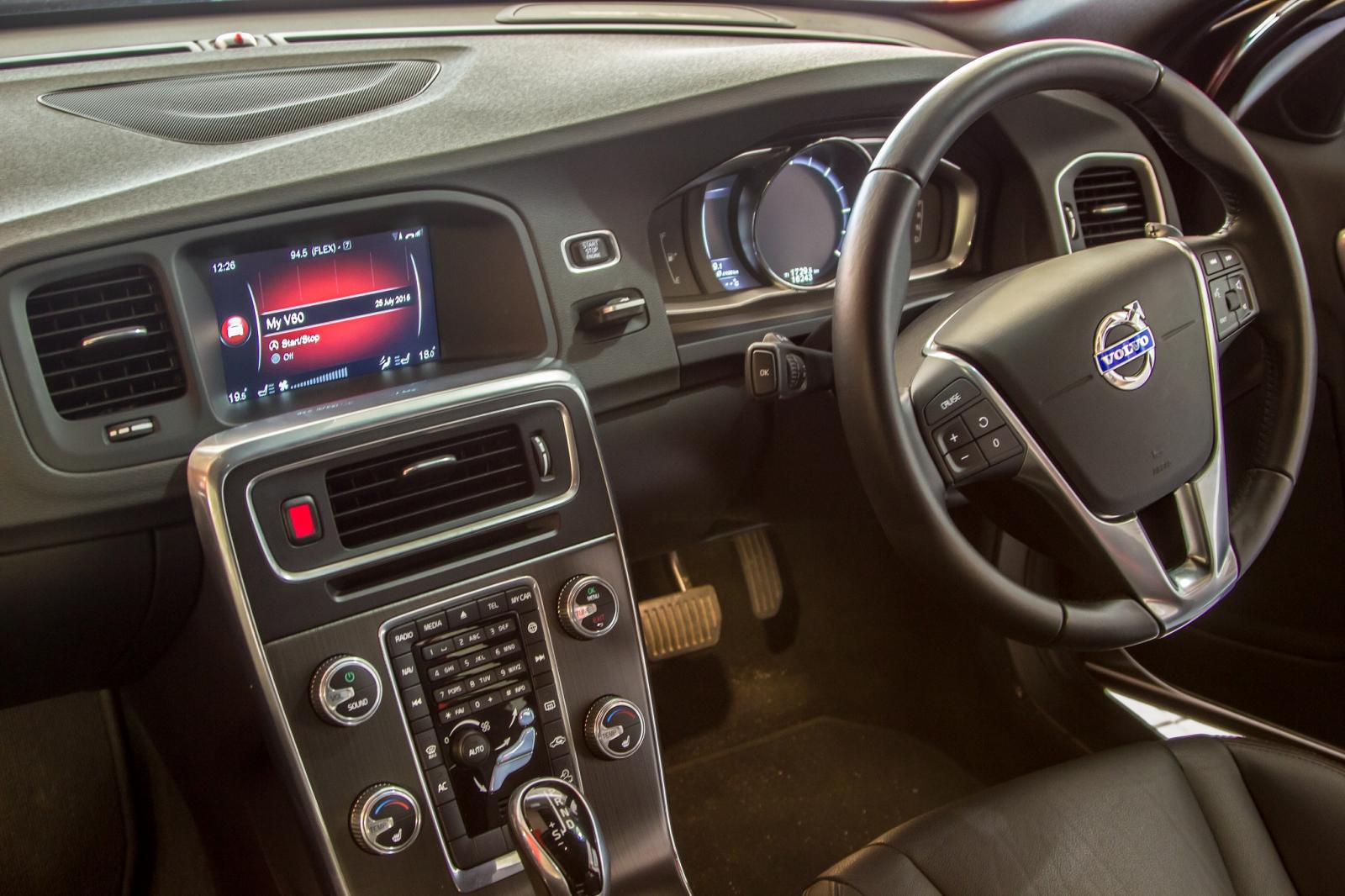
Well-made facia is showing its relative age in terms of a cluttered control interface.
The current-generation Volvo S60/V60 has always impressed with generally high levels of cabin comfort, especially for those seated in the front. We found the generously padded driver's seat particularly comfy, and our test unit also featured heated front seats (as part of the optional Sport pack), in addition to standard electric adjustability and memory functions. This Inscription derivative features a leather-wrapped steering wheel that offers generous rake and reach adjustment, so a very comfortable driver's position is likely to be one of your favourite traits of this car.
Other standard features of this model are; leather upholstery, automatic dual-zone climate control with rear ventilation outlets, cruise control and a very good sound system that offers Bluetooth/USB/aux support and eight speakers. Navigation, sadly, is not offered as standard, which is a bit cheeky at this price level but not unique to Volvo. A navigation system with voice control will set you back a whopping R22 000! If you'd like an even better sound system than what is offered as standard, there is a Harman Kardon option for R15 600.
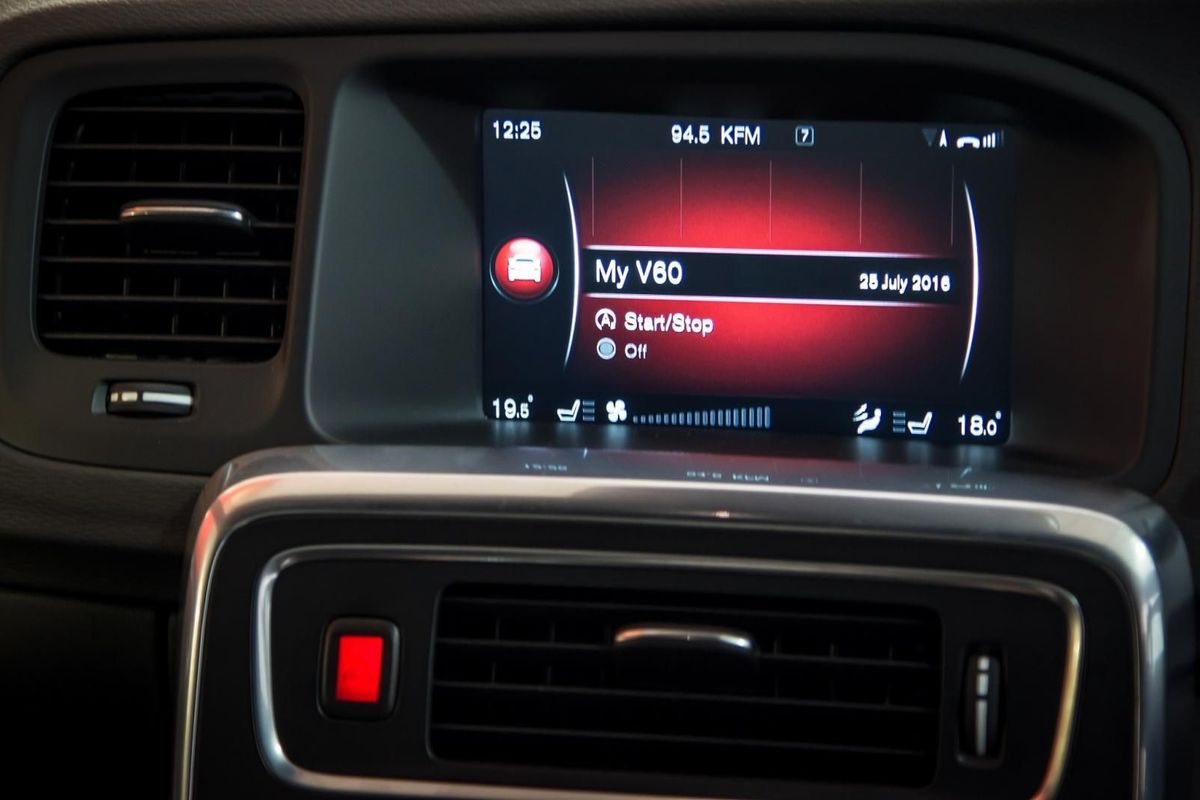
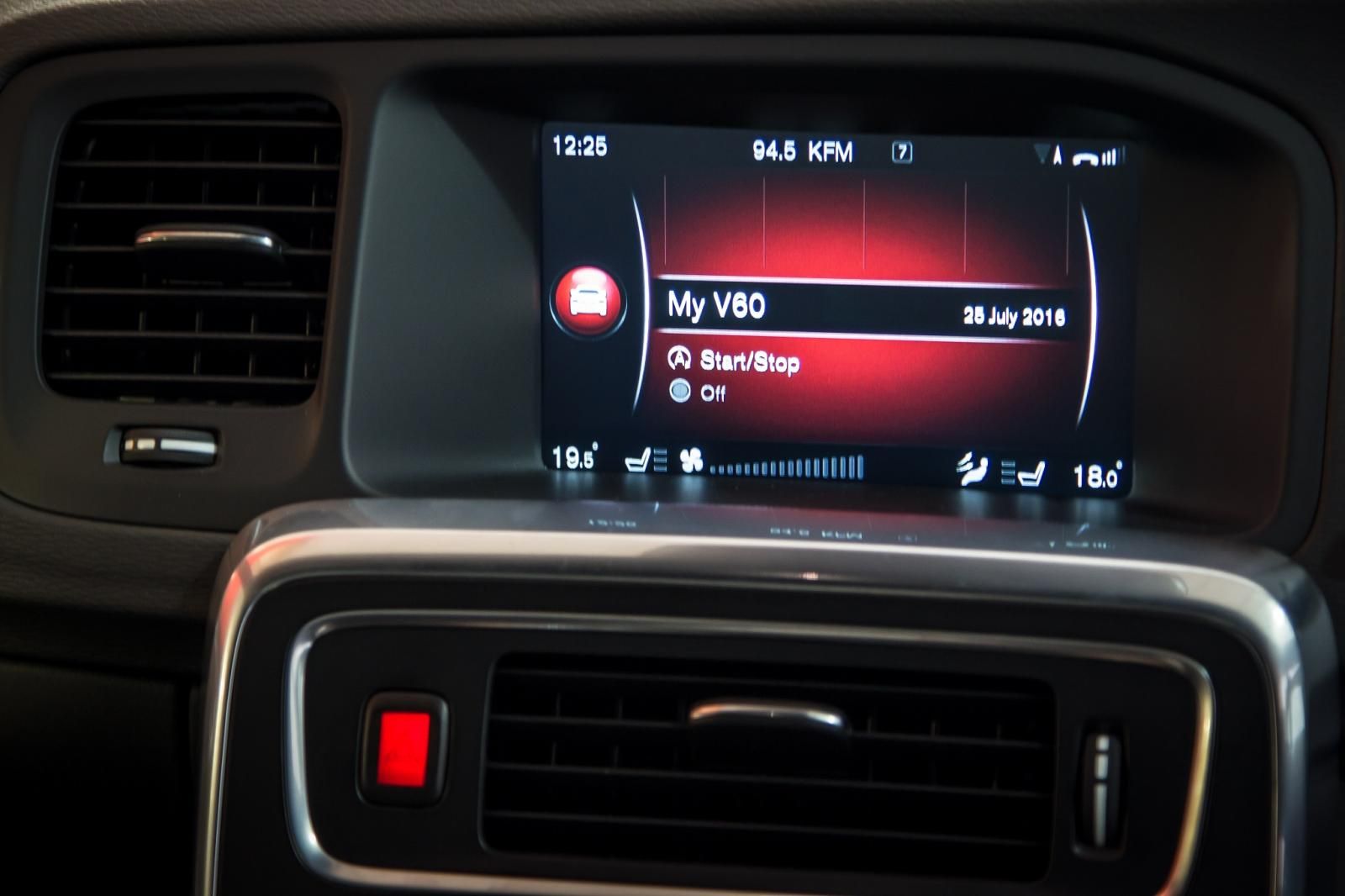
The Start/Stop system can be over-eager and intrusive, but can be switched off.
That said, the standard kit is sufficient and contributes significantly to the overall levels of comfort. NVH (noise, vibration, harshness) control is also impressive, lending the V60's cabin an almost vault-like feel of solidity. In terms of safety features this model is also generously equipped, though some items (such as a Driver Alert system for R9 750) are options. As standard you get the usual six airbags, stability control and ABS/EBD, but also hill-start assist, hill-descent control, IntelliSafe (incorporating City Safety) with automated emergency braking, tyre pressure monitoring, active-bending Xenon headlamps with cleaning system, and rear park sensors. This model carries a 5-star EuroNCAP crash safety rating and Isofix child seat anchors are provided in the rear.
Besides features and a pleasing sense of security, passenger comfort is usually underpinned by a car's ride quality. In this regard the V60 Cross Country was interesting, because the initial impression (around town on mixed-quality surfaces) was not entirely convincing. Perhaps the larger wheels and low-profile tyres are to blame, but the V60 proved quite firm in these conditions, almost too sporty. However, out on the open road and at speed the ride is transformed and the V60 Cross Country assumes a loping, supple ride character that further boosts its grand touring talents. It is in these touring conditions where the V60 Cross Country shines most brightly.
Pricing and Warranty
The Volvo V60 Cross Country D4 Inscription sells for R545 006 and comes backed with a 5-years/100 000 km warranty and maintenance plan. Service intervals are set for every 20 000 km or 12 months – keep an eye out for the on-board service notification.
Verdict
Packed with standard active and passive safety systems, as well as a long list of comfort-boosting items, the Volvo V60 Cross Country is, in reality, a luxury vehicle that doesn't mind working hard for the family. The standard all-wheel drive system gives it great surefootedness in poor conditions and on gravel, and while the boot is by no means cavernous, the shape of the load area makes it possible to pack more items than you may initially anticipate. Flaws are few and far between and mostly concern the now ageing turbodiesel engine, which is mostly too loud around town, and not as efficient as we had hoped. Overall, however, if you don't like following the pack yet still need a practical but luxurious all-rounder, this V60 Cross Country is well worth closer investigation.
Watch out for an in-depth long-term review and video wrap-up on this vehicle, coming soon.
Cars To Expect For The Rest of 2016
It’s been a busy first half of 2016 with several important new vehicle introductions to the market. Let's take a look at what's on the way for the remainder of the year…
The most important vehicle to hit the market in the first half of 2016 was undoubtedly the Toyota Hilux. Since going on sale, the Hilux has topped the sales chart by selling over 3 000 units a month. In fact, it’s been a strong first half for Toyota as the new Fortuner has also been a sales success, leading the medium/large SUV market. Not many other newcomers have set the sales charts alight, although we don’t have individual figures for Hyundai or Mercedes-Benz, both of which launched important models this year. The new Hyundai Tucson has reportedly been selling very strongly, too.
It has also been a good year for the performance car, especially if you like hot hatches. The facelifted Mercedes-AMG A45was a big hit as was the Honda Civic Type R and the Audi RS3. BMW launched two M cars in the M2and the M5 Pure Metal and there are Competition Packs available for the M3/4.
So what’s left in store for 2016? There’s still a load of cars hitting the market this year, some of which we hope will make a decent dent in the sales charts (Alfa Romeo Giulia QV, please!).
Cars still to come in 2016
Alfa Romeo Giulia
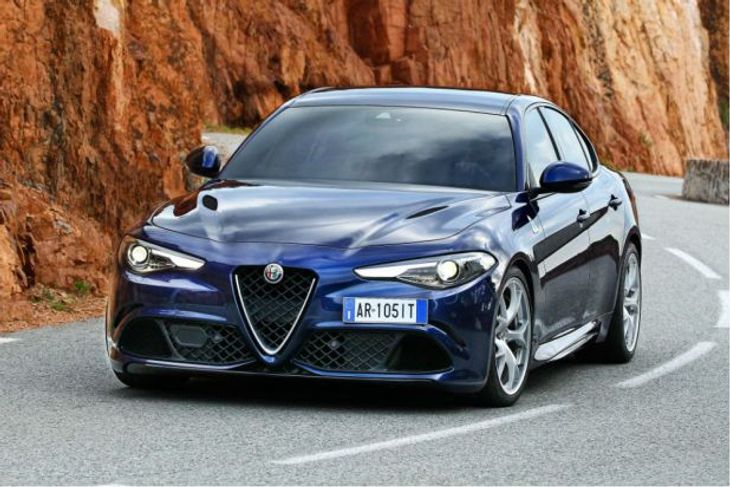
The local importers are working hard to get the Giulia to South Africa before the end of 2016.
Alfa Romeo is making waves overseas with the new Giulia and if the reviews are anything to go by, Mercedes, BMW and Audi may have a fight on their hands. The QV model is the top spec sports sedan made to compete with the M3, C63 and RS4 whilst there are other models in the range including turbodiesels and turbopetrols. It will hopefully be here by year-end, maybe early in 2017.
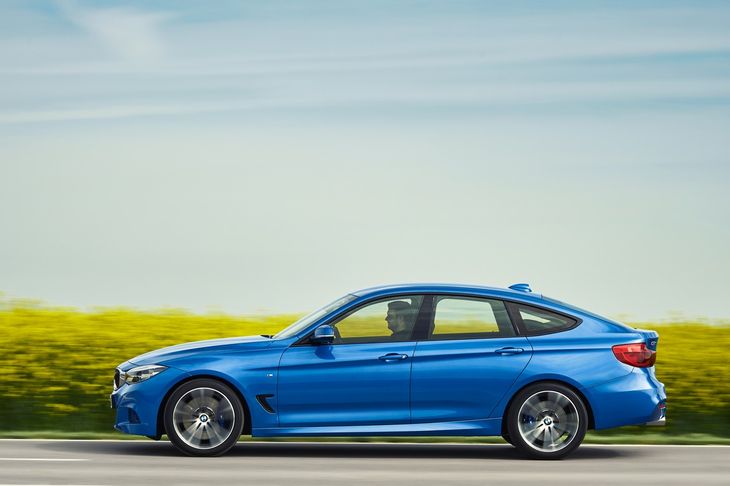
A dose of extra versatility compared with a traditional sedan is the 3 Series GT's greatest asset.
The 3 Series GT is back – with its hatchback. It offers a bit more practicality in the rear and slightly less awkward looks with this facelifted model. Expect the 340i (3-litre turbopetrol) to hit the market first with the 320i and 320d following soon after.
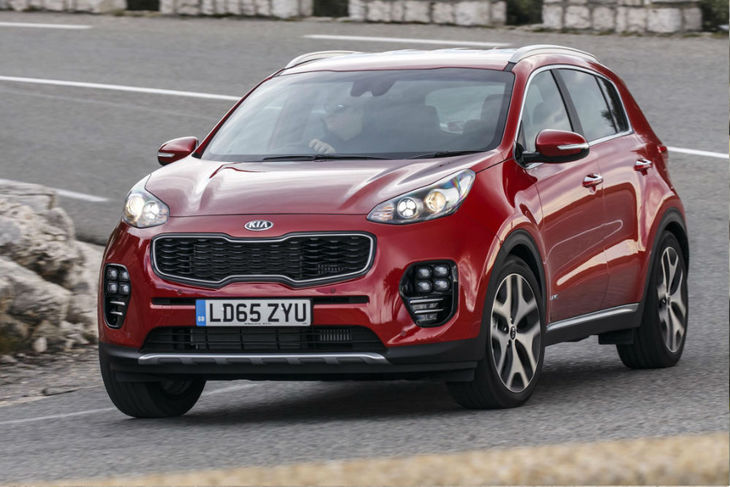
The new Kia Sportage arrives in South Africa very soon.
The Kia Sportage has had a major overhaul making it visually polarising. Kia claims improved interior space, higher quality interior surfaces and a better ride. It should be arriving in SA during this quarter (3rd quarter 2016).
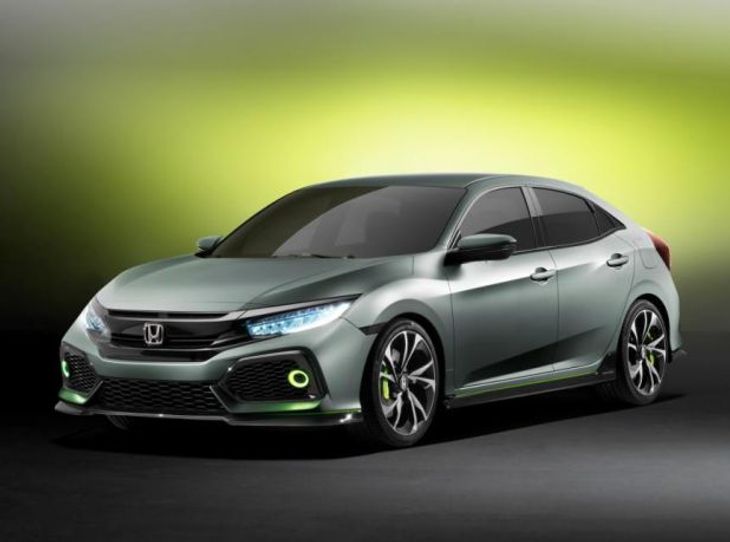
The new Honda Civic again features a bold design underpinned by the brand's usual mechanical solidity.
The Honda Civic has quietly snuck onto the South African launch roster. It will be here as of 11 August 2016 and we will be driving it. The design is radically different, if not to everyone's taste, but the engines look quite appealing with turbopetrols and naturally aspirated models in the lineup.
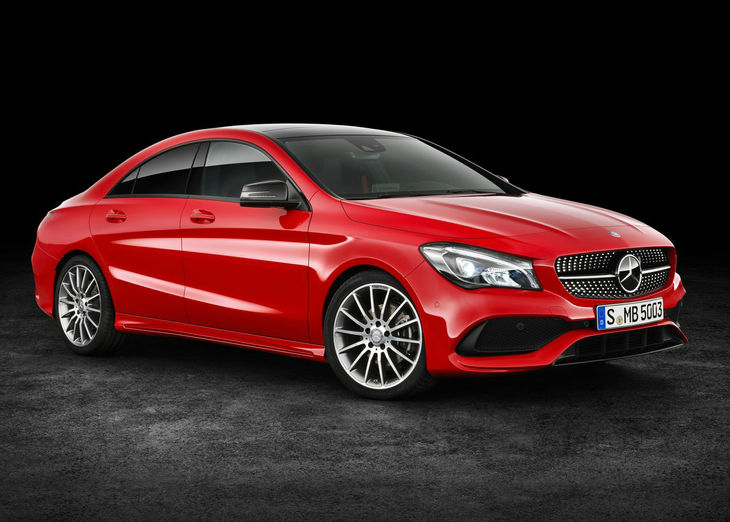
The Mercedes-Benz CLA gets a similar upgrade to the A-Class earlier this year.
The CLA will receive a minor facelift and engine update in line with what we see on the current A-Class. It will be launched locally on the 1st August.
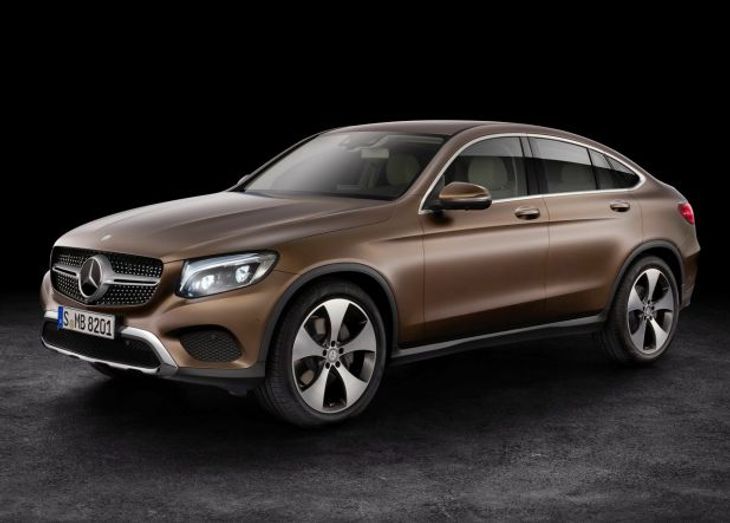
Want your GLC with some individuality, then the GLC Coupe is for you. It targets the BMW X4.
Mercedes-Benz will add another coupe variant to its SUV lineup. If they didn't sell, they obviously wouldn't make them despite the reduced practicality over the standard GLC. Mercedes notes it will be on sale in SA before year-end with more models joining the range in 2017.
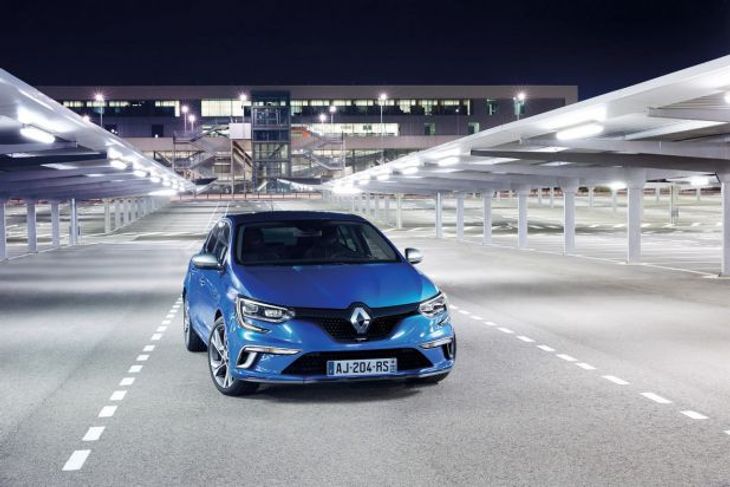
The Megane is an important image leader for Renault and arrives before year-end.
The Renault Megane has not had much success in its current form (apart from the Renault Sport derivatives), but thankfully, the French marque's other models are really hitting their straps locally. The new Megane looks to have upped its game in the styling and quality departments. We'll have to see if that translates into sales.
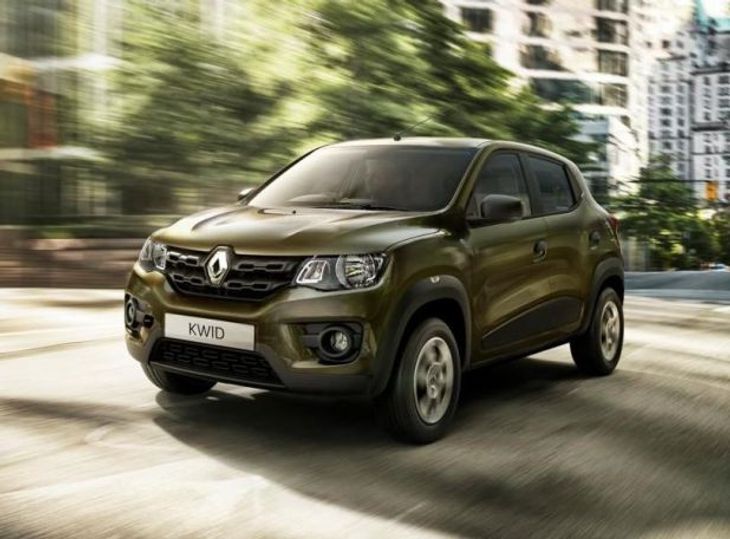
The compact Kwid crossover is selling up a storm in India and Renault SA expect similar popularity in SA.
The Kwid is an A-segment Crossover that will ride on an all-new platform from Renault. The Kwid looks to be up to date with interior tech whilst using the 0.8-litre turbopetrol engine for power.
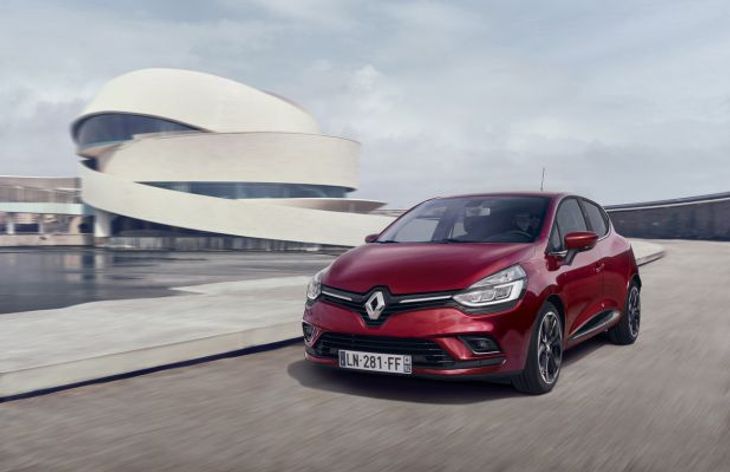
The already stylish Clio gets a nip-and-tuck before year-end.
The Renault Clio has been a hit for the French brand since this latest generation hit the market. The facelifted model promises to upgrade the level of interior materials whilst remaining good value for money. There's a turbodiesel being added to the range as well as a manual gearbox for the 1.2 turbopetrol.
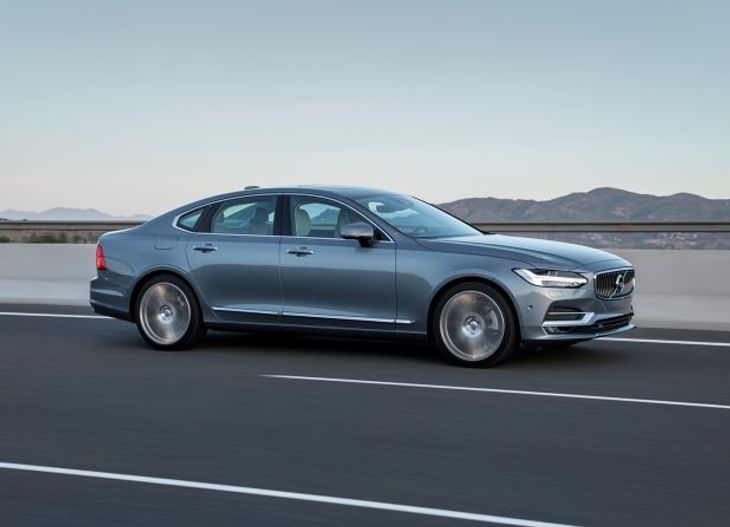
The Volvo S90 impressed us at the international launch and comes to South Africa soon.
Volvo's S90 is the brand's next step in its rejuvenation project that started with the XC90. It is set to go head-to-head with the Merc E-Class, Audi A6 and BMW 5 Series.
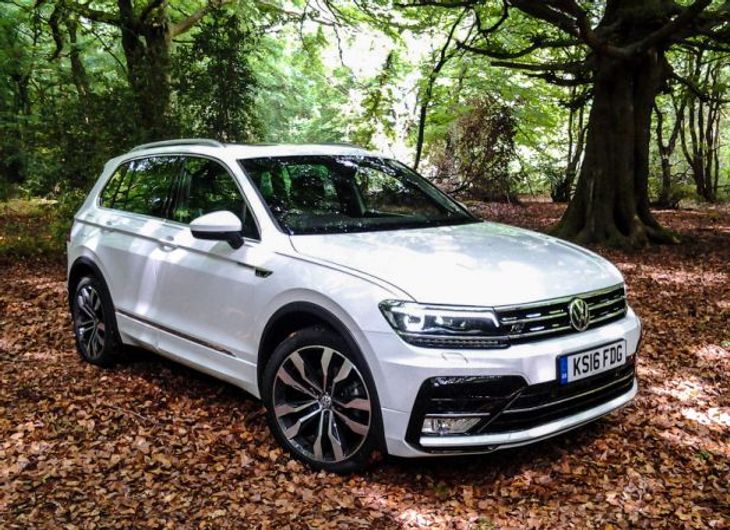
The popular crossover/SUV segment will feel the arrival of the eagerly anticipated Tiguan, soon.
Tiguan should be here quite soon. The new model boasts better styling, a more family-friendly interior and a more supple ride. It will also be offered in two-wheel-drive as well as VW's 4Motion all-wheel drive offering.
The most hardcore Golf GTI ever will arrive in South Africa in extremely limited numbers.
As a swansong to the current generation GTI, the Clubsport S comes with just 2 doors and 2 seats. It's also shod with semi-slick tyres, more power and more downforce. Just 47 models are likely to come to SA and we can expect them sometime around November 2016.