New Audi A4 2.0T FSI (2016) First Drive


We attended the launch of the new Audi A4 in George last week. Could the Ingolstadt-based manufacturer's compact executive sedan be the new benchmark in a tightly-contested segment?

The A4 is one of Audi South Africa's most important products – since its introduction in 1994, more than 110 000 units have been sold on the local market. Despite its successes, the A4 has come under fire from critics, some of whom labelled the car "boring" and "uninvolving". We recently took an example of the outgoing A4 for a drive and the criticism seemed justified. Compared with its main competitors, BMW's 3 Series and the Mercedes-Benz C-Class, the old A4 felt, well, old.

Audi has sharpened its pencil for the new A4 and imbued its sedan with much-needed zest. Buyers shopping in the mid-size executive sedan segment will be pleased to know that the new A4 is a vastly improved product over the previous-generation car. Yes, the new A4 still looks like an A4 (its exterior design is an evolution of its predecessor's), but it’s just that much sharper, leaner and… elegant. The new A4 has shed some weight too (up to 110 kg, depending on model) and that’s a good thing because it makes the sedan more athletic. When you factor in that power has gone up by up to 25% and fuel consumption has improved by up to 21%, you have a vehicle that’s more balanced in terms of proportion and performance.

For all the details regarding specification take a look at: Audi A4 (2016) Specs and Pricing in South Africa

Interior improvements

The interior of the new A4 deserves a special mention because it represents a giant leap forward from the outgoing model. Once you step inside the cabin you are welcomed by comfortable leather seats and a three-spoke multifunction steering wheel. The dashboard is home to horizontal air vents for the climate control system (they're remarkably similar to that of the new Audi Q7) and there’s a "floating" 8.3-inch monitor with a touchpad rotary controller ahead of the shift lever. It all looks much more contemporary and smart than the previous A4's interior. This one has a real sense of occasion.  

A major highlight of the new A4 is that Audi’s Virtual Cockpit is available as an option. It’s a marvellous system that replaces the traditional instrument cluster with a 12.3-inch, high-resolution LCD digital display that provides easy access to navigation and all the vehicle functions. Wizardry comes at a price, however. Expect to pay as much R39 000 to have the Virtual Cockpit fitted to your new A4.

What's the new Audi A4 like to drive?

The launch route encompassed 360 kilometres and included a total of four mountain passes that put the A4's dynamic capabilities to the test. We had the opportunity to test both the 110 kW/250 Nm 1.4T FSI and the 140 kW/320 Nm 2.0T FSI during the launch event. Audi did say that the more powerful 185 kW/370 Nm 2.0T FSI quattro derivative will arrive in April 2016, while the 140 kW/400 Nm 2.0 TDI turbodiesel will become available later in the year.

Our first drive was in the 2.0T FSI Design and it soon became evident that the driving experience of the new A4 is significantly more refined and comfortable than before. Fitted with a 7-speed S tronic dual clutch transmission, this model felt pleasantly punchy under hard acceleration. The 2.0T FSI responded well to throttle inputs and in-gear acceleration was impressive too. The transmission is well matched to the engine and the shifts through the gears are virtually imperceptible to the driver. The steering feel is on the lighter side, but adequately direct and precise, providing good feedback to the driver.

We were particularly impressed with how poised the A4 felt while cornering. Even at higher speeds, the new A4 held its line with confidence. The car certainly felt lighter and more agile than the outgoing model and managed to soak up bumps well with its balanced suspension setup. Audi claims a fuel consumption figure of 5.4 L/100km for this 2.0T FSI.

Although Audi says that major efforts were made to reduce noise levels in the cabin, we couldn’t help but notice an obtrusive rumbling noise emanating from the test unit's 18-inch tyres. Perhaps it's a credit to the cabin's noise, vibration and harshness control that the tyre noise was that noticeable…   

We also spent some time behind the wheel of the 1.4T FSI model and although its handling was identical to that of the 2.0T FSI, there was a major difference in performance. With 30 kW less power and 70 Nm less torque available, the smaller-engined model's more moderate performance was immediately noticeable. However, the model's performance was satisfactory – it was by no means sluggish to drive. Overall, both models delivered a comfortable and refined driving experience. Audi claims a fuel consumption figure of 4.9 L/100 km for the 1.4T FSI.

Summary

The new A4 is a very accomplished product. It incorporates major improvements over the previous-generation A4 and its higher levels of refinement and sprightly performance are refreshing. The cabin not only looks more modern and up-to-date, but it also offers more space for the driver and passengers. That, plus the addition of various in-car technology and driver assist features makes the A4 much closer matched to its natural competitors. In fact, a direct comparison between the Audi and its rivals could see the newcomer come out on top in certain aspects, perhaps overall. Look out for a full review of the A4 on Cars.co.za in the near future, when we'll gladly delve deeper into the Audi's merits.

Audi A4 prices in South Africa

Derivative Price
Turbopetrol engines  
1.4T FSI manual (110 kW/250 Nm)  R441 000
1.4T FSI S Tronic (110 kW/250 Nm) R459 000
1.4T TSI Design S Tronic (110 kW/250 Nm) R488 000
1.4T FSI Sport S Tronic (110 kW/250 Nm) R492 000
2.0T FSI S Tronic (140 kW/320 Nm) R496 000
2.0T FSI Design S Tronic (140 kW/320 Nm) R513 000
2.0T FSI Sport S Tronic (140 kW/320 Nm) R517 000
2.0T FSI Quattro S Tronic (185 kW/370 Nm) R616 000
Turbodiesel engines  
2.0 TDI S Tronic (140 kW/400 Nm) R517 000
2.0 TDI Sport S Tronic (140 kW/400 Nm) R538 000
2.0 TDI Design S Tronic (140 kW/400 Nm) R534 000

Subaru XV Crossover Updated


Subaru’s XV compact crossover now offers refreshed styling as well as revised and upgraded interior in South Africa.

Subaru’s popular XV crossover has been enhanced with a number of changes to the exterior and interior design, bringing the model in line with the rest of the Subaru range. As a special launch offer (valid until 31 March 2016), the XV is available with a 5-year/120 000 km Maintenance Plan extension. 

Exterior updates

In an effort to embolden the design of the XV, Subaru appended the hexagonal grille with an enlarged chrome divider. On the front bumper, the fog lights have L-shaped chrome garnishes, white indicator lights are integrated with the HID headlamps and the 17-inch alloy wheels (with black inlays and silver spokes) have a polished finish. Anoraks will note that the Subaru emblem on the wheel is now set in a clear cap.

Meanwhile, the XV's rear-end has been revised with LED taillights and the roof spoiler has been extended for a sportier look. The XV is also fitted with durable body cladding to protect the sheet metal from scuffs and scrapes. Subaru has added two new colours to the range: Hyper Blue and Dark Blue Pearl.

Interior Updates

The XV’s interior includes a number of upgrades. The steering wheel (borrowed from the Outback and Legacy models) features mounted controls for the audio system, cruise control, voice recognition and trip computer functions.The steering wheel is adorned with bold orange stitching that also features on the seats, headrest, armrests and gear selector. High-gloss black panels have replaced the previous silver trims on the doors, dashboard and instrument panel.

Subaru has re-introduced shift paddles for automatic versions of the XV (so that drivers can make manually-actuated shifts, if they desire) and all models come standard with Bluetooth connectivity, as well as USB and auxiliary ports. Apple users will benefit from Siri Eyes-Free: it recognises voice commands to operate Siri functions remotely. Android users can still make use of the standard voice recognition to control audio, telephone and climate control functions.

Engine remains unchanged

The Subaru XV engine offering remains the same with its 2.0-litre boxer engine developing 110 kW and 196 Nm of torque. The engine can be mated with either a 6-speed manual or a CVT (automatic) transmission. Claimed fuel consumption for the manual is 8.0 L/100 km, while the CVT version consumes 7.9 L/100 km. A generous ground clearance of 220 mm, coupled with all-wheel drive and dynamic chassis control, makes the XV capable in off-road conditions.

The XV is also well equipped with safety features, including seven airbags, ABS with EBD and brake assist. The XV previously achieved five-star Euro NCAP and ANCAP safety ratings.

Subaru XV Price in South Africa

Subaru XV 2.0i R338 000
Subaru XV 2.0i auto R357 000
Subaru Xv 2.0i-S auto R395 000

Toyota Hilux 2.8 GD-6 4×4 Raider (2016) First Drive

The wait is over! Toyota's new Hilux has arrived at dealers and we've already spent time with this very important newcomer. Here's what the flagship Hilux is like to drive…

The Toyota Hilux first arrived in South Africa in 1969 when a small, short-wheelbase, 1.5-litre powered model went on sale locally. Given the fact that the market was then dominated by big six- and eight-cylinder powered vehicles, this compact bakkie immediately made waves thanks to its low running costs and abilities. But even so, few would have guessed that it would end up being the icon it has become.

Fast forward to 2016 and there’s a new Toyota Hilux in town. It's been a long-time coming. Given the fact that the previous-generation Hilux was launched as far back as 2004, and that it has since had more facelifts than Cher, minor upgrades were no longer good enough to fight off the improving competition (here's looking at you, Ford Ranger). Now in its eighth generation, the Hilux has been completely overhauled to meet demanding customers’ needs.  

To read about the significant changes across the Toyota Hilux range, click here.

To read about the model line up and pricing, click here.

And it certainly is all-new… Ironically (given its roots) the newcomer is now one of the biggest bakkies on the market, and is, in fact, longer than the imposing Ford Ranger. The model we spent the most time in during the launch event was the 2.8-litre turbodiesel double-cab Raider, a derivative that should get the country's more leisure-oriented buyers as excited as the previous – and massively popular – 3.0 D-4D managed to do for years. It retails for R529 900, which is a very aggressive price indeed! For the launch event, Toyota entrenched itself at the Porsche-owned Kyalami race track. While the idea of driving around the completely new Kyalami in a vehicle not designed for track antics was at best amusing, there was an all-new 4×4/offroad course to sample and this was a perfect starting point to highlight the new Toyota Hilux’s off-road prowess.

Off the beaten track

Hilux customers are, of course, likely to reach for the prominent second "gearknob" which in the past activated the four-wheel drive modes, but the new model does away with that and in its place is a rotary dial which allows the driver to seamlessly switch between four-wheel drive high range, four-wheel drive low range and rear-wheel drive on the fly. This means that you can switch modes at speeds of up to 50 kph. No more need for stopping, putting the car into neutral, engaging the drive, then setting off.

There are some handy electronic aids that make their debut in the new Toyota Hilux. The Downhill Assist Control (DAC) is useful as it controls the brakes and prevents wheel lockup when descending the steepest declines. Hill Assist stops the vehicle from rolling backwards on an incline and finally there’s a revised traction control system which will allow some slip, but will ultimately rein you in if it detects the vehicle is out of control.

While there are new manual and automatic transmissions, we feel the manual gearbox is worth further detailing as the improvements are significant. Now fitted with Intelligent Manual Transmission (iMT), this gearbox makes use of rev-matching technology to ensure the smoothest changes, even if your action is lazy and poor. Why this is activated with a button and not an automatic setting is a little strange as it makes the vehicle smoother to drive. The action of the gearbox itself is solid, reassuring and pleasant – a big improvement on its predecessor.

Powerplant

The introduction of the new Hilux heralds the arrival of some new engines, too. The previous 2.5-litre and 3.0-litre diesels have made way for more efficient and very powerful 2.4-litre and 2.8-litre turbodiesels. The 2.7-litre and 4.0-litre V6 petrols from before continue, however, with some minor improvements. We drove the 2.8-litre GD-6 motor which packs 130 kW and 420 Nm when matched with the six-speed manual transmission – engines paired with the new six-speed automatic transmission offer even more torque (450 Nm). The engine/manual transmission combo offers a tow rating of 3 500kg for a braked trailer, good news for the many thousands of buyers who will end up using their vehicles as leisure tools. More good news is the standard fitment of Trailer Sway Control.

This motor is certainly strong and has plenty of grunt, but it’s not just about power though as it’s also meant to be thrifty at the pumps. Toyota claims 8.51L/100km, which is rather good for a bakkie of this type. There are some drive modes as well which allows the driver to adjust the ECU mapping as required. You can either opt for "eco" prioritises efficiency at the cost of some driveability, or "power drive", which does the opposite. You can feel the Hilux becoming a little more urgent in its responses when in the latter of the two modes – throttle response, especially, becomes noticeably sharper. It's a very good engine, and appreciably refined.

Climb inside

The cabin represents the biggest step forward from a design point of view, and endows the big bakkie with a pleasantly car-like driving environment. The dominant feature is a new tablet-like infotainment system which lends the cabin a near-premium feel. The overarching theme here is robustness and build quality. Everything is solid, and everything feels like it will last… yet there are definitely hints of premium and luxury here, despite the Hilux’s working class role. The Hilux is also one of the few bakkies to offer a steering wheel that is also reach adjustable, to the great benefit of driver comfort. 

Safety has been another area of focus for Toyota. Driver-side knee airbags make their debut and along with anti-lock brakes with electronic brake-force distribution and brake assist, as well as driver/passenger airbags, the Toyota Hilux looks like it’ll prove pretty safe in the event of a collision. Isofix child seat anchors are also provided in the rear.

Ride and handling on different terrain

The launch route was terrific as it combined multiple terrains for us to traverse. Admittedly we did take the 4.0-litre V6 around the exceptionally smooth new surface of Kyalami for a giggle, but the real test took place outside the confines of the circuit. We experienced sand, gravel and tarmac, and one particular section was a river crossing. While the water was only about 15 cm deep, the fact that you’re in a Hilux gives you a bit more confidence as opposed to a normal passenger hatchback or sedan. The Hilux has a claimed wading depth of 700 mm, as well as good ground clearance (286 mm claimed).

On the gravel sections we effortlessly shifted from two-wheel drive to four-wheel drive for additional traction and stability and despite the exceedingly poor surfaces, the Hilux felt right at home. Tarmac proved to be an interesting test as bakkies don’t exactly hold a stellar reputation for ride and comfort, but the refinement upgrades in the new Toyota Hilux are very obvious. While it’s not ever going to be as smooth as a German sedan, it arguably establishes a new benchmark in terms of outright comfort, especially for those seated in front. Rear passengers, on the other hand, may still feel that they’re sitting too upright but even here the Hilux has moved forward. The newcomer convincingly banishes the perception of the Hilux as a rugged, but utilitarian and hard-riding workhorse to the history books.

Summary

The new Toyota Hilux moves the goalposts and will undoubtedly give its rivals something to think about, especially at the very competitive pricing. Manufactured at the company's Prospecton plant in Durban, Kwa-Zulu Natal it forms part of a huge investment by the brand. While the actual monetary figure is yet to be confirmed, Toyota admits that it’s by far the largest investment in its history. It is a very, very important product…

So, while the Ford Ranger has done really well for itself in terms of sales of late thanks to its tech, punchy engines and macho looks, the new Toyota Hilux, based on this short first evaluation, will prove equal to the task. Bring on the comparative test!

View a video that highlights 5 need-to-know facts about the 2016 Toyota Hilux:


Click here to read about the model line-up and pricing

Compare this Hilux with its rivals from Ford and Isuzu right there

Chevrolet Captiva (2016) Specs & Price

The Captiva compact SUV/crossover has been a steady performer for Chevrolet since its introduction in 2007. This latest facelift brings more in-car technology and safety systems to the Captiva while maintaining a practical seven-seater layout.

In order to attract more buyers to the Captiva, the standard specification has also been improved. It now offers the following features across the range:

Eight-way electronically adjustable driver’s seat

Dual-zone climate control

MyLink 2.0 with large touchscreen

Rear park assist

Cruise Control

Keyless Entry and Keyless Start (PEPS)

Hill Descent Control and Hill Start Assist

Power-folding mirrors

Enhancements to the 2016 model range include a revised front-end design (including a redesigned grille), which brings the exterior appearance of the Captiva in line with the Chevrolet-family look. The headlamps have LED daytime running lights that are automatically activated when required.

The Captiva offers a spacious environment for its occupants and their luggage. Even in full seven-seater mode, the Chevrolet still offers 477 litres of loading space. If you fold the third row of seats down and use it purely as a five-seater it is said to offer 942-litres of utility space.

The 2016-specification Captiva models ride on 18-inch alloy wheels and the new look is finished off with integrated side steps.

Interior

The major upgrade for the interior is the introduction of Chev’s MyLink infotainment system with a 7-inch touchscreen. It’s the second generation of MyLink that builds on the innovations of the previous system. The new system introduces phone projection technology. In other words, it allows users with compatible smartphones to project some of their phone’s apps and functions onto the screen of the car’s infotainment system.

Further changes to the interior include a new leather steering wheel and an all-new dashboard and instrument cluster.

Unchanged engines

Buyers of the 2016 Chevrolet Captiva have a choice of either the 2.4-litre petrol engine or a 2.2-litre turbodiesel engine. The 2.4-litre naturally aspirated engine produces 123 kW and has a torque output of 230 Nm. Combined cycle fuel consumption is a claimed 8.8L/100 km. The 2.4 is only available in front-wheel drive configuration, but you have the option of a six-speed manual gearbox or a six-speed automatic.

The 2.2-litre turbodiesel engine produces 135 kW and 400 Nm of torque. The 2.2 D LT FWD model is only available with a six-speed automatic transmission and is said to achieve a combined fuel consumption figure of 7.8 L/100 km.

Standard safety features

The Chevrolet Captiva has a 5-Star Euro NCAP safety rating thanks to a suite of electronic aids such as 3-point seatbelts on all 7 seats, Isofix child seat anchorages, ABS with electronic brake force distribution (EBD), electronic stability control (ESC), traction control systems (TCS), braking assist system (BAS), hill start assist (HAS) and hill descent control (HDC).

2016 Captiva pricing:

Chevrolet Captiva 2.4 LT FWD M/T              R 396 600

Chevrolet Captiva 2.4 LT FWD A/T              R 415 500

Chevrolet Captiva 2.2 D LT FWD A/T           R 431 300

Warranty and Roadside Assistance is covered for 5 years or 120 000 km. Captiva comes standard with a 3 years or 60 000 km service plan.

Look for a used Chevrolet Captiva here

Audi Q7 vs Volvo XC90 Video Review and Comparison

Ciro de Siena compares the Audi Q7 and Volvo XC90: two towers of family transport that are both popular in their own right and offer much the same in terms of comfort and features. Which one comes out on top?

Right now, if you are looking to cart your family around in tech-laden, leather-lined comfort, you are spoilt for choice. So, what separates the Q7 and XC90, and, assuming you have no predilection for Audi or Volvo products, which one should you buy?

To try and answer this tricky question, we set out for the day with a the new Audi Q7 3.0TDI Quattro, and a Volvo XC90 D5 Inscription. This comparison looks at and rates the two SUVs on ride quality, engine performance, cabin quietness, comfort, features, price, optional extras and load space.

Subscribe to your Youtube channel here

Interested in a new Audi Q7? Find one here

Interested in a used Audi Q7? Find one here

Interested in a new Volvo XC90? Find one here

Interested in a used Volvo XC90? Find one here

Audi A4 (2016) Specs & Price

The B9-generation Audi A4 has been introduced to the South African market. Here are the key specifications of the new range…

The new A4 is larger than the outgoing model, but has shed as much as 120 kg due to utilisations of new materials.

The aerodynamics have been improved and it now boasts the best drag coefficient in its class at 0.23 cd.

Two turbopetrol engines are available, while a turbodiesel model and a quattro version will arrive soon. The upgrades to the engines have focused on increasing power (up by 21%) and reducing fuel economy (by up to 25%). All models are available with S tronic dual-clutch automatic transmissions.

Engine range consists of:

1.4 TFSI turbopetrol with 110 kW and 250Nm – manual and S tronic – 4.9 L/100km

2.0 TFSI turbopetrol with 140 kW and 320 Nm – S tronic only – 5.4 L/100km

Coming in April:

2.0 TFSI quattro turbopetrol with 185 kW and 370 Nm

2.0 TDi turbodiesel with 140 kW and 400 Nm – 4.9 L/100km

The space inside the cabin has grown by 11 mm more head- and shoulder room. The interior length has grown by 17 mm and the rear legroom is up by 23 mm.

Technological highlights of the new A4 include the Audi virtual cockpit, the Audi Matrix LED headlights, the Audi smartphone interface, as well as Audi phone box, which connects certain smartphones to the on-board antenna and charges them inductively (available mid 2016), the Bang & Olufsen sound system with 3D sound, Audi connect services, the head-up display and new driver assistance systems.

Audi's connect services runs off a data sim that will need to be installed in the car. The system will integrate your smartphone with the car via a Wi-Fi hotspot and result in internet access and functions such as Google navigation and internet search capability.

Improved safety systems are now available

The systems available in South Africa include Audi active lane assist, Audi pre-sense, Audi side assist, the City Assistance package and the parking assistance package. Standard assistance systems include Audi pre-sense city, secondary collision brake assist and the adjustable restraint system.

The City Assistance package will include the following: Parking system plus, reverse camera, Audi side assist, rear-cross traffic assist, Audi pre sense and exit warning systems.  

Standard equipment:

Audi A4 1.4T FSI manual and S tronic:

  • 16-inch alloy wheels
  • Xenon Plus headlights
  • Keyless start/stop
  • S tronic gear selector with Multi-function three-spoke steering wheel
  • MMI Radio plus with Bluetooth
  • Driver information system
  • Tyre pressure monitoring
  • Partial leather upholstery
  • Cruise control system
  • Rain sensor
  • Automatic air-conditioning
  • Front centre armrest
  • Space saving spare wheel
  • Electrical interface for external use AUX-IN and USB

Audi A4 2.0T FSI S tronic:

In addition to above standard equipment:

  • 17-inch alloy wheels
  • Audi Drive Select

Equipment lines: Sport and Design

The Sport line will contain the following, over and above the standard equipment:

  • 17-inch wheels with a 5-spoke Y design
  • Radiator grille in twilight and inlays in chrome
  • Inlays in aluminium ellipse
  • Rear diffusor in twilight
  • High gloss package
  • 3-spoke multifunction leather steering wheel
  • Sports suspension
  • Front sports seats
  • Tailpipe trims in chrome

The Design line will contain the following, over and above the standard equipment:

  • 17-inch wheels with a 10-spoke crystal design
  • Radiator grille in dark chrome high gloss and inlays in chrome
  • Diffusor in dark chrome matt with diffusor clip in chrome
  • Inlays in aluminium ellipse
  • High gloss package
  • 3-spoke leather steering wheel with multifunction
  • Tailpipe trims in chrome

Previously:

The prices and specifications for the next generation of Audi's A4 sedan in South Africa have appeared on the manufacturer's website ahead of the range's local launch in the last week of February 2016.

From launch, the Audi A4's engine line-up will comprise turbopetrol and turbodiesel four-cylinder motors, but those who want more grunt, the fiery S4 is scheduled to arrive later this year. The only manual gearbox can be found on the bottom of the range A4 1.4T FSI and the rest of the lineup features the popular S Tronic seven-speed twin-clutch transmission. From experience, we'd lean towards the clutchless option every time. 

Despite being the entry-level A4, the 1.4T FSI comes with a fair amount of kit as standard, such as eight-speaker MMI Radio Plus system with Bluetooth connectivity, multi-function three-spoke steering wheel, rain sensor, cruise control, automatic climate control as well as 16-inch alloy wheels. Being an Audi, the list of options that you can specify for your car is rather extensive too. The range will only feature sedans, with no plan to bring in the Avant station wagon to the South African market.

There are two trim levels: Sport Line and Design Line.

Sport Line gives you 17-inch wheels in a 5-spoke Y design, a dark grey radiator grille with inlays in chrome, rear diffuser in dark grey, high-gloss package, 3-spoke multifunction leather steering wheel, sports suspension, front sports seats, tailpipe trims in chrome.

Design Line has 17-inch wheels in a 10-spoke crystal design, a dark chrome high-gloss radiator grille and inlays in chrome, diffusor in dark chrome matte with diffusor clip in chrome, high-gloss package, 3-spoke leather steering wheel with multifunction and tailpipe trims in chrome.

The top-spec 2.0T FSI quattro also gets an all-wheel drivetrain as well as 18-inch wheels.

We'll be driving the new Audi A4 on the 25th and 26th of February – look out for the first drive report soon.

Audi A4 Price in South Africa (February 2017)

Click here for the latest pricing of the Audi A4 in South Africa

Derivative Price
Petrol engines  
1.4T FSI manual (110 kW/250 Nm)  R476 500
1.4T FSI S Tronic (110 kW/250 Nm) R494 500
1.4T TSI Design S Tronic (110 kW/250 Nm) R523 500
1.4T FSI Sport S Tronic (110 kW/250 Nm) R527 500
2.0T FSI S Tronic (140 kW/320 Nm) R536 500
2.0T FSI Design S Tronic (140 kW/320 Nm) R553 500
2.0T FSI Sport S Tronic (140 kW/320 Nm) R557 500
2.0T FSI Quattro S Tronic (185 kW/370 Nm) R666 000
Diesel engines  
2.0 TDI S Tronic (140 kW/400 Nm) R559 000
2.0 TDI Sport S Tronic (140 kW/400 Nm) R580 000
2.0 TDI Design S Tronic (140 kW/400 Nm) R576 000


Mini Convertible and Clubman (2016) First Drive


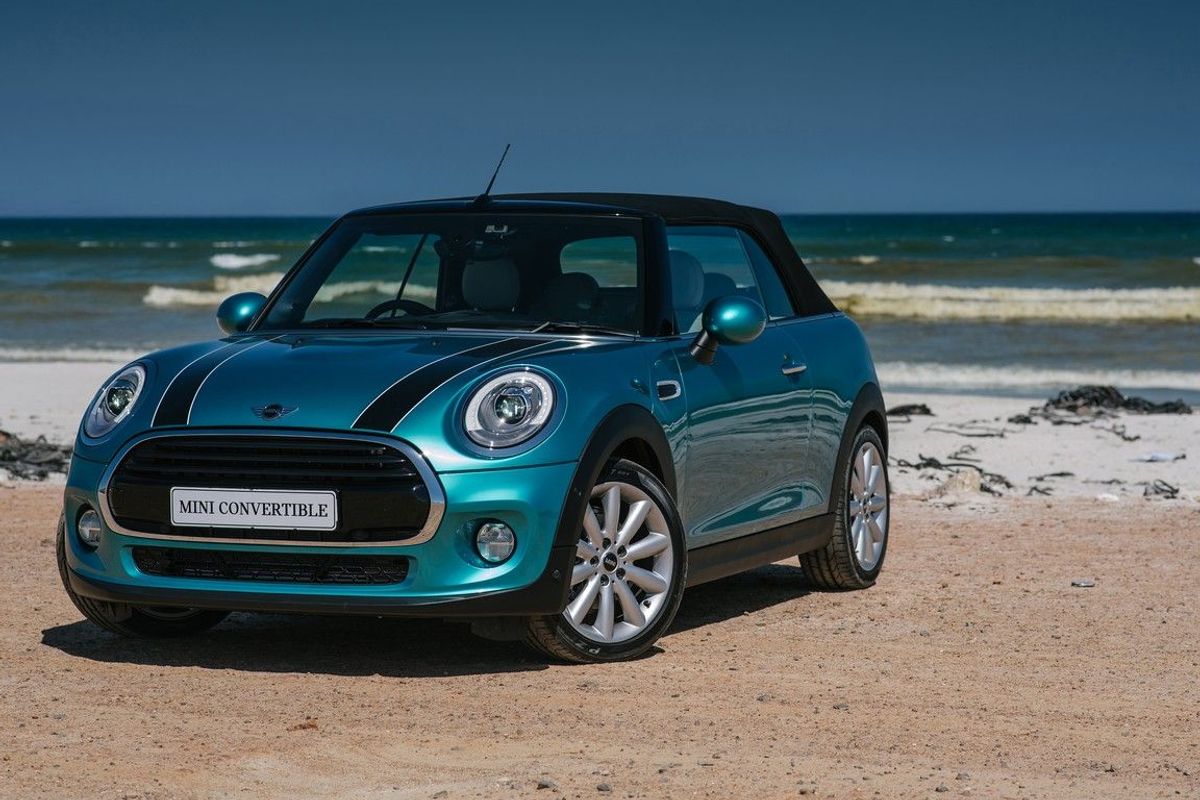
The Mini Cooper's Convertible and Clubman offshoots are niche offerings that exude cool and funky attitudes aided by a playful chassis tuned for optimal driver enjoyment. We had a quick blast at the local launch to get a feel for the newcomers.

Topless driving

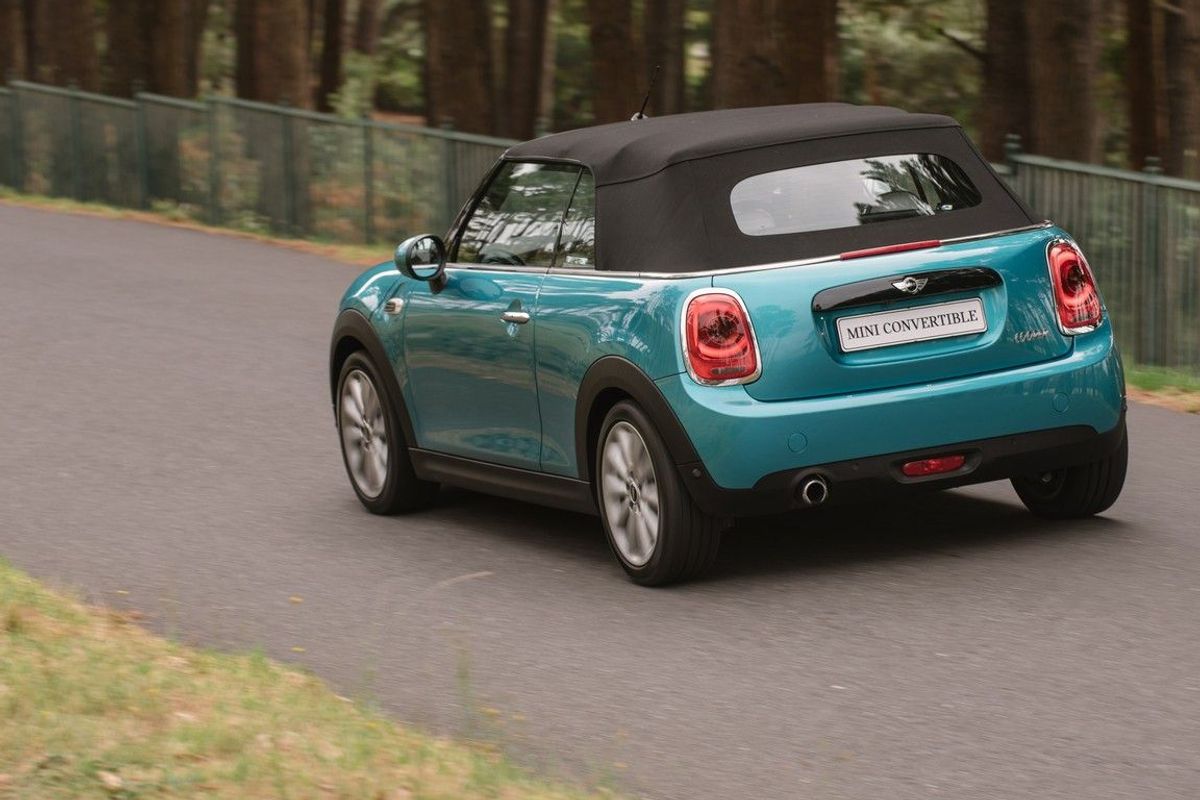
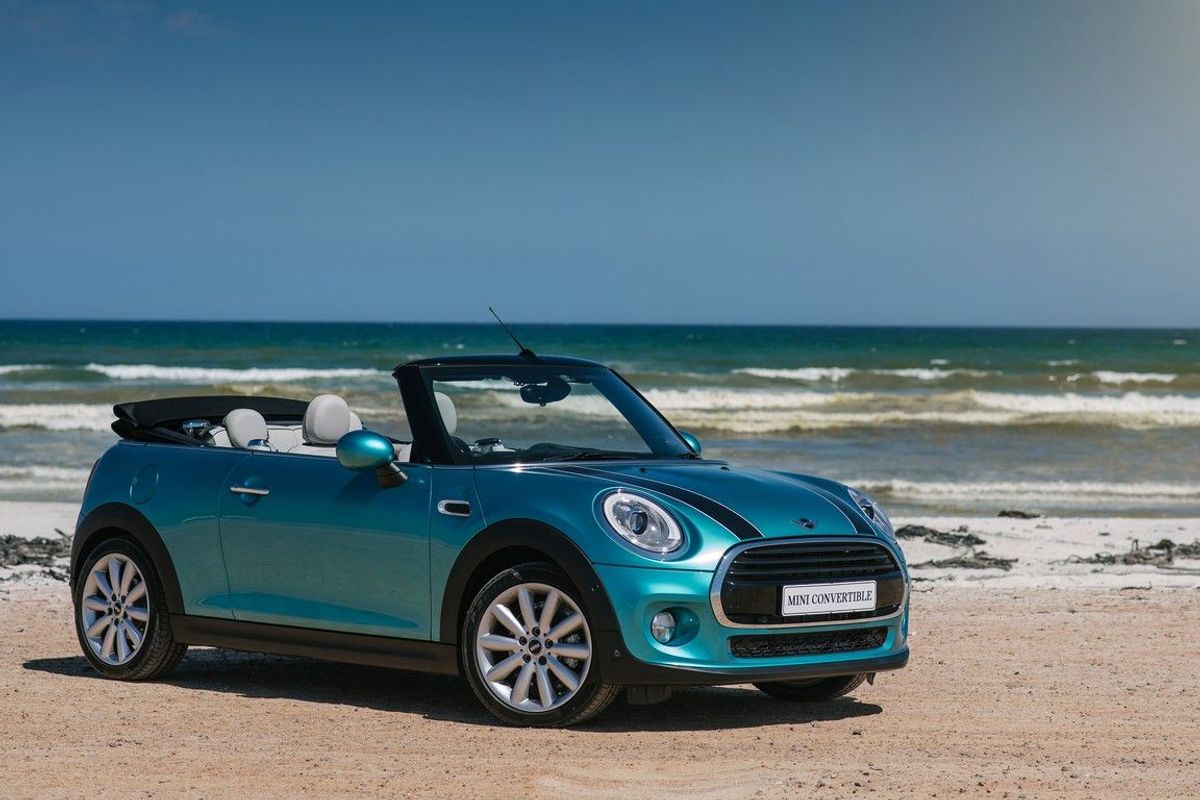
First we stepped into the Mini Cooper S Convertible with the top down on a windless day in the Cape; had it not been at the height of summer, it would have been perfect drop-top weather. The S badge means that it has the 2.0-litre turbo motor that produces 141 kW and 280 Nm. After about 10 minutes of roof-down scalp-frying, we slowed down to 30 kph and pressed the button to close the roof. It takes just 18 seconds to get the roof up or down (according to Mini).

Improved chassis

The previous-generation Mini Convertible suffered from a lack of body stiffness (because there’s no solid roof to add rigidity) and, as a result, it wobbled and shook a bit when driven enthusiastically, especially on less than perfect roads. The new one has certainly improved in this department and the Cooper S model I drove felt more tightly packaged and less prone to emit creaks and vibrations through the cabin and windscreen. The Convertible is actually bigger than its predecessor in every direction: it is 98 mm longer, 44 mm wider and 1 mm taller. The wheelbase has been lengthened by 28 mm as well and there’s more luggage room in the Mini's boot. You can load 215 litres in the boot when the roof is up and 185 litres when the roof is down.

Engine and gearbox

Mini offers the Convertible with six-speed gearboxes. You can opt for either a six-speed manual or automatic and, in the Cooper S Convertible, a six-speed sports automatic. The standard Cooper is powered by a 100 kW, 220 Nm three cylinder turbopetrol motor, but we didn’t get a chance to sample it. Driving enthusiasts will be pleased to know that the Cooper S has quite a bassy backing track. Back off the throttle and let it coast and the exhaust tips will pop and splutter until the car comes to a standstill. The Convertible still feels nimble and, quite rapid, when you drive it quickly, but the ride quality is rather stiff by compact car standards; the question of whether it will become annoying or tiresome in the long run would require a longer evaluation to answer.  

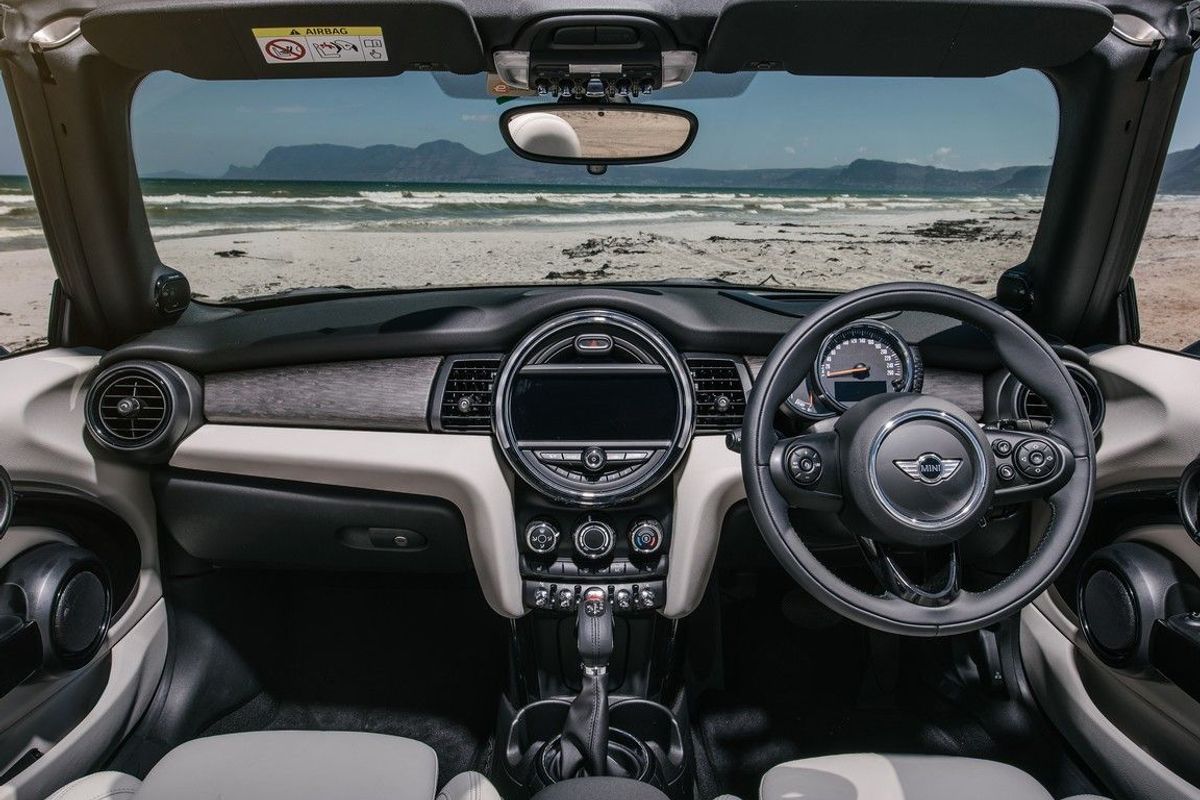
Interior comparison

The Convertible and the Clubman feature a full range of Mini’s connectivity options, including Bluetooth, USB and auxiliary input and navigation can be ordered as well. There are plenty of options to choose from as well: you can spec up your Mini with a reverse camera, park assist and a head-up display. In terms of personalising the exterior, the Convertible and Clubman are available in 15 and 12 exterior colours respectively. Wheel options are abundant and range from 16-inch to 19-inch. The Cooper S models are also available with a John Cooper Works aero kit to give them more street cred.

Clubman drive

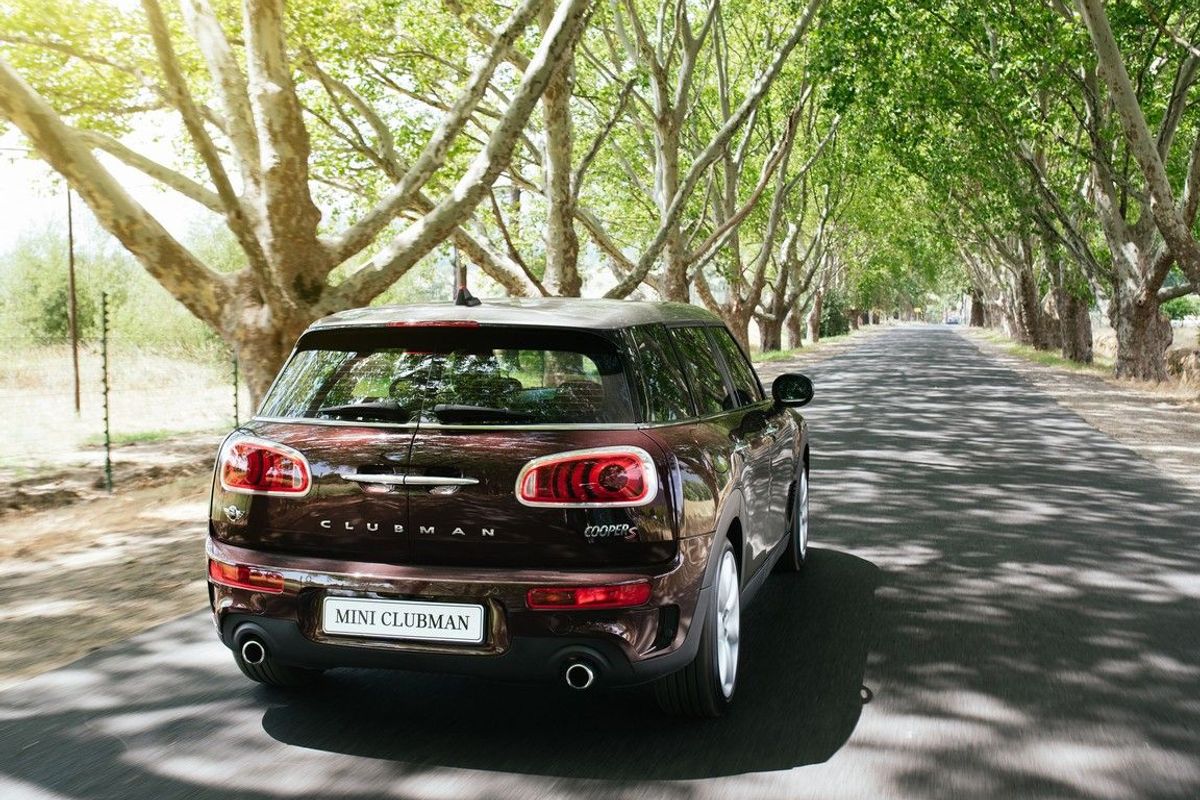
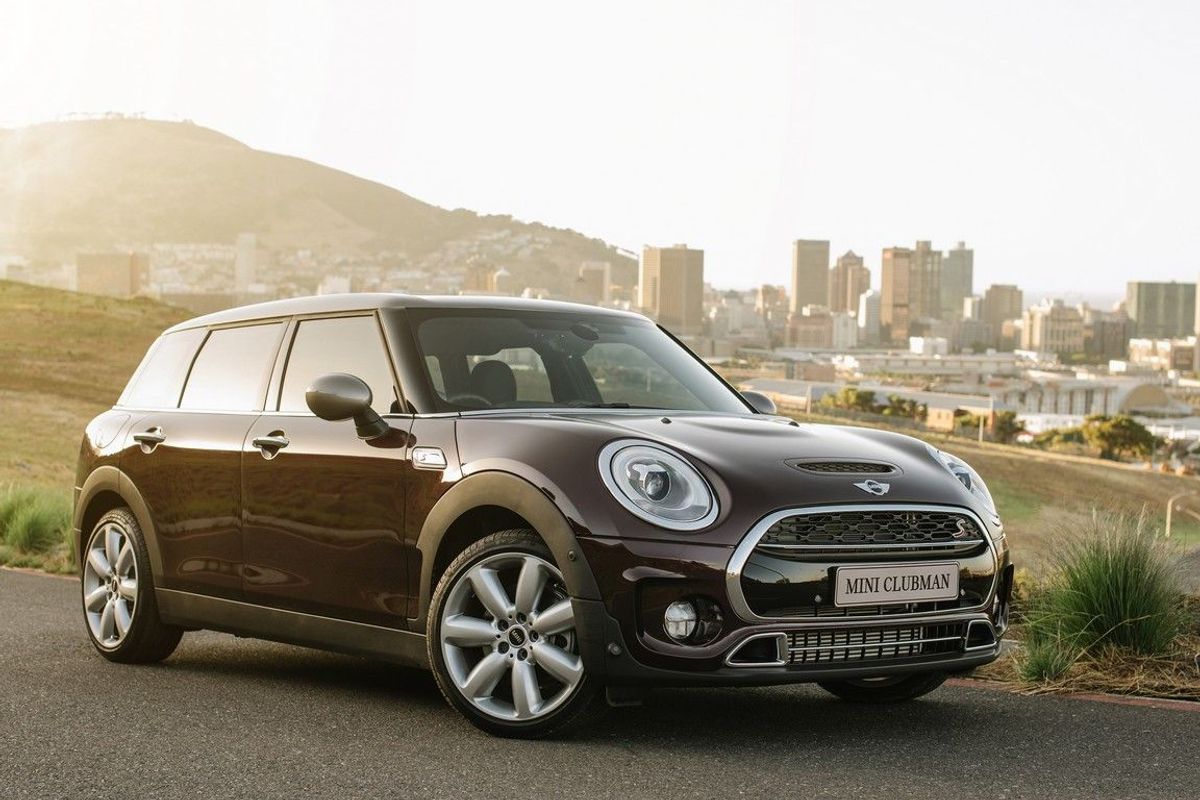
The Mini Clubman is a strange model in the Mini lineup. It has historical significance as the first Clubman model appeared in the 1960s. In its current guise, it’s difficult to categorise, because it’s not quite a hatchback and definitely not a panel van. You must really want a Mini to choose a Clubman as a family car.


A photo posted by Cars.co.za (@carssouthafrica) on

Cool factor

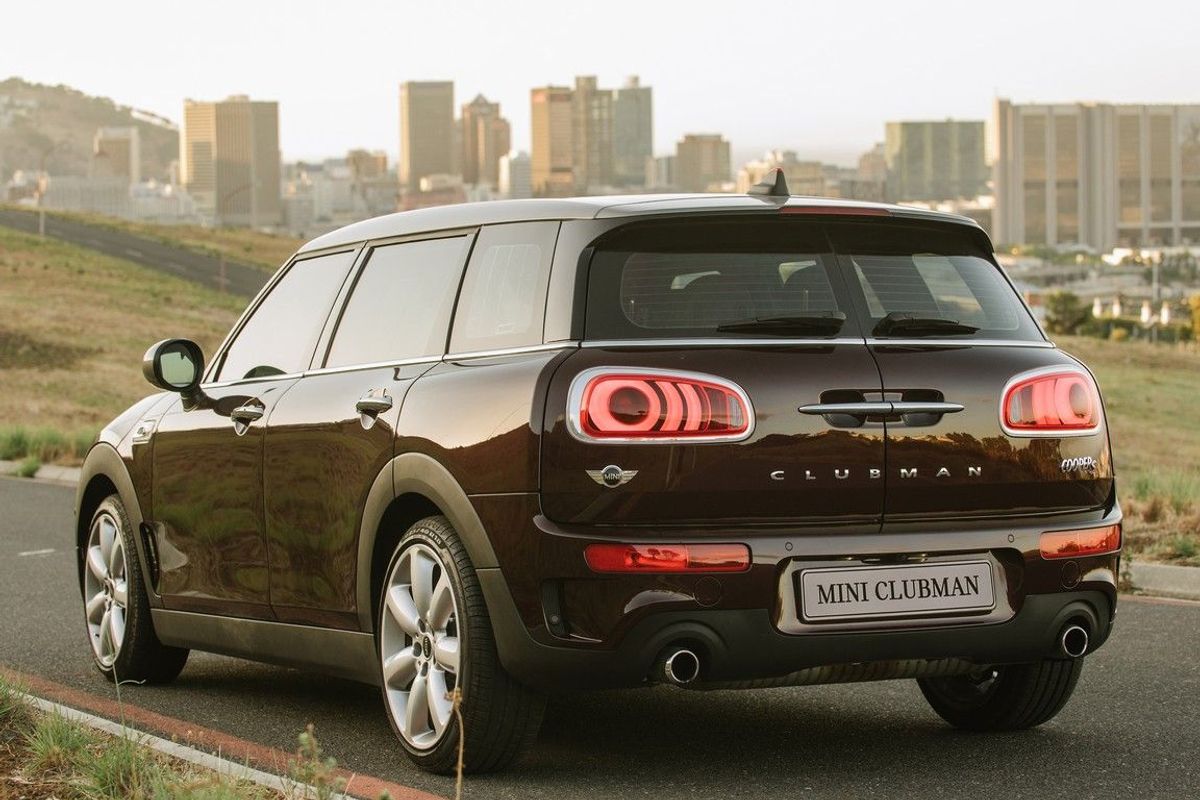
The Clubman still manages to be cool, however. There’s something about the rear doors that open like those of a delivery van that’s different and stylish and the car's overall shape is actually quite pleasing to the eye. The rear lights on the panel doors don’t actually function as brake lights but only illuminate when the headlights are switched on. The brake lights are in actual fact those red reflectors on the rear bumper and the high-level light below the roof spoiler.

The Clubman has also grown in size compare with its predecessor. Compared with the Mini 5-door it is 270 mm longer, 90 mm wider and has a 100 mm longer wheelbase. The rear has three individual seats, while the luggage bay can accommodate 360-litres (a little bit smaller than a VW Golf) and when all the seats are folded down offers 1 250 litres of utility capacity. The rear seats spilt and fold in a 40:20:40 configuration for an added bit of extra functionality.


A photo posted by Ashley Oldfield (@ashleyoldfield) on

Different gearbox available

The Clubman utilises identical engines and outputs to the rest of the Mini lineup, but because of its bigger platform, it can accommodate an eight-speed transmission. It is available as an option on the Cooper S Clubman and its main advantage is a fuel economy improvement. The claimed fuel consumption for the six-speed manual is 6.4L/100km and eight-speed 5.9L/100km. The 0-100 kph time is also one-tenth faster at 7.1 seconds for the eight-speed auto.

Driving time

The Mini Clubman’s extra size isn’t noticeable out on the road and the handling remains fun when you push on. The tyres reach their adhesion limits long before the chassis feels like it’s at its performance limits. I’m personally still not a fan of the electronic steering setup in the Mini range as the steering can feel a bit vague and disconnected from what the front wheels are doing when the going gets faster. The soundtrack isn’t as good as in the Convertible either, there’s no excited popping and burbling of the exhaust in the Clubman which, could certainly have added to the Cooper S’ fun factor.

Mini Convertible and Clubman Pricing

Convertible

Cooper Convertible 6-speed manual                       R368 000

Cooper Convertible 6-speed auto                            R385 310

Cooper S Convertible 6-speed manual                   R435 360

Cooper S Convertible 6-speed auto                         R452 539

Clubman

Cooper Clubman 6-speed manual                           R343 513

Cooper Clubman 6-speed auto                               R361 513

Cooper S Clubman 6-speed manual                        R417 872

Cooper S Clubman 8-speed auto                            R436 346

Budget 2016: Motorists slapped with levies, higher emissions tax

Although Finance Minister Pravin Gordhan’s 2016 Budget included personal income tax relief of R5.5 billion for lower- and middle-income earners, motorists will feel the brunt of a 30c/L fuel levy hike, a new tyre tax as well as an increase in CO2 emissions tax.

Consumers would have been relieved that personal income tax brackets have only been partially adjusted to compensate for inflation, that monthly medical tax credit allowances were upped and that there was no hike in VAT, at least not for the immediate future.

However, although ongoing oil price weakness and marginal improvements in the Rand/Dollar exchange rate will see reductions in fuel prices in March 2016, there will be an increase of 30c/L in the general fuel levy to R2.85/L for petrol and R2.70/L for diesel on April 6 2016. The Road Accident Fund levy will stay the same on R1.54/L.

What’s more, a new tyre levy of R2.30/kg per tyre will take effect on October 1 2016 for the purposes of financing recycling programmes, which, although it will benefit the environment, which is laudable, will further drive up the cost of vehicle ownership.

Not only will it be more expensive to fit your vehicle with a new set of tyres, but in terms of replacing a vehicle, new vehicle prices, which are already expected to increase by up to 20% in a little over a year due to the Rand’s weak exchange rate, will be further affected by a hike in the government’s carbon dioxide emissions tax.

The rate will increase from R90 to R100 for every gram above 120g/km for passenger vehicles, and from R125 to R140 for double cabs.

Given the recent interest rate hike and the impact of Budget 2016’s fuel and tyre levies and higher taxation on vehicles’ carbon emissions, the only way to reduce the running costs of a vehicle is by saving fuel.

Want to save on fuel? Consider this…

Most Fuel Efficient Cars in South Africa

Fuel Efficient Driving Techniques

For more detail on Minister Gordhan’s 2016 Budget Speech, click here.

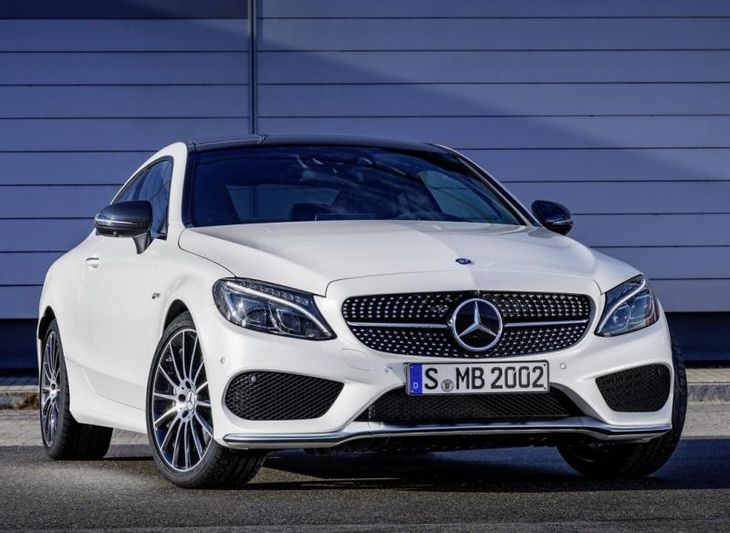
Mercedes-AMG C 43 Coupe Revealed


Mercedes-AMG welcomes a new member to the C-Class family, the C 43 4MATIC Coupe.

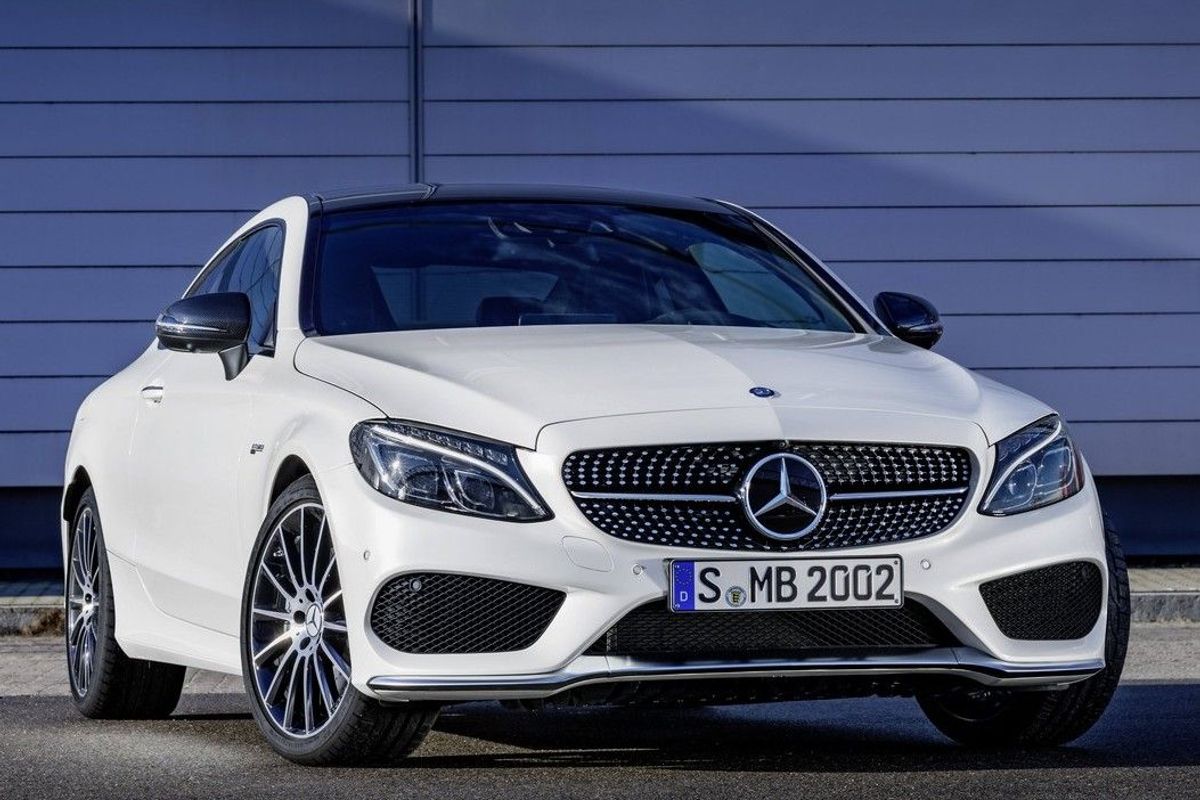
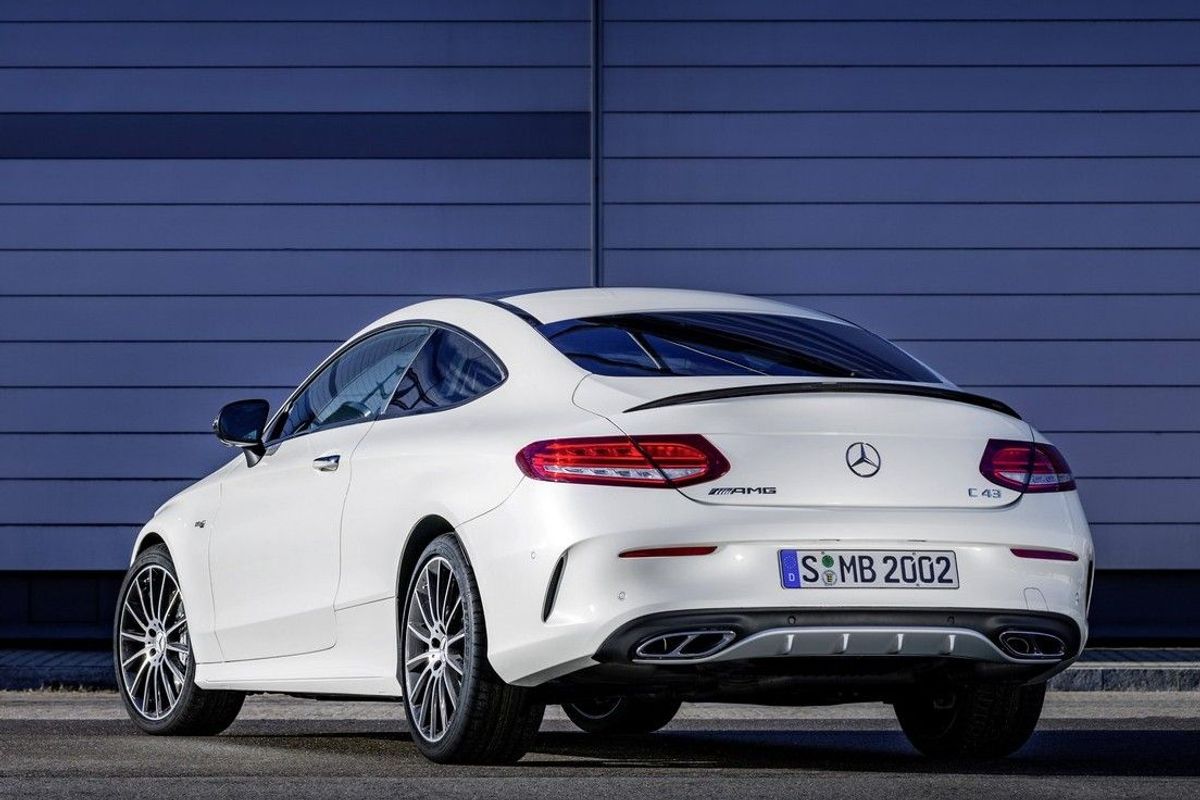
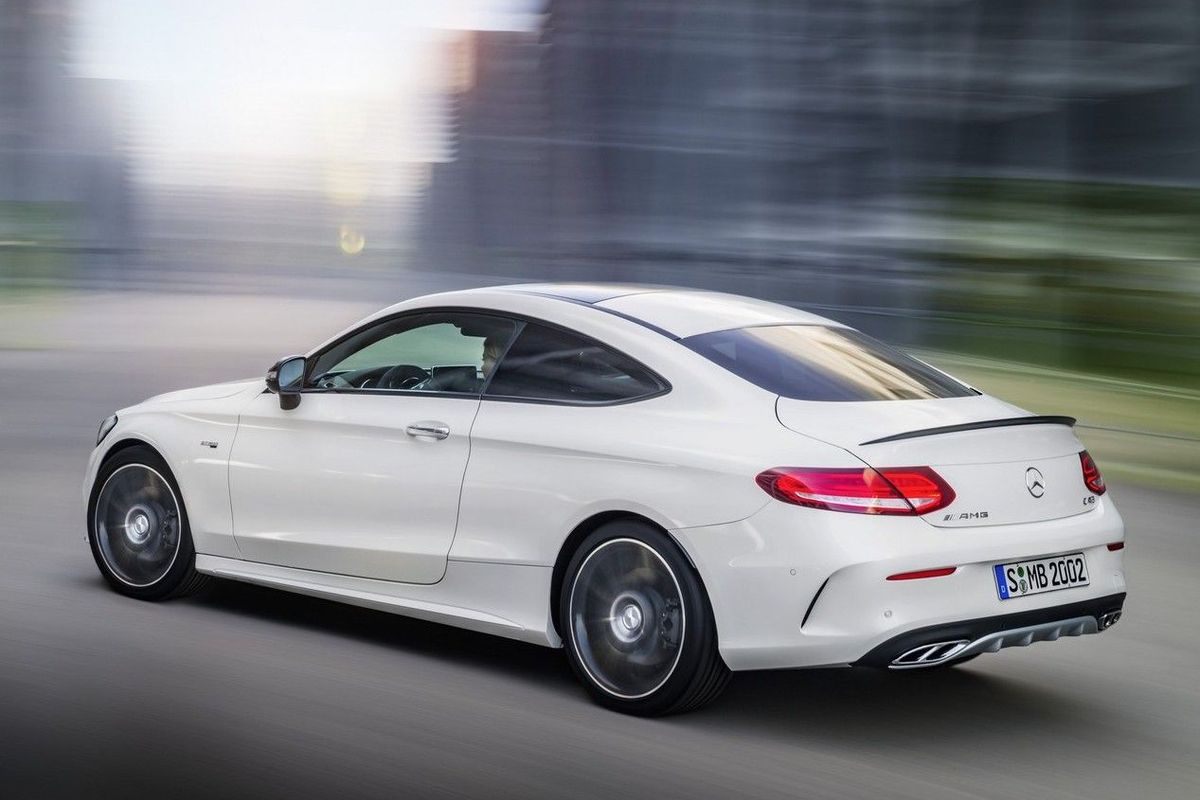
As part of the growth strategy of Mercedes-AMG, a new and exciting product will make its debut at the 2016 Geneva Motor show next week. Mercedes-AMG will showcase the C 43 Coupe that marks the introduction of a new series of ‘43’ models.

Mercedes-Benz South Africa has confirmed that the C 43 4MATIC Coupe will be available in the third quarter of 2016.

What makes it special?   


Well, performance is a good place to start. The C 43 Coupe is powered by a high-revving 3.0-litre V6 twin-turbo engine that develops 270kW and 520Nm. Power is sent to all four wheels via the AMG Performance 4MATIC all-wheel drive system with a front to rear torque bias of 31 and 69 percent. Power is transferred using a 9G-TRONIC automatic transmission with a double-declutching function and short response times.  

As is to be expected, performance is swift with 0-100 kph achieved in 4.7 seconds before reaching an electronically limited top speed of 250kph.

The C 43 Coupe features AMG Ride Control sports suspension, adopted from the Mercedes-AMG C 63, with three-stage adaptive variable damping. Five driving modes are available to the driver depending on your preference and three-stage Electronic Stability Program (ESP) is also fitted.

Stopping power is provided by large internally ventilated compound brake discs with perforations. The discs are 360 mm in diameter up front while the rear discs are 320 mm in diameter.

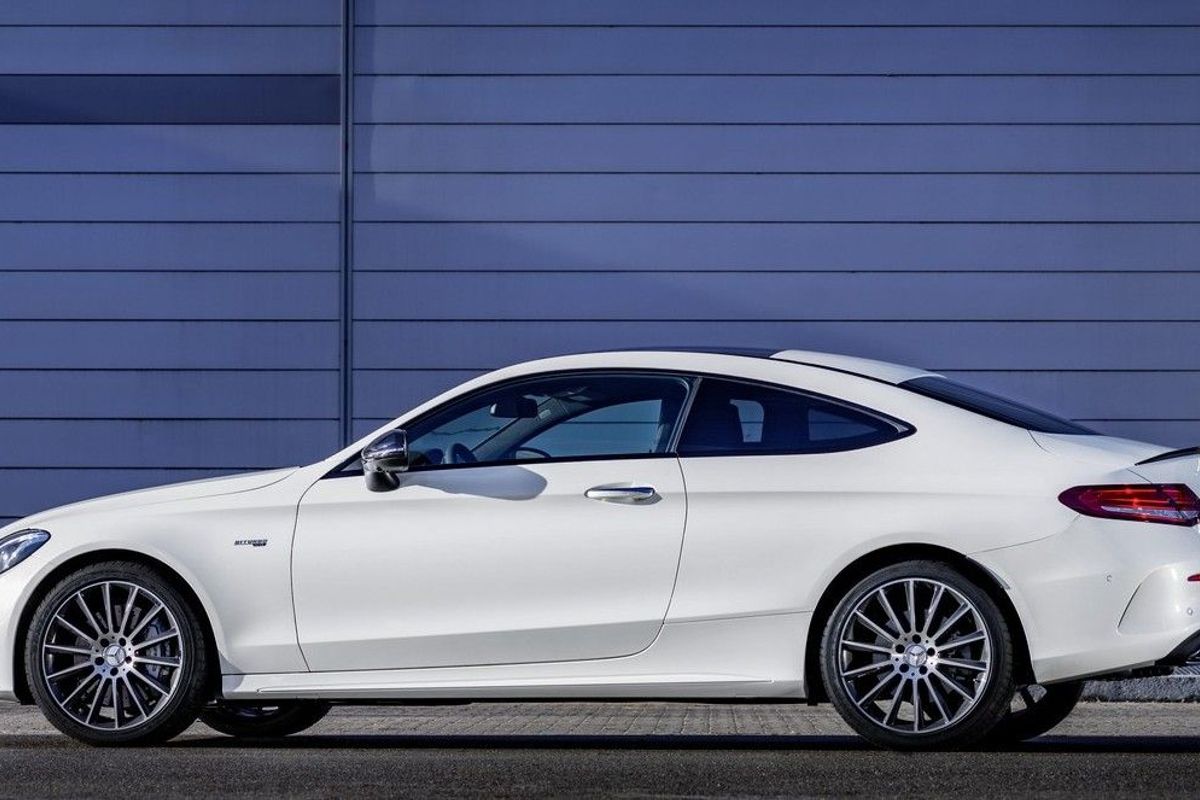
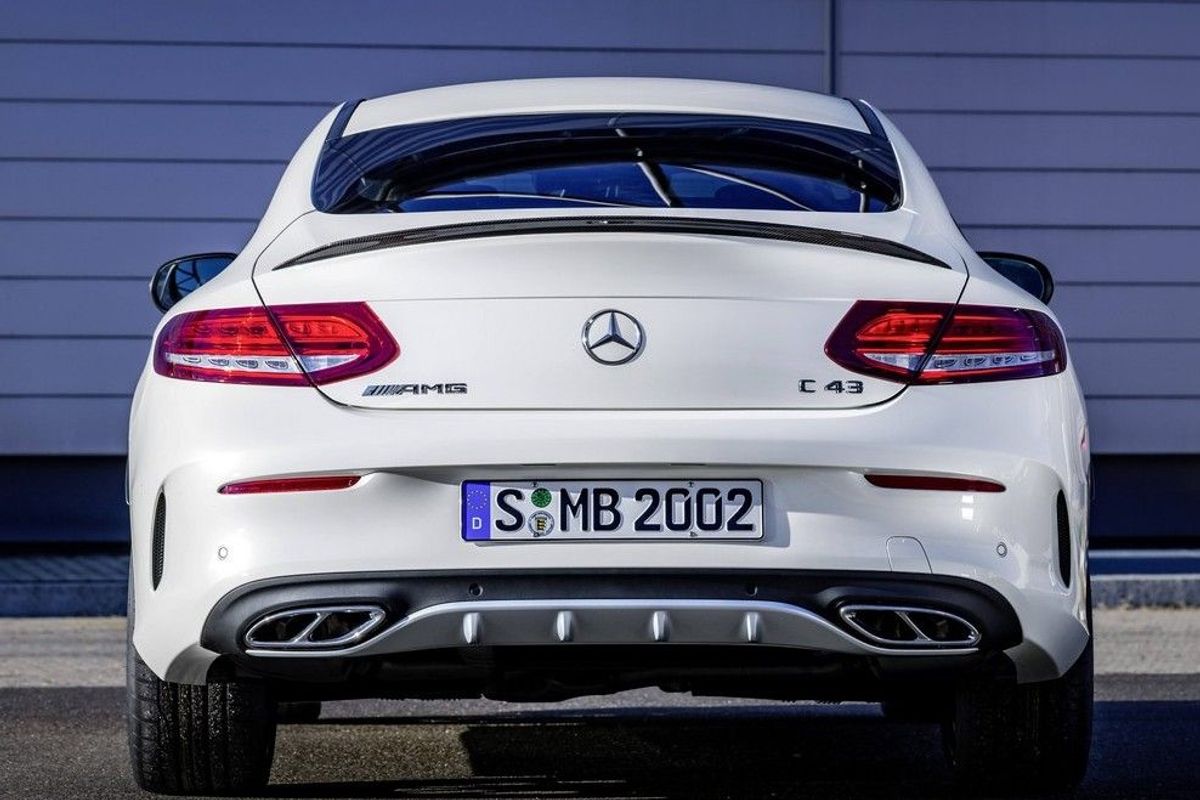
In terms of styling, the C 43 Coupe rides on 18-inch AMG light alloy wheels with 5-spoke design and they are painted in high-gloss black with a high-sheen finish. The model features a diamond radiator grille with chrome-plated pins and a louvre in high-gloss black with AMG lettering. A silver chrome front splitter is also fitted. The rear apron features a matt iridium silver diffuser insert and two chrome-plated tailpipes.

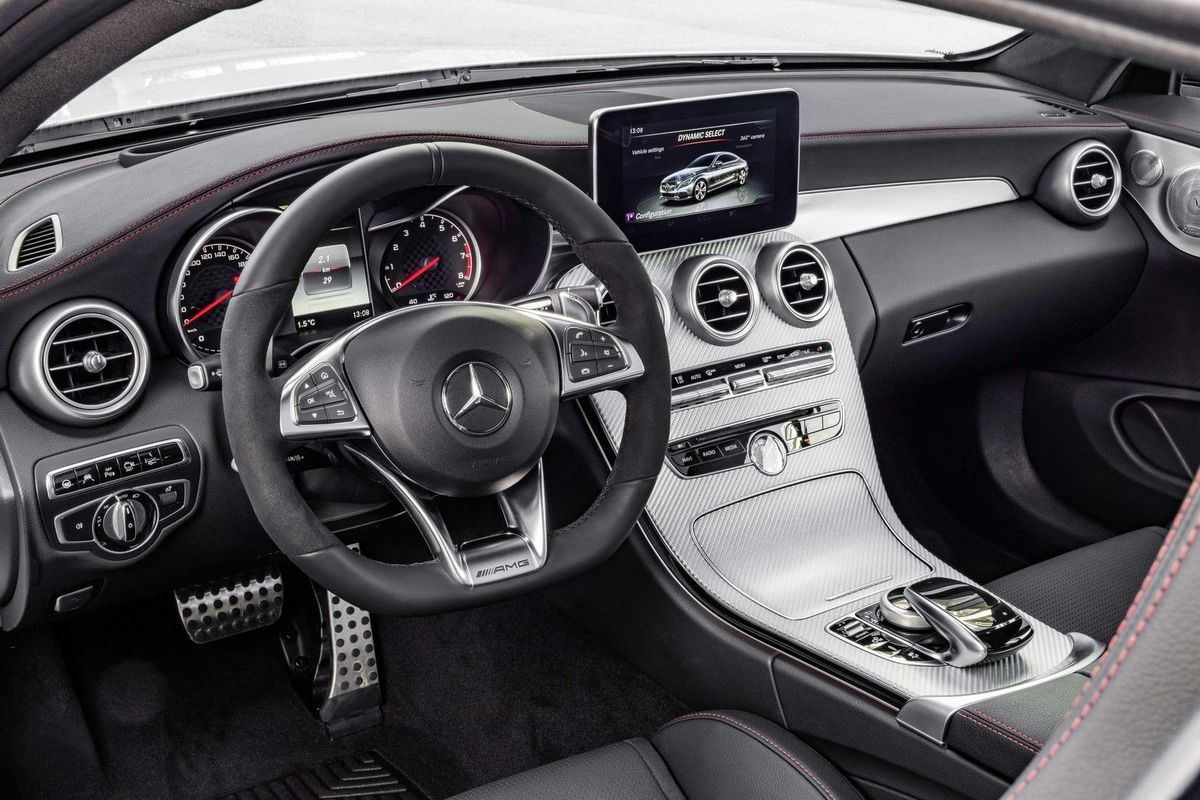
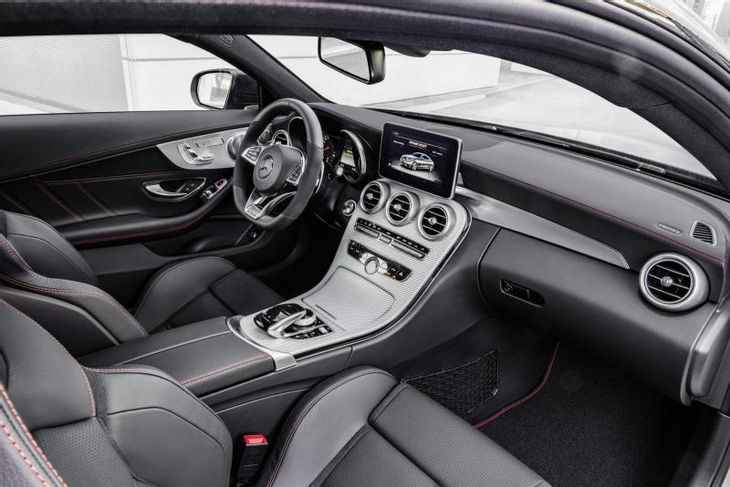
On the inside the C 43 Coupe features a flat-bottomed, multifunction sports steering wheel wrapped in black leather and finished off with contrasting topstitching. The sports seats feature improved lateral support and are upholstered in ARTICO leather and DINAMICA microfibre. The instrument panel is also trimmed in ARTICO, as are the armrests, door panels and centre console. Aluminium trim pieces in the instrument panel and doors provide contrast in the cabin. The instrument cluster features two round tube-shaped dials as well as a 4.5-inch multifunction colour display with a Racetimer and a 280 kph scale with a chequered-flag design.

The Mercedes-Benz C 43 coupe will be a great addition to the coupe range as it bridges the gap between the normal models and the fire-breathing AMG derivatives. If your budget can't stretch to the V8-powered C 63, then this is likely to offer the best bang-for-buck value in the range. 

More Content

Mercedes-AMG GT S – We drive the athletic V8-powered monster

Mercedes-Benz C-Class Coupe – What to expect

Volvo V40 Gets Facelifted


The Volvo V40 is receiving some love with cosmetic and trim changes for the 2017 model year.

Volvo’s popular V40 and V40 Cross Country derivatives are being updated and the changes will include cosmetic and trim enhancements. The V40 range will still offer three diesel and three petrol engines across four trim levels. The facelifted Volvo V40 and V40 Cross Country can be expected in South Africa in the third quarter of 2016.

What’s changed?

The most noticeable change on the updated V40 and V40 Cross Country is the inclusion of Thor’s Hammer. The impressive light signature was first introduced on the Volvo XC90 and is now also a feature on the S90 sedan and V90 station wagon. The front of the vehicle will also feature new grille designs and an all-new Volvo Iron Mark.

Five new colours will also be available to customers and these include Amazon Blue, Denim Blue and three existing colours used on other Volvo products including Bursting Blue, Mussel Blue and Luminous Sand.

New trim level nomenclature (Momentum and Inscription) will be used on the updated V40, first seen on the XC90. A total of eight new wheels designs will be offered with the updated V40 and V40 Cross Country derivatives.

Taking inspiration from the Volvo Concept Estate, a new upholstery called City Weave will be offered as well as a new Charcoal or Blond steering wheel option. A number of new interior panel trims will also be available to customers and these include Milled Aluminium, Black Grid Aluminium and Stealth Aluminium. The doors panels will feature accent trim colours with contrasted stitching and a black headliner will be offered as an option for the first time for all models in the range. In addition, R-Design and Inscription derivatives will get new tread plates and a new key fob with the new Volvo logo will be available too.

The Volvo On Call smartphone app has been updated but is still in the development and planning phase for release in South Africa. The app allows for remote access and controls a wide range of in-car features. New functionality for the app includes calendar and navigation integration as well as PC-based use.

In an effort to improve the in-car experience, Volvo’s CleanZone technology will work to keep air in the cabin fresh and clean by filtering air before it enters the cabin.

More Content

Volvo V40 T5 R-Design Review

Volvo V40 Cross Country D4 Review