According to the National Association of Automobile Manufacturers of South Africa (NAAMSA), domestic car sales showed further decline in December 2015, with the exception of light commercial vehicles, which registered an increase of 3.9%. Toyota came out on top, once again, as South Africa’s best-selling car brand while the Ford Ranger claimed top spot as the best-selling vehicle in the country.
New car sales summary – December 2015
49 250 aggregate new vehicle sales down by 4.1% (2 171 units) compared to December 2014
17 391 export sales down by 20.3% (4 439 units) compared to December 2014
33 025 passenger car sales down by 8.2% (2 715 units) compared to December 2014
13 711 light commercial vehicles up by 3.9% (599 units) compared to December 2014
Top Selling Car Brands in South Africa December 2015
Brand
Total Sales
Market Penetration %
1. Toyota
9 117 (-2 707)
18.5%
3. Volkswagen
8 869 (+1 699)
18.0%
3. Ford Motor Company
6 345 (-492)
12.9%
4. GMSA
5 231 (+681)
10.6%
5. Nissan
3 035 (-1 164)
6.2%
Top Selling New Cars in South Africa – December 2015
South African new car sales have declined year-on-year for two years in a row with sales declining by 4.1% overall in 2015. Factors contributing to the decline include slow down in the domestic economy, interest rate hikes, disposable income pressure and new vehicle inflationary pressure.
2015 was a tough year for the South African automotive industry, particularly at dealer level, despite incentives and the 12.5% contribution made by the car rental sector. Trading conditions were very competitive across all 52 brands with a total of 2 595 model derivatives. New car sales turnover for the year grew by 3.6% with estimates at R235 billion for the year. All-time high exports are estimated to have contributed about R80 billion to the total industry revenue in 2015.
New Car Sales Outlook for 2016
NAAMSA predicts a "lacklustre" year ahead for the South African automotive industry. Exports however, are predicted to remain positive in 2016 with an expected export increase of 42 000 units or 12.5%.
With the downward trend in the economy expected to continue well into the year, pressure will remain with economic growth of 1% or less expected in 2016. The weakening Rand will put pressure on inflation which will see prices of new vehicles increasing during the year. The current drought will further hamper economic growth. Expected increases in interest rates, administered prices of electricity, water and fuel will continue to pressurise consumer disposable income. In conclusion, NAAMSA projects that 2016 will yield a decline of between 3.0% and 5.0% in new car sales.
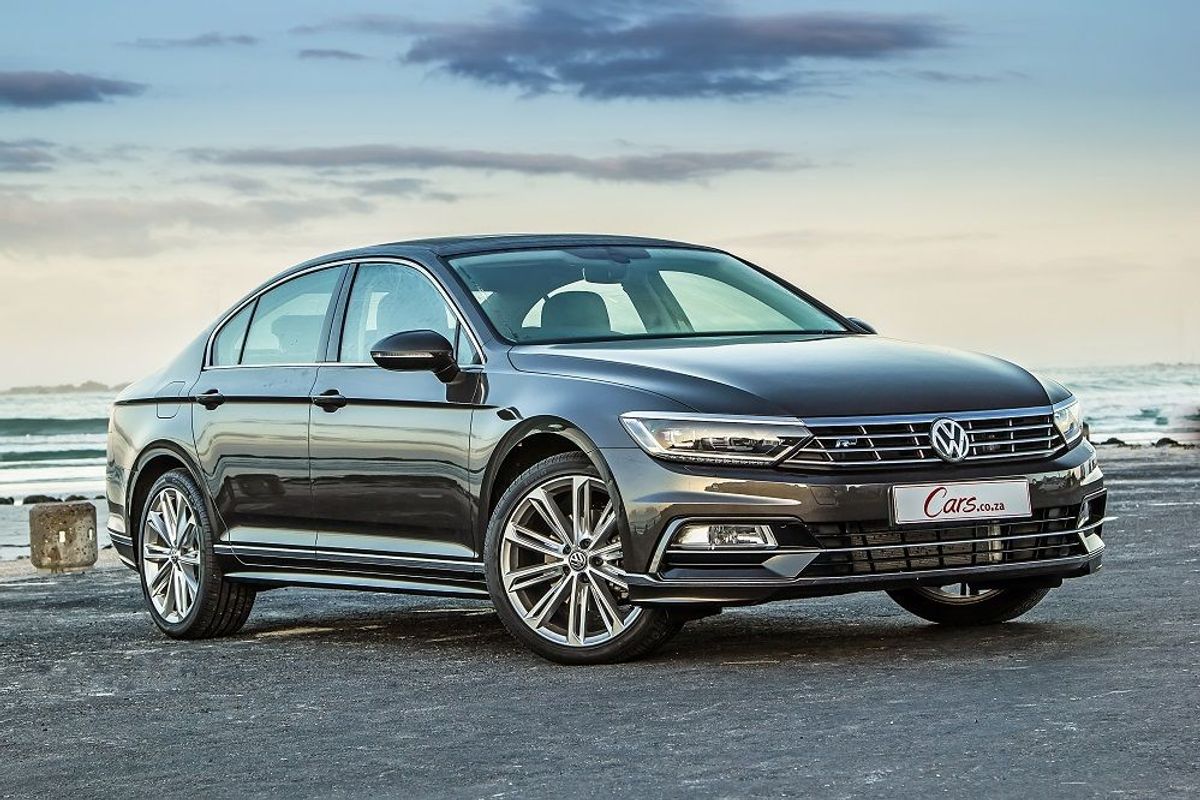
Volkswagen Passat 2.0 TSI R-Line DSG (2015) Review
We got to grips with the flagship 2.0 TSI R-Line model to see if this Passat can succeed where its predecessors struggled.
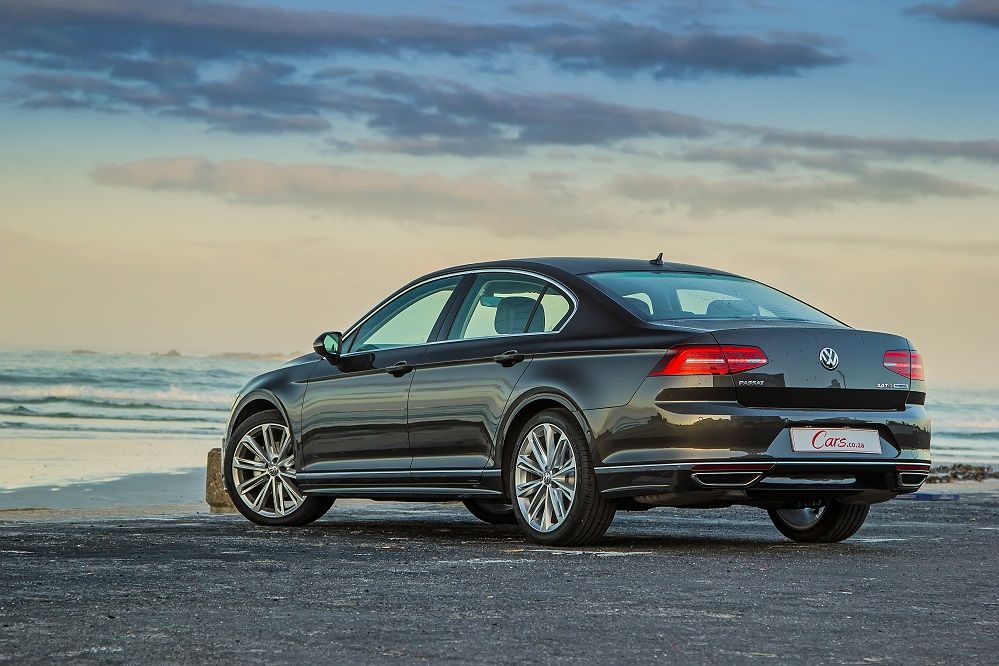
The Volkswagen Passat hasn’t had much sales success in South Africa. Pricewise it sits just below the compact executive sedan segment, but given the popularity of the Mercedes-Benz C-Class and BMW 3 Series (to name just two examples), meagre sales figures suggest the VW sedan cannot match the brand cachet of those premium offerings. Globally however, the Passat is a top seller for the Wolfsburg-based firm, which has sold more than 22 million units of the sedan (now in its eighth generation). We got to grips with the flagship 2.0 TSI R-Line model to see if this Passat can succeed (in South Africa) where its predecessors struggled.
Subtle Changes
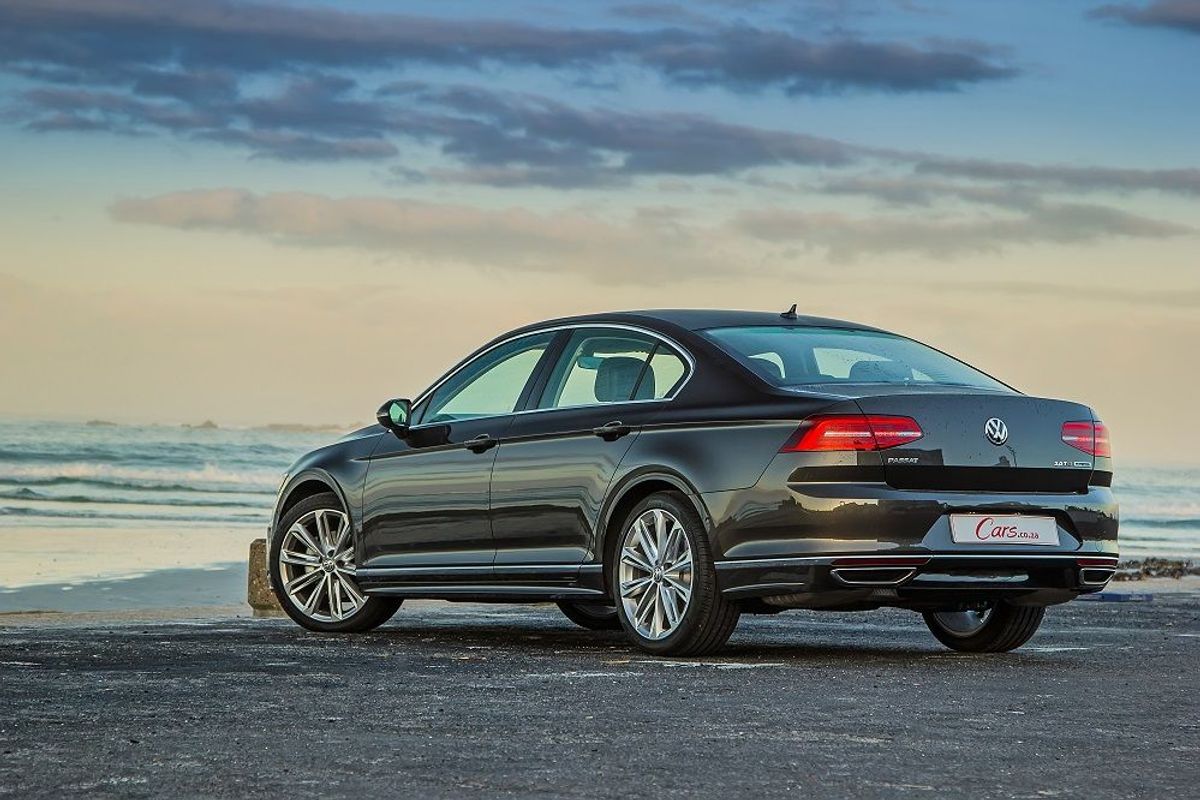
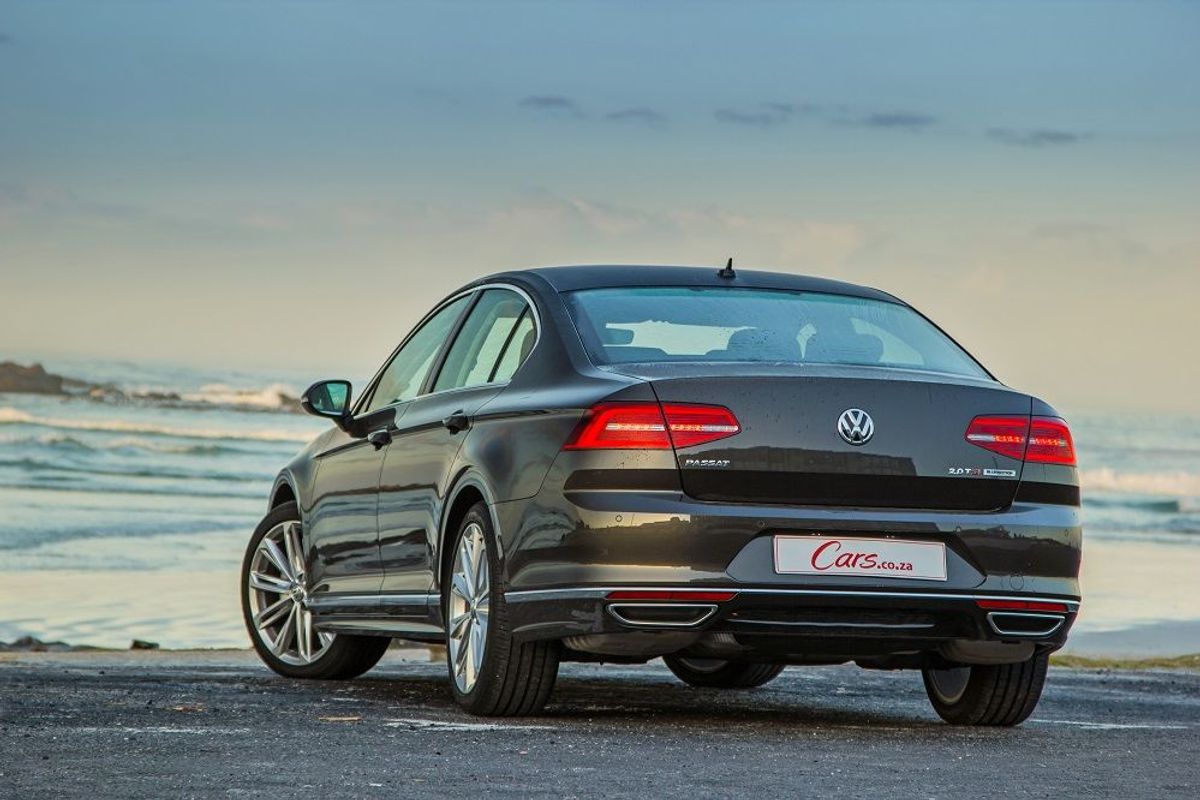
Volkswagen excels at making its products look all-new even though aesthetic changes are very subtle. The New Passat is a bit wider (12mm) and lower (14mm), but ever so slightly shorter (-2mm) than before. The wheelbase, based on VW’s adaptable MQB platform is longer (79mm) and that results in a more spacious cabin. Furthermore, VW has reduced the Passat’s weight by 85 kg, which is not a lot, but in the never-ending quest for better fuel efficiency, every kg counts. The front end has a lower-profile and is styled with VW’s sharp-looking three-tier grille that looks like it could have been designed by Gillette! Most of the major changes are beneath the sheet metal, however…
Smooth Engine
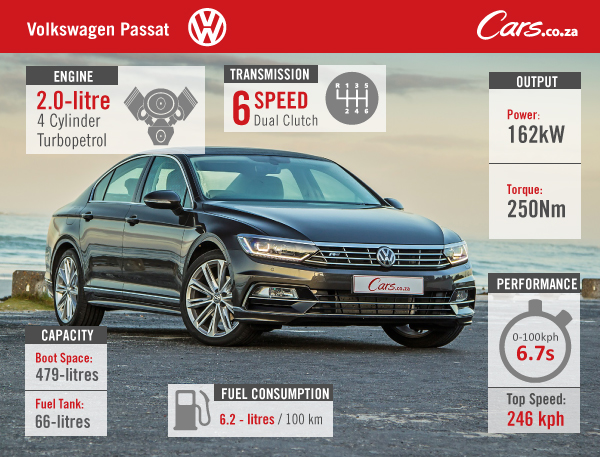
Volkswagen’s initial model line-up consist of petrol models only, but a 2.0-litre turbodiesel model will join the ranks halfway through 2016. Our unit here is equipped with the top of the range 2.0-litre turbopetrol engine. It produces peak outputs of 162 kW and 250 Nm of torque and is mated with a refined 6-speed DSG transmission. The petrol engine pulls smoothly from idle right to the top of the rev range although given the (early-shifting) characteristics the DSG box, it seems programmed with fuel economy in mind. Of course, in Sport mode the shifts are far snappier. If you don’t push on, the engine will barely crest over 2 500rpm before executing the next upshift. VW claims it’s possible to achieve 6.2L/100km, but during the test period we were still impressed with the 8L/100km it consumed in mixed conditions.
Upper-class Interior
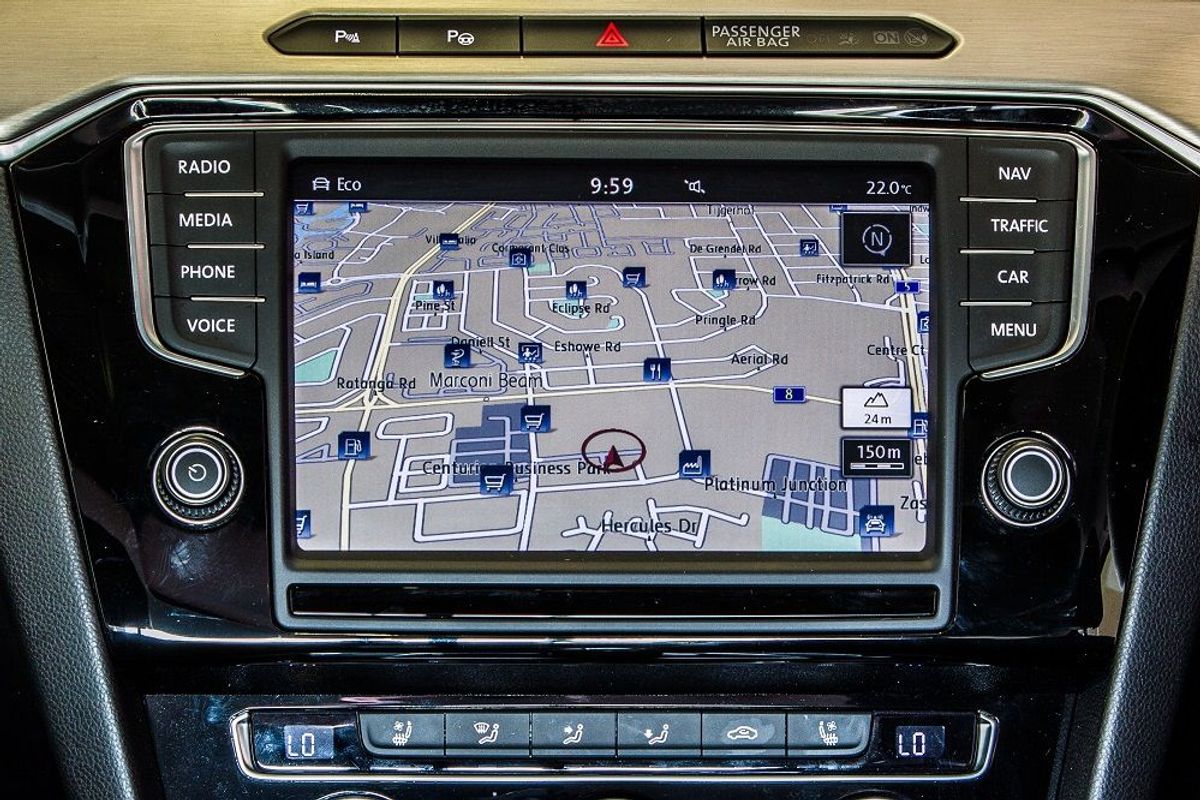
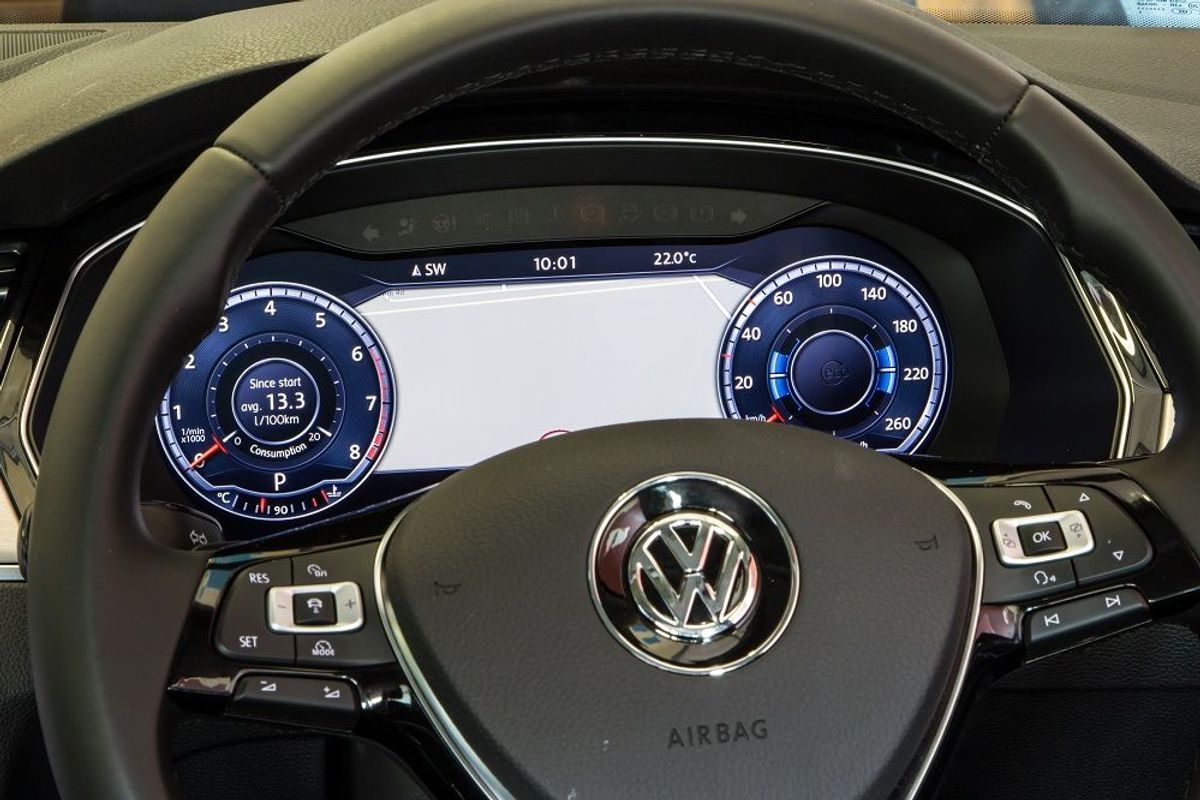
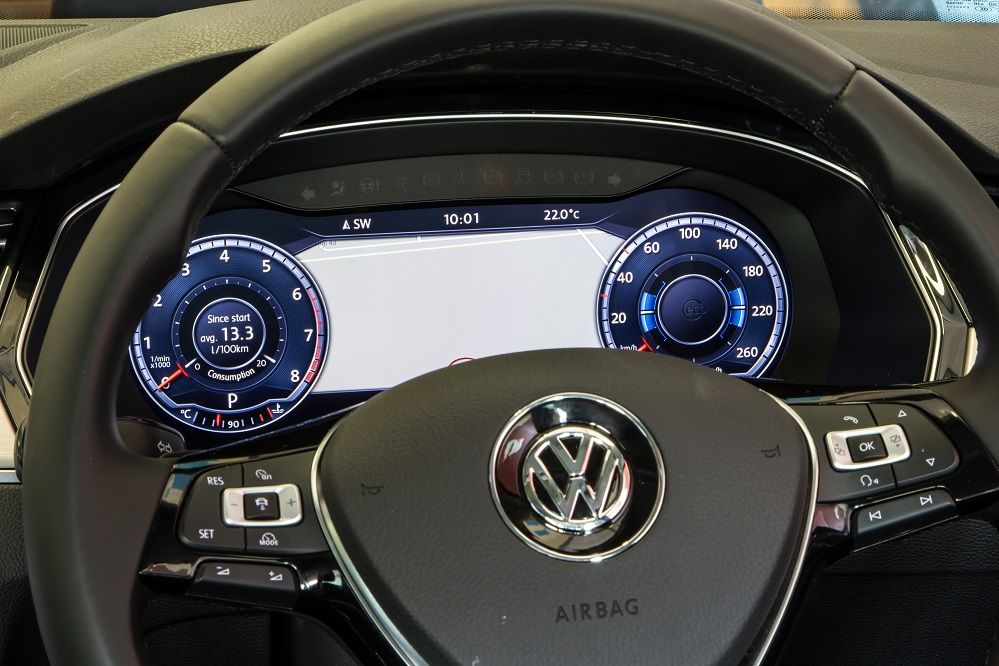
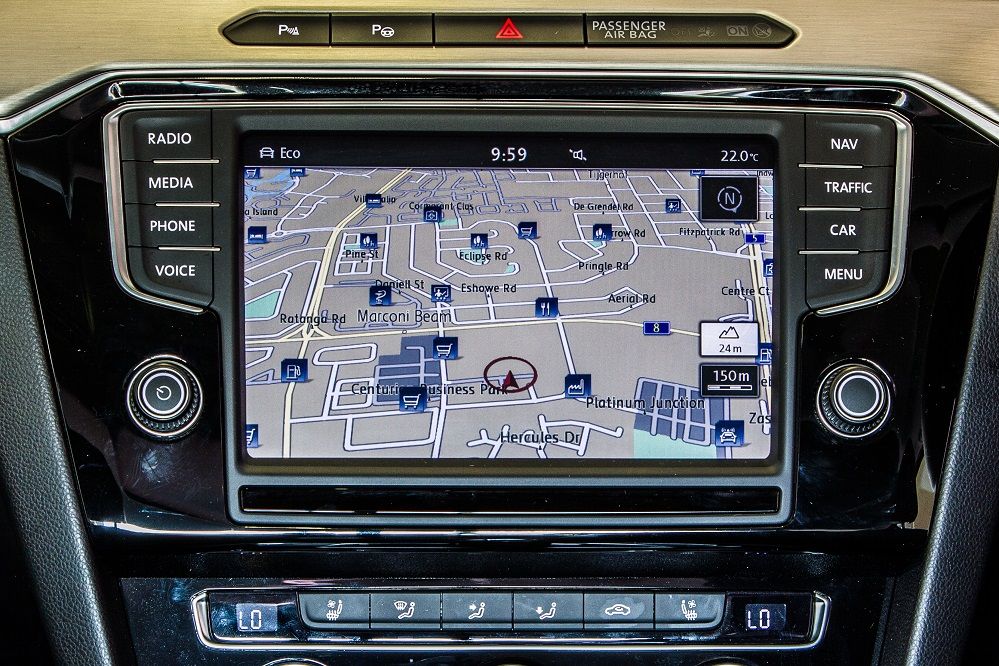
If you are considering the purchase of a new Passat, its well-finished and -appointed interior will be a major drawcard. There’s a premium feel throughout the cabin: the ventilation apertures span the length of the facia, the metallic trim is tasteful and the switchgear feels substantial. Our model was specified with some options such as Nappa leather trim, front seats that offer 12-way electrical adjustment, ventilation and massage functions, a DynAudio Confidence Sound System and Active Info Display. The latter transforms the instrument binnacle into an adjustable digital display that looks suitably slick and expensive: you can customise what info is displayed and the resolution of the screen is particularly crisp. It functions much like the Audi TT’s Virtual Cockpit with the ability to display navigation (and, if specified, Adaptive Cruise Control settings) into the binnacle.
Space is in plentiful supply, whether you’re in the front, back or being loaded into (I mean loading) the boot. The Passat has always placed a premium on boot space and the new model offers 489 litres, which is capacious. The rear seats can be folded flat, providing more loading space if required. Rear legroom, thanks to the increased wheelbase is more than adequate, even for taller occupants.
Ride and Drive
The Passat delivers a very comfortable, almost unflappable, ride quality, which is not something that can be said of many of its sportier rivals. It soaks up road undulations and imperfections with ease and the harshest bumps are announced with no more than a soft, rubbery thud in the cabin. The cabin is quiet with engine noise reduced to nothing more than a background whirr. If you happen to push on in the Passat and show it some corners, it feels well-planted and grips rather well.
Safety Spec
As the Passat scored five-stars in the EuroNCAP crash tests it won’t come as surprise to learn that it the test unit was equipped with six airbags and had traction control as standard. There are a few nice additions that you may want to add from the options list, however, such as LED headlights with cornering functions, Parallel and Bay Park Assist with rear view camera and Adaptive Cruise Control.
Verdict
Volkswagen’s newcomer has several strengths as a spacious, yet luxurious family sedan: it delivers a composed, comfortable ride quality and has a refined and fuel-efficient powertrain. However, while the new interior layout is comparable with the best in the class, the evolutionary exterior design is still a bit bland. Also, be mindful of the options you choose as you can spend in excess of R100 000 — even without ticking all that many boxes. With a base price of R476 800, this 2.0TSI R-Line DSG undercuts the more premium German offerings by around R50k. Will that be enough to tempt buyers away from the premium marques? Perhaps not many, but certainly more than before.
Volkswagen Passat Pricing
Currently there are four petrol models in the Passat range: 1.4 TSI Comfortline manual and automatic – R378 800, 1.8 TSI Highline – R444 200 and this 2.0 DSG Highline – R476 800. All models come with a 3-year/120 000km warranty and 5-year 100 000km maintenance plan
Test Team Opinion:
"There's really not much to dislike about this car. I particularly appreciate the spaciousness and the interior design and fit and finish. If you're not a brand snob, the Passat should not be ignored." Hannes Oosthuizen
"It's difficult to not like the Passat and this latest version boasts an all-new digital instrument cluster. Refinement and quality are very high, but beware the pricey options." David Taylor
We Like: Plush ride, spacious interior and new digital instrument cluster
We Don’t Like: Pricey options
Also consider: Honda Accord, Ford Fusion, Mercedes-Benz C-Class, BMW 3 Series
Most searched car brands on Cars.co.za, by province
Here at Cars.co.za we have access to a lot interesting data. Some of the most interesting stats we come across pertain to which manufacturers our users search for most often when they're looking to purchase a vehicle listed on our site. We can even split this data into provinces to see which manufacturer is searched for most often per region.
Based on NAAMSA new car sales figures, you would expect Volkswagen and Toyota to consistently trump all the others, but as the majority of the stock listed on our site is constituted by used vehicles, the statistics reveal a different story.
We’ve taken our search results for December 2015 and extracted the top five most searched for cars in each province. Taking into account factors such as affordability, road conditions and access to dealers one would expect established, top-selling brands to rank well. While the results below reveal that Volkswagen dominates the top positions (6), Toyota is the most searched brand in two other provinces, premium brand BMW is the most popular in KwaZulu-Natal and second-most popular in three other regions. Luxury marques Mercedes-Benz and Audi are prominent too.
Here are the results:
Eastern Cape
Manufacturer
No. of searches
Volkswagen
20168
Ford
8565
BMW
8247
Mercedes-Benz
6149
Toyota
6143
Free State
Manufacturer
No. of searches
Volkswagen
14884
Toyota
4721
Ford
4575
BMW
4361
Mercedes-Benz
3724
Gauteng
Manufacturer
No. of searches
Volkswagen
688970
BMW
551812
Toyota
413741
Mercedes-Benz
320746
Audi
315484
KZN
Manufacturer
No. of searches
BMW
92782
Volkswagen
90486
Mercedes-Benz
87218
Toyota
63225
Audi
51292
Limpopo
Manufacturer
No. of searches
Volkswagen
8216
Toyota
2801
Audi
2120
Land Rover
1785
Hyundai
1783
Mpumalanga
Manufacturer
No. of searches
Toyota
16503
Volkswagen
12166
BMW
10172
Ford
7054
Mercedes-Benz
7006
North West
Manufacturer
No. of searches
Volkswagen
24527
BMW
16594
Mercedes-Benz
16446
Toyota
12091
Ford
9026
Northern Cape
Manufacturer
No. of searches
Toyota
2007
Volkswagen
1132
Hyundai
968
Ford
209
Kia
185
Western Cape
Manufacturer
No. of searches
Volkswagen
139801
BMW
98474
Toyota
73471
Mercedes-Benz
64384
Audi
56446
Cars Awards: Design of the year
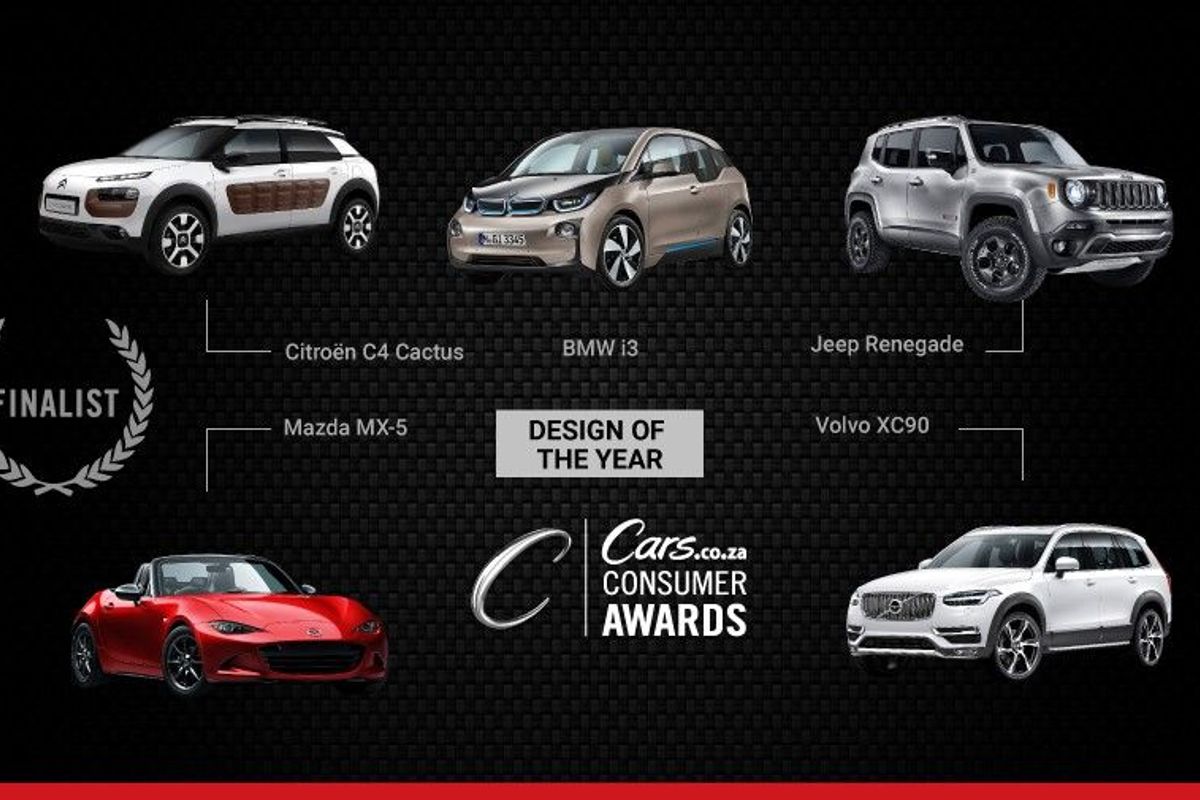
The winners in the first annual Cars.co.za Consumer Awards will be announced on January 14th. With the finish line in sight, these are the five contenders in the Design of the Year category that are battling it out for the prestigious prize. Which one should get the trophy?
When considering the design of cars, buildings, furniture or even mobile devices, good design is not only the preserve of premium products. The finalists in this category each introduced fresh thinking to their respective market segments and demonstrates that you don’t have to spend millions on a vehicle purchase to turn heads. While there is no definite price limit to this category, which would exclude exotic cars, our focus fell on more mainstream products.
Which cars are eligible?
2015 model: It must have been launched in the South African market during 2015
Innovation: The judges considered all new arrivals, with the brief to reward vehicles that brought innovative thinking and a fresh approach to traditional market segments
Total package: Both interior and exterior designs were judged
Want to have a say?
We appreciate and recognise that owners are the ultimate judges of cars, as they live with them and can attest to the quality of brands' after-sales backup. For that reason, we launched a comprehensive Ownership Satisfaction Survey a few months ago to gain insight into what owners think of their vehicles and their after-sales service experiences. By completing this survey, you will have real impact on the Awards programme. This year, voting has already taken place in the individual product categories, but your input can still have an impact on the Brand of the Year category.
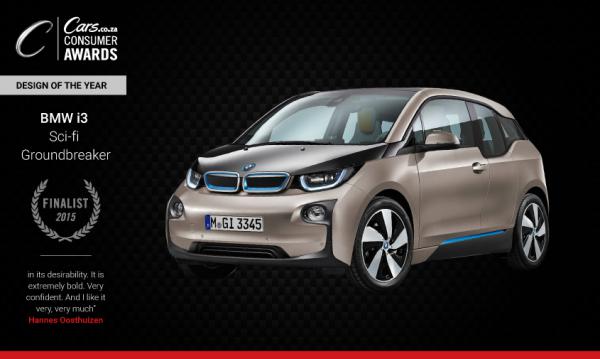
BMW i3
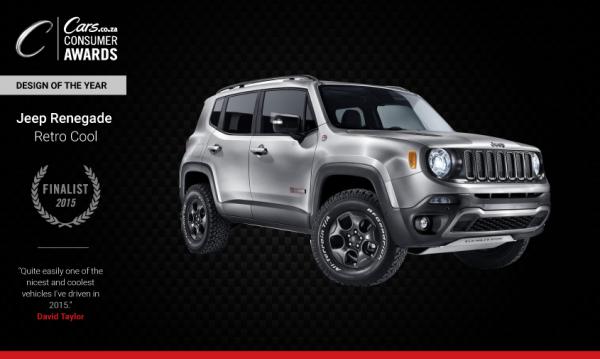
Jeep Renegade
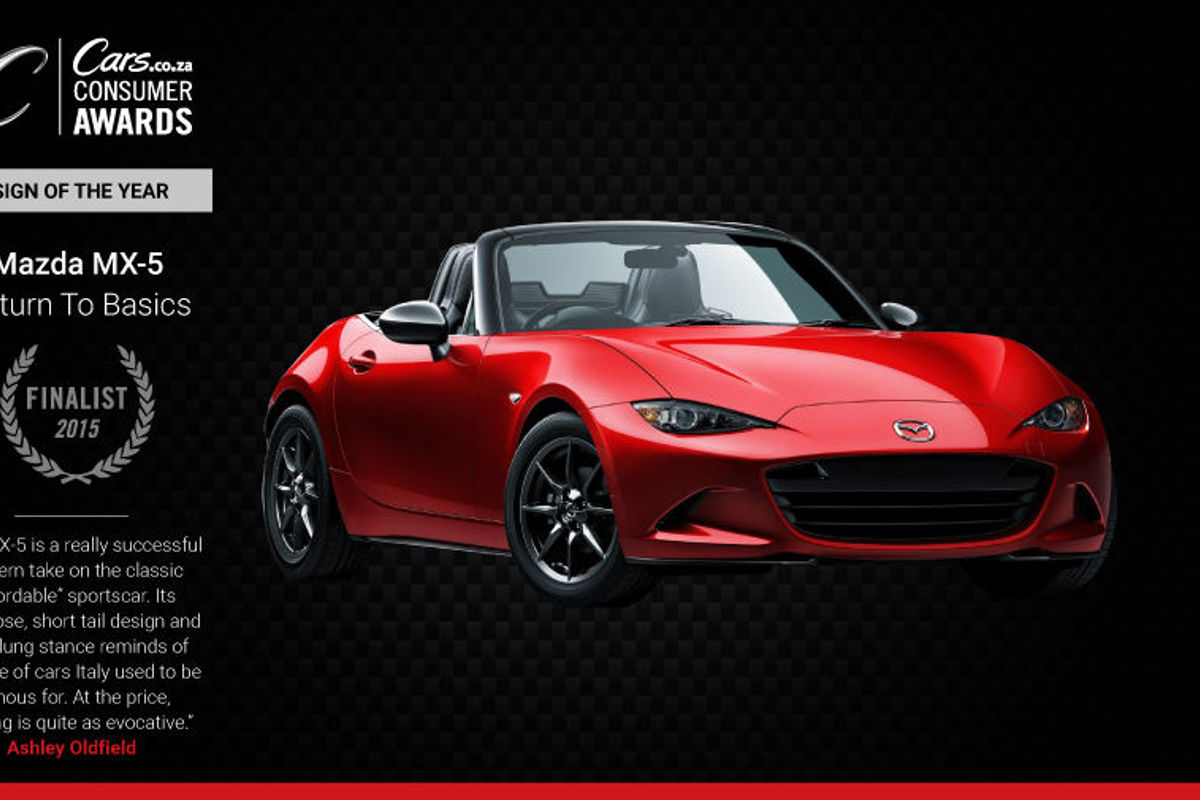
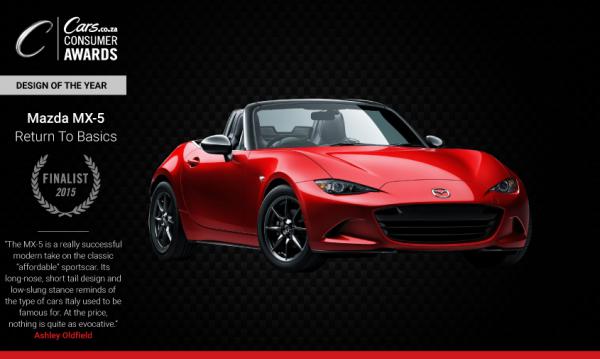
Mazda MX-5
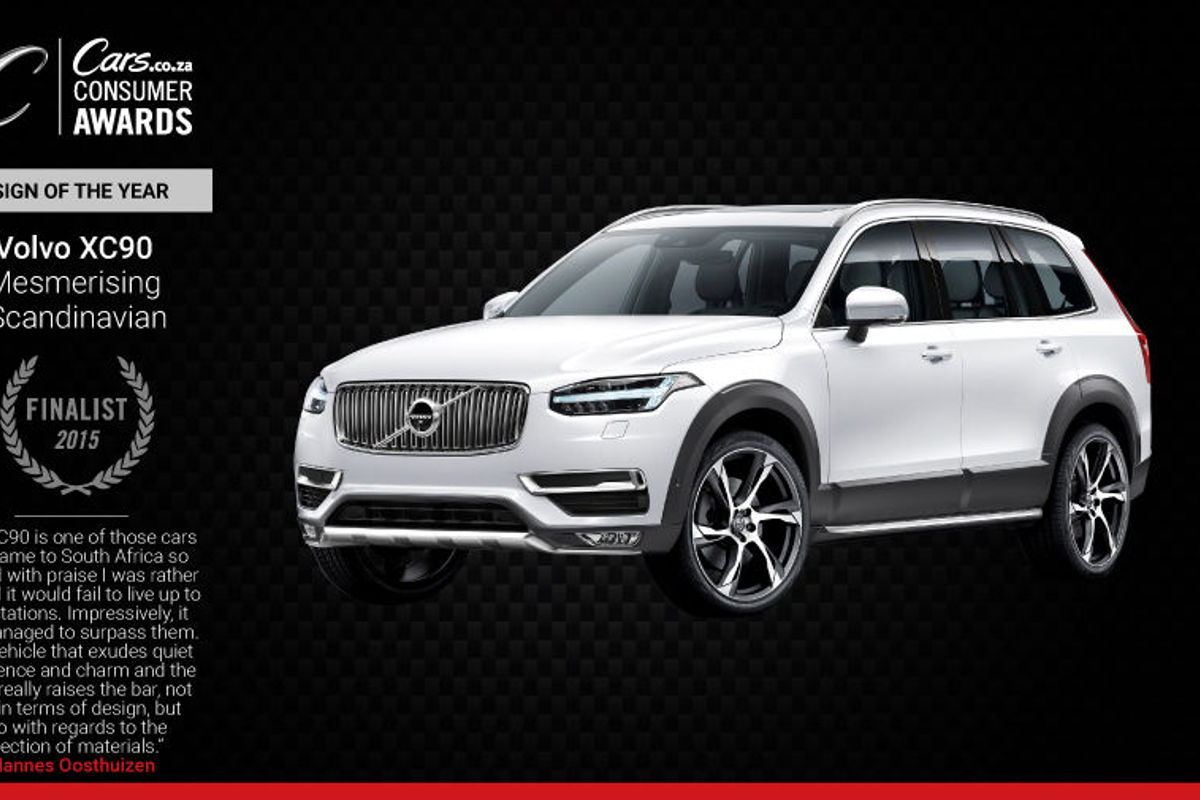
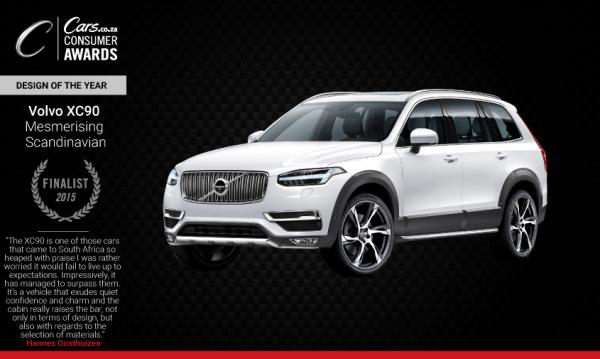
Volvo XC90
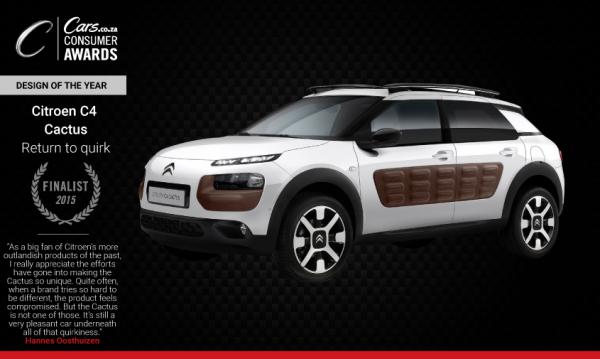
Citroen Cactus
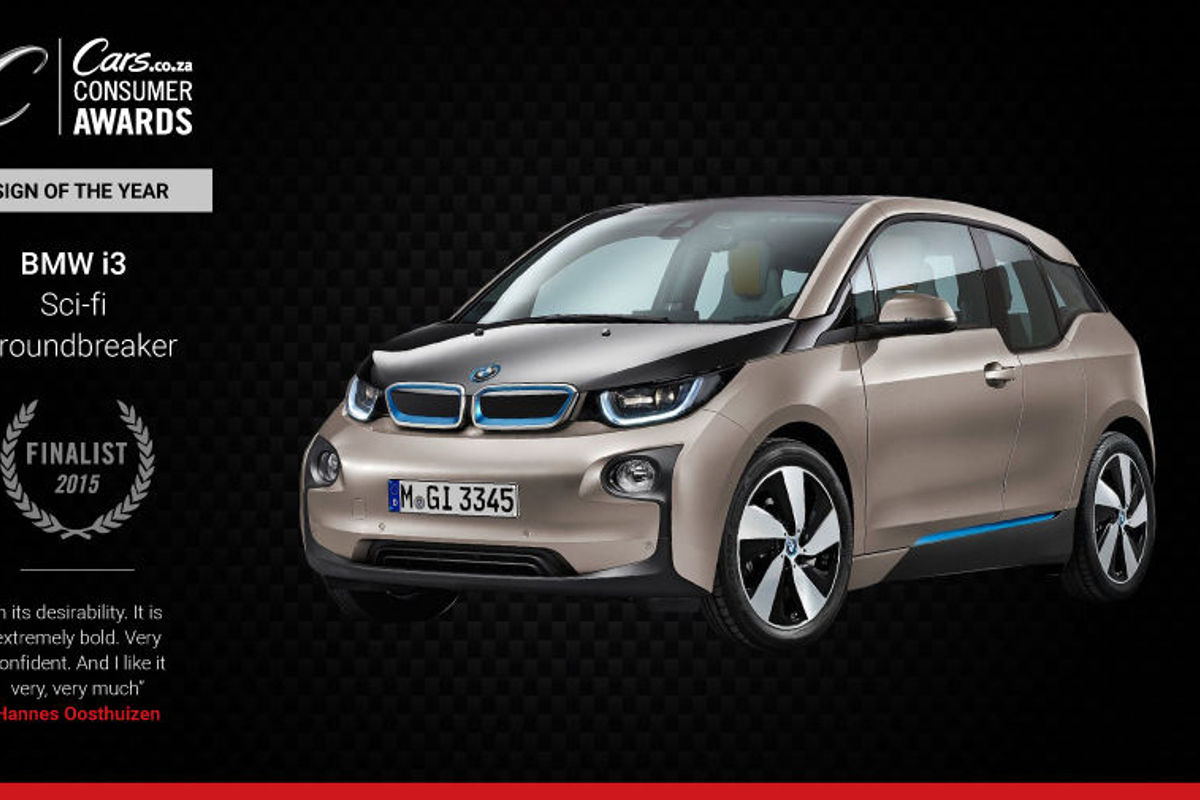
BMW i3
Design is one of the factors that prohibit a greater uptake of electric cars. In the past, car companies have either dreamed up weirdly compromised EV offerings, or tried to “hide” the futuristic powertrain under a traditional and familiar shape, but neither approach worked. The electric car customer is a bold decision maker and most likely would like their car to reflect that. You don’t get much bolder than the BMW i3. The product of a clean sheet design, the i3 employs a fusion of aerodynamics, high-tech materials and sheer bravado to bring the future into showrooms, today.
LifeDrive architecture: Unlike some other electric car offerings, the i3 is not based on the platform of an existing vehicle. Instead, the LifeDrive architecture consists of a flat floor (incorporating the powertrain), with a strengthened passenger cell mounted on top of it. BMW celebrates the utlisation of carbon fibre in the i3's unique construction by leaving many of the most important details exposed – such as the carbon fibre weave – which is visible in the door sills.
Black Band Design: The so-called “black band”, which is so integral to the unique exterior appearance of the BMW i3, runs from the bonnet over the roof to the rear of the vehicle. It serves to create the perception of “lightness”.
Eco-inspired cabin: The single-minded pursuit of efficiency and eco-friendliness is also evident inside, where the i3's minimalism is celebrated by the use of excellent materials – KENAF, for example, is a member of the cotton family and very sustainable. These materials sit next to modern touches such as a "floating" infotainment screen, beautifully crisp digital instrumentation and a unique rotary gear selector controller that sits next to the steering wheel.
“Right now I would say the BMW i3 is the single most important car I’ve driven in 15 years of doing this job. I can’t give it higher praise than that. It is exactly the type of car that is needed to break down barriers to greater electric car acceptance. And the design… well, that actually plays a big part in its desirability. It is extremely bold. Very confident. And I like it very, very much” – Hannes Oosthuizen
“Perhaps it's the radical choice of materials – much of the interior is recycled – that inspired the i3's designers to break so drastically from convention, but the i3's interior is the freshest I've seen in a decade. It feels like a concept car that escaped from the design studio before anyone could make it dull. The i3 offers is a modern, comfortable cabin to commute in, and hopefully all BMWs (and cars in general) will look and feel like this in the future…” – Ciro de Siena
Jeep Renegade
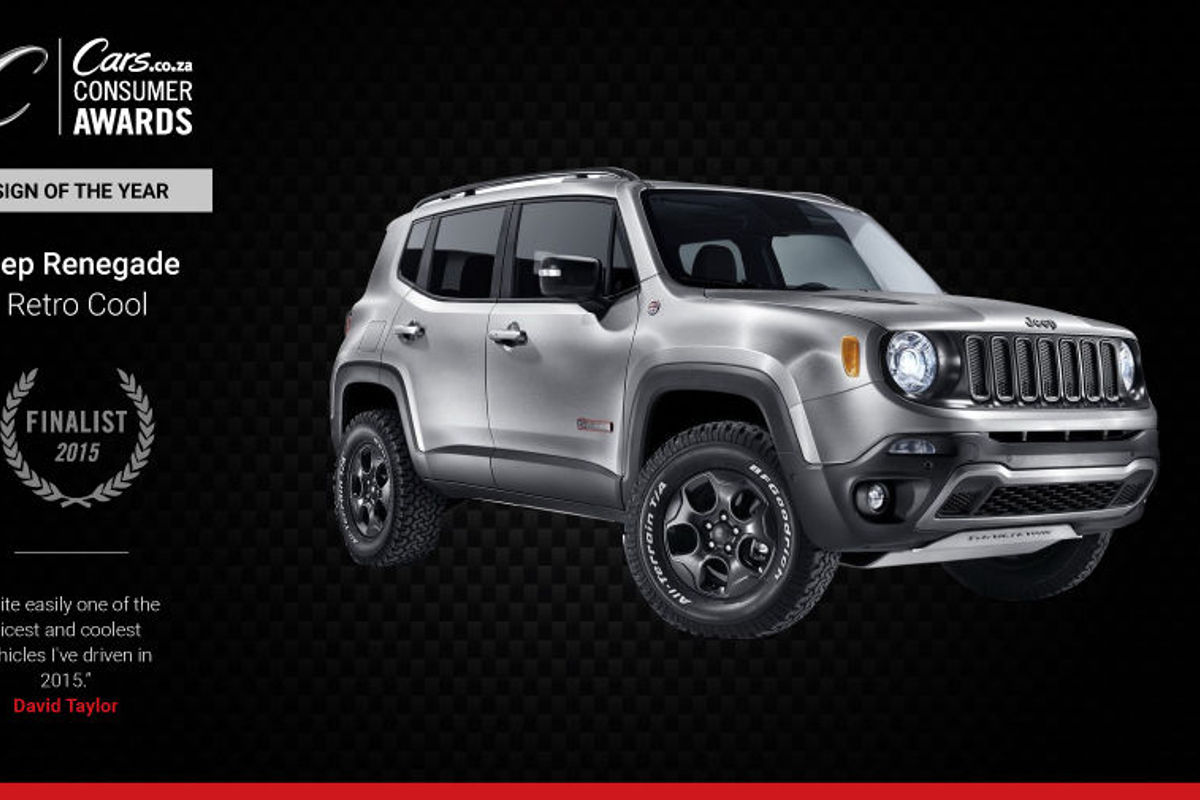
Jeep’s previous offerings in the compact crossover market, the Compass and Patriot, were not universally admired. The American manufacturer has gone all out to try and rectify the situation with its latest offering, the Renegade, which targets fashion-conscious, mostly city-bound individuals that are not necessarily going to go off-road. With a raft of clever retro touches and great detailing, the Renegade takes Jeep from zero to hero in the fashion stakes.
Vintage gas can theme: The Renegade’s designers point to the design of the vintage gas can, as found on the back of the original Willys Jeep, as the main driver of the X-themed design. This X can be seen in the tail lamps, in the cup holders and even on the roof.
Easter Eggs: The so-called design “easter eggs” point to several hidden quirks that are not obvious, but quite delightful when found: including mud splashes on the rev counter, an image of a Sasquatch on the rear window and, on the Trailhawk model, the upholstery has the "elevation lines of the Moab desert" woven into it.
Anodised framing: Taking their cue from the world of extreme sportswear, the designers incorporated colourful anodised surfaces in the cabin to edge certain interior features, such as the speakers, ventilation outlets etc.
“Quite easily one of the nicest and coolest vehicles I've driven in 2015.” – David Taylor
“This has certainly been a good year for characterful compact crossovers! Besides the Renault Captur and Citroen C4 Cactus, the one that probably came as the biggest surprise is the Jeep Renegade. It’s just such a cool car to look at and to sit in. And, thankfully, the driving experience and build quality backs up the solid first impression.” – Hannes Oosthuizen
Mazda MX-5
These days, new vehicles that offer high performance and driving thrills, never mind classic sportscar good looks, cost comfortably more than R1 million. That's why the fourth-generation Mazda MX-5 is such a welcome arrival. It delivers the sheer enjoyment of driving a sportscar in a compact package. The lines of the exterior design are simple, yet filled with tension and the cabin fits snugly around the driver. The MX-5 is a perfect example of less being more.
KODO design: Mazda’s current design theme is KODO, and it’s all about "capturing the moment when energy turns into motion", such as when a predator is about to pounce on its prey. Consequently, the MX-5's lines (muscles) are well-defined and tense. Unlike many modern cars, it doesn’t rely on frilly detailing to make its presence felt, but purity of form.
Driver-focused cabin: The snug two-seat cabin of the MX-5 is packaged around the driver. The close proximity of the handbrake lever, for example, is a sign of intent. The instrumentation prioritises engine speed over vehicle speed and the stubby gearlever falls perfectly to hand. Nothing distracting… just the essentials.
One-hand roof operation: To save weight, the MX-5 features a manually operated roof – a rare sight in today’s bubble-wrapped, all-things-to-everyone design. While some may scoff at the idea of having to fold a roof by hand, the design and operation is so simple it can be done with one hand in less time than any electric roof will take to fold.
“The world’s love affair with the MX-5 has waned somewhat in recent years, mostly because it had followed market trends and became too luxury and comfort focused. This new model will likely reignite the passion. Fantastic to drive. Gorgeous to look at. Simple. Pure." – Hannes Oosthuizen
“The MX-5 is a really successful modern take on the classic “affordable” sportscar. Its long-nose, short tail design and low-slung stance reminds of the type of cars Italy used to be famous for. At the price, nothing is quite as evocative.” – Ashley Oldfield
Volvo XC90
To make a large SUV stand out from the crowd without appearing too ostentatious is quite a challenge, but with the new, multi-award winning XC90, Volvo has hit the nail squarely on the head. It is said to have been inspired by nature and Swedish craftsmanship and consequently the Volvo's undeniable beauty stretches deeper than just the surface. There are beautiful details everywhere and a sense of real quality…
Thor’s hammer: The XC90’s headlamps feature T-shaped LEDs, a design trait that is said to have been inspired by Thor’s hammer, to give the Swedish SUV a very distinctive and bold frontal appearance.
Sensus Touch-interface: Pride of place in the XC90’s cabin goes to a large iPad-like touchscreen infotainment system mounted in the centre of the facia. Not only does it declutter the cabin; it arguably establishes a new benchmark in user-friendliness. Today’s smartphone users will find its pinch and swipe functionality very useful. Plus, it looks great!
Diamond-cut controls: The Volvo's refreshingly original cabin utilises only top-notch materials. The gearlever, for example, is finished in crystal glass from Orrefors. It is, however, the feel of the start/stop button and volume control knob that further heightens the ambience. Those were diamond cut.
“The XC90 is not the sort of car I should be excited about. I'm 29, I have no kids, and I only ever venture into the countryside for wine tasting. And yet, it is a car I would happily drive everyday. It is incredibly comfortable and the touchscreen infotainment system is as good as everyone says it is. It also just looks damn good." – Ciro De Siena
“The XC90 is one of those cars that came to South Africa so heaped with praise I was worried it wouldn't live up to expectations. Impressively, it has managed to surpass them. It’s a vehicle that exudes quiet confidence and charm and the cabin really raises the bar, not only in terms of design, but also the selection of materials.” – Hannes Oosthuizen
Citroen C4 Cactus
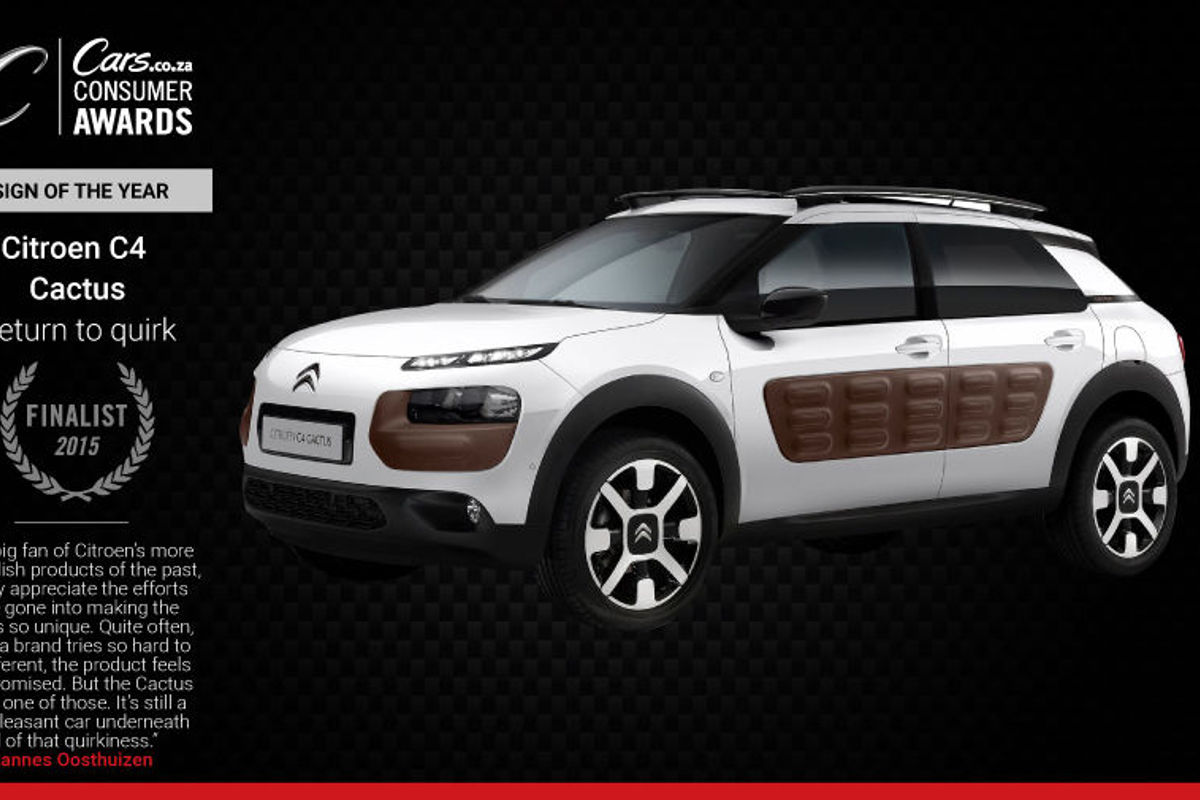
This French marque is keen to return to its more individualistic roots, and it doesn’t get much quirkier than the C4 Cactus. This brash and bold little crossover just can’t be ignored, yet there’s also some method in the madness – some of its most bizarre design elements actually have practical benefits.
Airbump technology: Airbump is essentially a soft thermoplastic polyurethane skin applied to the doors and elsewhere that protects against parking lot dings and misguided shopping trolleys, among other things. They were inspired by the protective casings of cellular phones and there are four colours to choose from.
Distinctive face: The rounded, high nose of the C4 Cactus is characterised by separate and high-mounted LED strips that look like eyebrows. The headlamps themselves are set within moulded plastic that features Airbump technology.
Retro-minimalist interior: When a car has a unique exterior, its interior can often be somewhat of a let-down. Not so in the case of the C4 Cactus. Retro touches such as leather doorpulls, a sofa-like front seat and a glove compartment lid that looks like a vintage travel suitcase sit comfortably next to ultra-modern items such as a free-standing 7-inch touch-screen as well as fully digital instrumentation.
“As a big fan of Citroën’s more outlandish products of the past, I really appreciate the efforts have gone into making the Cactus so unique. Quite often, when a brand tries so hard to be different, the product feels compromised. But the Cactus is not one of those. It’s still a very pleasant car underneath all of that quirkiness.” – Hannes Oosthuizen
“The Citroën C4 Cactus is something different, just as Citroën has always tried to do. It's unique styling and characterful touches mean it stands out wherever it goes and will keep its owner entertained non-stop. There's a lot of competition in this segment, but no doubt the Cactus is the most visibly noticeable of the pack.” – Ashley Oldfield
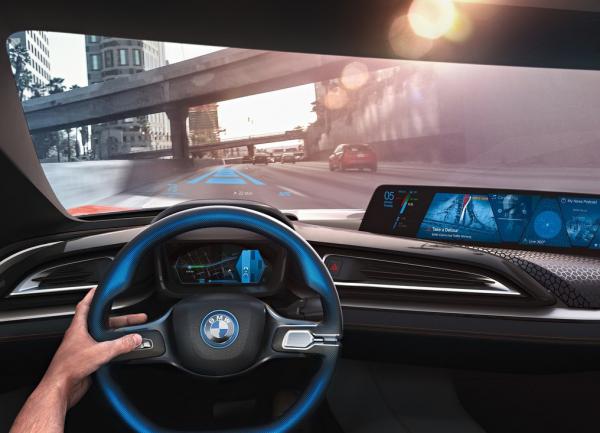
BMW drops the top of its i8 supercar and unleashes a wealth of automation and technology. Meet the i Vision Future Interaction concept.
This smart-looking roadster is based upon BMW's i8 and while this is an out and out driving machine, what you see here is a demonstration of future technology. BMW claims the i Vision Future Interaction concept showcases a high-tech cabin as well as autonomous driving. The cabin is a very futuristic place to hang out and its dominated by the 21-inch panorama display. While the vehicle is in full autonomous mode, the display switches from car systems to a massive entertainment complex which gives the driver and passenger video-watching capability as well as offering office features such as internet browsing and emails.
Another feature is the AirTouch gesture control which allows the user to control vehicle settings without actually pushing any buttons. The car is able to recognise hand signals and interpret them as instructions. Perhaps the best part of the BMW i Vision Future Interaction concept car is its driving modes. You're faced with three choices. Pure Drive is your hands-on and traditional driving experience, while Assist Mode will step in if accidents are likely and finally you can sit back and enjoy Auto Mode where the car will give you a full autonomous driving experience. If you opt for full auto mode, the steering wheel retracts and gives the driver more space to relax.
For a demonstration of the vehicle's abilities and a glimpse into a not too distant future of the automobile, watch the video below:
Volkswagen BUDD-e Concept Reveals New Microbus
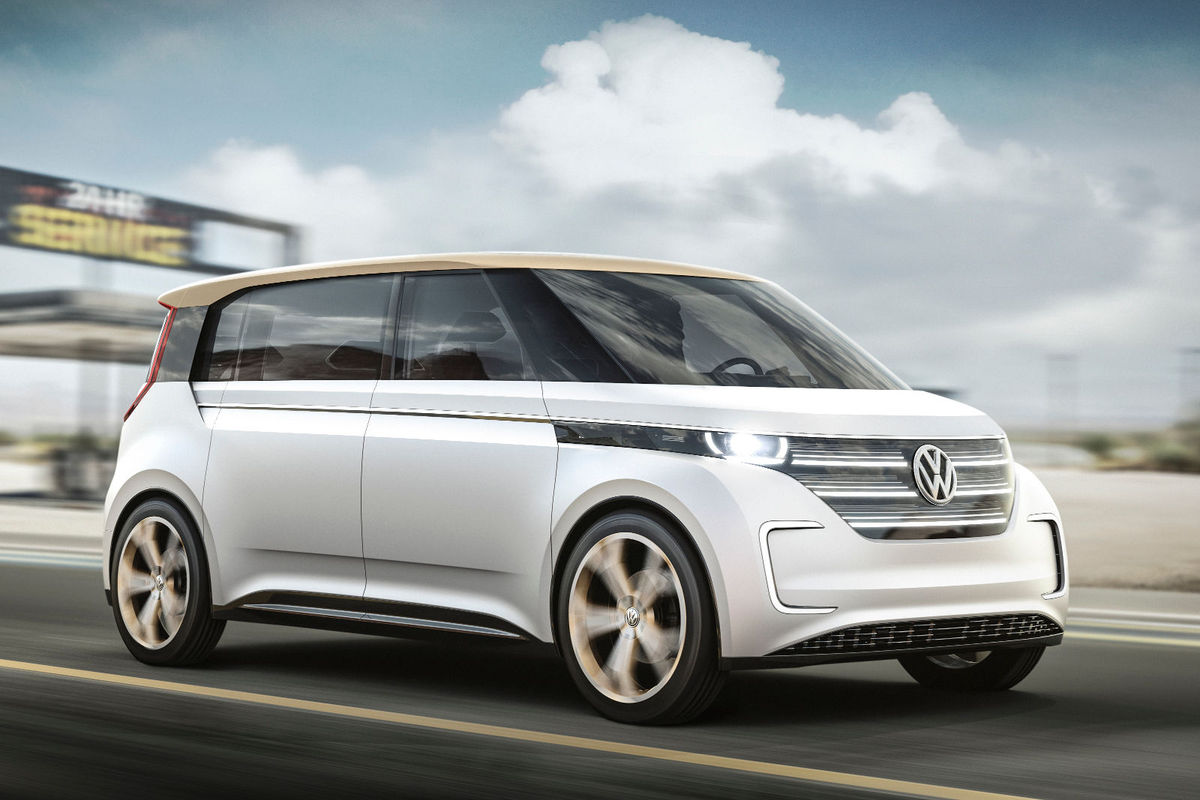
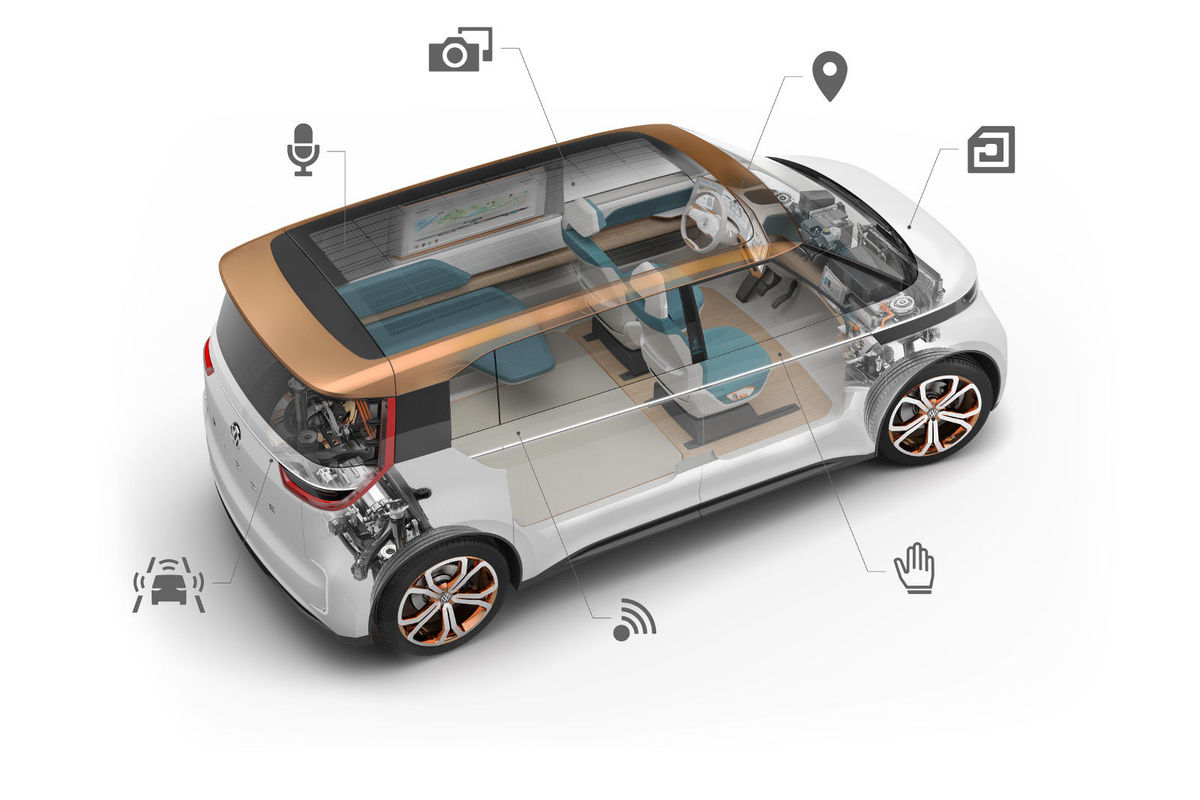
Last year we reported that VW would reveal a new all-electric vehicle at the Consumer Electronic Show (CES). This is the result of that teaser image that came out last year and it’s touted as a stylish, new Microbus. Importantly, it is fully electric and features a host of new VW tech that the brand intends to push out into its upcoming models.
It looks small for a Microbus right?
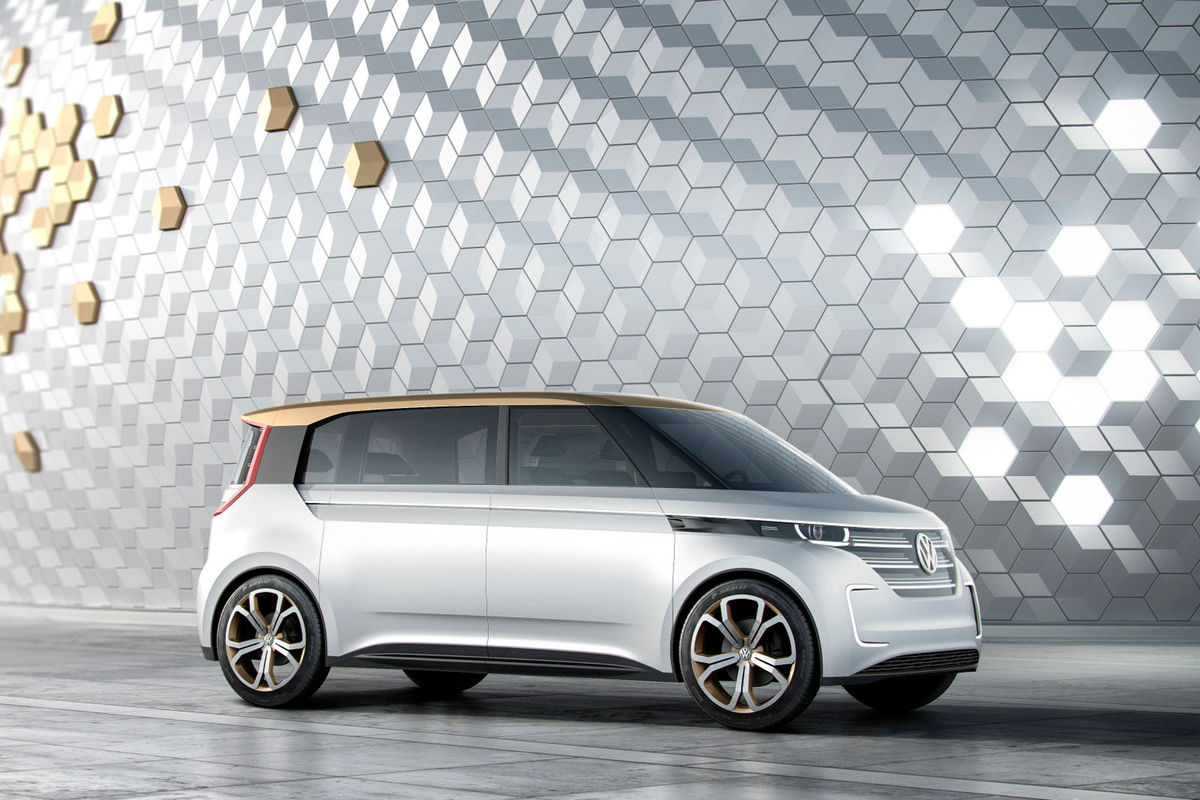
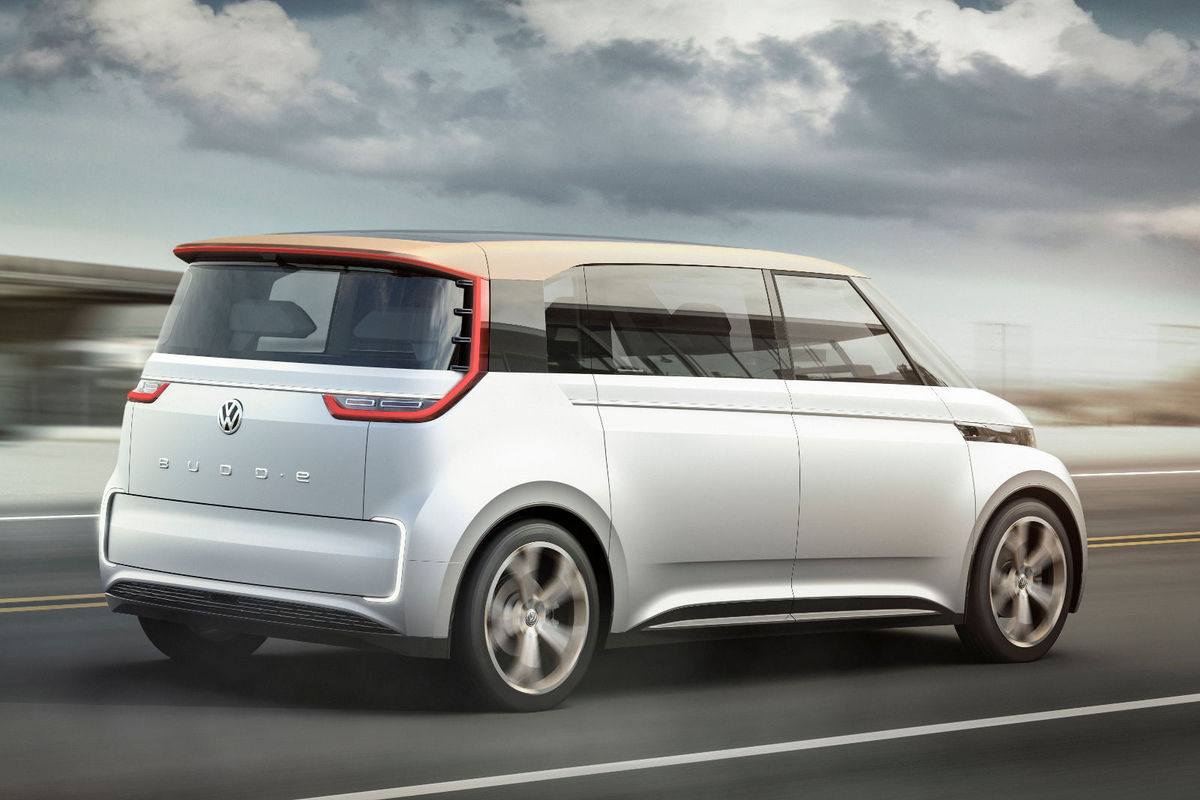
It does look small, but for now it’s just a concept but much like the original Microbus, this BUDD-e concept features short front and rear overhangs and a long wheelbase. VW claims the styling is a preview of the direction it plans to take with future products. It looks modern and funky, but still manages to pull off an athletic stance – it’s just plain cool.
Electric bus
Most of the concept's underpinnings are hypothetical at the moment, but VW believes the BUDD-e concept could be powered by a 101 kWh battery. That would give it a range of around 600km between charges. With the way that battery tech is improving, VW predicts that by 2019 you’ll be able to charge a battery from flat to 80% full in around 15 minutes. That should make longer journeys less of a problem in electric vehicles. Top speed in the BUDD-e isn’t bad either – VW reckons 150kph is possible.
Tech zone
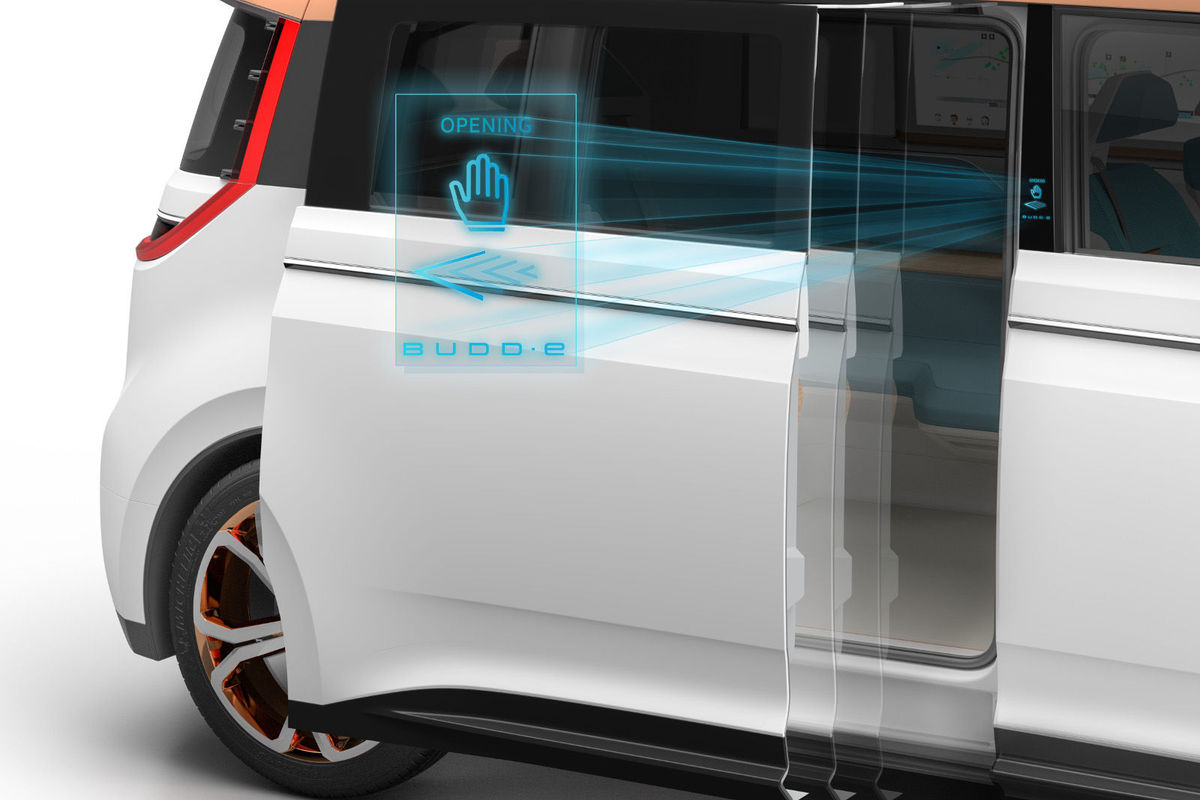
VW has improved upon the gesture control it featured on the Golf R Touch Concept it released last year at CES. No longer do you need to activate gesture control before performing gestures. The BUDD-e will automatically recognise a swipe of the hand to open the sliding door or a wave of a foot below the rear bumper to open the boot.
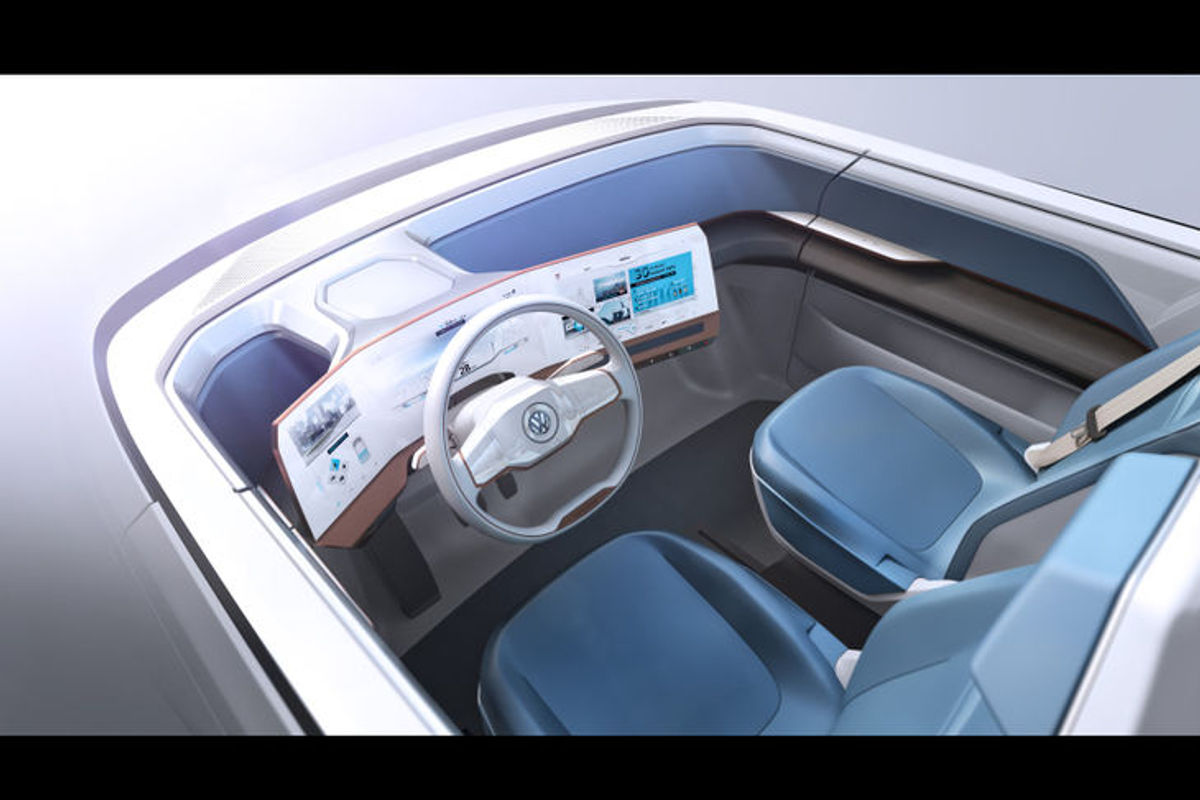
Inside the BUDD-e the driver is greeted with a huge three-panel display. The panels are divided up into vehicle information such as rpm, speed and range; current trip information and navigation and then the final one for access to all the interactive functions, such as music and apps. Gesture control can also be used inside the car as well.
Will VW Build it?
VW has confirmed that the BUDD-e concept will go into production and can be expected in the year 2020.
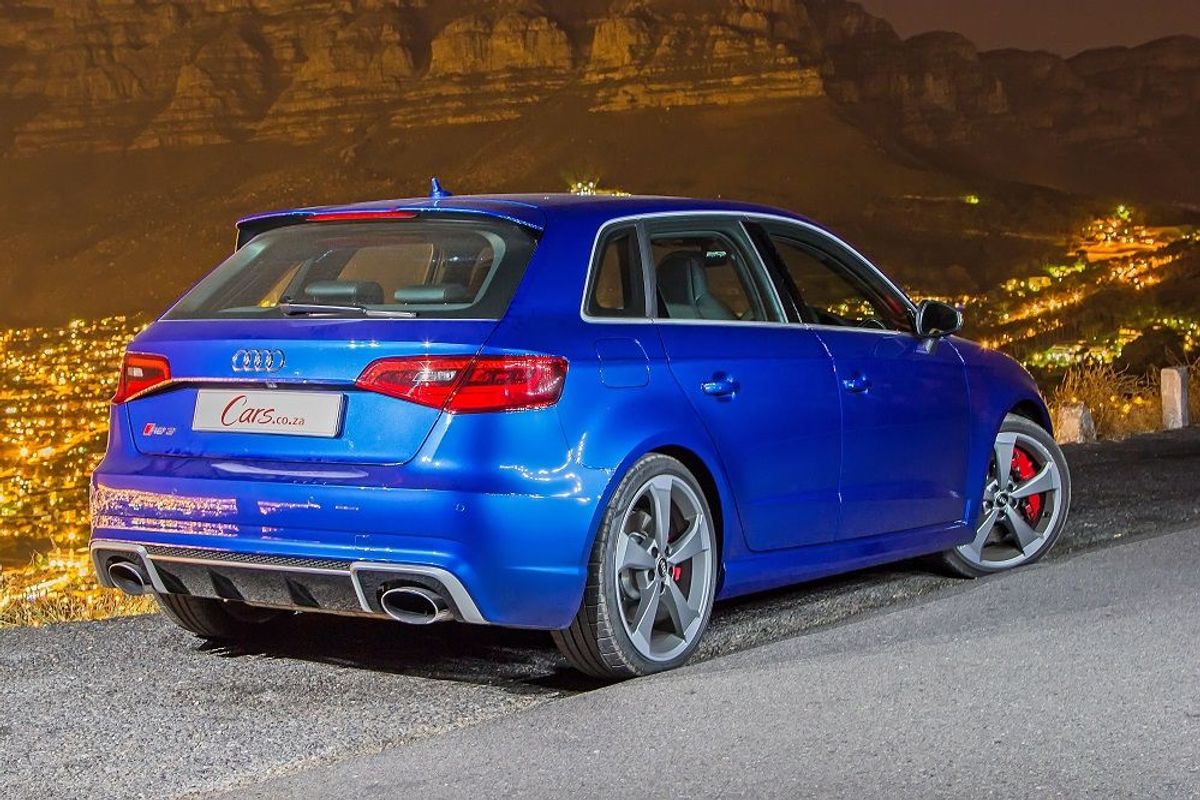
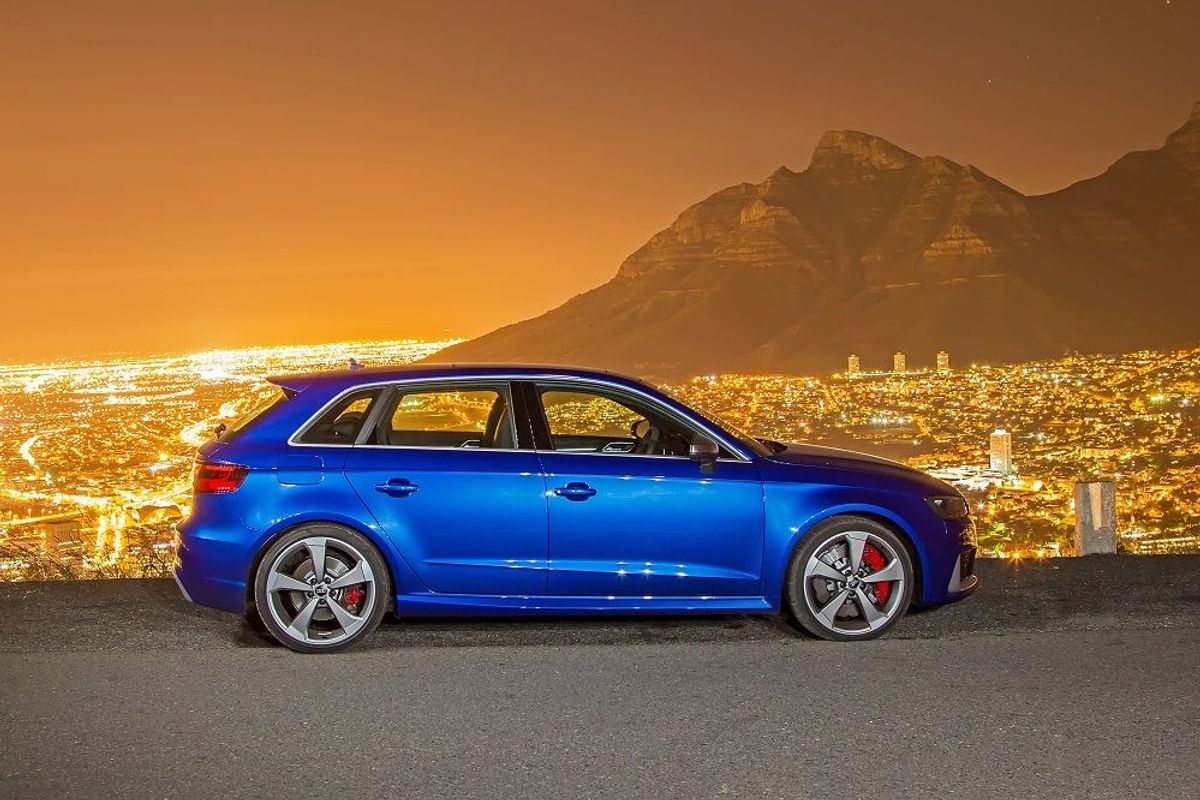
Audi RS3 (2016) Review
We get to grips with Audi’s hottest hatchback, which offers near supercar-like performance for under a million Rand. How do we rate the faster and lighter new RS3 after a week of testing?
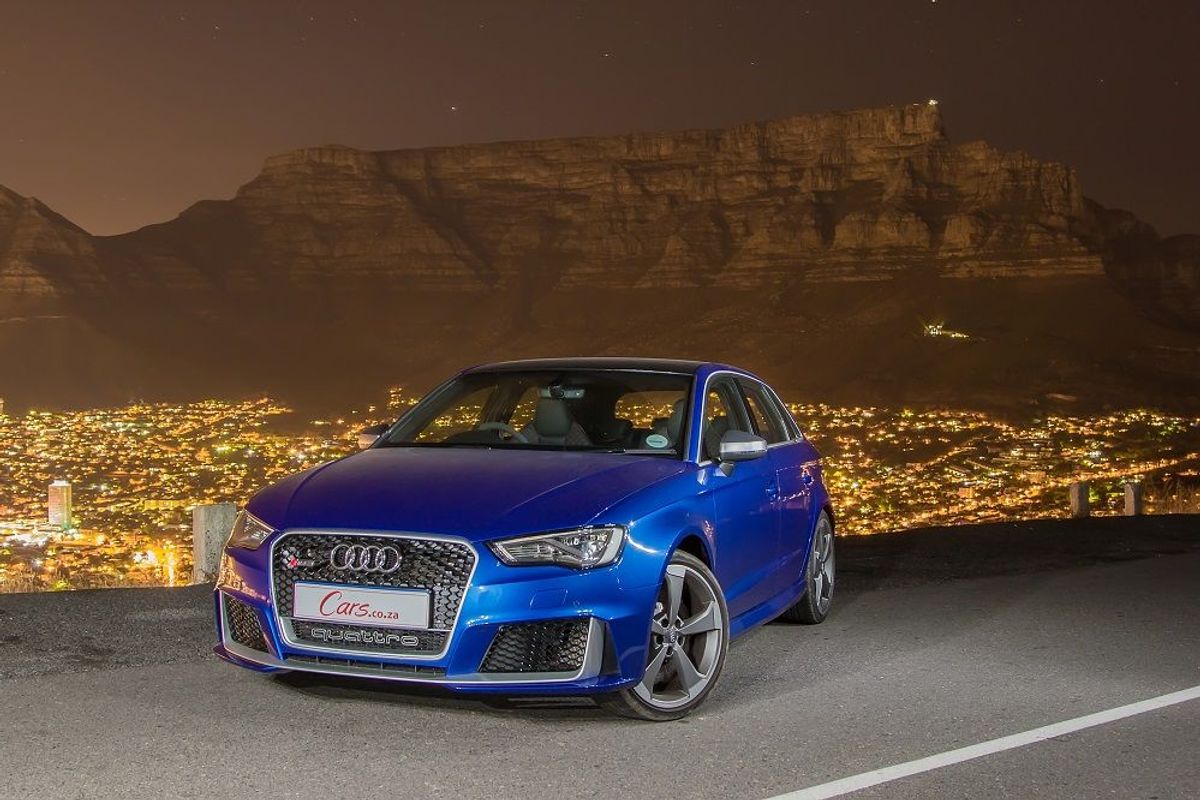
Before we get caught up in the intricacies of quattro all-wheel drive, the effectiveness of the RS3’s launch control function and indulge in general (five-cylinder induced) debauchery, let’s review the origins of this mad Audi. Because the RS3 is based on the popular A3 Sportback, it offers daily usability and practicality above and beyond headlining performance; it also means the interior is well-designed and excellently made. Except, unlike regular A3 models, the RS3 is a tarmac terrorist.
Since Mercedes-AMG introduced the world’s most powerful 2.0-litre turbo production engine (yes, that was the Stuttgart-based brand’s official claim) in the A45, the rest of the segment has been scrambling to find an answer to the belligerent baby Benz. Audi’s riposte is this model and with it, Ingolstadt politely flips the bird at any notion of using a 2.0-litre; it utilises an extra cylinder and is half a litre bigger. Yes, the iconic five-cylinder turbo motor has been retained and what a marvel it is.
Engine and Performance
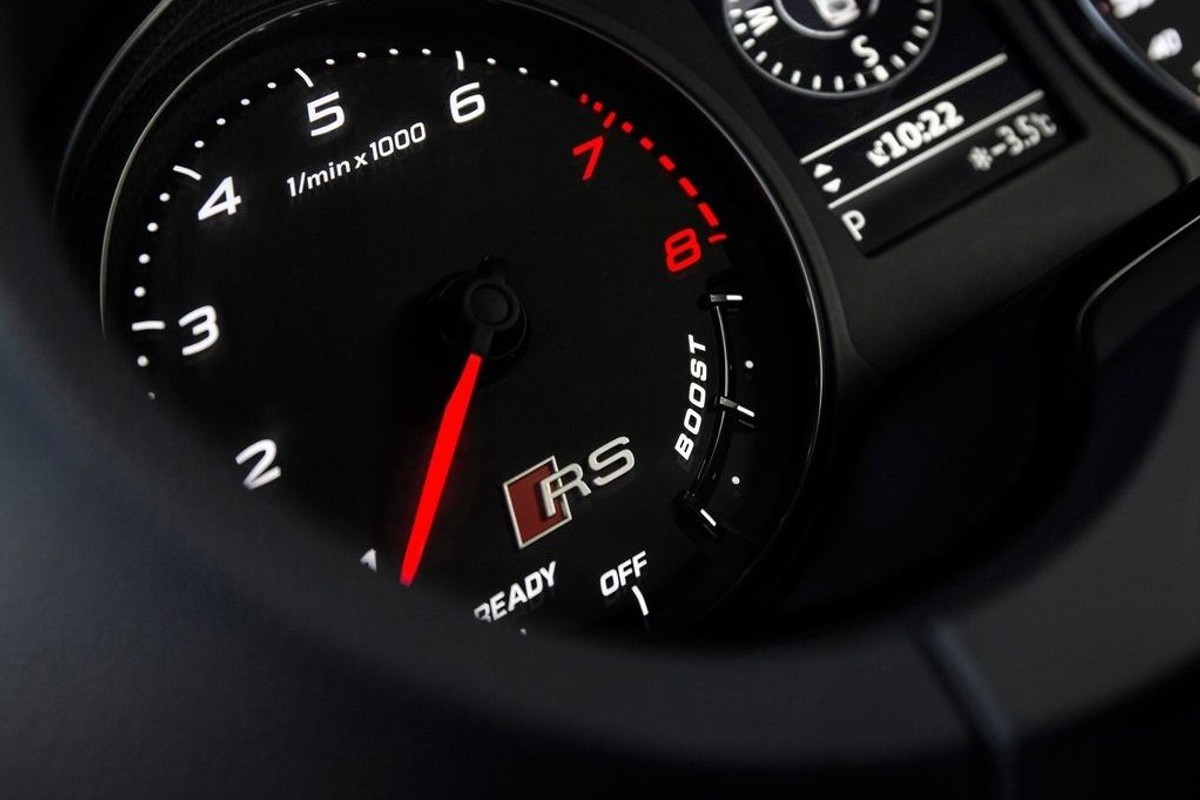
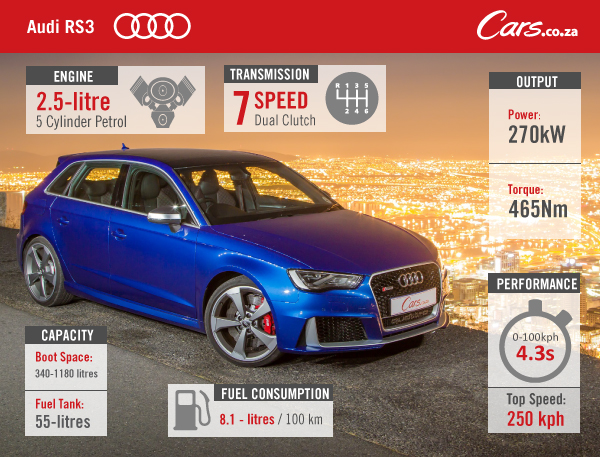
Courtesy of 270kW and 465Nm produced by a single-turbo 2.5-litre five cylinder motor, Audi’s RS3 is deceptively rapid and has a provocative soundtrack. It has purposeful start-up and idle notes and, once on the move, it delivers delicious rapid artillery-like exhaust backfires, while upshifts are punctuated by staccato barks accompanied by pops and whistles from the turbocharger. It’s nothing short of an aural feast. The downside is thirsty fuel consumption. Drive hard and you’ll see figures north of 14L/100km, but if you’re like us and drive mostly in Comfort, under 13L/100km is possible.
Push a few buttons to arm the launch control function and wait for the revs to build. When ready for launch, slide your foot off the brake and the Audi RS3 will blast off the line like a fighter jet leaving its carrier ship. Audi claims a 0-100kph benchmark of 4.3 seconds and our first test run indicated 4.59 seconds. If the ambient temperature was a little lower and the passenger in the car was kicked out, we estimate we could dip under 4.5 seconds, which is fast in anyone’s book. By comparison, a Ferrari 360 Modena from 1999 offers this sort of performance — and that was a pukka supercar.
Ride and Handling
It’s not just about herculean straight-line efforts however. Audi has a sterling reputation for producing fine-handling cars and the sure-footed RS3 is no exception. The manufacturer claims it has reworked the newcomer’s quattro setup to deliver up to 100% of power to each axle. The handling of a Quattro-equipped vehicle tends to exhibit understeer at the (albeit lofty) grip limit, but the RS3 instils confidence in its driver when they’re pressing on. It is a pity, however, that the pleasingly sharp and direct steering system does not offer much in the way of feedback or weight through the driver’s palms.
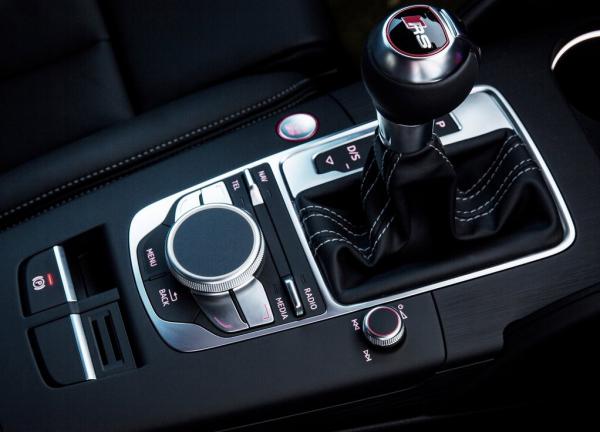
That should not detract from the fact that the Audi is ridiculously easy to drive fast. The shift programme of the 7-speed DSG transmission is particularly well matched with the performance characteristics of the engine. Audi’s Drive Select allows users to adjust the shift/throttle/suspension settings of the car to their tastes and whereas the transmission is quick to gear down — and accelerator responses are razor sharp — in Dynamic mode, the RS3 effortlessly produces bursts of speed in Auto, yet remains composed as soon as its pilot adopts a more relaxed driving style.
Meanwhile, the Audi’s ride quality is generally firm. You’d be wise to specify Magnetic Ride, which is a R13 460 option and would add a measure of extra on-road comfort, but while riding on 19-inch alloy wheels wrapped in low-profile rubber, the RS3’s ride will always be classified as firm.
Cabin and Features
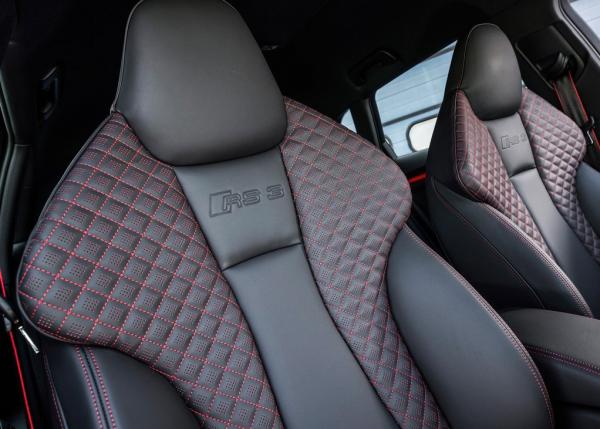
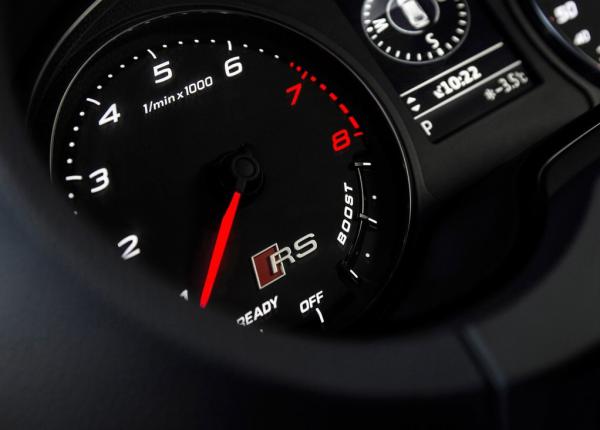
As is the case with most Audis, the interior’s very smart and comfortable. That said, we drove the RS3 and an S3 back to back and it’s remarkable how similar the cars’ interiors are, despite the price difference of around R150 000. You’d expect the flagship Audi A3 to feature a distinctive interior, but the cabin’s appearance is largely derivative. That typical flat-bottomed RS steering wheel, which incorporates controls for the infotainment system and cruise control and comes equipped with gearshift paddles that fall nicely to hand, is very functional, but it lacks a sense of visual drama.
Still, the interior’s build quality and specification are of a high standard. A particularly notable feature is Audi’s MMI screen, which stylishly slides up and down out of the dashboard.
What’s more, by virtue of the RS3’s Sportback configuration, you still get the benefit of that five-door hatchback practicality. The Audi shares its platform with the Volkswagen Golf, but there are a few differences. Due to the specific configuration of the five-cylinder engine, the battery has had to be moved into the boot. The boot loses some depth, but it still offers up 340 litres of space and, when you fold the seats down, 1 180 litres becomes available, which is ample for a family.
The RS3 is a product that offers the practicalities of a family hatchback matched with near supercar-like performance capability. It’s a decidedly quick car, but perhaps its best quality is that you’re able to defuse the weapons-grade performance and drive it to work every day in Comfort mode. Switch to Dynamic mode and be prepared for savage acceleration both standstill and in gear.
Criticisms? Well the ride can be a little harsh on our cratered roads and some of the options that Audi offers should be standard. In addition, a performance exhaust on a flagship performance car should be factory-fitted — not something for which you’d have to fork out another 11 grand. Not that it wouldn’t be money well spent! Plus the interior’s a bit plain for a range-topping halo model.
Still, the Audi RS3 is a superb piece of kit and that won’t disappoint owners eager to go supercar baiting. 2016 is shaping up to be an interesting year as we’ll see a facelifted Mercedes-AMG A45 (boasting more power and quicker acceleration) make landfall in South Africa, while BMW has the forthcoming M2 in the pipeline. And let's not forget the upcoming Ford Focus RS either (due in the second quarter of the year)! It’s going to make for one amazing shootout – watch this space.
Audi RS3 Price in South Africa
The Audi RS3 retails for R710 000 before any of the extras. It comes with a 5-year/100 000km Freeway Plan and 5-year roadside assist plan as standard.
Test Team Opinion:
"Impossibly grippy, maddeningly fast for a hatchback and over the top pops and bangs from the exhaust. That is all." Ashley Oldfield
"What a machine! I didn't even find the ride a problem. Perhaps the interior could be a bit more special but that would be nit-picking. It's car that makes even the most mundane of trips fun. Admittedly, much of that is down to the addictive noise." Hannes Oosthuizen
We Like: Fearsome performance, soundtrack, looks, handling
We Don’t Like: Price for a sports exhaust – it should be standard, interior is not as special as it should be.
Also consider: Mercedes-AMG A45, BMW M235i or wait for the M2.
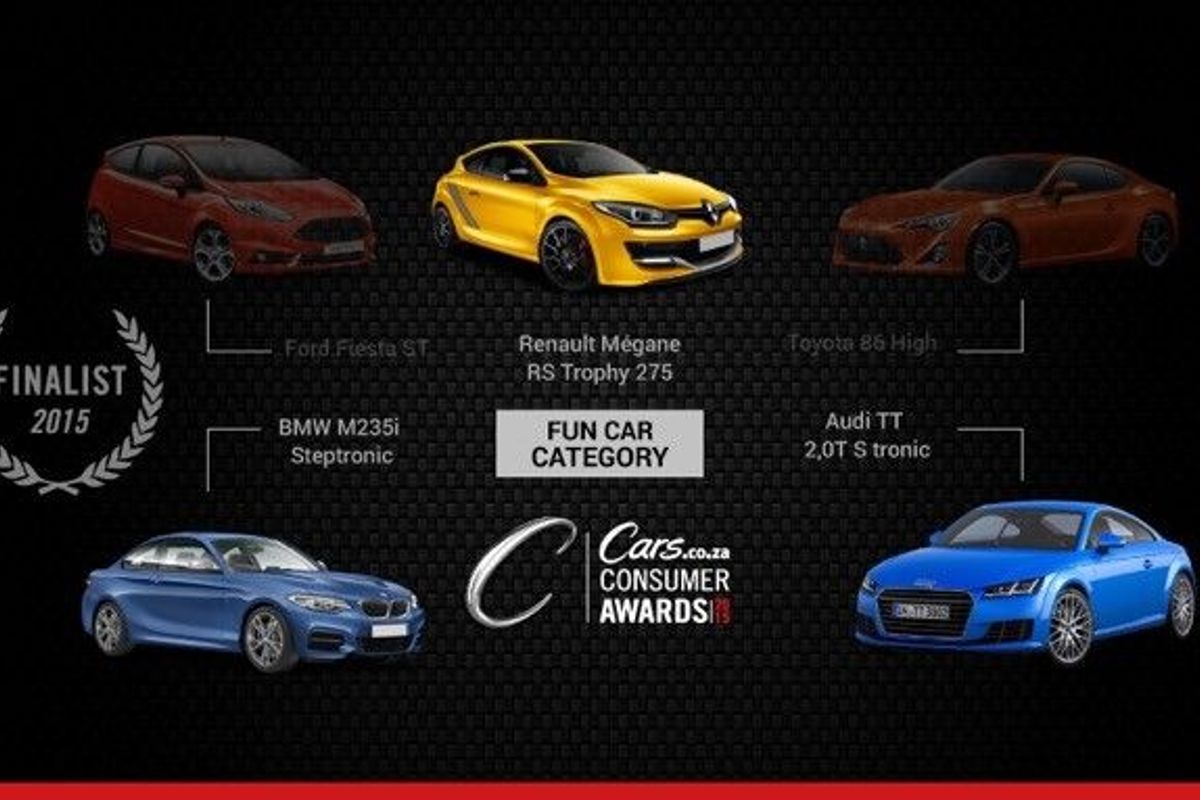
The winners in the first annual Cars.co.za Consumer Awards will be announced on January 14th. With the finish line in sight, these are the three contenders in the Fun Car category that are battling it out for the prestigious prize. Which one should get the trophy?
What is it that makes a “fun” car? Is it purely about performance and handling? To a degree it is, but for this award we’re looking for a total package without an exorbitant price tag. This is one for the petrolheads – a car that must leave a die-hard enthusiast smiling after every drive. It needs to satifsy in the way it looks, handles, sounds and, yes, performs.
Which cars are eligible?
Its listed price must be below R600 000 at the time of semi-finalist voting (June 17 2015) to ensure that this category doesn’t become dominated by extravagant and unattainable exotics.
Most important judging factors
Drivetrain engagement – more than ultimate performance, a car needs to be reponsive to driver inputs and reward those inputs with immediacy and urgency
Handling – entertaining, crisp dynamics and steering feel/feedback prioritised
Sensory Appeal – a measure of aesthetic appeal and aural stimulation is required
Standard Features – although performance and dynamic prowess are priorities, we’re looking for cars that offer enough comfort and entertainment features to remain a pleasure to drive, even sedately.
Want to have a say?
We appreciate and recognise that owners are the ultimate judges of cars, as they live with them and can attest to the quality of brands' after-sales backup. For that reason, we launched a comprehensive Ownership Satisfaction Survey a few months ago to gain insight into what owners think of their vehicles and their after-sales service experiences. By completing this survey, you will have real impact on the Awards programme. This year, voting has already taken place in the individual product categories, but your input can still have an impact on the Brand of the Year category.
Audi TT 2,0T S tronic
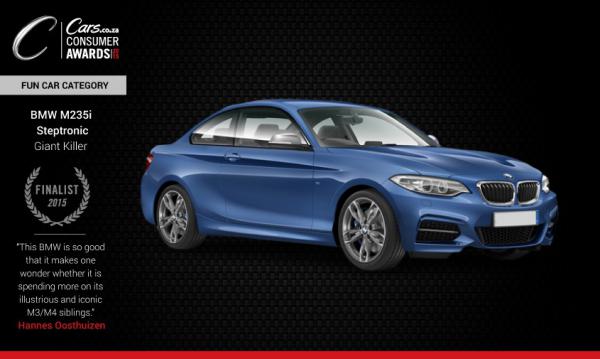
BMW M235i Steptronic
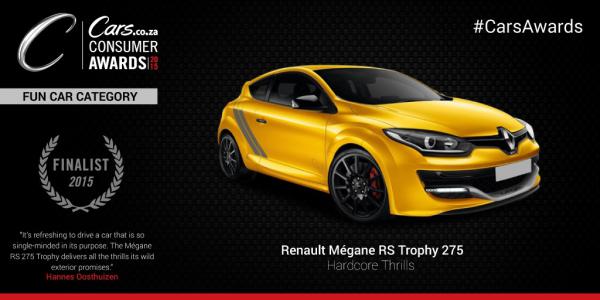
Renault Megane RS Trophy 275
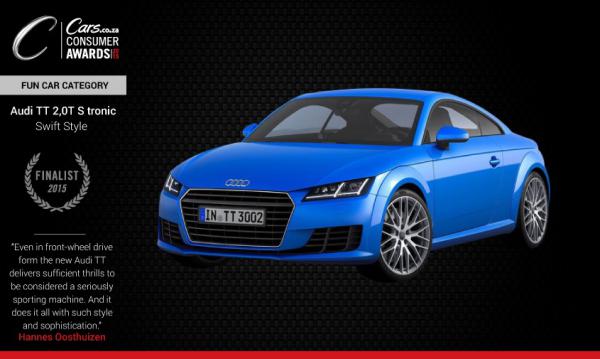
Audi TT 2,0T S tronic
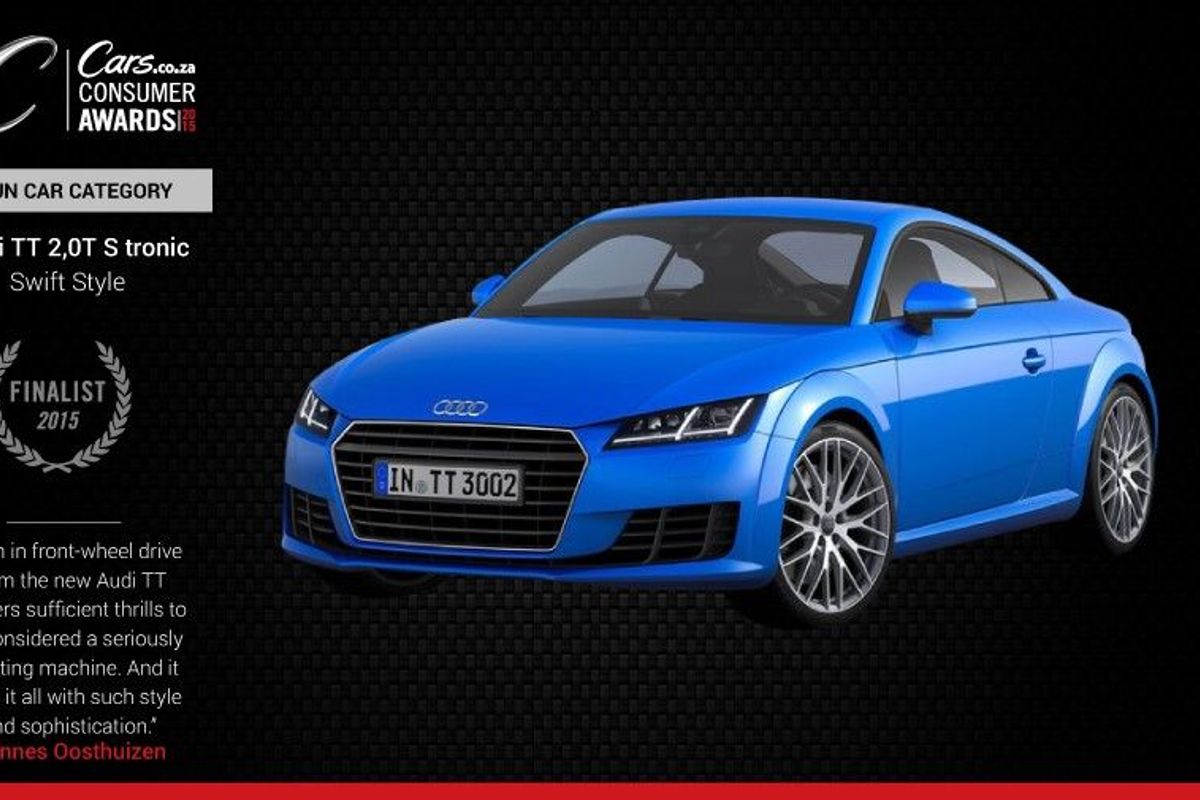
The Audi TT’s main appeal has always been its design and quality interior, rather than performance and dynamics. In its latest incarnation, however, the fun factor has been dialled up significantly. More agile and engaging than ever before, and offering such easily accessible performance and handling, the TT will please both enthusiasts and poseurs. Under the TT’s stubby bonnet is a proven engine that is shared with a large number of VW group products, including the Golf GTI. The 2,0-litre four-cylinder turbo produces169 kW and 370 Nm of torque. The capable, but ultimately dull suspension and steering setups of past TTs have given way to a far crisper, more direct setup that counters understeer well. At the price, the TT’s combination of style, sophistication, performance and features means it already puts forward a very convincing purchasing argument. It’s a properly upmarket package that includes navigation, cruise control, climate control, a sound system with Bluetooth/USB/aux support, auto wipers/lights and even keyless access.
“Even in front-wheel drive configuration the new Audi TT delivers sufficient thrills to be considered a seriously sporting machine. And it does it all with such style and sophistication.” Hannes Oosthuizen
“The latest generation of Audi TT epitomises the sportscar category. Not only is it easy on the eye and brimming with technology, it’s also terrific to drive. Handling is darty and the backfires from the exhaust make for an entertaining combination.” David Taylor
“A front-wheel drive Coupe that somehow manages to mask the negative understeer perceptions. There’s seemingly endless grip and the most responsive dual-clutch gearbox I’ve ever driven.” Ashley Oldfield
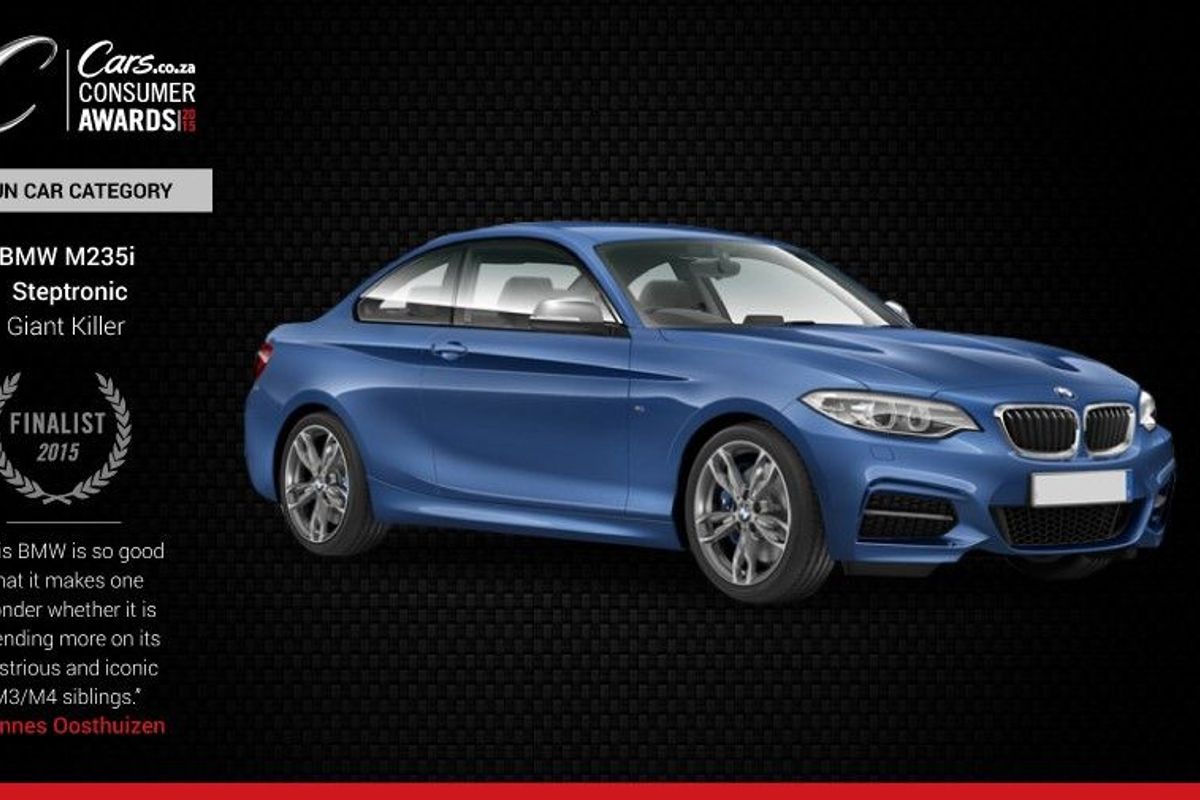
BMW M235i Steptronic
What would this shortlist be without a scorching, rear-wheel driven BMW? The M235i Steptronic makes this list because it offers sizzling performance and fun dynamics in a very attractive, high quality package. In many ways it is the modern-day M3, as it offers similar thrills to what made that model so iconic, but at a far more attainable price than a modern-day version. Powering the M235i is one of those straight-line six-cylinder engines that have made BMW the darling of so many enthusiasts. These days turbocharging is used to bump up the power to 240 kW and 450 Nm, but still it retains that silky smooth character of its predecessors. As per usual, this BMW requires the ticking of some option boxes to get the really tasty stuff. That said, it still has auto lights/wipers, a sound system with Bluetooth support and even a cruise control system with active braking as standard. There are lots of extras to choose from too.
“This BMW is so good that it makes one wonder whether it is worth spending more on its illustrious and iconic M3/M4 siblings.” Hannes Oosthuizen
“I’m amazed how close an M235i feels to an M3. As good as the manual gearbox is, we’ve selected the Steptronic which flatters the amateur driver. Acceleration is good, and the handling is very pure. Throw in the addictive six cylinder bark and you have quite a potent machine on your hands.” David Taylor
“Certainly worthy of the baby M title, the M235i commands your attention with superb dynamics and a sweet-sounding backing track. It’s not a car you get bored of driving quickly.” Ashley Oldfield
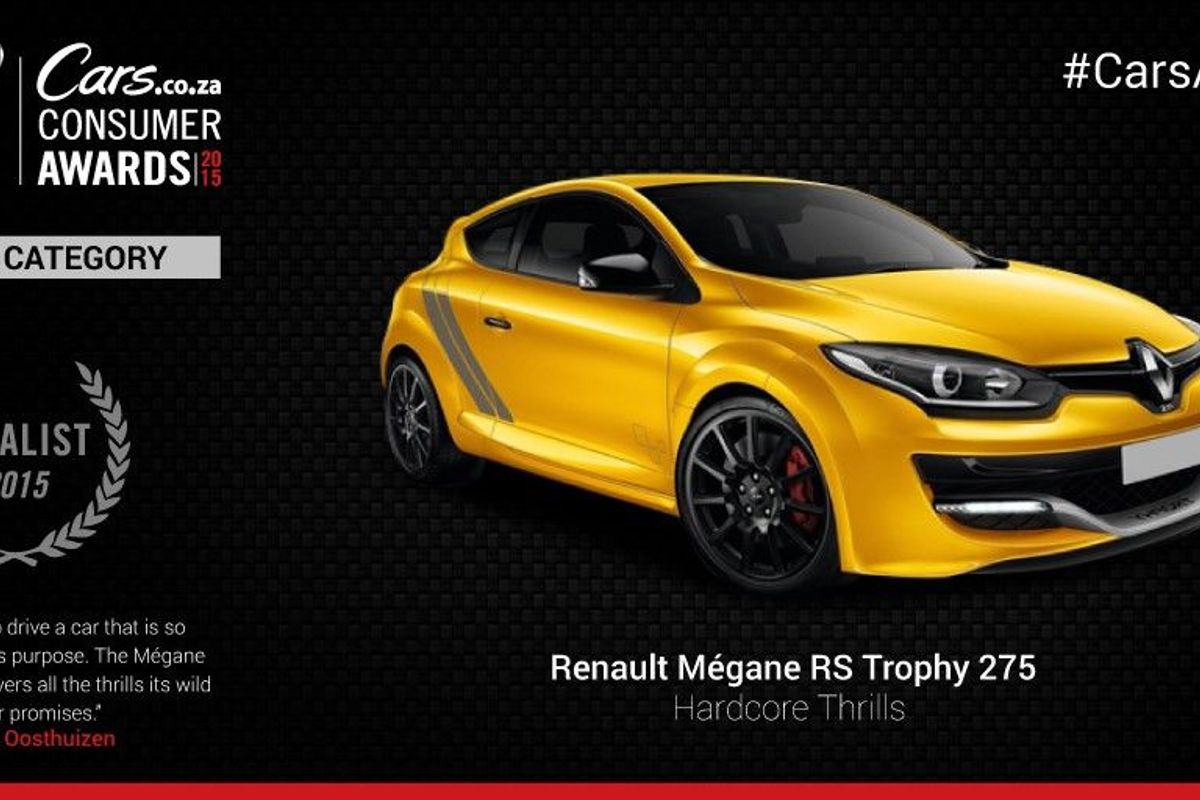
Renault Megane RS Trophy 275
The hot hatch segment is in rude health at the moment, with the likes of Ford, Volkswagen and Renault all in the running for the crown. It is this special edition Megane RS, however, that really excites us. Whereas contemporary hot hatches attempt to offer a spread of talents that broaden their sales appeal, the Megane RS 275 Trophy is a very focused machine that prioritises ultimate engagement and fun. Under the Renault’s bonnet is a turbocharged 2,0-litre engine that pumps out no less than 201 kW and 360 Nm of torque (the latter across a wide rev range of 3 000 to 5 000 rpm). The power is accessed through a lovely, short-throw six-speed manual gearbox, and sent to the front wheels where a limited slip differential ensures great tractability. Renault always offers lots of standard equipment on all its cars, and this Megane RS Trophy is no different, notwithstanding its hardcore performance orientation. You still get heated front seats, auto lights/wipers, cruise control and a smart info-tainment system with TomTom navigation and Bluetooth.
“It’s refreshing to drive a car that is so single-minded in its purpose. The Megane RS 275 Trophy delivers all the thrills its wild exterior promises.” Hannes Oosthuizen
“If a racecar for the road is what you want, then this will tick all your boxes. It’s very hardcore and the bark from that Akrapovic exhaust will let other road users know that this is a serious machine. Opt for the yellow paintjob for maximum effect.” David Taylor
“I can’t help but need this car in my life, it’s hard-edged and track focused and so responsive to inputs. A proper track car for racers but it’ll make you suffer on the everyday commute with its stiff ride.” Ashley Oldfield
BMW 7-Series Prices in South Africa Released Pre-Launch
We've found pricing for the G11 BMW 7-Series ahead of its imminent South African launch.
For many years the BMW 7-Series has played second fiddle to the Mercedes-Benz S-Class limousine and the Munich-based brand has been hell-bent on trumping the class leader. The latest incarnation of BMW 7-Series looks like it may just have the technology, luxury and performance to match the Mercedes-Benz S-Class and we're very excited to drive it in January 2016. This video highlights some of the newcomer's high-technology features, many of which BMW claims are groundbreaking. You'll get things such as gesture control, inductive smartphone charging and remote control parking, which makes the 7-Series… very clever. You can also read more details about the new BMW 7-Series here.
The Range
Initially, four models will go on sale in South Africa, with more (such as the V12-engined 760Li) arriving later this year. The BMW 7-Series range kicks off with the 740i which packs a 240kW and 450Nm motor. The only turbodiesel in the range, the BMW 730d, is next with 195kW and 620Nm. Then we're onto the turbopetrol V8s which are befitting for a vehicle of this stature. There are two 750i models. The second — a long wheelbase Li — offers more space and comfort for rear passengers. Both 4.4-litre V8-engined 750i models produce outputs of 330kW and 650Nm.
BMW 7-Series Price in South Africa
The BMW 7-Series comes with many trim options and being a premium product, numerous options are available.
CO2 Tax
Standard
Exterior Design
Pure Excellence
M Sport
M Sport with
Interior Design
Pure Excellence
740i Sedan
R3 488,40
R1 339 000
R1 350 600
R1 378 500
R1 398 300
730d Sedan
R1 128,60
R1 365 500
R1 377 100
R1 405 000
R1 424 800
750i Sedan
R6 566,40
R1 755 000
R1 766 600
R1 775 000
R1 424 800
750Li Sedan
R6 874,20
R1 893 500
R1 905 100
R1 913 500
R1 932 200
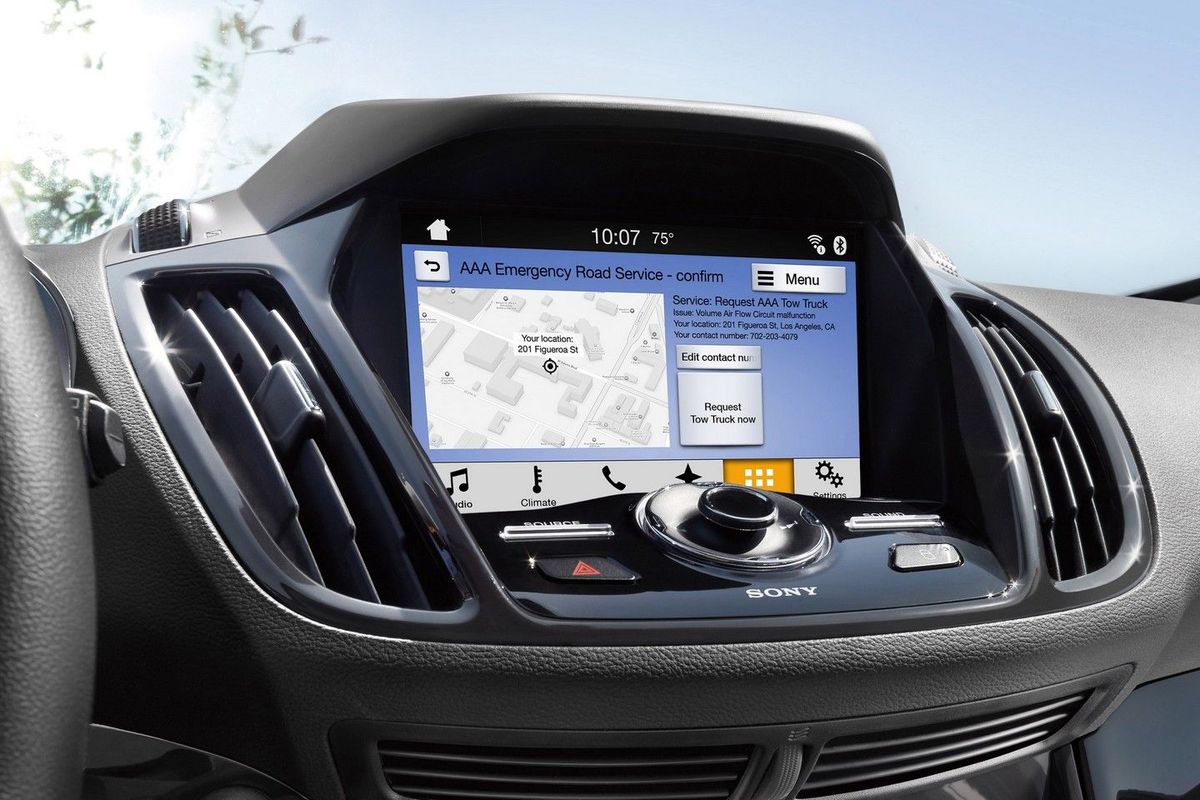
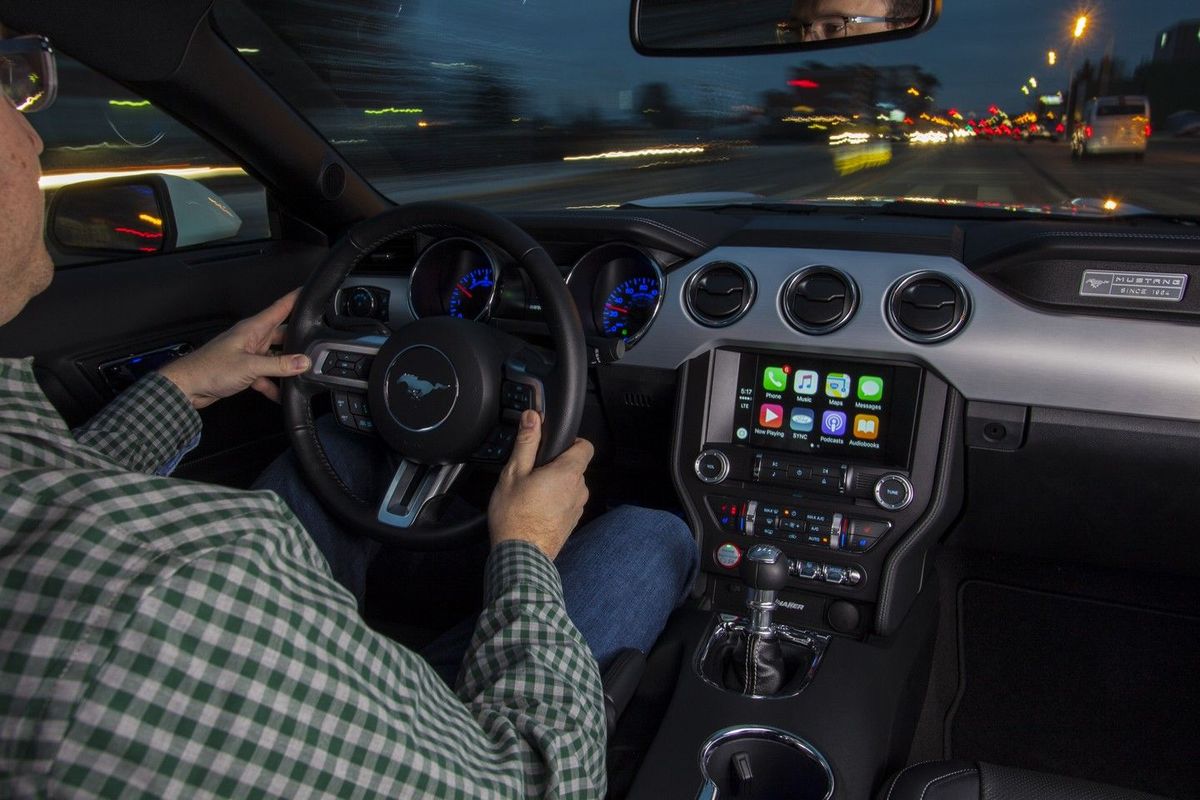
Ford Offers Android Auto and Apple CarPlay in SYNC 3 (Video)
Ford's SYNC connectivity and voice recognition software is well regarded, but the latest version narrows the gap between cars and smartphones thanks to Android Auto and Apple CarPlay technology.
SYNC 3 is not new, but the new smartphone connectivity feature is. It brings Ford up to speed with the likes of many manufacturers that have already taken the plunge and partnered with both Apple and Android. The other addition is that all new Fords will also come fitted with 4G LTE connectivity. The news emanates from the 2016 CES exhibition in Las Vegas. The Consumer Experience Show is not really a car show, but it's being increasingly taken over by automotive manufacturers seeking to highlight advances in technology.
The new software will be offered in the United States on all 2017-model year Ford products equipped with SYNC 3, while existing customers with SYNC 3-equipped vehicles will be requested to pop past their dealer for an upgrade.
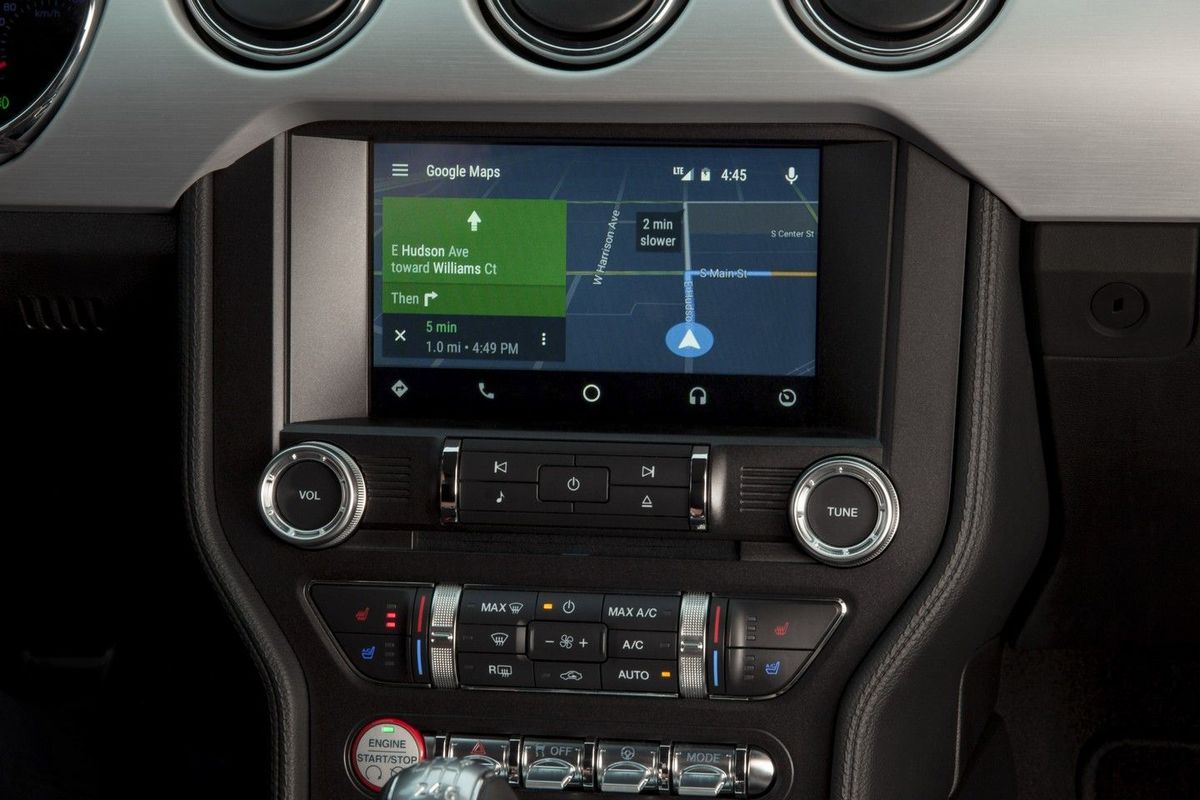
Android Auto
Android Auto will only work if devices are running at least the 5.0 Lollipop operating system and most of the Google Services will be supported. Features such as Google's Voice Search, Google Maps and music can be displayed on the screen and there's no reason why you'd need to touch your mobile device while driving. The 4G LTE connectivity also makes it possible to remotely start your car, unlock the doors, check fuel levels and find your parked vehicle by using the smartphone. Apps such as CitySeeker, which finds restaurants and nightspots, will also be included.
Apple CarPlay
For those who use Apple's iOS, please note that only the iPhone 5 and later models are compatible. Simply plug your phone in via USB and you get the CarPlay menu on your dashboard. Features include Siri voice control, hands-free calling, streaming music, receiving directions (optimised for traffic conditions) and sending/receiving text messages.
South African Availability
We made contact with Ford South Africa and at the time of writing, availability of SYNC 3 was unconfirmed. However given Ford's plans for 2016 we'd be very surprised to not see SYNC 3 fitted to the Ford Focus RS, as well as later versions of the Ford Everest.