Renault Captur or Ford EcoSport?

The Ford EcoSport has been a serious hit in South Africa since its launch way back in 2013. Ford has racked up more than 15 500 EcoSport sales locally with average monthly sales exceeding 1 000 units in 2015.  Much of the EcoSport’s success can be attributed to its attractive styling and keen pricing which has put it on top of the sub-compact crossover pile. Not even the once-popular Nissan Juke or Peugeot 2008 come close to selling those numbers. There is a newcomer, however, that poses a threat to the EcoSport, and it’s called the Renault Captur.
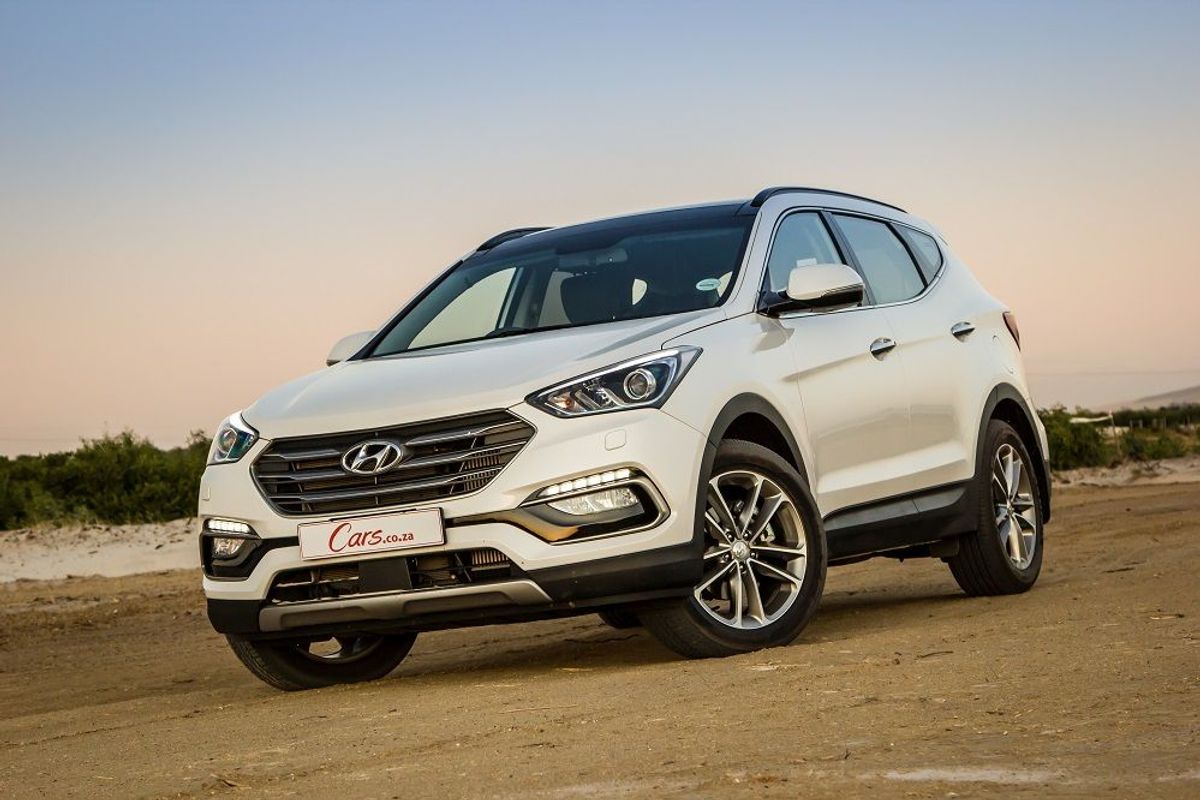
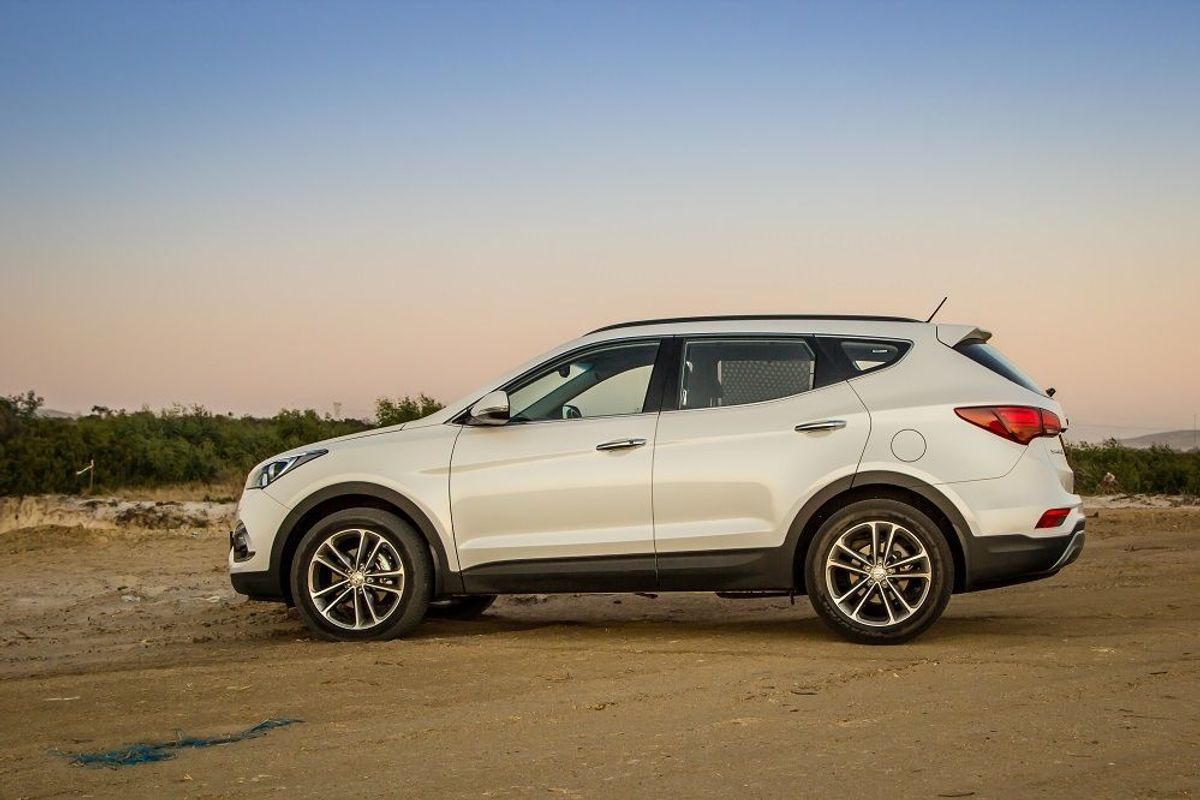
The Renault Captur was introduced to market in May 2015 and interest in this vehicle has been huge. In it’s first partial month of sales, just under 500 units were sold, hinting that the Captur is a serious and worthy competitor to the EcoSport. Like the EcoSport, the Captur has much to like in the looks department and it too is keenly priced. But what car is the better buy? Let’s take a closer look to see how the new Renault Captur stacks up against the dominant Ford EcoSport.

Engine Comparison

The Renault Captur currently has three derivatives on offer powered by a three-cylinder, 0.9-litre turbo engine and a four cylinder 1.2-litre turbo engine. The Ford EcoSport on the other hand is by powered by a three cylinder 1.0-litre Ford Ecoboost engine as well as a 1.5-litre engine. There’s also a 1.5-litre TDCi derivative but for the purpose of this comparison we will only focus on the petrol derivatives.

Renault Captur 0.9-litre Turbo Ford EcoSport 1.0-litre Ecoboost Renault Captur 1.2-litre Ford EcoSport 1.5-litre
Cylinders 3 3 4 4
Power 66 kW 92 kW 88 kW 82 kW
Torque 135 Nm 170 Nm 190 Nm 138 Nm
Transmission 5-speed manual 5-speed manual 6-speed auto dual-clutch 5-speed manual or 6-speed auto dual-clutch
Fuel Consumption 4.9L/100km 5.7L /100km 5.4L/100km 6.5L/100km

Engine Verdict

Although we haven’t tested the Renault Captur 66kW Turbo, we have our reservations about it. On paper, it seems that the Captur is under gunned in the face of Ford’s 1.0-litre Ecoboost engine, which is a remarkably good engine offering excellent performance. For the larger capacity engine offerings, we feel the Renault Captur 88kW Turbo automatic is the better offering as it offers more power and torque over Ford’s 1.5-litre engine. If fuel efficiency is important to you, then the Renault Captur is the car to go for.

Read our review of the Renault Captur 88kW Turbo Dynamique here!

Read our review of the Ford EcoSport 1.0T Titanium here!

Features Comparison

With engines out of the way, let’s see how these two competitors stack up in terms of spec. For this comparison we will examine both the entry-level model and the top-spec model.

Entry Level

Features Renault Captur 66kW Turbo Expression Ford EcoSport 1.5 Ambiente
Auto Stop/Start Yes No
ABS Yes Yes
EBD Yes No
Brake Assist Yes No
Stability Control Yes No
Alloy wheels Yes No
Climate Control Yes No
Multifunction steering wheel Yes No
Navigation Yes No
Cruise Control Yes No
Bluetooth Yes No
CD Player No Yes
USB Port Yes No
Auxiliary Port Yes Yes
Park Distance Control Yes Yes
Airbag Quantity 4 6
Interior Space 377 – 1 235L 362 – 705L

Top Spec

Features Renault Captur 88kW Turbo Dynamique Auto Ford EcoSport 1.5 Titanium Auto
Upholstery Cloth (Opt Leather) Leather
ABS Yes Yes
EBD Yes No
Brake Assist Yes Yes
Traction Control No Yes
Stability Control Yes Yes
Alloy wheels Yes Yes
Multifunction Steering Wheel Yes Yes
Multi Information display No Yes
Navigation Yes No
Cruise Control Yes Yes
Bluetooth Yes Yes
CD Player No Yes
USB Port Yes Yes
Auxiliary Port Yes Yes
Park Distance Control Yes Yes

Spec Verdict

The Renault Captur is difficult to trump in terms of specification. The entry-level offering is packed with features when compared to the Ford Ecosport 1.5 Ambiente, which looks rather sparsely specced. The spec sheet for the EcoSport however improves somewhat as the trim level improves. A major draw card for the Renault Captur is its space offering. The Captur has the bigger boot with 377L which can be adjusted to 455L which is in contrast to the EcoSports 362L boot. The Captur however takes the cake when the rear seats are folded flat, offering up to 1 235L compared to the EcoSport’s 705L.

Price Comparison

  Renault Captur 66kW Turbo Expression Ford EcoSport 1.5 Ambiente Renault Captur 66kW Turbo Dynamique Ford EcoSport 1.0T Trend Ford EcoSport 1.0T Titanium Renault Captur 88kW Turbo Dynamique Auto Ford EcoSport
Titanium Auto
Price R219 900 R210 900 R239 900 R246 900 R266 900 R279 900 R270 90

Renault Captur pricing includes a 5-year/150 000 km warranty and a 3-year/45 000 km service plan.

Ford EcoSport pricing includes a 4-year/120 000 km warranty and a 4-year/60 000 km service plan.

Overall Verdict

Despite being slightly under powered at the entry-level price point, the Renault Captur still offers excellent value when considering the sheer amount of standard specification on offer compared to the Ford EcoSport. At mid-level specification, Ford’s 1.0-litre Ecoboost engine is well worth consideration but buyers will have to opt for the pricey EcoSport 1.0T Titanium to match the specification of the Captur. At the top-end of the range, the Captur pips the EcoSport in the performance department and the Captur offers more space and is more fuel efficient overall when compared to the Ford EcoSport.

Still not sure? Watch this Buying Advice video to get some more information and don’t forget that you can use our Cars Compare tool to see how these vehicles stack up against each other.

Buying Advice: Renault Captur Pricing & Rivals (Video)

Kia Sorento (2015) Specs & Pricing Announced

The all-new Kia Sorento launches this week and officially goes on sale in South Africa on the 1st of July 2015. The Sorento is a large SUV which offers up to seven seats, generous specification and the choice of either petrol or diesel engines. The all-new KIA Sorento had its global debut 2014 Paris Motor Show and is now in its third generation.

“The all-new Sorento is a key model for KIA due to our affinity for the SUV class of vehicles,” says David Sieff, Marketing Director, KIA Motors South Africa. “The third generation Sorento is especially exciting to bring to market as we make the next step up the quality and refinement ladder. We realise innovation and technology is expected from KIA but we have again brought key conveniences that make owing the new Sorento a driving pleasure,” he added.

2015 Kia Sorento Details

In terms of size, the new Kia Sorento is longer, lower and wider. The length has been extended by 95mm to 4 780mm, making the new Kia Sorento a rather large vehicle. While its large exterior makes its quite eye catching on the road, its the interior where the majority of improvements can be found. The interior is now more sophisticated and more luxurious, featuring significantly higher quality materials and there’s confidence that the brand is able to match its European counterparts.

There’s extensive use of soft-touch materials and leather which combine to create a modern and luxury feel to the cabin of the Kia Sorento. All Sorento models come with a Saturn Black interior as standard with cloth or leather trim depending on the model. There has been substantial improvements to the new Kia Sorento’s quality and this includes strengthened body, improved NVH, increased torsional rigidity which all add up to improved refinement.

Depending on the model, the all-new KIA Sorento is equipped with one of two instrument binnacles. In entry-level guise, the new Sorento comes as standard with a 3,5-inch mono LCD screen while higher spec models feature a 7-inch colour TFT LCD screen. All models come as standard with a Radio/CD/MP3 player, as well as multimedia ports for USB and AUX-in connections, and six speakers around the cabin. In entry-level models, information is displayed on a 3,8-inch display, while higher specification grades feature a 4,3-inch colour touch screen that incorporates the rear-parking camera.

Technology in the new Kia Sorento

The new Sorento has a number of new, advanced on-board technologies to improve convenience and further enhance the ownership experience. These include a Blind Spot Detection system, which uses radar sensors to monitor approaching vehicles from the rear in the lanes flanking the driver. If a vehicle is detected, a visual alert appears on the side view mirrors. Linked to the system is a Lane Change Assist function: if the Blind Spot Detection system detects an approaching vehicle in the blind spot, and the turn signal is activated in an attempt to change lanes, the Lane Change Assist emits an audible warning.

Also new is a Smart Power Tailgate, which automatically opens when the key is ‘sensed’ in close proximity to the trunk. When owners approach the rear of the vehicle and the key is within the correct range of proximity, the trunk opens automatically after three beeps, allowing you to load shopping bags or heavy objects straight into the vehicle without first having to shake a foot underneath the bumper.

In terms of engines, you can pick either a 2.4-litre multi-point injection petrol engine or a 2.2-litre ‘R’ turbodiesel engine. The diesel engine has been revised to offer improved smoothness and efficiency, while increasing torque. Kia offers the all-new Sorento in front-wheel drive and all-wheel drive configuration with a choice between six-speed manual and automatic transmissions – the combination dependent on the specification grade.

High-specification versions are equipped with Kia’s DYNAMAX™ all-wheel drive system, which balances torque distribution to the front and rear wheels depending on the specific requirement. The system is further enhanced with a ‘4WD Lock’ mode, which splits torque distribution evenly between front and rear wheels and gives greater traction in snow, on sand, on other low-traction surfaces, and around bends.

Kia South Africa will offer the all-new Sorento in four derivatives, ranging from LS and LX at the entry level to the mid-spec EX and top-spec SX.

Starting off is the front-wheel drive KIA Sorento 2.4 LS, which is the only model powered by the 2.4-litre MPI engine, and the only model equipped with a six-speed manual transmission as well as five seats. The next model is the front-wheel drive Sorento 2.2 CRDi LX which has a smooth-shifting six-speed automatic transmission. It too is a five seater. Next up is the Sorento 2.2 CRDi EX which has the AWD system, as well as two additional seats. Finally, there’s the range-topping Sorento 2.2 CRDi SX AWD, which gains Blind Spot Detection, the smart power tailgate and a full glass panoramic sunroof.

Kia Sorento Price in South Africa

KIA Sorento 2.4 LS                                             R 379 995
KIA Sorento 2.2 CRDi LX                                  R 499 995
KIA Sorento 2.2 CRDi EX AWD                       R 599 995
KIA Sorento 2.2 CRDi SX AWD                        R 634 995

All new Kia Sorentos come with KIA’s industry-leading 5-year / 150 000 km warranty, as well three years of unlimited roadside assistance. The Sorento 2.4 LS comes as standard with a 4-year / 90 000 km service plan, while LX, EX and SX models include a 5-year / 100 000 km maintenance plan.

Ashley Oldfield is currently at the launch of this vehicle. Look out for his driving impression in the next few days.

Ford Tourneo Connect 1.0T Trend (2015) Review

The Ford Tourneo Connect is the brand’s attempt to move into the people-carrier segment and on paper it looks promising. Despite its very apparent van-like design, the Ford Tourneo Connect offers some great family practicality and thanks to a decent price, makes a strong case for itself as an affordable people carrier. We spent a week with the 1.0-litre Tourneo Connect in Trend spec, but is a 1.0-litre engine powerful enough for a people carrier?

Engine and Performance

The star of the show has to be the engine. While we’re well aware of the punch offered from Ford’s 1.0-litre three-cylinder EcoBoost engine, we thought a people carrier application would be a bit of a stretch. It doesn’t have the same outputs as the Fiesta 1.0 and Focus 1.0 as it’s detuned from 90kW to 74kW.  Torque however sits happily at the 170Nm.

Questions were asked of the Ford Tourneo’s performance while loaded. Without any cargo and just a driver, we’re satisfied with how the Tourneo drove. A perfect opportunity arose when some of the Johannesburg office staff requested transportation and this included their luggage which consisted of surfboards and suitcases. With four adult males in the car as well as gear, performance remained credible and the six-speed gearbox made light work of a busy commute.

Practicality and Boot Space

Practicality is another area where the Ford Tourneo Connect shines. There are storage compartments aplenty all around the cabin. For the driver and passenger, there are some overhead lockers which are perfect for loose jerseys and laptop bags. The second row of passengers gets similarly-sized compartments, however these have access doors.

The boot space is commendable and with the ability to fold down the rear bench, the potential to carry items such as bookcases or washing machines becomes very real. The headroom in the Ford Tourneo Connect was particularly impressive and the entire cabin felt very spacious.

The rear bench is accessed by two sliding doors, which make entry/exit easy. The seats in the rear are spacious and adults will be comfortable.

The Drive

Thanks to a relatively decent six-speed manual gearbox and reasonable ride quality, the Ford Tourneo Connect offers a generally positive drive. It’s super comfortable and offers a car-like driving experience. Once you’re up to cruising speed, the Ford Tourneo Connect starts returning impressive fuel consumption figures and at one stage we saw 3.5L/100km on the instant fuel readout. Overall you’re looking at around 8L/100km when driving the Tourneo Connect around town.

The materials inside the cabin feel very durable, but cheap. It’s not a crisis as materials like this are designed to last and are easily wiped clean. Trend specification gets you a lot of features such as steering wheel-mounted audio controls, cruise control, speed limiter as well as the rather good Ford Sync infotainment system which plays through a small screen in the middle of the dashboard. Parking sensors and alloy wheels are strangely optional…

An excellent feature is the tiered wing mirrors which offer two sets of glass. The one mirror is your usual rear view setup, while the other makes parallel parking super easy and you’re able to accurately see how far the vehicle is from the kerb.

Summary and Conclusion

The Ford Tourneo is a simple and sensible multi-purpose vehicle that offers tons of practicality and interior space. While it may lack some premium touches, the market prefers simple yet durable materials anyway. The engine is more than up to the task of lugging people and cargo about, and offers reasonable fuel consumption returns. If you’re in the market for an affordable people carrier, this may be the answer to your needs.

Ford Tourneo Connect Price in South Africa

The Ford Tourneo Connect 1.0 EcoBoost starts at R269 900 for the Ambiente model, while the model tested here is the Trend at R279 900. The vehicle comes with a 3 year/60 000km service plan, 3 year’s worth of roadside assistance and the warranty is a 4 year/120 000km plan.

Test Team’s Comments

“The Tourneo Connect has a smaller engine than you’d ever imagine. What a great car for surfers!” – Ciro De Siena

“The Tourneo Connect is a super practical vehicle perfectly suited for family use. The 1.0-litre Ecoboost engine offers good performance and the Tourneo Connect should be fairly easy to live with on a daily basis.” – Gero Lilleike

We Like: Practicality, engine, drives well, features galore, value for money offering

We don’t Like: Commercial looks, rear tailgate only accessible for tall people and it’s impractical for confined garages,

Also consider: Volkswagen Golf SV, Citroen C4 Picasso, Opel Meriva

Compare the Ford Tourneo Connect to its rivals here.

Ford Tourneo Connect 1.0 EcoBoost Trend Specs

Ford-Tourneo-Connect

Honda BR-V Crossover Teased Before Reveal

Honda has sent out a teaser picture of its new BR-V crossover which is set to premiere at the Indonesian Auto Show. The car in the image looks very futuristic, but if reports are to be believed, what you’re looking at is Honda’s next generation crossover utility vehicle.

Honda BR-V Details

BR-V stands for Bold Runabout Vehicle and potentially seating for up to seven people on three rows is possible. Developed by Honda Research and Development Asia Pacific Division based in Thailand, the BR-V looks likely to target the Asian market. In terms of engines, there will be a 1.5-litre petrol engine, but we wouldn’t say no to the rather excellent 1.6-litre diesel that we’ve sampled in the Civic.

Underneath that smart-looking body, we reckon the new BR-V will be based on the Brio/Mobilio which is a rugged platform. Honda says the BR-V will be solid and tough and will feature sleek roof rails, big alloy wheels as well as useful ground clearance. Safety features are generous and there will be a choice of two gearboxes.

The vehicle will be shown off in August at the Indonesian International Auto Show 2015, with a production version potentially going on sale in 2016. 

Fuel Price Increase for July 2015

It’s another dark day in South Africa as motorists prepare for a fuel price hike with effect on 1 July 2015. The increase in fuel prices is a direct result of the weakening Rand against the US Dollar. According to the Department of Energy, the Rand lost around 40 cents to the US Dollar since the end of May 2015 as a result of negative sentiment on global emerging markets. The petrol price increased internationally due to strong demand in Europe and in the Asian market.

Here is what you can expect when the increase takes effect at midnight tonight.

Fuel Price in South Africa – July 2015

Diesel – Both grades of diesel will increase by 4 cents/litre.

Reef – Diesel 0.05% – R11.71
Diesel 0.01% – R11.74

Coast – Diesel 0.05% – R11.38
Diesel 0.01% – R11.44

Petrol – 93 ULP and LRP will increase by 44 cents/litre while 95 ULP and LRP will increase by 41 cents/litre.

Reef – Unleaded 93 – R13.52 / 95 – R13.70
LRP – R13.52

Coast – Unleaded 93 – R13.26 / 95 – R13.37
LRP – R13.37

Take a look at our Driving Tips to Improve Fuel Efficiency to help you save fuel while out on the road.

New Hyundai Creta Compact SUV Revealed

Hyundai has revealed that it will be making a compact SUV in the near future named the Creta. The name comes from the largest of the Greek islands and it is likely to be sold globally. The Creta is currently sold as an ix25 in China.

Hyundai Creta Details

The sub-compact SUV market is taking off at the moment with a flurry of vehicles being introduced recently. Renault has the Captur, Nissan has a Juke, Ford an Ecosport and Mazda will imminently introduce the CX-3. The Hyundai Creta will take the fight to this bunch with a new version of fluidic sculpture – Hyundai’s design language.

The engine lineup for the Hyundai Creta includes three motors, two of which are diesels. The remaining petrol engine is a 1.6-Litre petrol that develops 90 kW and comes with a six-speed manual gearbox. There is a 1.6-Litre diesel available in automatic that will deliver 94 kW and a 1.4-Litre diesel however power details are not available on this version yet.

In order to further boost the Hyundai Creta’s market desirability it also offers projector headlamps with LED Positioning lamps, 17-inch alloys, 7-inch touchscreen and six-speaker sound system, push button start and six airbags (includes Sides & Curtains).

The Hyundai Creta is set to go on sale in July 2015 in India, but there’s no news about external markets yet. The identical IX25 is a vehicle which is potentially on its way to South Africa at some point during 2015. Whether we’ll get the IX25 or the Creta is yet to be determined.

2015 Audi A4 Revealed (Video)

It’s been a long time coming, but Audi has finally revealed details of the new A4 in both sedan and station wagon form. Audi has placed significant emphasis on reducing CO2 emissions and the new A4 weighs up to 120kg less than the outgoing model and is up to 21% more efficient. Let’s take a closer look at what you can expect from the new 2015 Audi A4.

Audi A4 Styling

In terms of styling, the new Audi A4 features a horizontal line at the front and rear which emphasizes the car’s width. The front-end is dominated by a wide and low Singleframe grille, flanked by reshaped LED headlights and Matrix LED technology, which includes dynamic indicators. The A4 also features a sloping roofline and flared wheel arches while a high bootlid is found at the rear with LED taillights.

The new Audi A4 is bigger than before and stands 4.73 (+25mm) metres long, 1.84 (+16mm) metres wide and 1.43 meters tall while the wheelbase has been extended by 12 mm to 2.82 meters. This affords the A4 with a spacious cabin. The A4 Avant has a large boot capacity of 505-litres which expands to 1 510-litres with the rear seat folded flat. An electrically operated boot cover and tailgate are fitted as standard.

A range of technology is offered with the new 2015 Audi A4 and these include Audi Virtual Cockpit, head-up display, a new 8.3 inch MMI display with touchpad and rotary controller and a smartphone interface. Sound is delivered via a Bang & Olufsen Sound System with 3D sound. With MMI Plus, occupants will have Wi-Fi access to the internet while the driver makes use of Audi connect and there’s also an Audi tablet which makes rear infotainment that much more enjoyable.

Engine Choices

The 2015 Audi A4 and A4 Avant will be offered with a total of seven petrol and diesel derivatives.

The first is a 1.4-litre TFSI offering 110 kW and 250 Nm. With a seven-speed S tronic transmission, 0-100kph takes place in just 8.9 seconds with a top speed of 210kph. The corresponding figures for the Avant are 8.9 seconds and 210kph. Fuel consumption is rated at 4.9L/100km.

Buyers looking for more petrol power can also opt for the 2.0-litre TFSI (4.8L/100km) which can offer either 140 kW and 320 Nm of torque. Fitted with quattro drive and a 7-speed S tronic 0-100kph takes just 5.8 seconds with an electronically limited top speed of 250kph. The new A4 Avant has corresponding figures of 6.0 seconds and 250kph. The A4 with front-wheel drive and S tronic consumes just 5.7L/100km. 

As an alternative this 2.0-litre TFSI can also develop 185 kW and 370 Nm of torque. 0-100kph in the sedan with a 7-speed S tronic takes just 7.3 seconds with a top speed of 240kph while figures for the Avant are 7.5 seconds and 238kph. Fuel consumption is rated at 4.8L/100km for the sedan and 5.0L/100km for the Avant.

In terms of diesel engines, there’s a 2.0-litre TDI (3.7L/100km) which develps 110 kW and 320 Nm of torque. With a 7-speed S tronic and front-wheel drive, the sedan will accelerate to 100kph in 8.7 seconds with a top speed of 219kph. Corresponding figures for the A4 Avant are 9.0 seconds and 213kph. When fitted with  6-speed manual, fuel consumption is rated at 3.8 and 4.0l/100km for the sedan and Avant respectively.

This engine can also be had with outputs of 140 kW and 400 Nm of torque which results in acceleration from 0-100kph in 7.7 seconds with a 7-speed S tronic transmission for the sedan while the Avant manages 7.9 seconds with top speeds of 237kph and 231kph respectively.

A six-cylinder 3.0-litre TDI engine will offer 160 kW and 400 Nm of torque with fuel consumption rated at 4.2-litres/100km for both the sedan and Avant. This engine can also be had with outputs of 200 kW and 600 Nm of torque. Here, 0-100kph is achieved in  5.3 seconds with an electronically limited top speed of 250kph. fuel consumption is rated at 4.9L/100km. Figures for the A4 Avant are 5.4 seconds to 100kph with a top speed of 250kph. Fuel consumption for the Avant is at 5.1L/100km. This high-end model is fitted with an 8-speed tiptronic transmission.

Audi will also introduce a g-tron version during the life cycle of the new A4, which will use natural gas or the sustainably produced Audi e-gas.

Safety Features

As is to be expected, the 2015 Audi A4 will feature a range of safety features and driver assistance systems. These include predictive efficiency assistant, active lane assist, Stop&Go adaptive cruise control, traffic-jam assist, parking assist, rear cross-traffic assist, exit warning, collision avoidance assist, turn assist and the Audi pre-sense systems. Camera-based traffic-sign recognition will also be available.

When Will It Come to SA?

At this stage we’re likely to see the new 2015 Audi A4 arrive in South Africa in early 2016.

2015 Audi A4 Video

Mercedes-Benz A45 AMG Refreshed For 2015

The next generation Mercedes-AMG A45 4MATIC has been revealed and promises to carry on with the sheer lunacy and hooliganism its become known for. The vehicle features more power, revised gearbox and some tweaks to the aerodynamics as well as new Dynamic Select driving modes.

It’s Faster

First up is the power increase. The A45 AMG now pushes out 280 kW and 475 Nm, up from the 265 kW and 450 Nm in the current model. Mercedes-AMG has changed the valve assembly as well as reconfigured the turbocharger and timing. The result is an even faster vehicle off the line, with a claimed 0-100kph time of 4.2 seconds, which is 0.4 seconds faster. Interestingly Mercedes-AMG claims fuel economy stays the same, despite the increase in power and you can get 6.9L/100km.

The gearbox has received some changes in the form of revised gear ratios for gears 3 and 7 which means faster in-gear acceleration. The additional benefit of closer ratios means smoother gear changes too. If handling and track days are your thing, then you can spec an optional front axle differential.

Aerodynamics and Interior

There are some aerodynamic changes to the A45 AMG in the form of AMG-specific cooling air inlets and spoiler lip under the front splitter, while the rear apron gets four vertical fins with diffuser as well as the boot-mounted spoiler. The headlights get the LED High Performance with daytime running light treatment and this is included as standard. The aerodynamics help generate additional downforce which will then improve the handling.

In terms of the interior, there’s a new multifunction sports steering wheel and some changes to the sports seats which now feature cushion depth adjustment. The A45 AMG now offers modern s

American Chevrolet Cruze Revealed

The Chevrolet Cruze has only just landed in South Africa and already a new model, specifically for America has rolled out of the factory. It is set to go on sale in the states early in 2016 and then be exported to 40 countries around the globe.

New Chev Cruze Details

Don’t be entirely fooled by its good looks in these pictures, this Cruze is specced with RS kit that adds a few special touches. The RS trim level also comes with 18-inch wheels and a rear spoiler. The new Cruze rides on a longer platform with a larger wheelbase that improves rear legroom. The extra size hasn’t affected the weight of the Cruze, which claims to have actually shed 113kg. It’s also 27% stiffer than before and more aerodynamic according to its drag coefficient number.

Chevrolet will also be adding a new 1.4-Litre turbo engine to the range that works with either a six-speed manual or a six-speed auto. Claimed output is 113 kW and 240 Nm of torque, plenty for a family sedan. With this particular engine, Chev says the Cruze can get from 0-100kph in 8-seconds flat and use just 5.8L/100km on the combined cycle.

Inside the infotainment system has been enlarged to seven-inches with the option of eight-inches. The Cruze will feature new technical highlights like Apple CarPlay and Android Auto, there’s also the Chev MyLink system and navigation built in.

Nissan Juke-R 2.0 Revealed

Nissan will unleash the Nissan Juke-R 2.0 at the Goodwood festival of Speed on Thursday 25 June. The original Juke-R made use of a Nissan GT-R motor to develop 362 kW in the tiny Juke chassis. Some technical wizardry went on to get it to grip and handle – which it just about did – and the car was used globally as a marketing tool for Nissan and Nismo.

Nissan Juke-R 2.0 Details

Visitors at Goodwood, will witness the Juke-R 2.0 make its dynamic debut on Goodwood’s Hillclimb on all three days of the event, driven by Nissan GT Academy graduate and Le Mans 24 Hours driver, Jann Mardenborough.

Based on the updated Nissan Juke launched in 2014, the Juke-R 2.0 has been injected with further levels of GT-R testosterone to now reach 441 kW.

The exterior has been modified to make it look more aggressive including a new carbon fibre front bumper. In hot weather, the original Juke-R used to suffer with overheating and a leaf-blower was often used to cool it down between runs. Engineers have now tried to overcome this issue by including larger air vents in the bumper. The rear lights have also been pulled from the latest Juke.

Gareth Dunsmore, Marketing Communications General Manager for Nissan Europe said, “The Juke-R has become an iconic Crossover supercar and with the launch of the latest Juke model last year, it was the natural choice to upgrade the original Juke-R with added power and even bolder styling. The Juke-R 2.0 is a perfect ‘crossover’ of the best bits of Nissan – real innovation showcasing our Crossover prowess fused with the excitement of the GT-R supercar engine.”