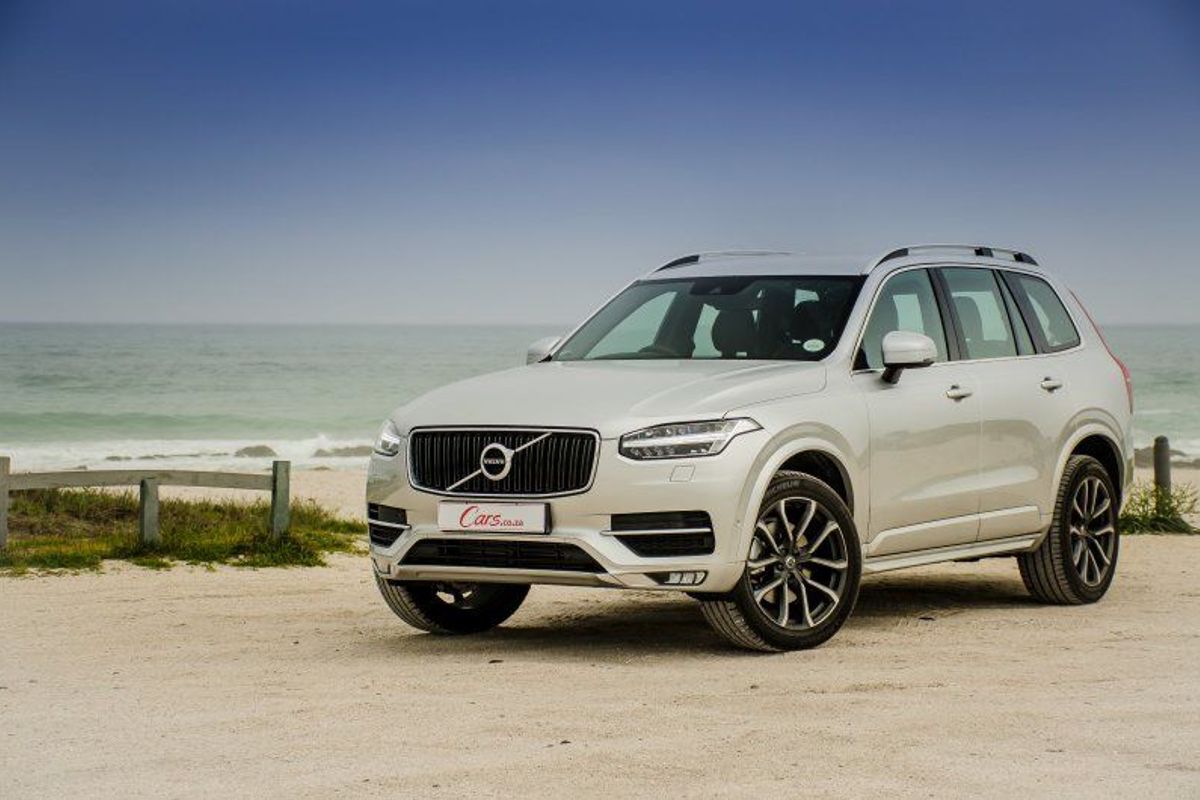
Volvo XC60 T6 Excel (2015) Review


Originally launched way back in 2010, Volvo’s XC60 has matured gracefully enough to still put up a good fight in the ultra-competitive luxury crossover segment. It received a substantial update in 2013, and recently another round of refinements and upgrades were implemented. Most importantly, perhaps, Volvo has brought to market its eagerly anticipated Drive-E 2.0-litre petrol engine, which powers the topic of this evaluation, the T6 Excel.

Class-leading power

Seeing as the XC60’s design is familiar by now and there’s little change on that front, let’s deal with the new engine first. Volvo is on a major efficiency drive and is moving away from large-capacity engines. At the same time, it does not want the quest for efficiency to impact negatively on performance. With this particular engine, that has certainly not been the case.

The 2.0-litre engine is super- and turbocharged, and develops a meaty 225kW and 400Nm of torque. The maximum torque figure is already available at 2 100 rpm and remains on tap to 4 500 rpm. The purpose of the supercharger is not just to boost overall power, but to rather make sure there’s no lag at the bottom end of the power band. The engine is mated with a slick eight-speed automatic transmission that sends power to the front wheels only. Interestingly, the brand’s six-cylinder engine remains on duty in the AWD (all-wheel drive) version of the XC60.

So, how does it perform? Exceptionally well, for short. Consider that the same-price BMW X3 xDrive28i offers a paltry 180 kW and the Audi Q5 even less, and you can appreciate the fiery nature of this Swede. Mash the throttle and the steering wheel will even squirm as a result of the torque steer effect. Drive properly and you should get to 100 kph in less than seven seconds, which is really rather fast for this type of vehicle.

More important, of course, is the flexibility. Generally speaking the transmission is quick to react to throttle input, and once the chosen ratio has been hooked, the result is excellent overtaking acceleration. It is a very swift long-distance family car indeed.

And yet it is also quite efficient. Volvo claims a combined cycle fuel consumption figure of 7.3L/100 km and though that is not terribly easy to achieve, a real-world figure of well below 10L/100 km is both achievable and deeply impressive considering the inherent performance capability of the engine. Many vehicles offer so-called “Eco” modes without much noticeable impact during real-world driving, but Volvo’s Eco+ function seems to be quite effective.

Loaded with technology

Volvo is certainly not pulling any punches when it comes to new technologies. You could argue that it simply has to play the tech game aggressively, seeing as its price puts it up against some pretty desirable badges.

Nevertheless, the new Sensus info-tainment system is very impressive, though Volvo needs to – and is, on its latest products – move beyond the cluttered centre stack control interface. The all-digital instrumentation panel is very attractive, and can be tailored by selecting one of the three modes; Elegance (traditional black/white), Eco (green) and Performance (red). A large variety of features are housed within the Sensus system – it can even read your text messages out to you. Another nice touch is free updates to the navigation maps… for the lifetime of the vehicle.

This being a Volvo, safety remains a high priority. As such, the brand’s City Safety feature is standard – when driving at speeds below 50 kph this feature will apply the brakes automatically when a stationary vehicle or obstacle approaches and the driver isn’t responding in time. A large number of optional extras and option packs are offered. Our T6 Excel was fitted with the Premium pack which adds R31 000 to the price and adds features such as; heated front seats, automated tailgate, front/rear park distance sensors, rear view camera, navigation with advanced voice control and a lovely Harman Kardon premium sound system, among a few other goodies.

Comfortable and practical

The rest of the XC60 T6 Excel is more familiar, yet still impressive. At 2 774 mm in length its wheelbase is still class competitive, even against a newcomer such as the (seven seat) Land Rover Discovery Sport. Rear legroom is good for this class. The boot, too, is very big, measuring 650 L. Drop the rear seats and you’ve got 1 450 L of space to work with. It’s not only the sheer numbers that are impressive – the actual shape of the loading compartment makes it a practical mover of bulky/awkwardly shaped items such as mountain bikes (without removing the wheels).

The XC60 is a comfortable daily driver, but ultimately it is most happy on the long road, where it soaks up the miles effortlessly and, in this model derivative’s case, very quickly. The ride is very supple, even on those large 18-inch wheels. There really are only two minor irritations – road noise on coarse surfaces can be a bit high, and the suspension doesn’t like transverse ridges.

Conclusion and Summary

At the price the Volvo XC60 faces a very difficult challenge, no matter how good it is. The allure of BMW, Audi, Lexus and Land Rover badges may simply be too much for most buyers. Yet, if you compare spec-for-spec and especially powertrains, this Volvo looks like a bit of a bargain. You’ll have to pay more than R100 000 extra to get the same power in a BMW X3, and there’s no such option in the new Land Rover Discovery Sport. If resale is of little concern to you, and you’re looking for a family friendly, safe and practical crossover with a bit of a performance streak, we advise you to go take a test drive of this Volvo.

Volvo XC60 T6 Excel Price in South Africa

The Volvo XC60 T6 Excel costs R629 300 and comes with a five-year/100 000 km warranty, five-year/100 000 km maintenance plan and requires servicing every 12 months/20 000 km.

Test Team’s Comments

Volvo’s offering is tough to beat and it’s more than a match for most of its German and British rivals. The engines are all 2.0-litres in displacement and its astonishing to see the power outputs coming from such a small unit. Factor in a solid 8-speed autobox and a classy cabin, and you’ve got a seriously strong contender in the SUV segment- David Taylor

We Like: Build quality, Ride, Practicality, Standard features, Performance

We don’t Like: Cluttered control interface, Resale worries

Also consider: BMW X3, Audi Q5, Lexus NX

Compare the Volvo XC60 with the BMW X3 and Land Rover Discovery Sport here

Volvo XC90 Specs

XC60-T6-Excel

Volkswagen Golf GTI Performance Pack (2015) Review

The addition of the Performance Pack to the Volkswagen Golf GTI range should offer a better driving experience on paper at least, but is there enough of a difference to make it more enticing than the already excellent standard GTI? We spent a week with a Tornado Red Golf GTI Performance Pack and got under its skin.

It’s easy to understand why the Volkswagen Golf GTI sells in the numbers it does. It combines performance in a practical five-door body, with splashes of luxury and excellent build quality. If there was a car that could tick most boxes for Joe Average, this is it. What makes the Golf business case interesting is that the GTI accounts for more than half of the sales and out of all the Golf models sold, the majority being twin-clutch DSG units. As good as the manual is, the DSG-equipped is faster and better for day-to-day driving.

With a price difference of almost R100 000, VW has spotted a gap  between the GTI and its Golf R brother that needed filling. GTI Performance Pack slots perfectly between the two cars, but is closer to the GTI than the R on the performance scale.

What’s The Difference?

The differences between the GTI Performance Pack and its sibling is a bit more power on tap as well as Dynamic Chassis Control (DCC) being fitted as standard. There’s a fancy new electronic front differential which makes for sharper handling. Enthusiasts will spot the subtle red GTI badging on both the front grille and rear bumper as well as red brake calipers. The wheels pictured here are optional, but they look terrific.

The engine in the Volkswagen Golf GTI Performance Pack is a solid piece of engineering and the output is upped to 169 kW, with the torque figure of 350 Nm remaining the same as the normal GTI. Volkswagen is claiming a 0.1 second improvement on the 0-100kph time, which doesn’t sound like much. We didn’t feel any noticeable difference in performance either.

The handling does feel a little sharper, and when used in its Sport setting, the DCC works well. Essentially DCC tweaks the dampers in the suspension to be soft or firm, making for a more comfortable or sportier ride respectively.

How Does It Drive?

What does this mean on the road? Driving the GTI in Comfort or Eco mode, you’d be fooled into thinking you’re driving a normal, semi-luxurious Golf, but when you engage Sport, everything changes. There’s a sharp induction bark, the responsiveness of the engine and DSG ‘box are sharpened and the car feels taut. It’s in the corners where you notice a difference. We’re not saying the Golf GTI was a poor performer in the cornering stakes at all, but the GTI Performance Pack is the more precise driving tool of the two.

When you’re not pressing on, the GTI Performance Pack still retains those qualities which make the Golf GTI so successful. It’s smooth, comfortable and the ride is supple and forgiving when in Comfort mode. At times it’s easy to forget you’re actually in a performance model, that’s how relaxed the GTI can get. Naturally you can go from Comfort to Sport at the touch of a button and this dual persona makes living with this car so effortless.

Drive it responsibly and in Eco mode, and you’ll get pretty close to the claimed fuel consumption of 6.4L/100km. During its week-long tenure with us, the GTI Performance Pack returned a figure of 8.9L/100km – a fair result considering it was a mix of spirited driving and peak hour commuting.

Still Sensible In Many Ways

A hot hatch being sensible? Yes, the Golf GTI can be very sensible and practical while offering some driving joys. There’s five-door practicality, a handy 380L boot and plenty of kit fitted. Things like daytime running lights, cruise control, climatronic air conditioner, rain sensing wipers, auto headlamps as well as a 5.8-inch touchscreen infotainment system are just some of the things available as standard. Safety features include 7 airbags, ISOFIX child seat mounts, ABS and ESP with brake assist.

Conclusion and Summary

There’s a lot to like about the Volkswagen Golf GTI Performance Pack. In reality, as good as it is, we feel there’s not enough difference to separate it from a standard VW Golf GTI DSG. If you get too happy with options, the list price of the Golf GTI Performance Pack becomes dangerously close to Golf R territory, and we know what we’d rather have. If you’re after more driving thrills then you can look to the RenaultSport Megane range, otherwise stick to the excellent day-to-day hot hatch champion which is the Golf GTI.

Volkswagen Golf GTI Performance Pack Price in South Africa

The Volkswagen Golf GTI Performance Pack DSG retails for R447 800. Our particular test car came with numerous add-ons such as panoramic sunroof (R9 200), Park Distance Control (R4 500), Bi-Xenon headights (R10 000), Light Assist (R1 100), 19-inch Santiago alloy wheels (R7 650), media in with iPod adapter (R2 050) and keyless entry (R4 700). This pushed the price up to R487 000. Included in the price is a 3 year/120 000km warranty and a 5 year/90 000km service plan.

Team Opinions

The Golf GTI performance pack doesn’t really do enough to make it stand out. It’s not as comfortable and pure as the standard GTI and not hard enough to be considered as a track toy. The performance pack seems like a half-hearted attempt to fill the gap between GTI and Golf R. -Ashley Oldfield

We Like: Performance, premium feel, build quality, spaciousness … but are these qualities of a hot hatch?

We don’t Like: Not special enough, a normal GTI DSG is fine thank you.

Also consider: Renault Megane RS, Opel Astra OPC, Ford Focus ST

Compare the Volkswagen Golf GTI Performance Pack to the Renault Megane RS Trophy and the Ford Focus ST here.
Quick Specs

GTI-Performance-Pack

Land Rover Defender 2.000.000 for Auction

To commemorate 67 years of the Land Rover Defender and 2-million units built in the UK since 1947, Land Rover has built a special model that will go up for auction in support of charity.  The Land Rover Defender 2.000.000 will be publicly unveiled at the Goodwood Festival of Speed at the end of the month before going on auction in December 2015. All proceeds will be donated to Land Rover’s humanitarian and conservation partners – the International Federation of Red Cross, Red Crescent Societies (IFRC) and the Born Free Foundation.

Unique Land Rover Defender

TV star and adventurer, Bear Grylls, was invited to partake in the production of the Land Rover Defender 2.000.000 in Solihull, UK. Grylls had this to say: “The Land Rover Defender has been there for me more times than I care to remember. They are so often the unsung heroes of our TV shows, working hard in the toughest conditions to get crew in and out of exceptionally challenging terrains. Known and respected by me and many other adventurers for their rugged reliability – it was an honour to be asked to take part in the build of this very special car.”

The vehicle itself features a number of unique details including a map of Red Wharf Bay, where the design of the first Defender was depicted in the sand. This map is engraved in the aluminum fender as well as on the leather seats. A ‘no 2,000,000’ badge is found on the rear of the vehicle as well as on the interior console and headrests. The vehicle features Indus Silver satin paint finish with Santorini Black wheels, wheel arches, roof, door hinges, grille and mirror caps. An aluminium plaque found on the driver’s seat plinth, features all the names of people who helped build this one-off vehicle.

The vehicle is also fitted with ‘S90 HUE’ number plates which alludes to the first ever pre-production Land Rover with registration ‘HUE 166’.

Dr Ralf Speth, Chief Executive of Jaguar Land Rover said: “Over 67 years, the Series Land Rover and in turn Defender has been the transport of choice for explorers, charity organisations, farmers and even royalty. Throughout history it has helped pioneers to reach the unreachable. What started life as an agricultural workhorse has transcended the automotive world to become a worldwide design icon. I was honoured to join the production line team in Solihull to help build this unique vehicle. It was a special experience which will no doubt become a fond memory.”

Interested in a Land Rover Defender? Click here to see new examples for sale.

Land Rover Defender 2.000.000 Video

Renault Captur 88 kW Dynamique (2015) Review

The Renault Captur is a compact crossover based on the Renault Clio that offers a bit more space, a higher ride and an automatic gearbox option. It jumps into a segment that’s relatively new but dominated by the Ford Ecosport. Renault hopes to steal sales with its good looks, perky engine and strong standard specification offering. We spent some time getting to know the new Captur 1.2 automatic to see how it’s likely to stack up against the competition.

Capturing the market

Renault has found success with Clio and Duster by offering smart style with impressive spec at a tough to beat price. It seems to reapply the same philosophy to the new Captur, as the compact crossover is a good-looker with generous proportions. Spec levels are also exceptionally good and the price appears very competitive for an automatic model.

Turbo engine with a dual-clutch

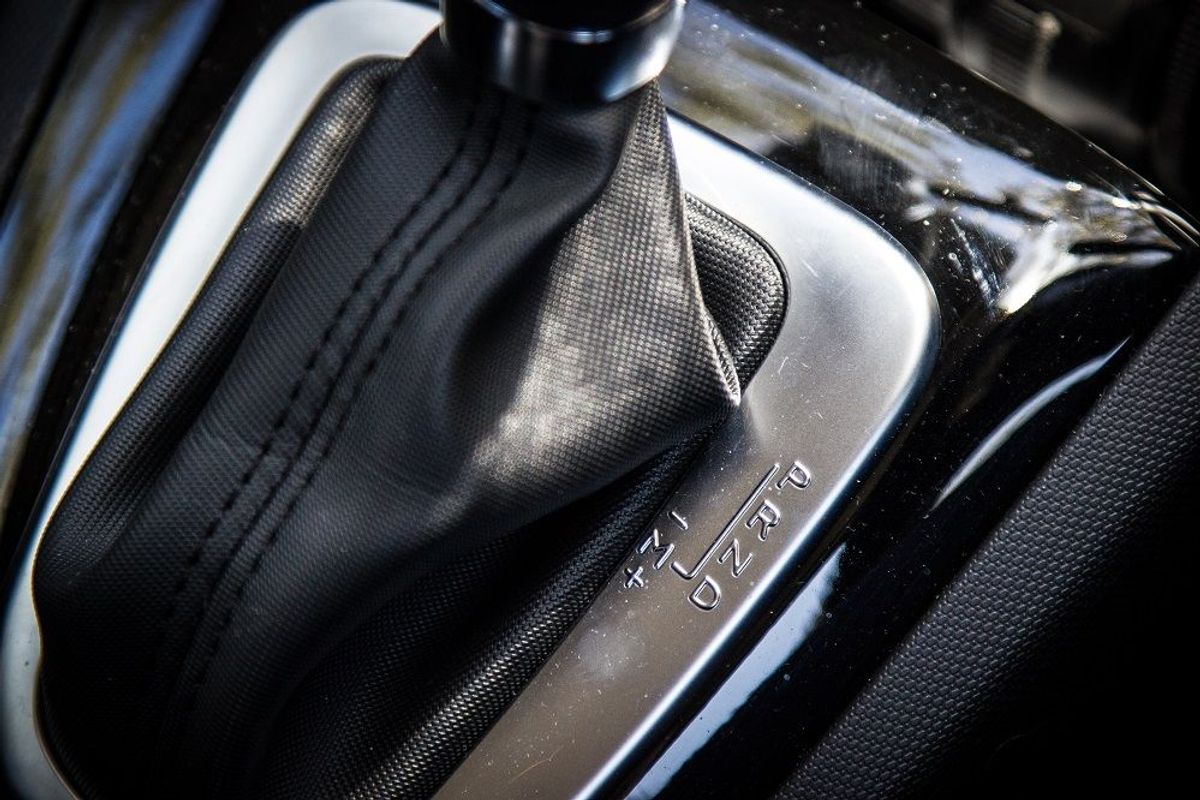
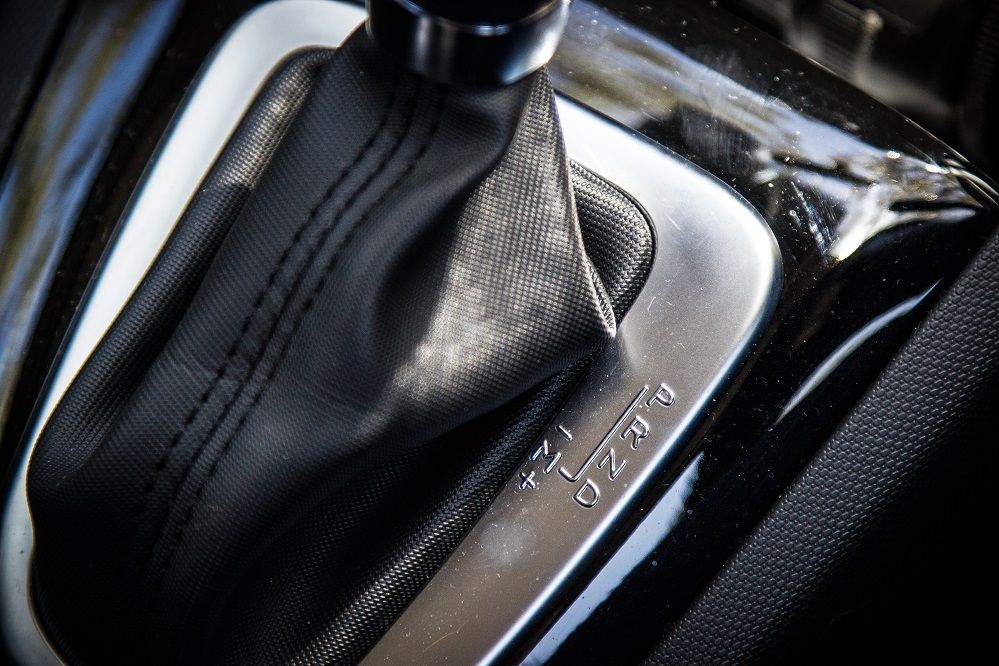
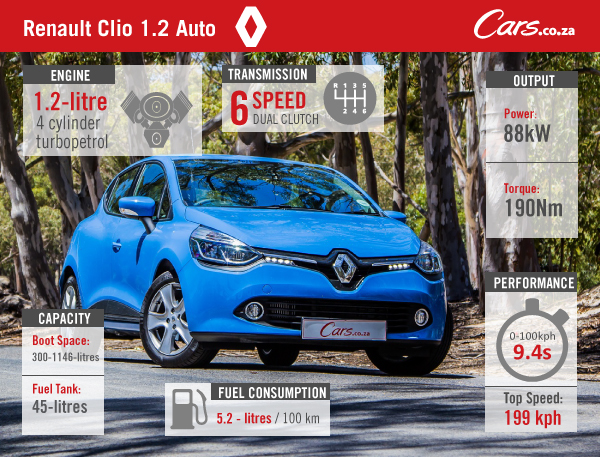
Renault has opted to slot two different turbo engines in the Captur, the entry models are equipped with the same 0.9-Litre turbo from the Clio. This top model makes use of a 1.2-Litre turbo with power claimed at 88 kW and torque at 190 Nm. It’s ample for a hatch/crossover and whether you just want to potter along in traffic or race the traffic to get to work on time the engine is more than capable of coping. The automated dual-clutch gearbox used in tandem with the engine isn’t as good though, it often finds itself confused as to what gear it wants to be in. Areas where yielding occurs like traffic circles or slip-ways can be annoying and jolty as the gearbox hunts around for a gear. In straight line acceleration the ‘box is fine and when knocked into manual mode shifts quickly.

Economy though is extremely good and Renault claim a figure of 5.4L/100km. Not quite as good as the three-cylinder entry units, but in all likelihood you’ll achieve better fuel consumption in this 1.2-Litre than in the smaller engine, due to not having to push it as hard to move about.

Good value interior

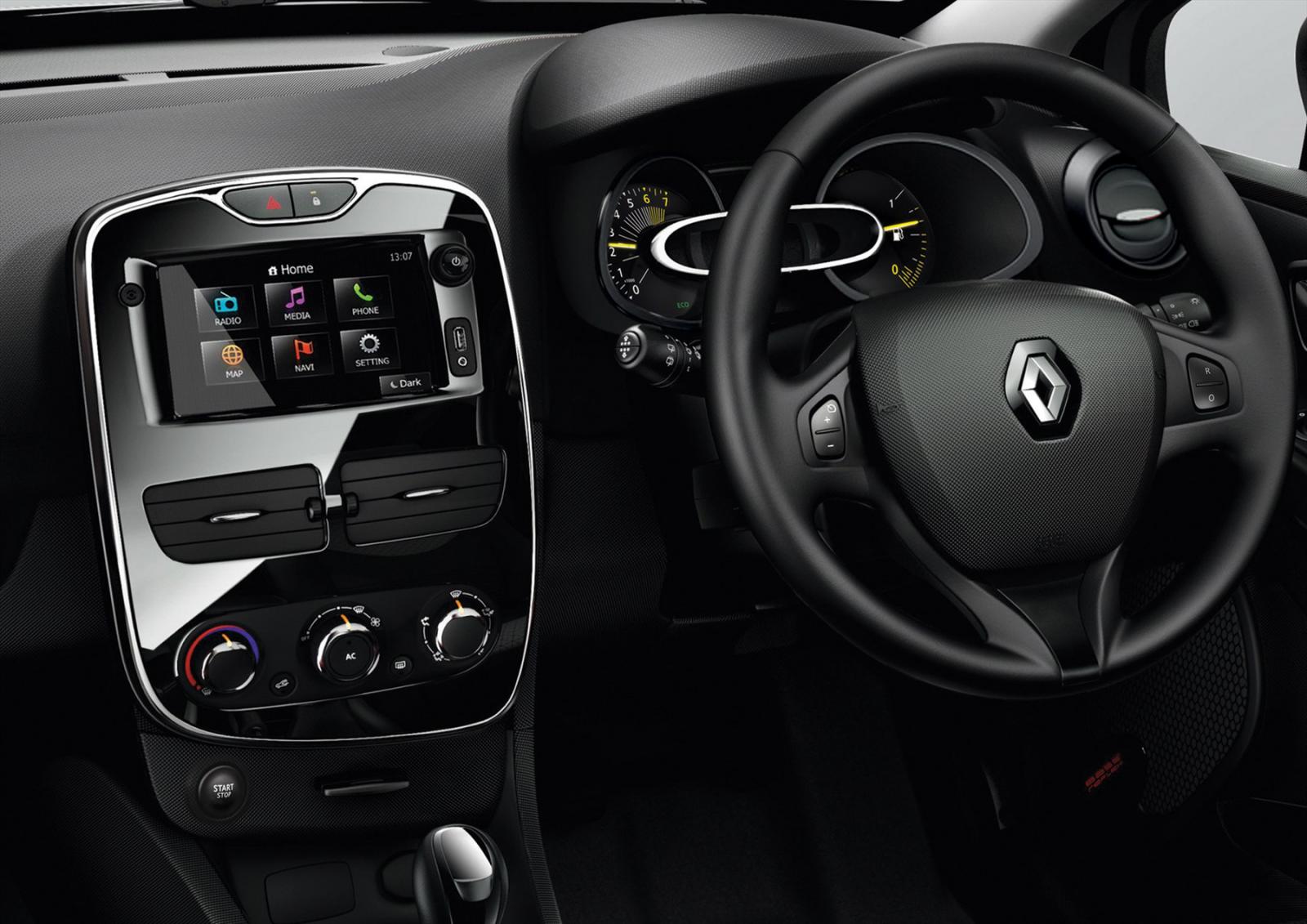
The specification is impressive no matter what Captur you buy and the only options on this top model you can still add on are leather upholstery and heated front seats. The interior design is smart and modern and all models are standard with the seven-inch touchscreen that controls media and navigation duties. The screen seems to be faster and more sensitive to touch now, making it a pleasure to navigate through menus.

Renault does know how to make a grey interior and the Captur seems a bit devoid of colour apart from the touchscreen that offers up a bit of visual interaction. The exterior is vibrant and shouts to be looked at, but the interior doesn’t quite match up. The fit and finish is a bit questionable as our unit acquired a few rattles whilst in our hands and the gear shift button feels like a flimsy afterthought. Overall though you get good value as the spec is exceptional. Navigation is standard across the range as are Bluetooth, USB and Aux connectivity. Cruise control, steering wheel controls and climate control also make it as standard fare.

Space is a strong export of the Captur, it has a two-stage boot that can either hold 377-Litres or in its largest configuration cope with 455-Litres. The seats fold flat too and it has sufficient storage places around to keep even the most cluttered of lifestyles happy.

Ride and Drive

The larger engine Captur handles our diversified road surfaces adequately and darts around impressively for a vehicle of this nature. Bumps and road surface changes are dealt with easily and the suspension seems well set up as it settles back to norm after jolts quickly. The steering is light, but responsive and you’ll be confident with it at freeway and back road speeds. The pedals can take some getting used to, the brake pedal especially can be quite snatchy. The throttle on the other hand has a lot of travel and you need to press it a long way to get it to respond.

Safety

As we’ve come to expect from Renault, safety is a key priority within the brand’s products. All safety systems available are standard throughout the Captur range and encompasses both active and passive safety features. There’s ABS, EBD with brake assist, stability control and four airbags as a base. ISOFIX anchor points are available as are rear parking sensors.

Verdict

The Renault Captur is a welcome entrant to the compact crossover segment, it certainly rivals the competition for looks and gives them a run for their money in the specification department. It rides and handles very well and is more spacious and practical than you’d expect from something based on a Clio chassis. The interior is nicely designed but some of the fit and finish leaves a bit to be desired. Thankfully that doesn’t detract too much from the overall package and we’re almost certain they’ll sell well in SA.

Renault Captur Pricing

There are three models in the Captur range starting with the 66 kW Expression at R219 900. The upgraded specification Dynamique hit in at R239 900. Our test unit here is the 88 kw Dynamique and costs R279 900.

Team Opinions

The Renault Captur offers a lot of car for not a lot of money. Combining Euro chic looks with a small capacity engine, the Captur’s drive is not unpleasant although the auto gearbox isn’t as good as an equivalent DSG/S tronic. All in all, it’s another valiant budget-beating offering from Renault. -David Taylor

With such good looks, excellent standard features and an attractive price the Captur can only succeed. Families that need usable space may still have to go the Duster route, though, as the Captur is not quite as spacious inside as I had thought. -Hannes Oosthuizen

We Like: Style, space, practicality and standard specification

We Don’t Like: Jittery dual-clutch ‘box and interior fit

Also consider: Nissan Juke, Ford Ecosport, Peugeot 2008

Compare the Captur to the Juke manual and Ecosport here

Renault Captur Specs

Captur Specs

Renault Captur Buying Advice: Pricing and Rivals

Renault Duster Oroch Revealed

Renault has officially revealed its medium-sized bakkie and it has retained the Oroch name which we first saw in the Oroch Concept. Renault hopes to push back traditional boundaries to create a new segment within the bakkie regiment. The brand’s expansion into the pick-up segment comes when other manufacturers like Mercedes-Benz are also looking at the bakkie segment as ripe for the taking.

Double Cab Mini Bakkie

The Duster Oroch will expand the Duster family worldwide, it combines the functions of a double-cab bakkie with the space, performance and comfort of a compact and sporty SUV.

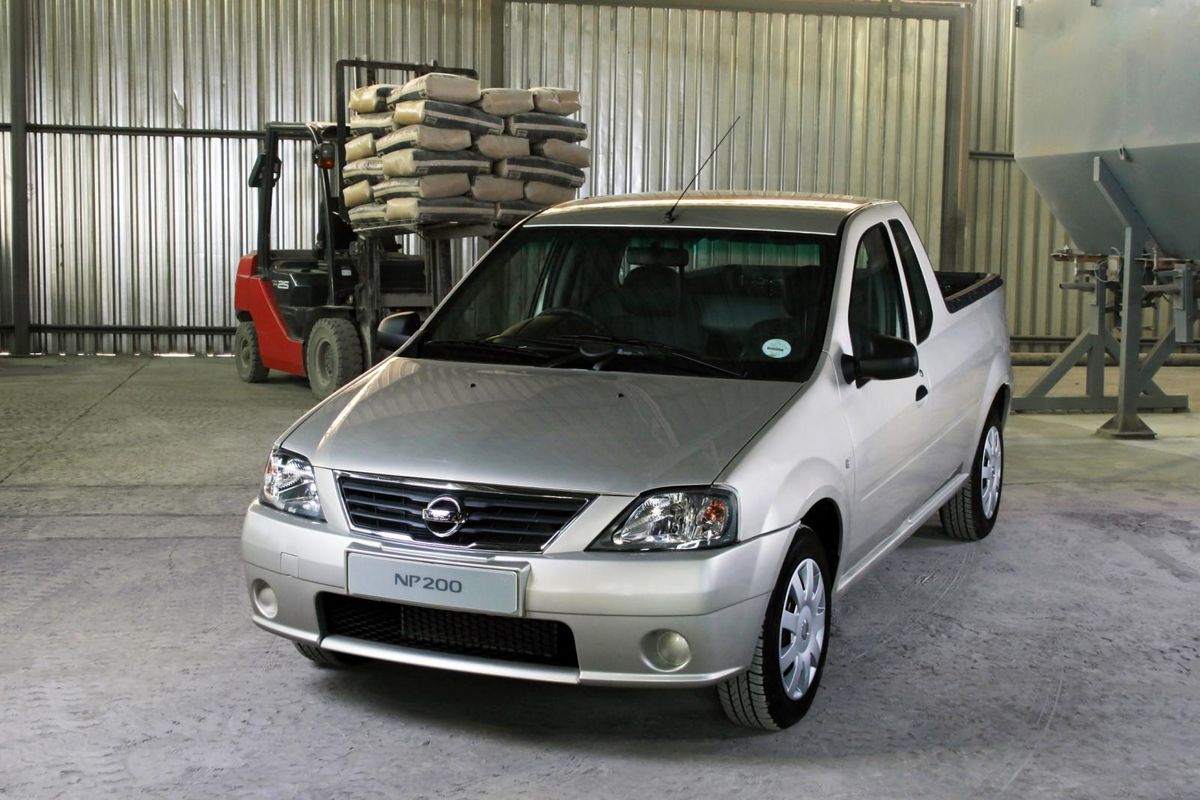
The new Renault Duster Oroch slots in between the half- ton and one-ton bakkies. However, the Oroch has been designed with four doors and five seats so it brings something different to the market. The competition in this part of the segment are purely workhorses like the Nissan NP200 and the Chevrolet Ute. The Oroch brings a baby double-cab to the segment. It is scheduled for international launch in the second half of 2015.

Renault Duster Oroch engine?

Engine designation and outputs are yet to be confirmed, but it’s fairly safe to assume that it would use the same 1.6-Litre petrol and 1.5-Litre turbodiesel currently in the Duster SUV.

“This new model, Renault’s first pickup, is the next step in Renault’s globalization strategy. With Renault Duster Oroch, the brand is launching its offensive in the competitive pickup segment”, said Ashwani Gupta, Renault’s Global Head of Light Commercial Vehicles.

Renault SA was approached for comment and a spokesperson said that while the Duster bakkie wasn’t on the cards immediately, there’s potential after the first quarter of 2016. Given the Duster’s success in South Africa, we think Renault SA would be mad not to bring it in.

Mercedes-Benz GLC Revealed

Mercedes-Benz has revealed its second generation GLC mid-size SUV which comes with a host of improvements over the previous GLK model. The new GLC is packed with safety assistance systems and is more efficient than before with fuel consumption being cut by up to 19%. Equipped with 4MATIC permanent all-wheel drive and AIR BODY CONTROL multi-chamber air suspension, the GLC now offers improved ride comfort and performance.

Exterior Styling

In terms of styling, the new GLC features short overhangs, an upright 3-D grille with twin louvres and a centrally positioned Merc star. The bumpers feature integrated underguards and buyers can also choose between either AMG or Off-Road styling packages. The wheelbase has grown by 118 mm and the GLC takes on a distinct coupe look. There’s matte black cladding on the wings and wheel sizes up to 20-inches are up to tackle tough terrain. The rear end is broad and features split LED tail lights while the fin for the antennae is no longer needed as this has now been integrated into the exterior mirrors.

Interior Styling

The interior has received some love and high quality materials are used throughout, including nappa leather and open-pore wood trim. There’s also a newly designed dashboard and centre console, which houses the air vents, infotainment display, a newly developed touchpad and a new Head-up Display. The new GLC now also offers more space than before and there’s  an optional large-area panoramic glass roof which adds to the airy feel in the cabin. Boot space is at 580-litres, which expands to up to 1 600-litres with the 40/20/40 split rear seats folded down. The loading sill has also been lowered by 40mm with the help of AIR BODY CONTROL  and there’s also HANDS-FREE ACCESS that automatically opens the tailgate by swiping your foot under the bumper.

Engine Power

On the engine front, there are two diesel derivatives and one petrol model available. In addition, there’s also a plug-in hybrid model in the lineup. The GLC220d and 250d are powered by a 2.0-litre turbodiesel engine offering 125 kW/400 Nm and 150 kW/500 Nm respectively. The GLC250 petrol variant is powered by a 2.0-litre turbo engine delivering 155 kW and 350 Nm of torque. All these variants are mated with a 9-speed automatic transmission.

The plug-in hybrid version is paired up with a 85 kW electric motor and the same 155 kW petrol motor used in the GLC250. A 7G-TRONIC PLUS automatic transmission is used to put that power to the road. This variant, according to Mercedes-Benz, can travel up to 34 km on electric power alone. Five driving modes including Eco, Comfort, Sport, Sport+ and Individual are offered as standard via DYNAMIC SELECT.

Safety Features

The new GLC comes packed with safety features and these include Collision Prevention Assist Plus, Crosswind Assist, Headlamp Assist and Attention Assist fitted as standard. With the Driving Assistance Plus package, features such as Distronic Plus with Steering Assist and Stop&Go Pilot, PRE-SAFE Brake with pedestrian detection, BAS Plus with Cross-Traffic Assist, Active Blind Spot Assist, Active Lane Keeping Assist and PRE-SAFE Plus. There’s also the optional 360° camera and Active Parking assist which helps get into those tight parking spaces with little effort.

The Mercedes-Benz GLC will be available in South Africa in the third quarter of 2015.

Mercedes-Benz GLC Video


Mercedes-Benz V-Class (2015) First Drive

Mercedes-Benz went all out to launch the new V-Class in South Africa and it has arrived in style. We attended the launch of the new MPV in Johannesburg at the specially constructed V-Class Dome where the media were introduced to the vehicle. It was all lights and music when the new V-Class suddenly appeared being lowered from the high ceiling with chains to the stage below – very fancy!

The new V-Class is a ‘Jack Of All Trades’ kind of vehicle and is aimed squarely at large families, leisure enthusiasts and business users. Mercedes-Benz made it clear that the V-Class is not a commercial vehicle, but rather blends the brand’s passenger vehicle expertise into an MPV that’s clearly differentiated from the ordinary.

In The Lap of Luxury

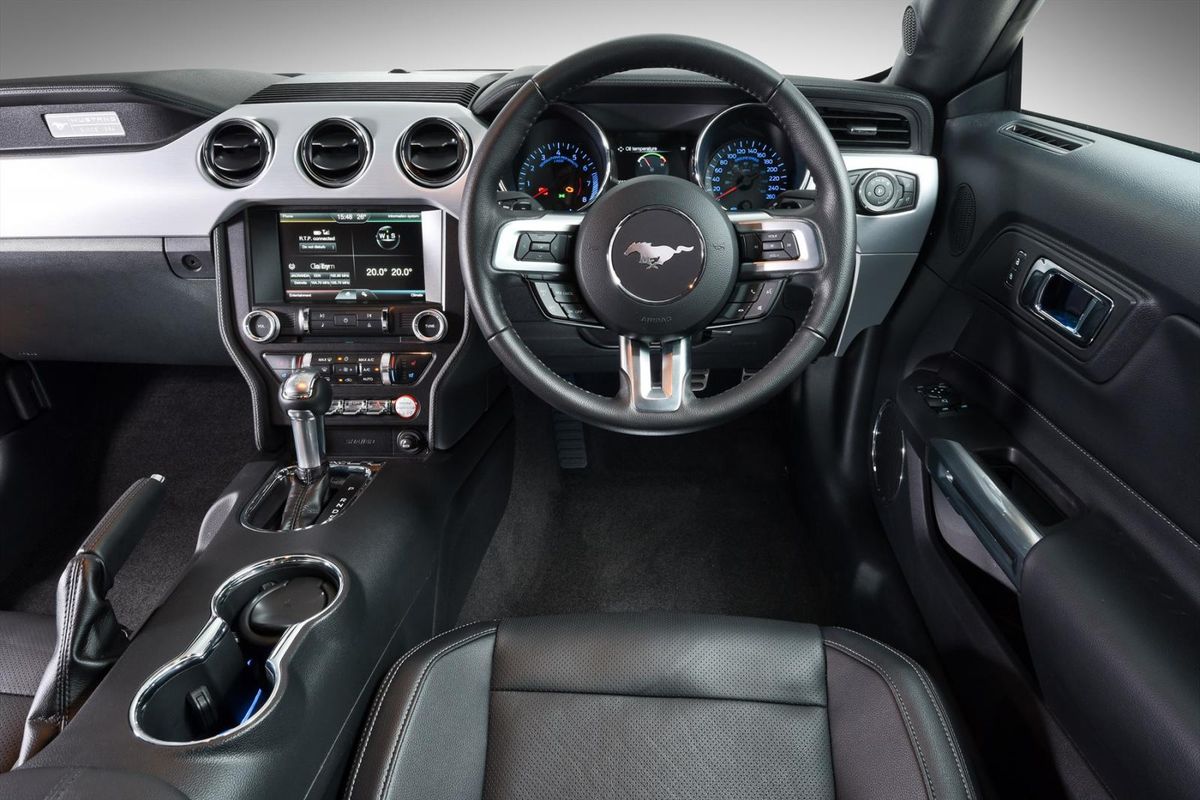
Step inside the new V-Class and you will soon realise what Mercedes-Benz is trying to achieve here. Whether you are seated in the front or rear, luxury is ever present. If you are familiar with the new C-Class then you will feel right at home in the V-Class, because the interior is near identical and that means that all that tech is part of the package too.
Speaking of tech, there’s lots of it. Standard features include Crosswind Assist, Attention Assist and Active Parking Assist which takes care maneuvering the V-Class safely into its parking bay. Buyers can also opt for a host of additional optional features such as a 360° camera, DISTRONIC PLUS adaptive cruise control with Collision Prevention Assist, Lane Keeping Assist, Blind Spot Assist, LED Intelligent Light System and Adaptive High Beam Assist.

The infotainment system takes care of audio, telephonic and navigational functions and is accessed via a free-standing 7-inch central display. Functionality is enhanced using a touchpad, which is a nifty piece of equipment also found in the new C-Class.

The new V-Class is flexible and is equipped with four individual seats with armrests at the rear. Additional seating can be had to accommodate either seven or eight passengers and they can be placed in varying positions according to your needs. The seats are set on a rail system and can be moved or removed completely to increase load space. On higher spec models, the rear windscreen can open separately to the tailgate which provides additional access to the loading bay. Overall the interior is very smart and the leather seating will keep any passenger happy.
Under the Bonnet

Three equipment lines are on offer and these include V-Class Standard, V-Class BlueTEC and V-Class BlueTEC AVANTGARDE. All variants are powered by a 2.2-litre turbodiesel engine with three power outputs on offer. The entry-level V 200 CDI offers 100 kW and 330 Nm of torque whilst the mid-range V 220 CDI offers 120 kW and 380 Nm of torque. The top-of-the-line V 250 BlueTEC offers 140 kW and 440 Nm of torque.

The V 200 CDI and V 220 CDI are fitted with a 6-speed manual transmission as standard while the V 250 BlueTEC features a 7G-TRONIC PLUS automatic transmission, which is also available as an option on the other models. AGILITY SELECT is offered as an option with the automatic transmission which allows the driver to select a preferred driving mode including ECO, Comfort, Sport and Manual.

On our short driving test covering about 35 km of highway and urban roads, we were able to test the V 220 CDI and the V 250 BlueTEC, both fitted with the 7-speed automatic transmission. The V-Class, thanks to all its luxury appointments was comfortable to drive with good ride and handling. We found that the automatic transmission wasn’t as responsive as we’d hoped for but the engine/transmission combination managed to perform fairly well despite feeling a bit under powered. The fact that we were driving in convoy also meant that we weren’t able to test the full capability of the vehicle. Nonetheless, the V-Class impressed with its styling and luxurious interior and we look forward to having it on test for a more thorough evaluation.

Mercedes-Benz V-Class Price in South Africa   

V 200 CDI Standard – R 695 981

V 220 CDI Standard – R 726 875

V 250 BlueTEC – R 782 416

V 220 CDI AVANTGARDE – R 949 175

V 250 BlueTEC AVANTGARDE – R 984 196

Pricing includes the Mercedes-Benz Premium Drive 6-year/100 000km maintenance contract.

Peugeot Reveals 308 GTi Hot Hatch

Peugeot has taken the wraps off its 308 GTi hot hatch. The performance focused pocket rocket will debut at the end of June at the Goodwood Festival of Speed. It features a high powered 1.6-Litre turbo motor, race-ready interior and enhanced suspension dynamics.

Exterior spruce up

The 308 GTi has been visually tweaked to appear more aggressive and fast, sitting 11 mm lower to the ground. The nose features LED headlamps, flanking a new black radiator grille with a horizontal chequered pattern and gloss-black finishing. Below the bumper, two front spoilers boost aerodynamic performance. The redesigned door sills hint at the car’s aggressive nature, while the new rear design features a gloss-black section housing the twin exhaust pipes. Finally, a wider track has been employed front and back in order to offer more grip and cornering prowess.

Interior

Red stitching is used on the upholstery, door panels, gear lever and floor mats. The door-sill carries the GTi and Peugeot Sport logos and is finished in aluminium. The same material is used on the pedals, foot rest and gear knob. If you opt for the top spec 308 GTi, the bucket seats are upholstered in Alcantara with GTi signatures stitched into them.

The 308 GTi is equipped with the Driver Sport Pack. Pressing the Sport button on the centre console changes the display from white to red, shows additional information on the central read-out (power, torque, boost, lateral and longitudinal acceleration), enhances the engine’s throaty growl and changes accelerator pedal mapping for a more engaging driving experience.

308 GTi engine

A 1.6-Litre turbo with two separate outputs will be available for the 308 GTi. The introductory model is equipped with 182 kW and 330 Nm of torque. That’s good enough to get it to 100kph in 6.2 seconds. If you want more from the 308 GTi then Peugeot does also offer it with 200 kW and the same 330 Nm of torque. It sprints to 100kph a bit quicker than the intro model making the 100kph sprint in 6.0 seconds. Both cars have to be electronically restrained at 250kph.

Tweaked suspension

The entire vertical suspension system in the front is specific to the new 308 GTi, and including bespoke spring stiffness and shock absorber calibration. The anti-roll bar is more malleable to ensure a better match with the rear axle and enhances grip while cornering while also increasing road holding.

Exclusive to the top-spec GTi 270 is a limited-slip differential, incorporated into the transmission to improve cornering traction.

Peugeot South Africa is unable to say if the 308 GTi will come to SA but says if it is feasible that we will likely see it launch in the third quarter of 2016.

Jaguar XJ Updated for 2016 Model Year

Jaguar has announced some updates for its luxury limousine, the XJ. The 2016 model year Jaguar XJ offers mostly technological upgrades while the distinctive looks are mildly tweaked. The range has been expanded too, and now includes an R-Sport model as well as a flagship long wheelbase Autobiography model.

Jaguar XJ Details

Starting with the interior, the new car offers a new InControl Touch Pro touchscreen infotainment system which combines navigation, iOS and Android connectivity as well as a thumping 26-speaker 1300W Meridian Digital Reference audio system. The 12.3-inch instrument cluster now includes a full-screen navigation display option too. The Autobiography gains two 10.2-inch screens for the rear passengers.

In terms of engines, the revised 3.0-litre V6 turbodiesel now offers 220kW and a mighty 700Nm, while CO2 emissions have been reduced by 6%.

The exterior upgrades include a full LED headlight system as well as unique daytime running lights. The tail lamps have been tweaked as has the the rear bumper which now features a gloss black touches and a chrome insert. The air intakes have been chromed and the Autobiography model gains 20-inch alloy wheels.

In terms of driver technologies, the 2016 Jaguar XJ now offers electric power-assisted steering offers even greater feel and responsiveness and reduces fuel consumption, All-Surface Progress Control which enables smooth, effortless drive-away on surfaces such as snow and ice as well as advanced driver assistance systems including lane keep-assist, adaptive cruise control with queue-assist, reverse traffic detection, 360° surround camera system and semi-automated bay- and parallel-parking.

The new Jaguar XJ should be on sale in South Africa from late 2015.

Buying Advice: Renault Captur Pricing & Rivals (Video)


SCROLL DOWN FOR VIDEO

We’re not stock brokers, but if B-segment crossovers were a stock option, it would be the hottest on the market right now.

Cars like the Ford EcoSport have been an enormous success, in fact, the EcoSport accounted for over 45% of Ford’s sales in SA last year. But Ford would have known that at some point the party would become very crowded, and with the Renault Captur, it certainly has.

The Captur is very closely based on the Clio, a car which is also hugely popular in SA. The two lower models use the same 0.9-litre, 66 kW engine as the Clio, while the range topping 88kW Dynamique, featured in this video, uses a 1.2-litre four-cylinder turbo.

And thankfully the Captur also borrows heavily from the Clio’s attractive looks. In fact, with the extra height, we think it has more stature, and more presence.

In this video, Ciro takes an in-depth look at the new Captur, and compares it to three of its rivals, which we have detailed for you below.

For more info on the Captur range, click here
See the Captur’s three rivals in our comparison tool here

Renault Captur 88kW Dynamique Auto Ford EcoSport 1.5 Titanium Auto
Price R279 900 R270 900
Engine 1.2 litre 4-cyl petrol 1.5 litre 4-cyl petrol
Power 88 kW 82 kW
Torque 190 Nm 138 Nm
Fuel economy 5.4L/100km 6.5L/100km
0 – 100kph 10.9s Not available
Top speed 192kph 166 kph


Renault Captur 88kW Dynamique Auto Nissan Juke 1.2T Acenta+ Manual
Price R279 900 R277 900
Engine 1.2 litre 4-cyl petrol 1.2 litre 4-cyl turbo petrol
Power 88 kW 85 kW
Torque 190 Nm 190 Nm
Fuel economy 5.4L/100km 5.6L/100km
0 – 100km/h 10.9s 10.8s
Top speed 192kph 178kph


Renault Captur 88kW Dynamique Auto Peugeot 2008 1.6 Allure Manual
Price R279 900 R277 900
Engine 1.2 litre 4-cyl petrol 1.6 litre 4-cyl petrol
Power 88 kW 88 kW
Torque 190 Nm 160 Nm
Fuel economy 5.4L/100km 5.9L/100km
0 – 100km/h 10.9s 9.5s
Top speed 192kph 196 kph