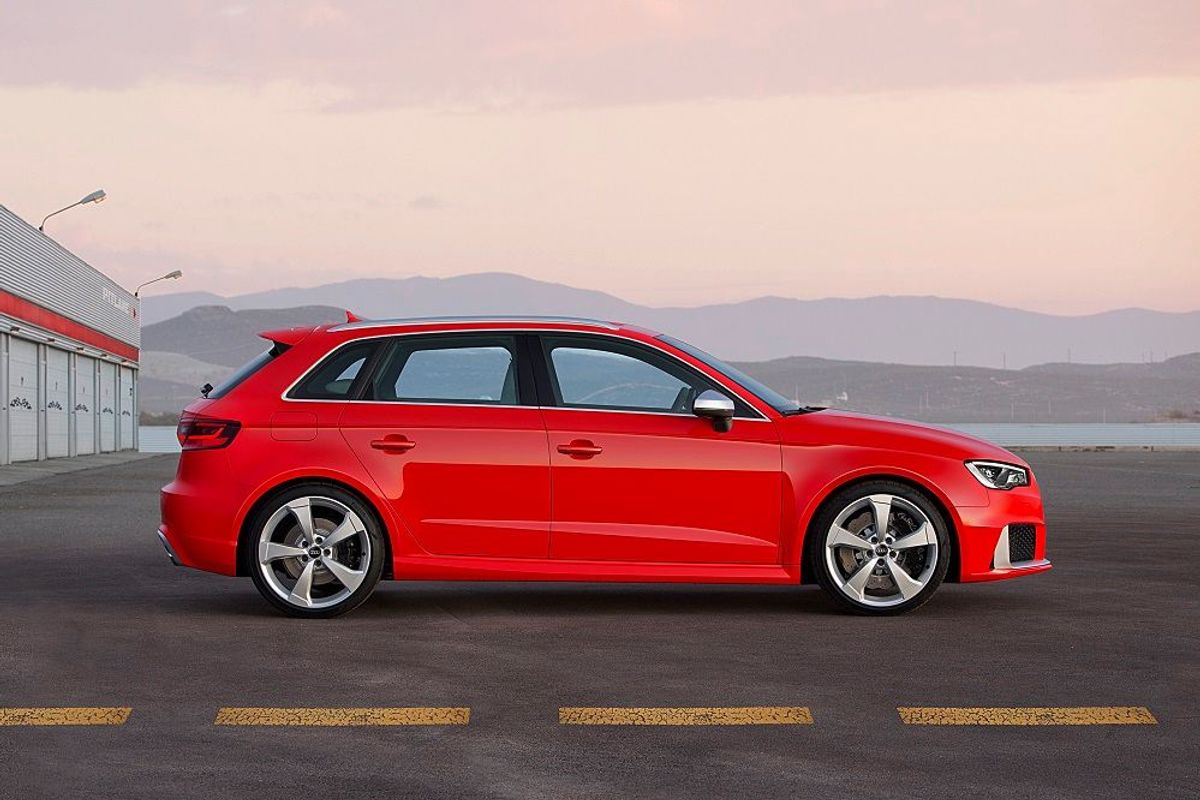
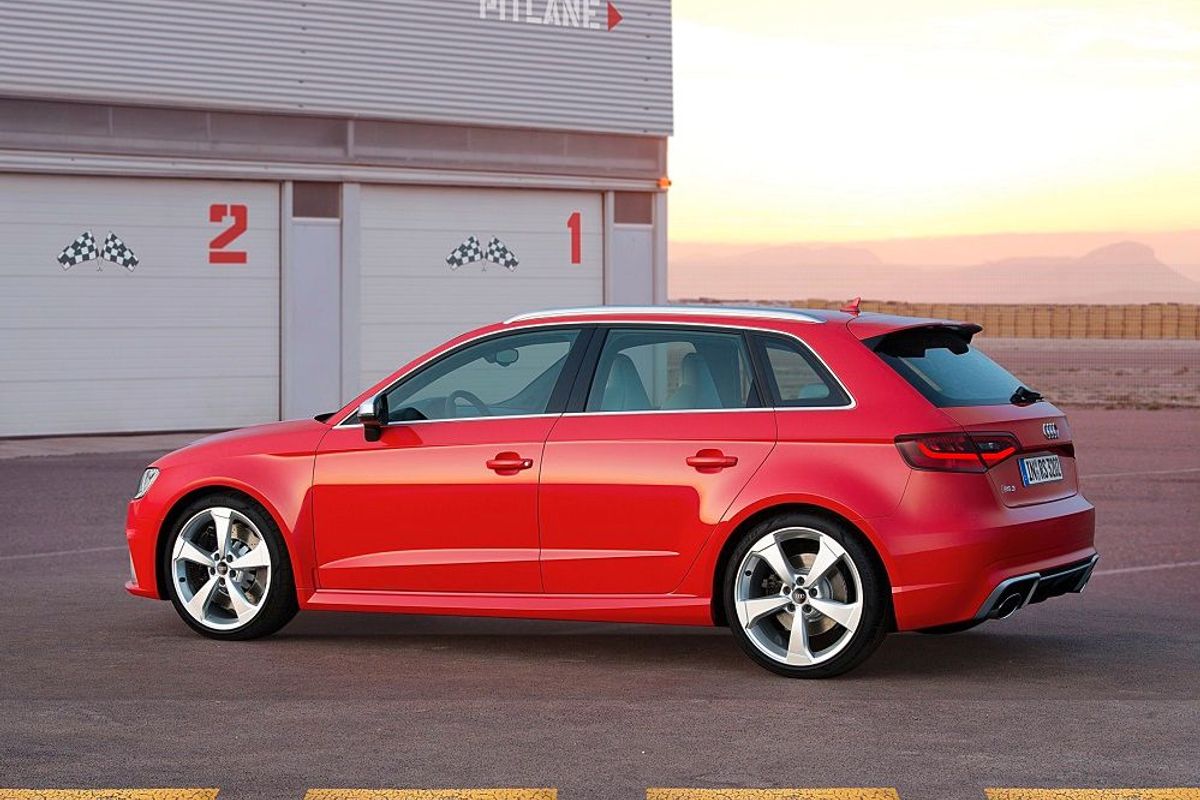
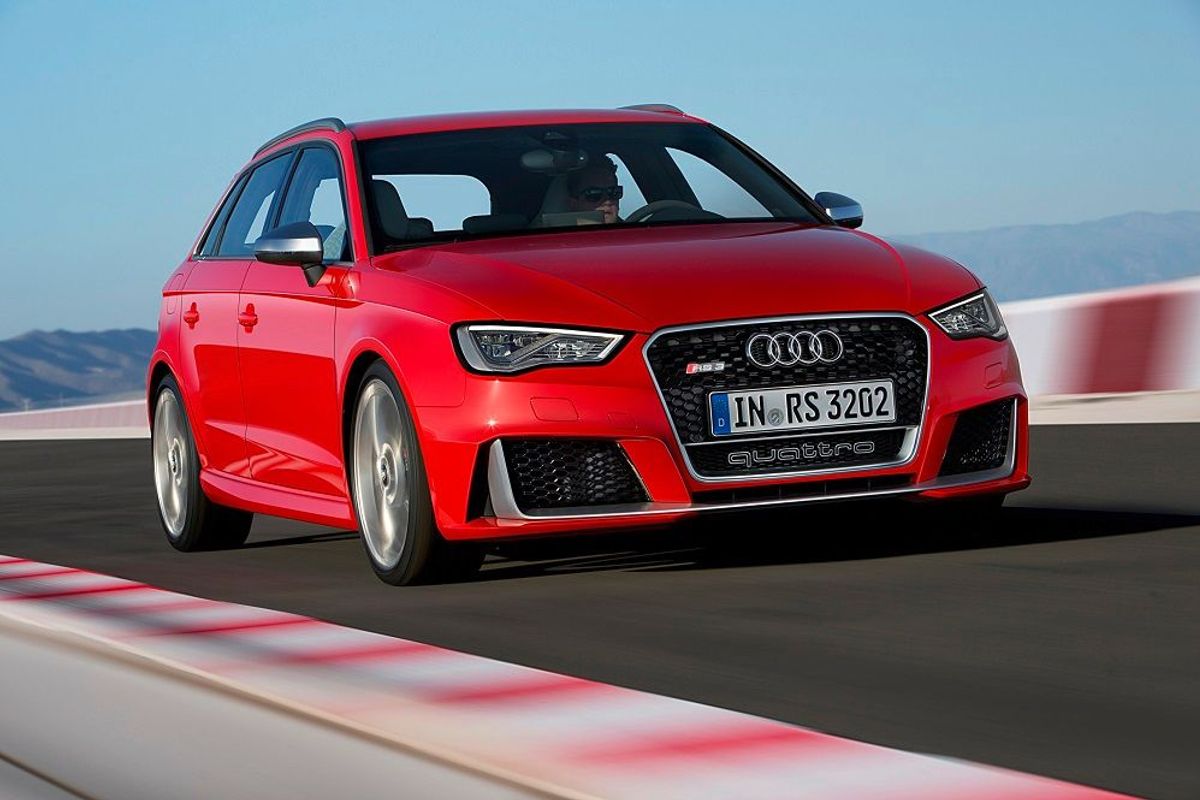
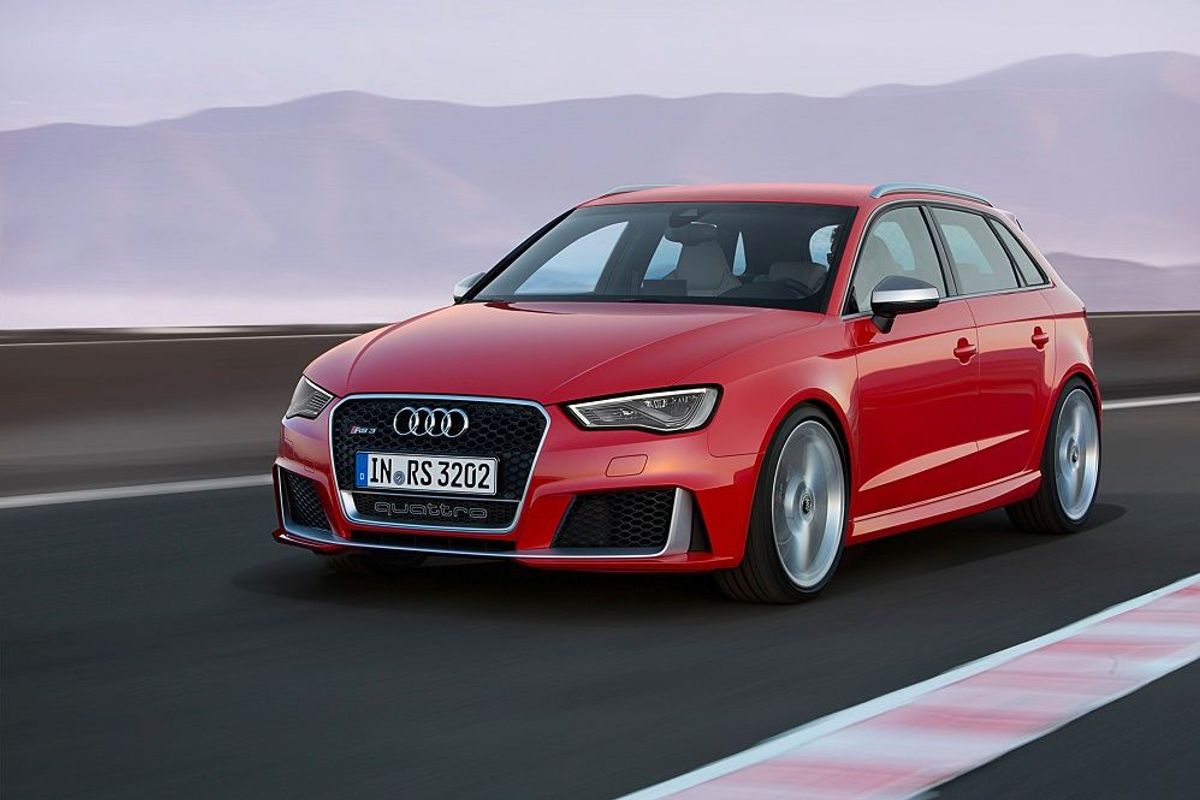
Flagship Audi RS3 has made it to South Africa. This is the ultimate and fastest Audi A3 available and it competes with the Mercedes-AMG A45.
Highlights
– 270kW, 465Nm from a 2.5-litre five-cylinder turbopetrol engine
– quattro all-wheel drive gives RS3 a 0-100kph time of 4.3 seconds
– Priced from R710 000 before options
With its trademark five-cylinder engine, the next-generation of the Audi RS3 has landed in South Africa. Packing a 270kW/465Nm five-cylinder turbocharged engine, the Audi RS3 is a candidate for the world's ultimate hot hatchback. Audi claims that 100kph will be dispatched in just 4.3 seconds thanks to a combination of quattro all-wheel drive and S-tronic seven-speed transmission. For the first time in this segment, Audi is able to offer a sports exhaust as an option, which will further enhance that magnificent engine sound. It's claimed to be a little cleaner and kinder to the environment too, with a combined fuel consumption figure of 8.1L/100km and CO2 emissions of 189g/1km. Given the performance nature of the vehicle, we're unlikely to ever see that number…
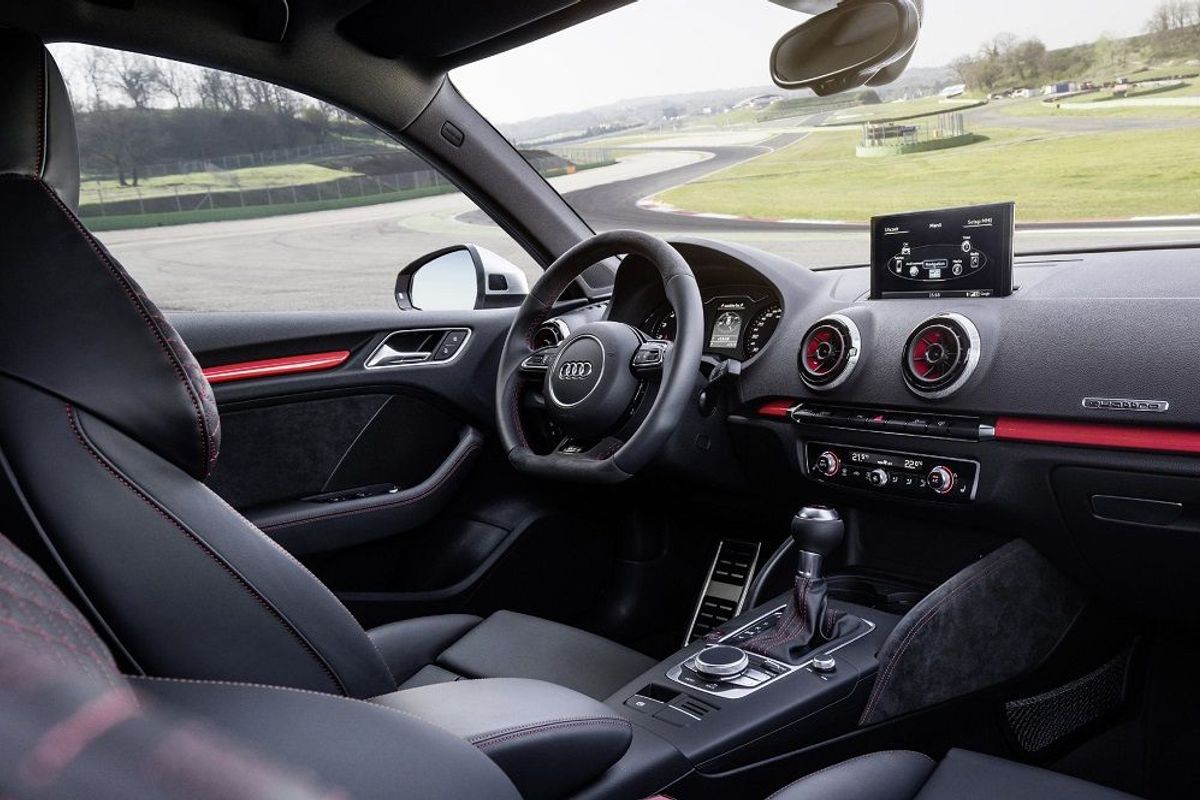
To visually differentiate the Audi RS3 from lesser A3 models, there are big wheels, big oval trademark RS exhausts and RS3 badges everywhere. It also has a big front bumper and flared wheel arches to give it that wider and more purposeful look. The sportiness continues inside with plenty of RS badges. sport seats covered in Nappa leather, flat-bottomed steering wheel as well as some nice touches like boost pressure indicator and lap timer.
A Lot Of Standard Kit
As its the flagship Audi A3, standard equipment levels are high. You get 19-inch alloy wheels, sports suspension, xenon plus headlights, Audi drive select, Audi music interface, Audi sound system, Bluetooth interface with audio streaming, Parking System Plus, Fine Nappa leather upholstery, front sport seats with RS embossing, light/rain sensor, aluminium look interior enhancements, front centre armrest, RS3 leather-trimmed, 3-spoke flat bottom multi-function steering wheel with shift paddles, cruise control system, digital air conditioning and LED interior lighting.
Audi RS3 Price in South Africa
The Audi RS3 Sportback costs R710 000 and this includes the standard 5 year/100 000km Audi Freeway Plan.
Best Car Adverts 2015 (Video)
Here's a look at five of the top car adverts that we've really enjoyed in 2015.
Car advertising is a tricky business as there are just so many brands out there. How can you make your product stand head and shoulders above the rest? The key is to make a unique advert that will be unforgettable. Here are five of our favourite adverts from 2015 which really stand out. Do you have any favourites? Leave your thoughts in the comments below.
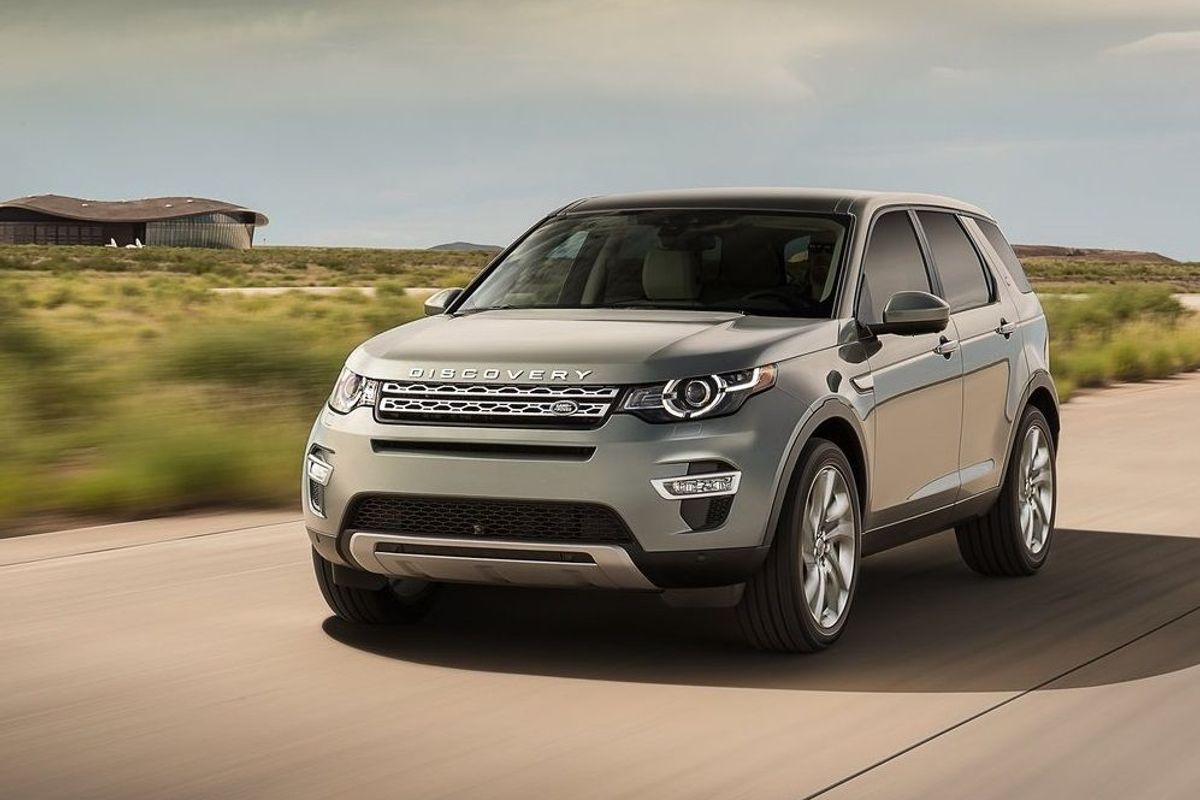
We do like the Land Rover Discovery Sport thanks to its seven-seat arrangement and surprisingly good offroad ability. This advert highlights both of those aspects as a dogsled needs to cross a river and a Land Rover Discovery Sport comes to the rescue. There's a nice blend of product as well as feel-good factor.
Official 2015 Fiat 500X Super Bowl Commercial
Trust the Italians to come up with something funny and memorable. To promote its bigger and more masculine 500X crossover, Fiat went the humour route and made a Viagra joke, which has a funny conclusion.
Mercedes-Benz AMG GT Commercial
The Mercedes-AMG GT sportscar is being marketed intensely as a rival to the ever-popular Porsche 911 and this advert represents just that. While the Porsche 911 is not directly mentioned or featured, there are enough clues in the advert to show that its Stuttgart's finest that Mercedes-AMG are targetting.
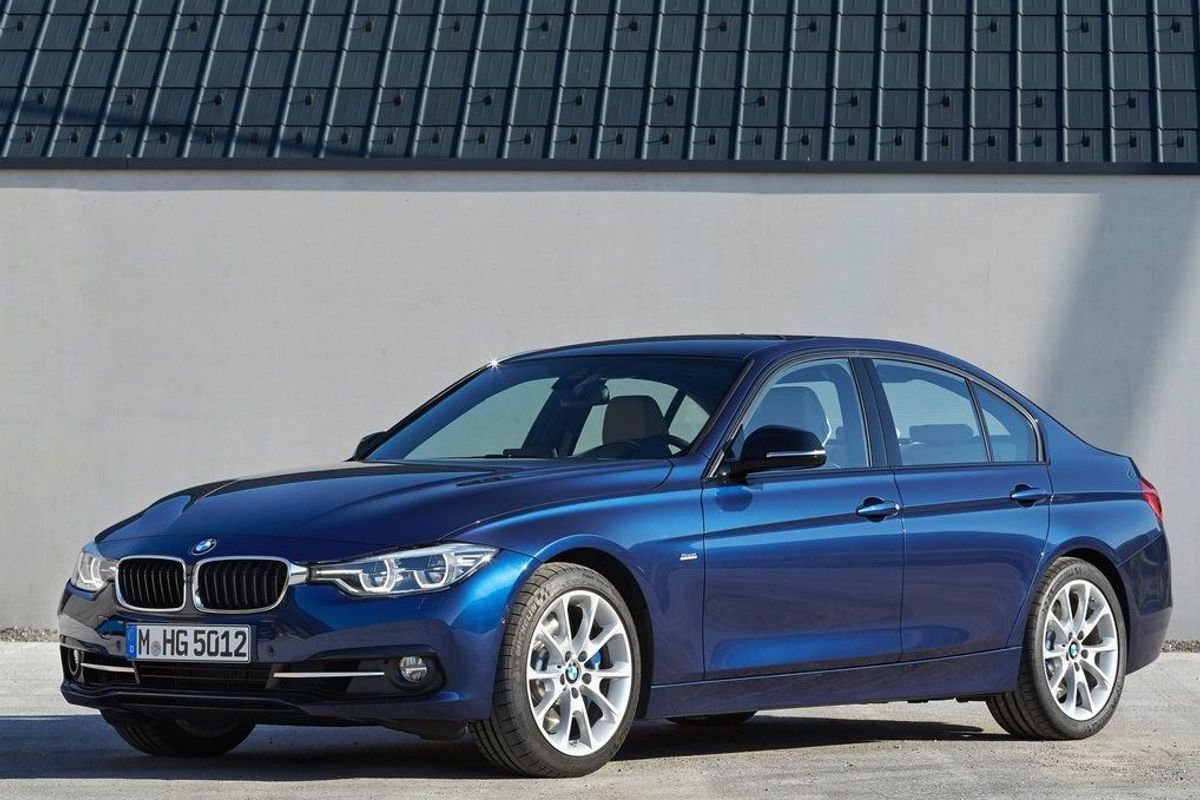
BMW 3-Series LCI – Curves
The South-African made BMW 3 Series recently underwent a facelift recently and as this model is exported to the rest of the world, this advert was rolled out globally. It was filmed in the Western Cape and features some of our best driving roads combined with some great dynamics. Why is it here? Well, there's the proudly South African angle, but interestingly this advert has been banned in the United Kingdom as it's claimed to promote dangerous driving.
Lexus LX and LS Commercial: Different Routes
This advert came as quite a surprise as we simply were not expecting this level of dynamic driving, both on and off-road. We usually take Lexus as a premium, relaxed and refined brand, but this advert shows the Japanese can have a creative and playful side.
BMW SA to Build X3 in SA, Cans 3 Series
BMW announced today that it will begin producing the X3 at its Rosslyn plant. The 3 Series that is currently built at the Rosslyn plant will be given the boot in favour of the mid-size SUV.
It’s not a simple switch-over from building a 3 Series to suddenly producing an X3. BMW Group will invest R3 billion in new, state-of-the-art facilities at Rosslyn. It will then invest another R3 billion in launch costs, training of associates and suppliers.
BMW X3 in favour over 3 Series
As current market tendencies lean more towards SUVs and Crossovers BMW is looking to expand production of its SUVs. The X3 will continue to be built in the USA along with the forthcoming X7. South Africa will add additional supply for the X3 globally as it will be exported like the 3 Series currently is. The decision comes as the 3 Series market share has somewhat been cannibalised by the 2 Series and 4 Series. The result is less demand for the 3 Series that has been BMW’s bread and butter sales icon for decades.
Minister of Trade and Industry, Mr Rob Davies, says that the investment is testament to the important partnership that exists between business and government as well as the role that business is playing in the development of the economy. “We are excited at the prospect of BMW Rosslyn plant as home to the next generation of the BMW X3. For us this is a boost to our industrial policy objective of positioning South Africa as a manufacturing hub for high valued consumer products. A few days ago we announced the findings of our mid-cycle review of the APDP, which reaffirmed our commitment to providing continued support to the automotive industry for the short to medium term and trust that this provides the industry with policy certainty necessary for long term investment planning. As we change production of the BMW 3 Series Sedan programme, it is our expectation that the new generation X3 programme will make a telling contribution to the long term development of the sector through higher production volumes, local value addition and inclusion of previously excluded groups in the sector.”
The BMW plant at Rosslyn was recently been awarded Platinum Plant Quality status by J.D Power. The stats actually put the Rosslyn plant at the top of all plants around the world, with the least issues per 100 cars produced.
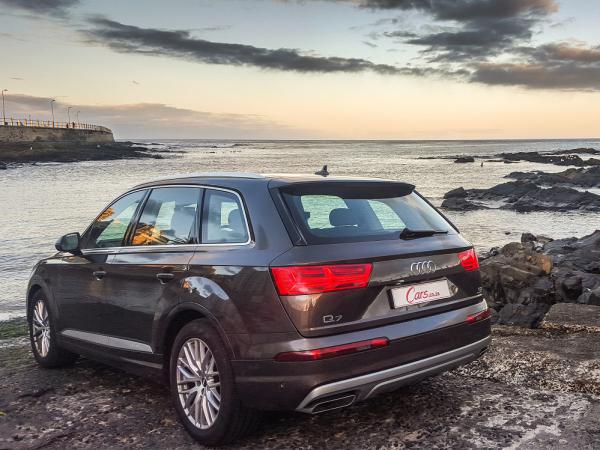
Audi Q7 3.0TDI Quattro (2015) Review
The second-generation Q7 has been a long time coming. Leaner and loaded with tech, it has a real shot at segment glory.
Highlights
-More than 300kg lighter than before
-Superb fit and finish in classy cabin
-Extensive (and expensive) options list
The first-generation Audi Q7, launched in 2005, was around for a decade. In the automotive world ten years equates to a veritable eternity. But there was, seemingly, method in Audi’s apparent madness. Firstly, the Q7 continued to sell well, even in the twilight of its career. More importantly, perhaps, the follow-up model would be so important that Audi just had to get it right. Either way, it is here now and enters a fiercely contested segment that doesn’t only include old rivals from BMW (X5) and Mercedes-Benz (GLE), but also the new Volvo XC90.
Crisp, yet sombre styling
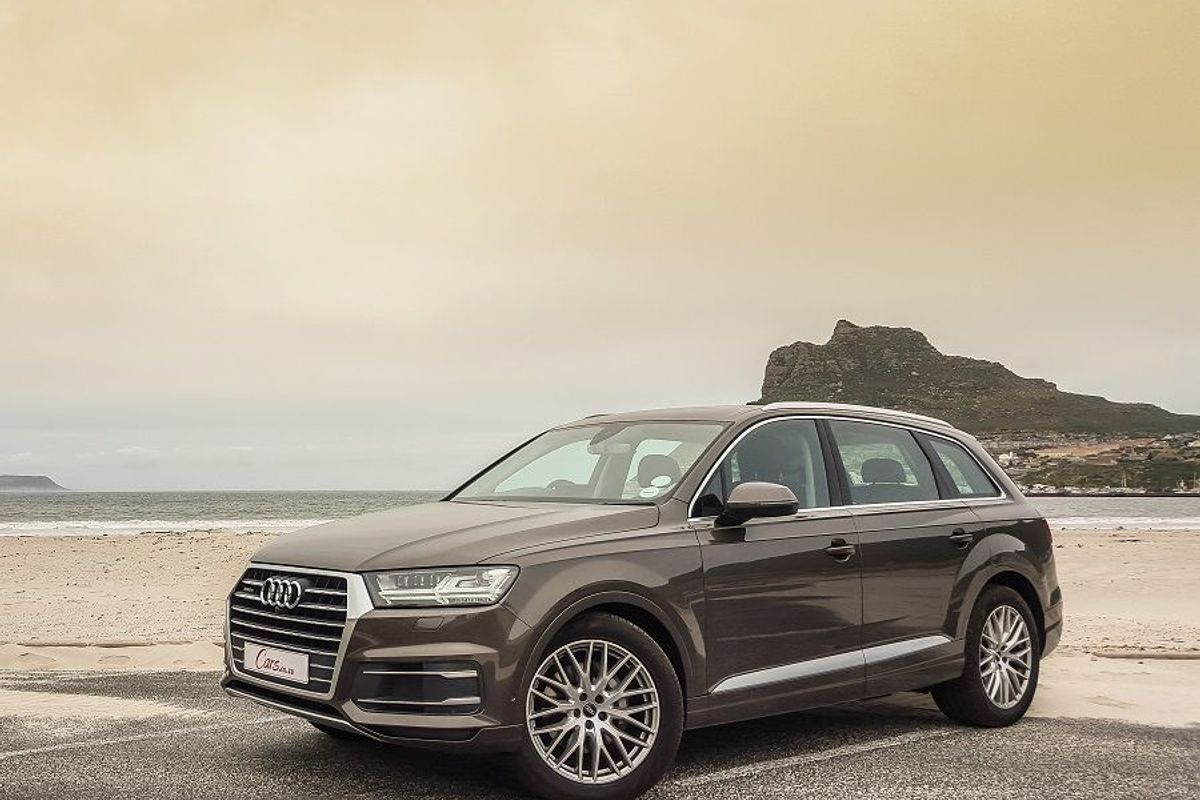
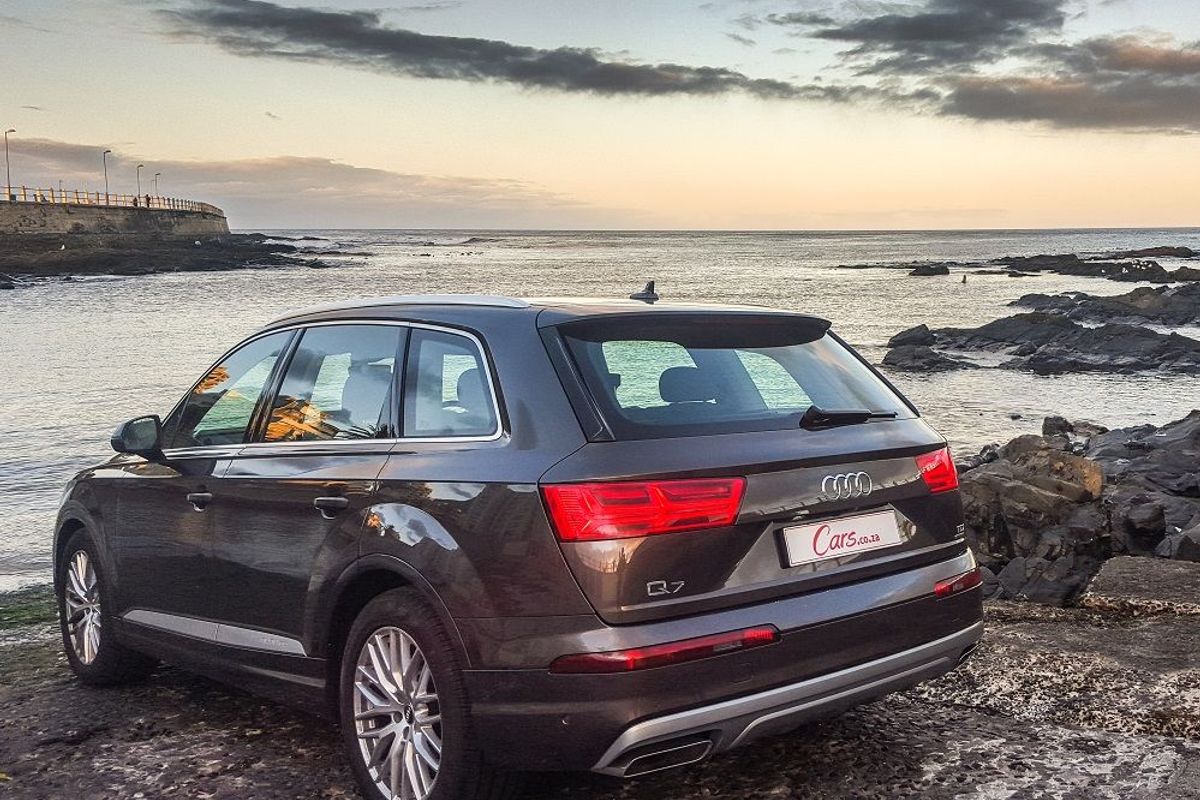
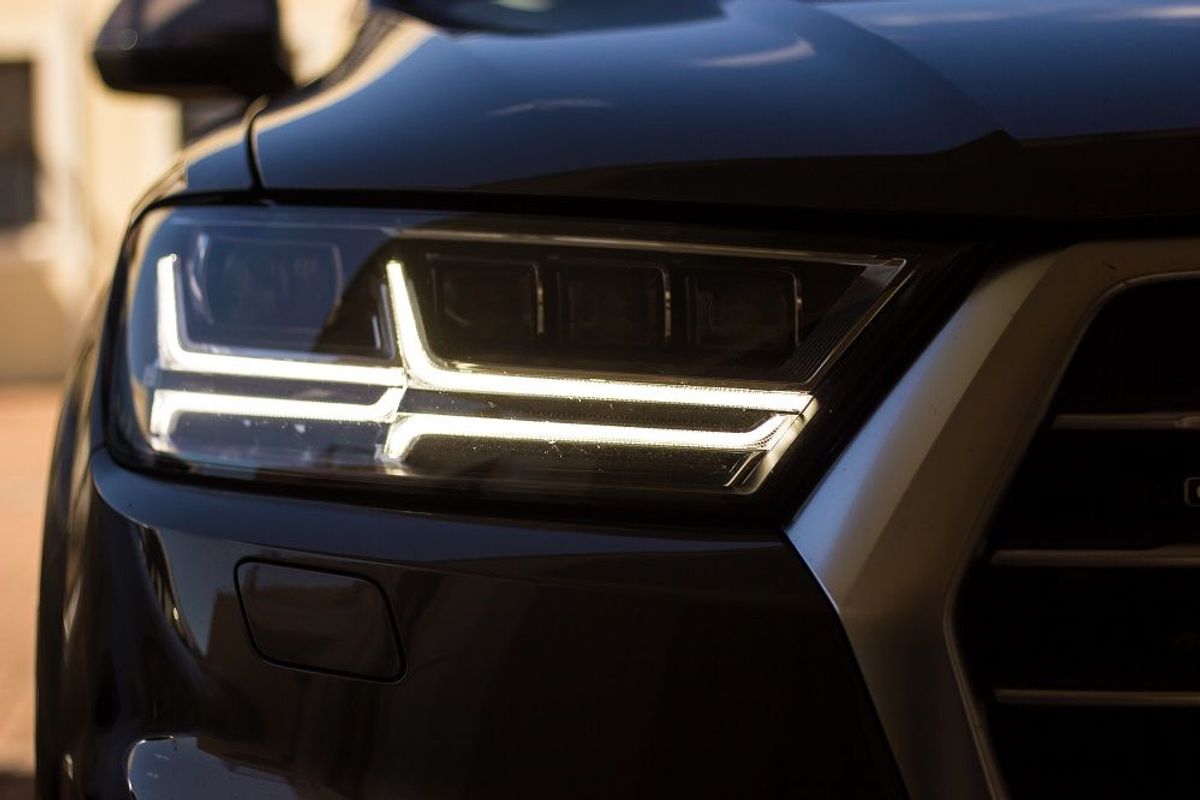
The first-generation Q7 was often criticised for its somewhat ungainly and bloated design. The new model, though obviously still a large Audi SUV, boasts a significantly more restrained look. If it appears smaller, it is because it is smaller, albeit only slightly so. The bodywork stretches tight over its underpinnings and the lines are crisp and modern. The front-end is dominated by the latest take on Audi’s single-frame grille, and it’s huge. And very, very shiny. The grille is flanked by neatly detailed headlamps that can be specified with Audi’s smart Matrix LED technology – a R38 500 option. Various wheel designs are on offer, too, with most of the 20-inch items costing just shy of R30 000 for a set. Overall, the Q7 errs on the side of caution but such designs often date well. Perhaps Audi is eyeing another ten-year model life?
Fantastically elegant interior
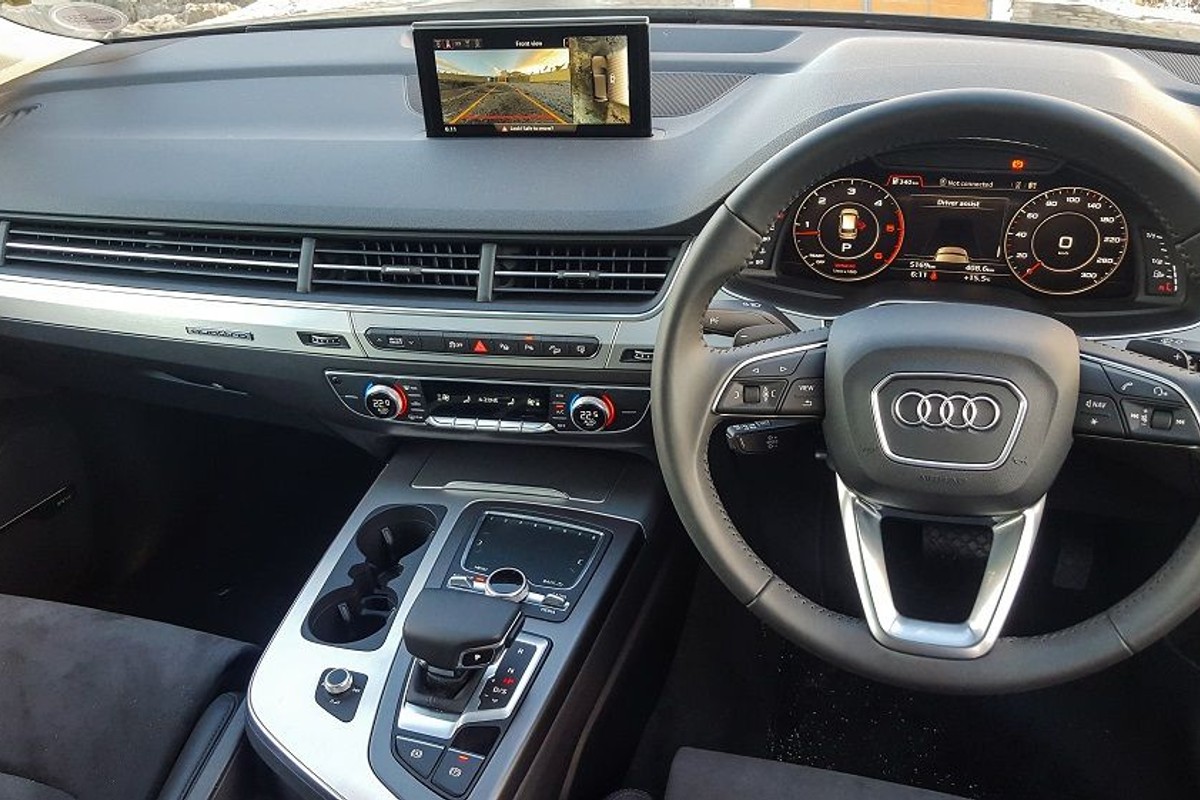
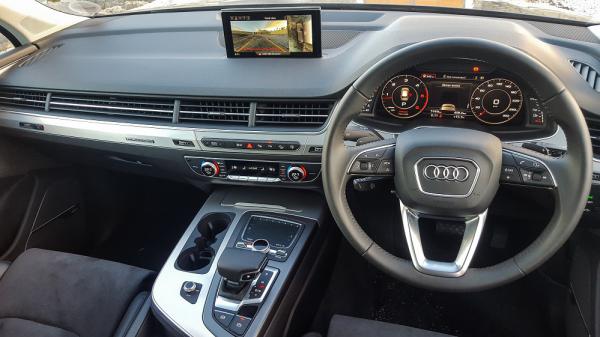
Audi interiors have been among the class leaders for a good few years now, but with the latest TT it has laid down a design direction that is particularly striking. Using strong horizontal themes, virtual cockpit displays and stylish new control interfaces Audi’s designers have created a modern, minimalistic look that has now been applied to the Q7. And it works. Beautifully.
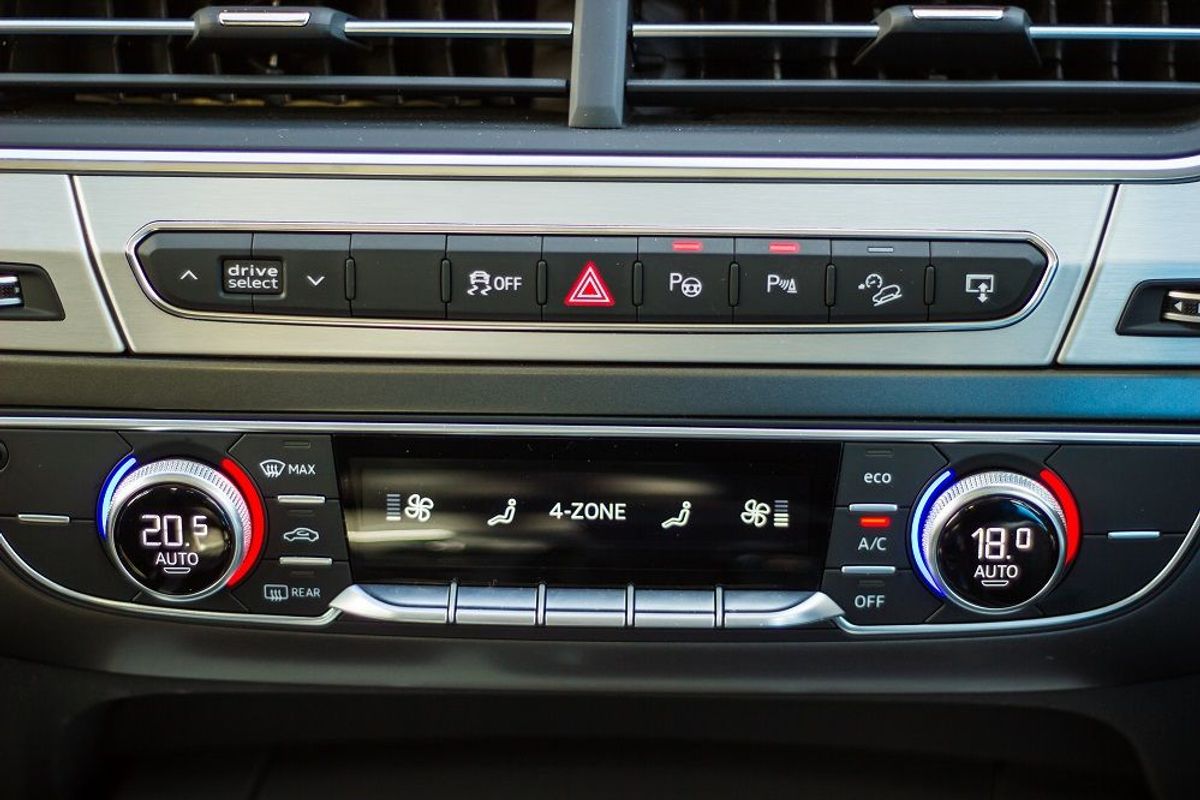
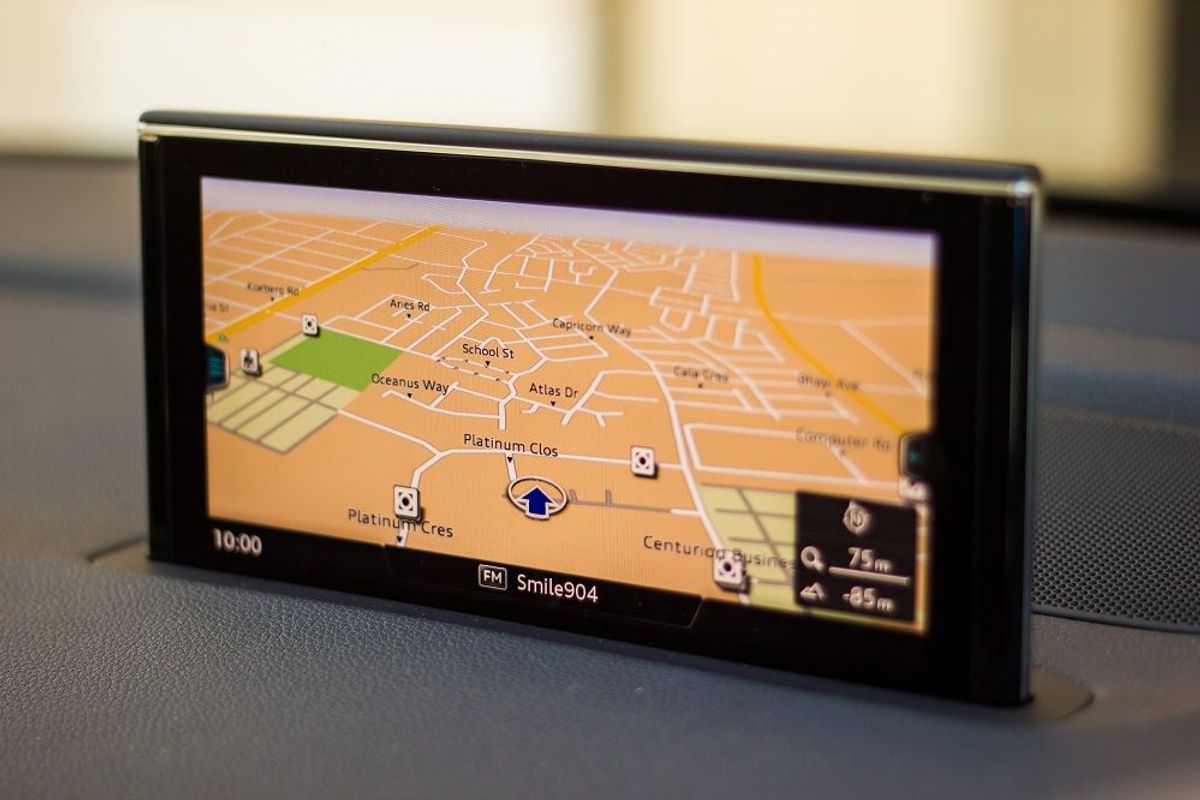
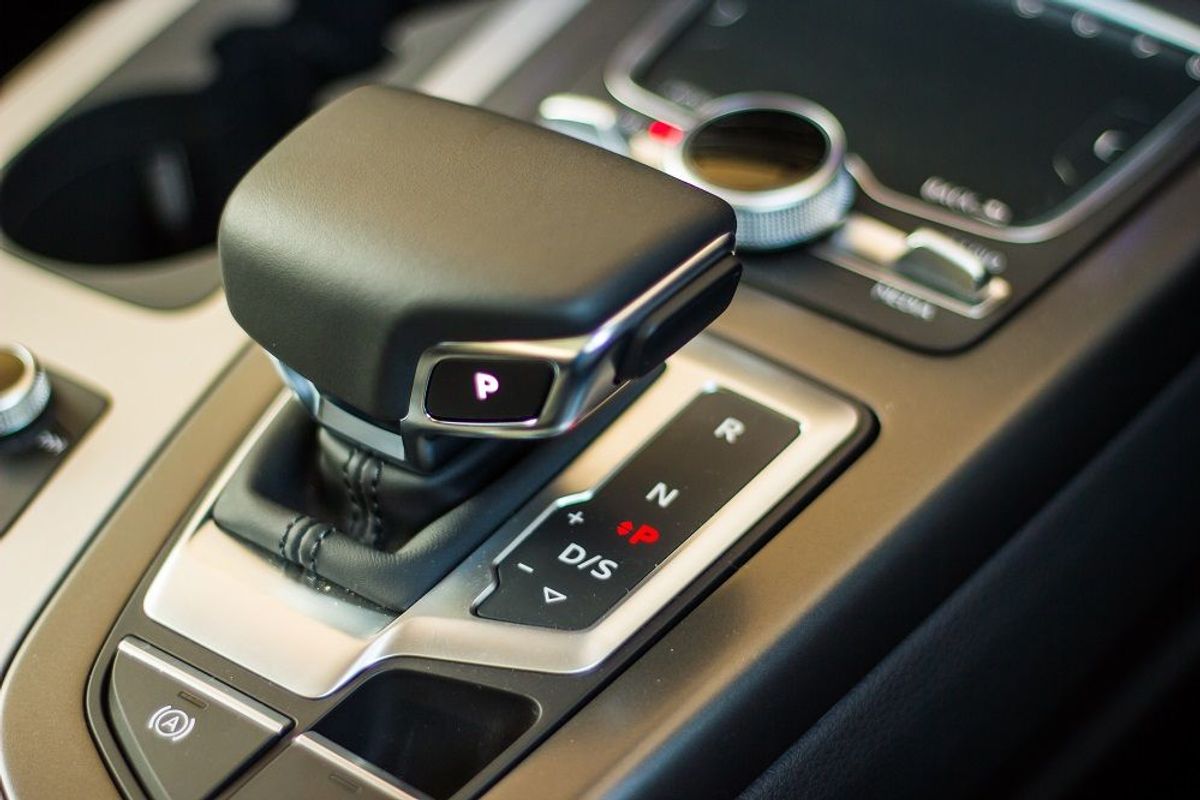
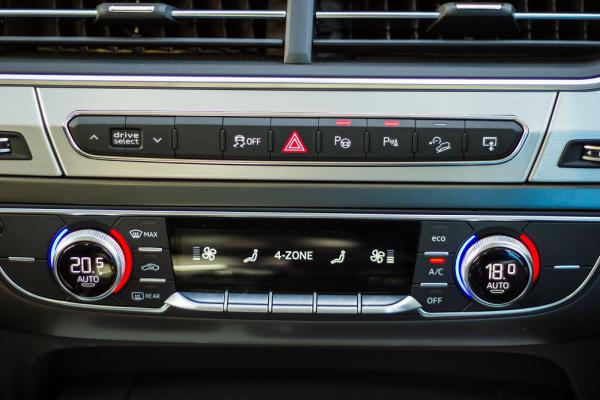
The facia appears expansive and wide, mostly because of the a strip of ventilation outlets that seems to run the full width of the cabin. Fronting the driver is Audi’s now familiar “virtual cockpit”, which is a R8 950 option, and allows the driver to switch between several displays, including the standard MMI navigation. A striking info-tainment screen glides majestically out of the top of the facia and can be retracted at the touch of a button. As with the TT, the main controls for the ventilation system boast integrated digital displays. And lower down, the stubby gearlever resembles the throttle of an airliner. The attention to detail is quite extraordinary, in fact, down to illuminated strips hidden between trim panels that add to the ambience at night.
The new Q7’s cabin is not just pretty to look at, but also very comfortable to sit in. Granted, our test car boasted a generous list of options that included electrically adjustable sports front seats, alcantara leather and a huge panoramic sunroof, but even so we were mighty impressed with the interior. For one, it is notably better packaged than before. It offers more space throughout the cabin than its bigger forebear. Legroom in the second row is particularly generous, and though our test unit lacked third-row seating (a R20 750 option), we’re told it’s bigger back there too. The boot is claimed to hold 890L, which is commodious indeed.
Rear seat passengers have access to two 12V power points, ventilation outlets and the backrests of the seats offer a reclining function, too. We took the Q7 on an extended trip fully loaded with passengers and luggage and the general consensus was that the Q7’s cabin was not only comfortable, but actually soothing. NVH (noise-vibration-harshness) control is excellent. Auto lights and wipers, as well as cruise control are standard fitment. The attractive, leather-wrapped steering wheel offers gearshift paddles that feel particularly solid.
Light-footed performance
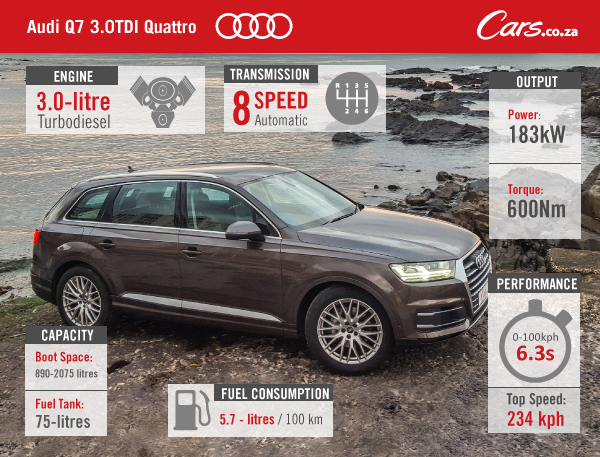
Based on the Volkswagen Group’s new MLB-Evo platform, the Q7 is more than 300kg lighter than its predecessor. You can feel it almost immediately. With a 0-100kph time of 6.9 seconds it is every bit as perky as the slightly more powerful BMW X5 xDrive30d. But straight-line performance is not the Q7’s greatest talent. The lower weight, power delivery characteristics, Quattro all-wheel drive and slick eight-speed automatic transmission combine to deliver a very refined driving experience.
With less weight to lug around and efficiency improvements just about everywhere, the Q7’s 3.0-litre turbodiesel engine is also impressively economical, with a claimed figure of 6.3L/100 km being very reasonable indeed.
Our test unit also featured the optional adaptive air suspension system which costs R30 500. Though this may appear rather expensive, it’s an option box that we’d recommend ticking. While Comfort mode is obviously the most cossetting, leaving the electronics to automatically adjust to circumstances and driving style sees the Q7 adopt a loping, refined ride that smooths out the bumps and roughness of our roads. In fact, the ride refinement is very possibly class leading, and is coupled with excellent body control when pushing on. Dynamic mode further tightens things up. Its predecessor suddenly feels like a lumbering dinosaur in comparison. Oh… and another upshot of the air-suspension system is the fact that, using buttons in the sidewall of the boot, you can actually lower the rear end of the car to make loading bulky items simpler. Clever.
Very few Q7s are likely to go off-roading and Audi certainly doesn’t promote its flagship SUV as being a Range Rover rival in extreme conditions. That said, it’s not without capability. The all-wheel drive system usually runs in a 40:60 power split (front to rear) but up to 85% of the power can be sent to the rear if required. The Drive Select system, now accessible via a simpler two-button system, offers an Off-Road mode, but you have to keep in mind your Q7's footwear… Audi does, however, offer what it calls “robust tyres” as a no-cost option for those who may want to venture off the beaten track. The tyres are 285/45s. Also keep in mind that if you specify your Q7 with the optional third-row seating, you can't have a spare wheel. Even our five-seater only had a temporary spare.
Conclusion and Summary
The new Audi Q7 is one of those cars that doesn’t bowl you over immediately, but rather wins you over slowly. The key ingredients to its slow – but powerful – seduction abilities are refinement and cabin design. This refinement is not restricted to any particular facet of the Q7, but is omnipresent. Similarly, there is precious little to fault in the modern, solid and tech-laden interior. Whatever points the Q7 may lose for its rather bland exterior, the interior more than makes up for it. If it had arrived earlier in the year, we think the Q7 would have been a very, very strong challenger in the Cars Awards. Keep an eye on it as a candidate for some recognition next year.
Audi Q7 3.0TDI quattro Price in South Africa
The Audi Q7 3.0TDI quattro costs R924 000 and comes with a one-year/unlimited km warranty and five-year/100 000 km Maintenance plan. Service intervals are according to the on-board indicator, but can be up to 30 000km apart.
Test team opinion
If ever there was a car that perfectly embodied the phrase, "Don't judge a book by its cover," it's this one. It's nondescript on the outside, but step inside and you're experiencing one of the finest cabins in this segment. Brimming with technology and beautiful finishes, the Q7 is magnificent. The ride quality is exceptionally refined too. The downside? Some of those extras are frightfully priced. -David Taylor
Ride comfort is taken to a whole other level with the Q7. It works over every terrain and maintains poise and balance. The engine and gearbox only enhance the feeling of comfort and refinement as Audi has really developed its diesel engines over the years.
We Like: Beautifully made and designed cabin, refinement, comfort, ride quality
We don’t Like: Some of the options should be standard such as electric seats/adaptive suspension
Also consider: BMW X5, Mercedes-Benz GLE, Volvo XC90
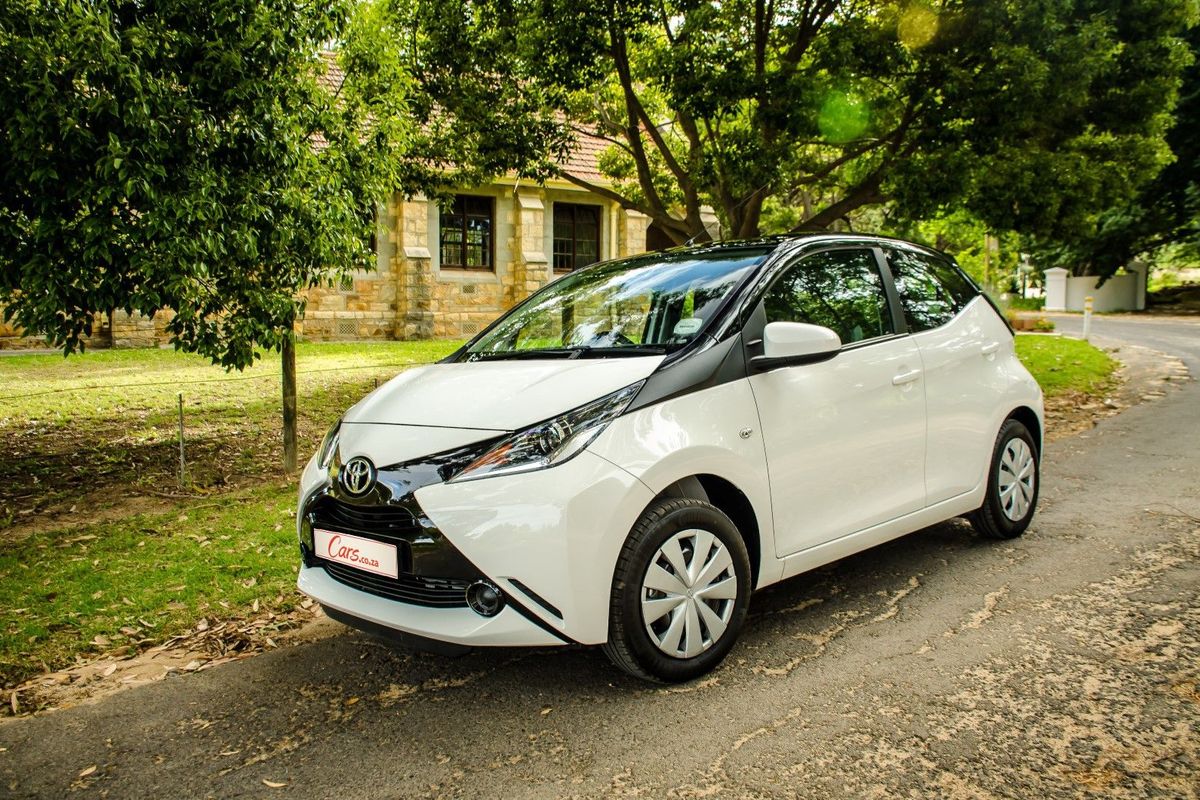
The new Toyota Aygo has arrived in South Africa but does it have enough X-Factor to drive sales in the A segment?
We get quite excited when a new model is launched, and when the next-generation Aygo rolled off the ship in Durban in October, we were delighted to give it a go. Our first impressions were relatively positive but we recently spent more time with the Aygo to get a better sense of its everyday liveability. Let’s see how this city slicker weighs up…
Boutique Styling
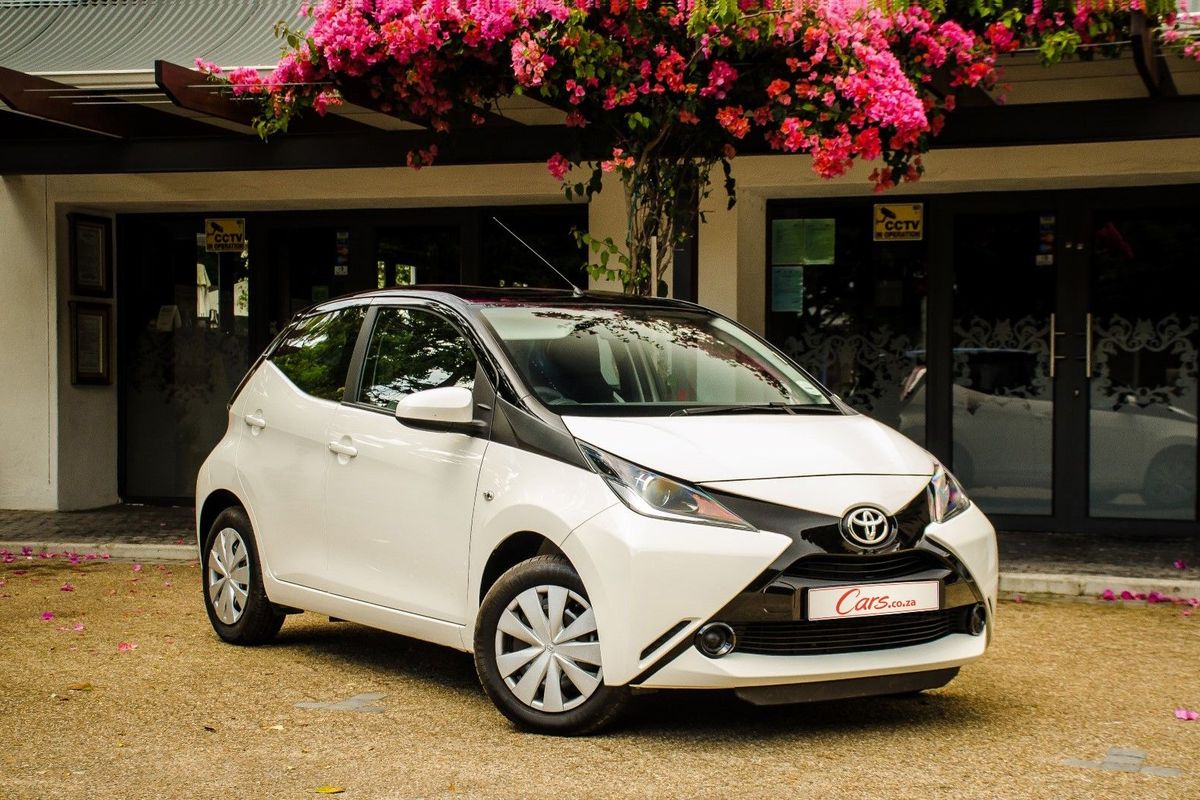
In a recent Cars.co.za survey, the new Aygo came out on top as the most attractive boutique city car in South Africa, a result, which speaks volumes, especially when you consider that it pipped longer standing models such as the Opel Adam and Volkswagen up! in the final vote.
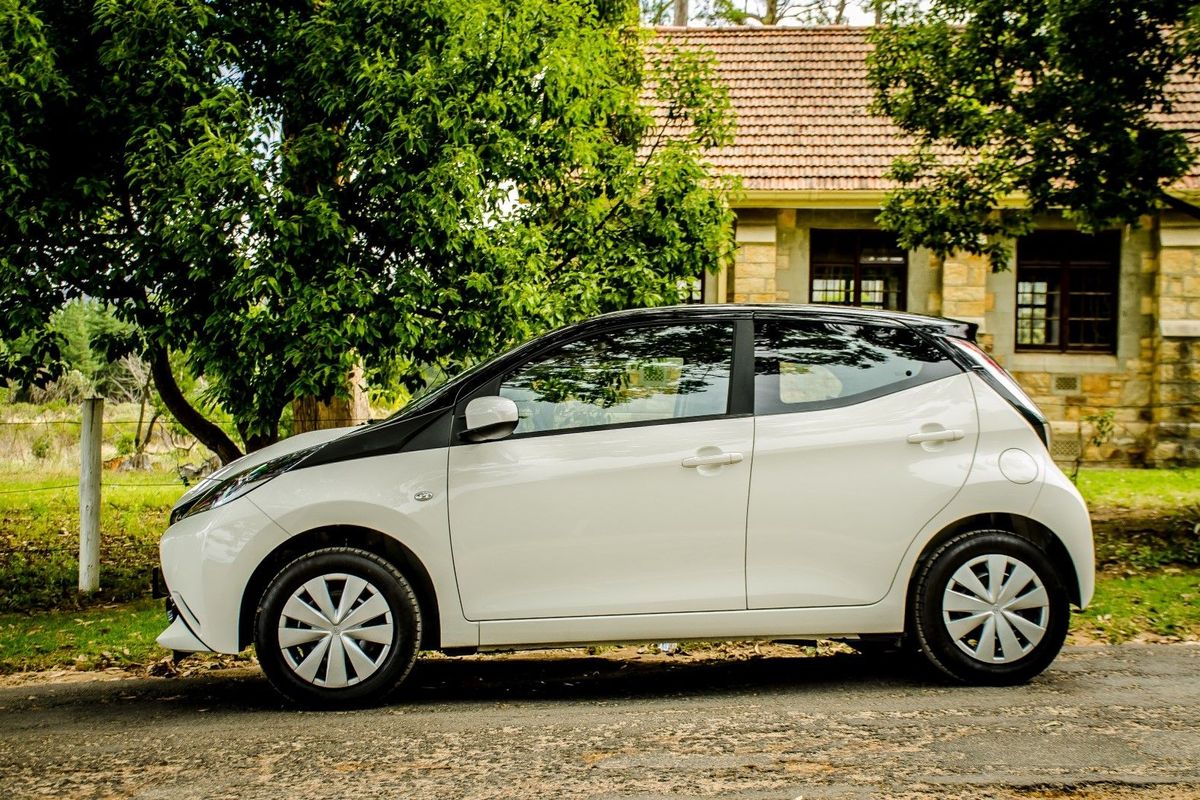
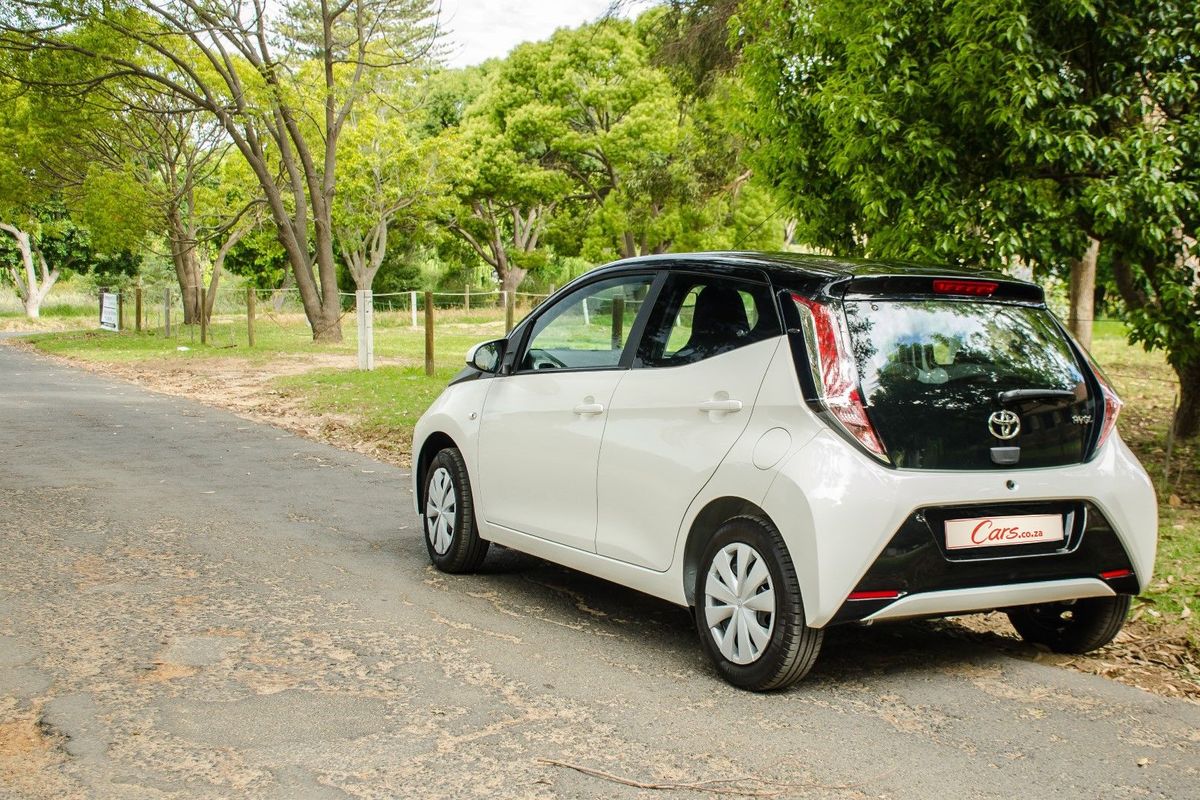
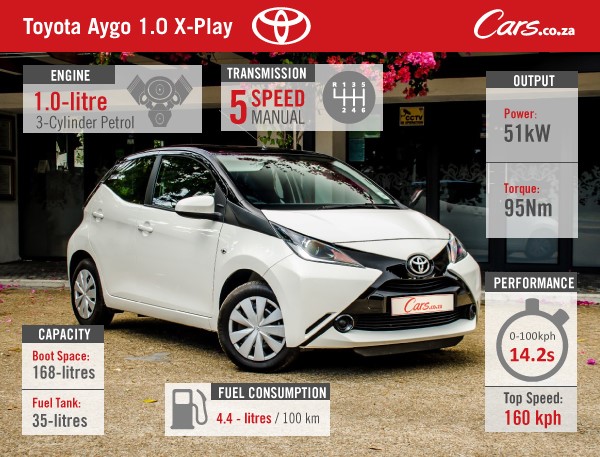
So what makes the Aygo so attractive? For starters, that bold X motif in the grille certainly makes itself known and shouts ‘Look at Me’ to every other car on the road. Mix the X with two-tone styling and the Aygo suddenly comes to life. Our particular test unit is an X-Play Black derivative meaning that the roof is black, contrasting with an Ice White body. The black roof can also be paired with Cherry Red body colour and buyers can also opt for X-Play Silver, which matches a silver roof with an Ash Grey body. If you're not into two-tone, you can just go for the stock-standard Aygo, with no contrasting. You decide!
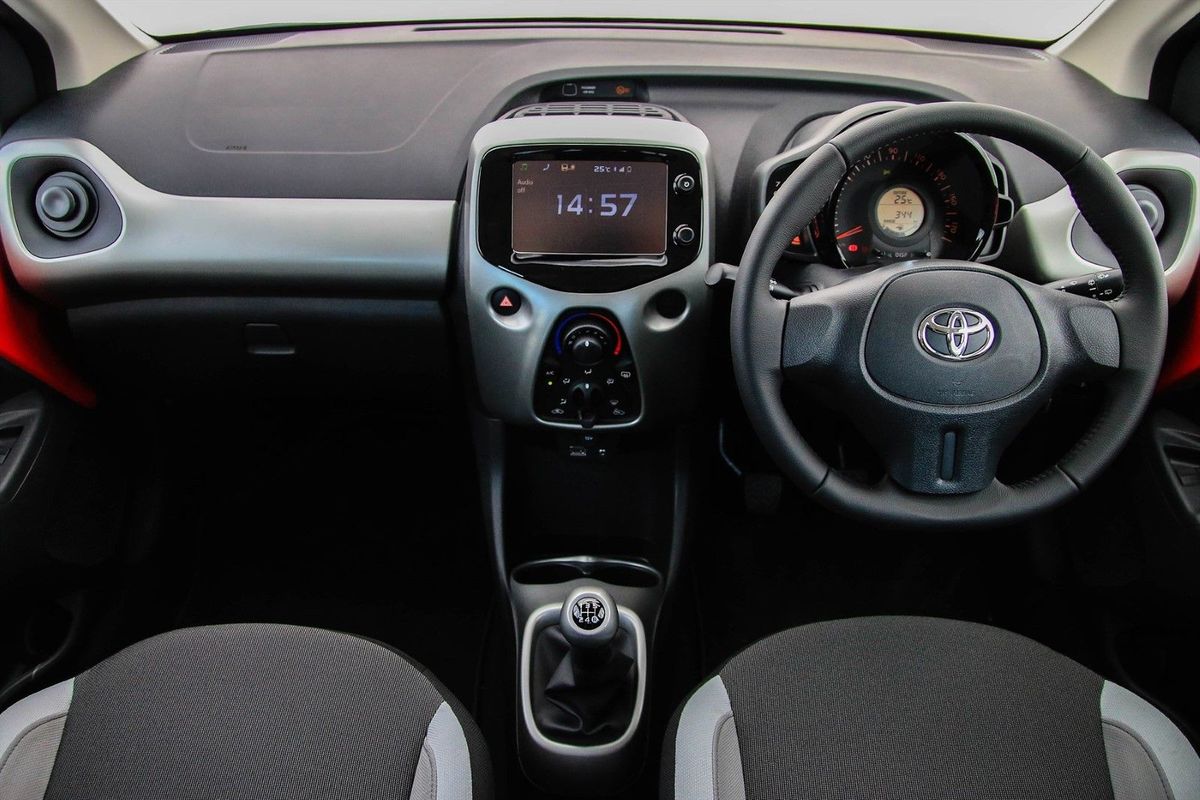
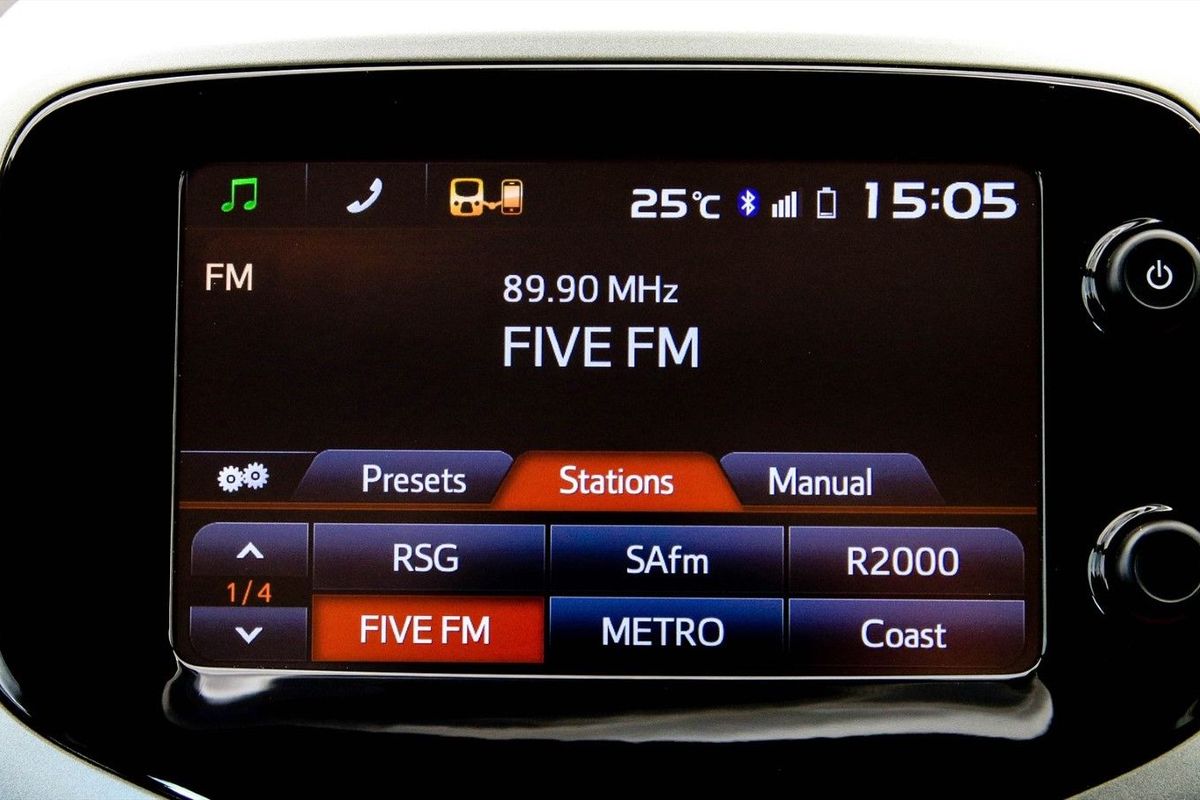
Step inside, and the vibe is fresh and functional yet not too exciting. The interior is rather basic and fit and finish is average. The seats are comfortable enough though and they feature multi-tone inserts for added contrast. You will also notice a large round speedometer unit directly behind the steering wheel which houses the central trip computer, a coloured bar tachometer and a shift indicator to remind you to change gears. The most important addition to this new Aygo is the touchscreen audio system that happens to be simple to use and takes care of your Bluetooth and music requirements. The touchscreen also adds a dash of colour to the interior, which is nice. There’s also a USB and auxiliary port for hooking up your devices.
The boot is rather small at 168-litres so don’t expect to fit large items in there, but you can fold the seats down for more space. Rear passengers will find the Aygo to be quite cramped as head space and rear legroom is compromised quite severely. This type of city car is generally suitable for the solo driver who heads into the city everyday.
How does the Aygo drive?
The Aygo is fitted with a 3-cylinder 1.0-litre engine that offers 51 kW and 95 Nm of torque. Those are relatively small numbers, but for a small car that weighs only 855kg, it’s enough to get around town at a decent pace. The Aygo is by no means sluggish from robot to robot, but the clutch position does take some getting used to and the throttle does require a heavy foot to get the revs up. The 5-speed transmission shifts nicely through the gears and if driven conservatively, decent fuel consumption figures can be achieved too. Toyota claims 4.4L/100km on the combined cycle and during our time with the Aygo we managed to achieve in the region of 7L/100km which should be easy to improve upon with a more reserved driving style.
The one thing you will notice when driving the Aygo is the engine noise. Under hard acceleration, the Aygo pipes up and makes a throaty, even racy type of sound typical of small capacity 3-cylinder engine. It’s cool at first, but then just becomes annoying and to mitigate this you have to adopt a conservative driving approach to minimise the engine rumble. That said, the engine is not as refined as other 3-cylinder 1.-0-litre engines we have tested. You'll find it smoother going in something like the Volkswagen up!, Opel Corsa and Opel ADAM.
The Aygo makes up for its refinement issues with excellent handling. The steering is well-weighted and provides good feedback to the driver. With its compact dimensions, the Aygo can be thrown into corners with confidence and the suspension setup delivers good ride quality too. Over severe bumps and undulations on the road, the Aygo can get a bit crashy but it manages to even out the rough stuff relatively well. Overall, the Aygo pulls off the city car character quite well and delivers good driving fun, albeit a bit noisy.
In terms of safety, the Aygo comes fitted with a total of four airbags, ABS with EBS, Brake Assist and ISOFIX child seat mounts.
Toyota Aygo Price in South Africa
The Toyota Aygo X-Play Black and Silver derivative is priced from R139 900 while the base monotone Aygo is priced at R138 900.
Prices include 3-year/100 000km warranty while a service plan is offered as an option. If buyers purchase the Aygo before 31 December 2015, Toyota will throw in a 3-year/45 000km service plan to sweeten the deal until the end of 2015.
The Aygo is a solid offering from Toyota and it will appeal to buyers looking for a bit more character and charm from their car. Performance and efficiency is good within the city limits and excellent handling makes the Aygo fun to drive on a daily basis. Space for goods and passengers is limited, but as a basic city runabout, the Aygo performs its duties reasonably well within the confines of its small dimensions. If you can tolerate the vocal engine noise then the Aygo is a good companion for tackling the urban jungle.
Test Team Opinion
The Toyota Aygo offers an interesting start into the world of motoring and its quite funky to look at and to drive. Despite a gruff sounding engine and some cheap build finish, I quite like its characterful nature. -David Taylor
We Like: Fresh Styling, excellent handling, decent performance, nice price
We Don’t Like: Harsh engine noise,average choice of materials
There’s a new kid on the block and its called the Polo Vivo Street!
Volkswagen South Africa has expanded its Vivo range with the addition of a special edition Street derivative. More than this, Volkswagen is also offering a Style Package as well as new exterior colours to spice up your Polo Vivo..
Volkswagen Polo Vivo Street Special Edition
The Polo Vivo Street is only available as a hatchback and comes fitted with a 1.4-litre engine offering 63 kW of power. This model gains exclusive features such as silver painted side mirrors, 15-inch Cordoba alloy wheels, lowered suspension by 7mm, silver double stripes on the bonnet, roof and on the lower front and rear doors. On the inside, the Polo Vivo Street benefits from a grey stitched leather steering wheel and gear lever while the seats are in ‘Kadra’ trim.
VW Polo Vivo Street Price in South Africa
Volkswagen Polo Vivo Street – R159 900
Style Package
Volkswagen is offering the Style Package for the 63 kW 1.4 Trendline sedan and 77 kW 1.6 Comfortline derivatives. The Style Package includes 15-inch Riverside alloy wheels, Vienna leather seats, including the same leather for the steering wheel and gear lever, cruise control and chrome strip rings for the instrument cluster, ventilation surrounds and switch nobs.
The cost of the Style Package amounts to an additional R13 000 for the 1.4 Trendline and R9 100 for the 1.6 Comfortline derivative.
In addition to this, Volkswagen has also included four new colours to the Polo Vivo range and these include Sunset Red metallic, Blue Silk metallic, Pepper Grey metallic and Honey Orange which is only available with the Polo Vivo Maxx.
Suzuki Vitara (2015) First Drive
Suzuki specialises in compact, no frills value for money vehicles. You know when you get a Suzuki that it’s going to be reliable, hard-working and allow you peace of mind transportation. Suzuki has seen that the compact SUV market is continuing to grow rapidly and that buyers are most notably looking for a stylish car.
The new Vitara is meant to be just that, an attractive compact SUV with all of Suzuki’s standpoints built in. We took it for a spin around the mountains of George and Knysna.
The new Vitara
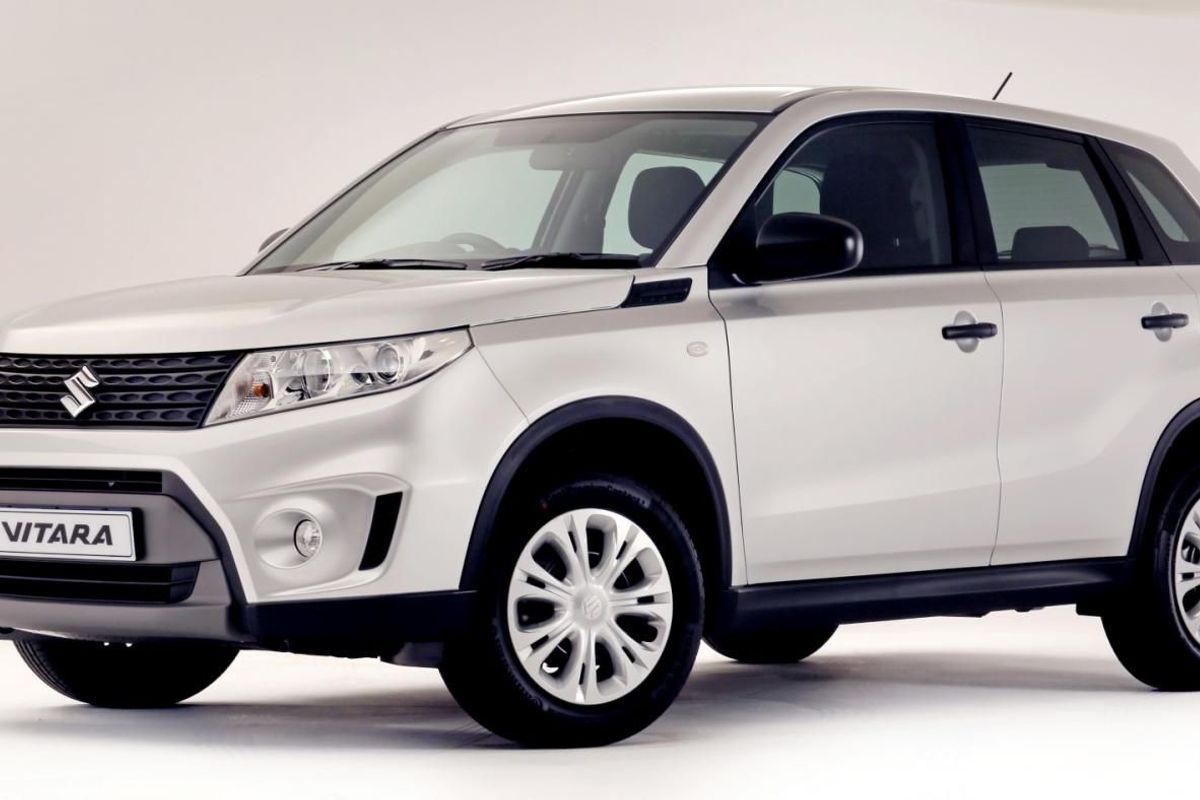
Firstly, the Vitara is not a replacement for the previous Grand Vitara, which will likely remain a larger, mid-size SUV. The Vitara fits very much in the new segment of crossovers that includes the likes of Nissan’s Juke, Renault’s Captur and the Ford Ecosport to name the main players. The segment accounts for 30 000 sales a year according to Suzuki and it wants a piece of the rising pie. The Vitara is offered in both front-wheel drive and all-wheel drive derivatives. There are also manual and automatic gearboxes on offer. Suzuki has also gone to town on the customisation options but more on that later.
Just one engine
Suzuki doesn’t have the largest range of engines to choose from in its parts bin. The one they have selected is a naturally aspirated 1.6-Litre petrol unit. It has 85 kW and 151 Nm of torque available. Power is competitive, but it is a little shy on torque compared to the competition that uses turbochargers to get that extra bit of mid-range shove. We drove with three passengers in the Vitara and it performed acceptably. It’s a bit sluggish in the low end of the rev range but like all naturally aspirated engines it gets better the higher you rev it. Fuel consumption is claimed at 5.8L/100km for the five-speed manual and 6L/100km for the six-speed auto. That seems to be a pretty good benchmark considering that we returned 6.7L/100km over our 300km route.
The cabin
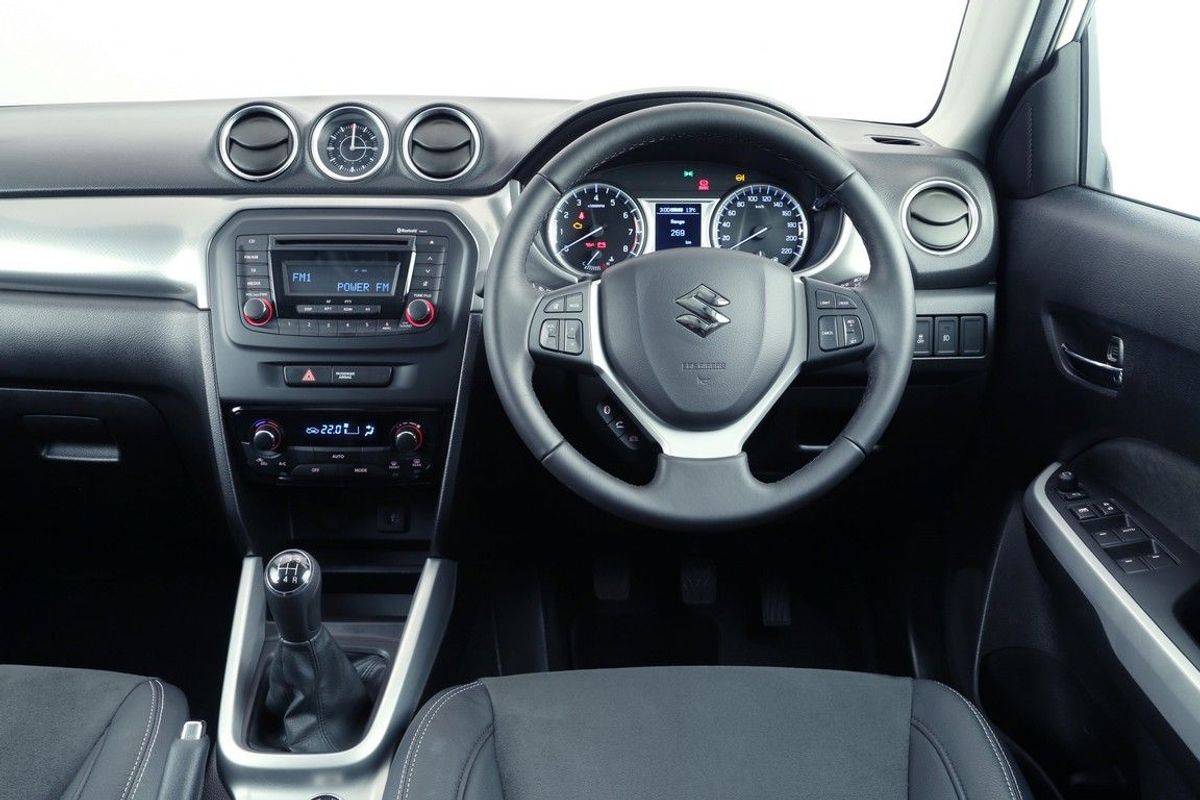
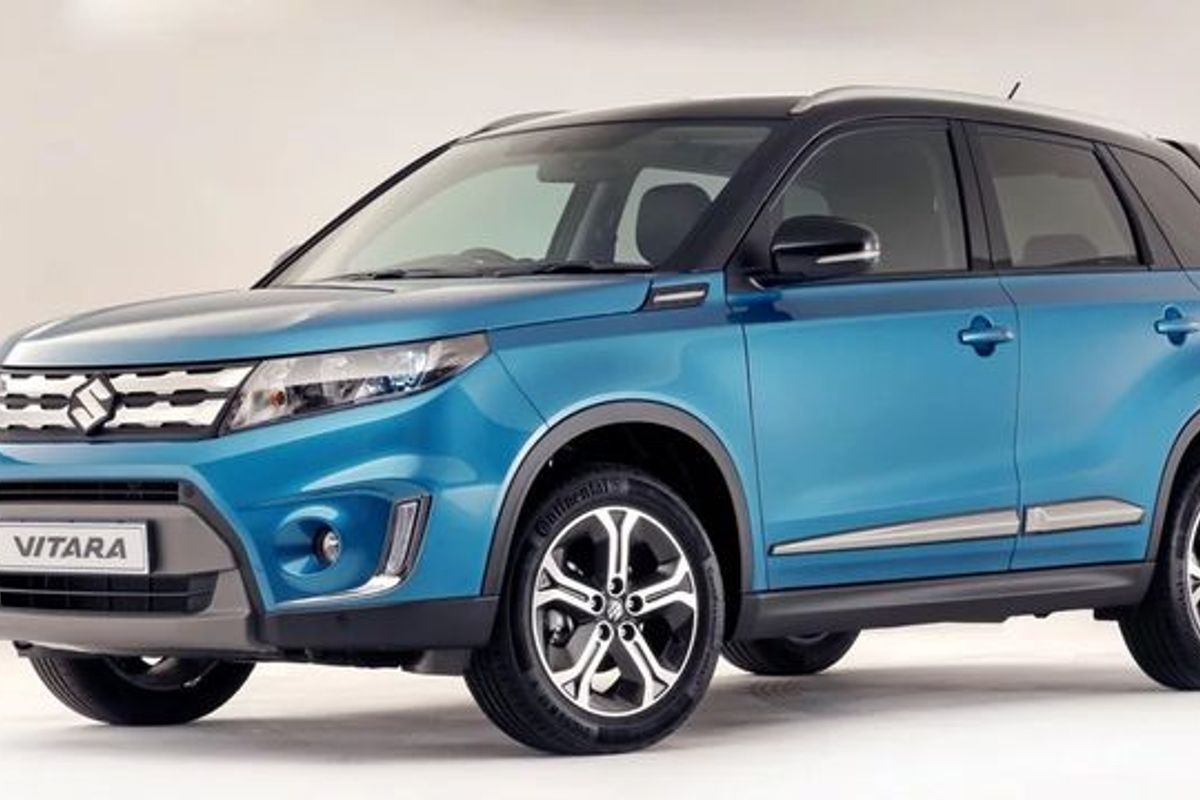
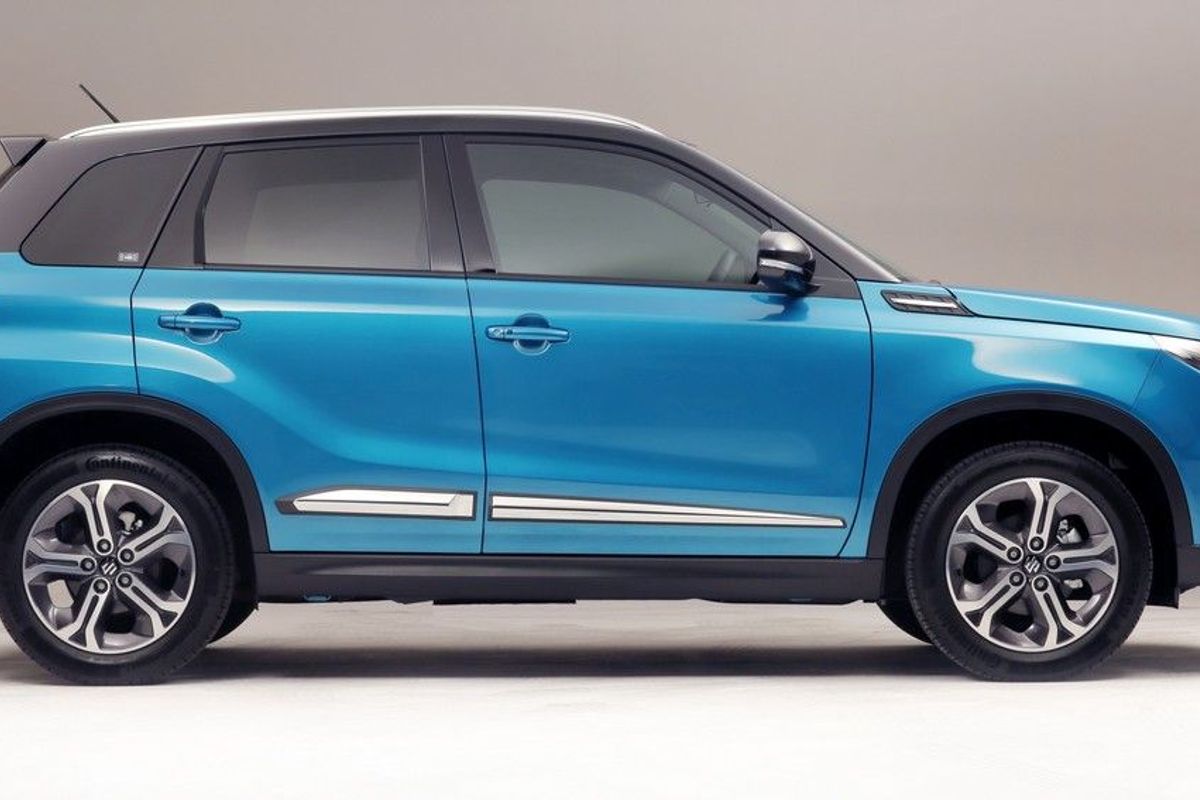
In short, the Vitara's cabin is not as funky or stylish as its competition but it is functional. The plastics are coarse in places and it could do with a more modern dashboard and instrument cluster layout. That said, you can specify the interior with colour-coded trim that matches the exterior. The exterior can also be ordered in two-tone paint schemes if you wish – the red/black and blue/black combinations make quite stylish statements. The seats are quite comfortable and offer decent lateral support on bumpy roads.
Rear occupants have good legroom space and door pockets that can hold a 1.5-Litre water bottle and a few other bits and bobs. The boot is practical with a floor shelf the can be lowered to offer a full 375-Litres or raised to provide a flat loading surface. The rest of the cabin remains functional, but not cool or trendy. It is well specced inside even in the base model GL. The middle of the range GL+ offers solid value for money with climate control, cruise control, a leather-wrapped steering wheel and 15-inch wheels.
Rough and ready
Suzuki seemed adamant about showing us that its crossover was capable on the dirt track. Our route took us up Montague pass, a decent dirt road before turning back later from Uniondale through to Knysna. That route took us along the Karoo to Coast mountain bike race route, quite a slippery and rocky 90km off road section. The 185mm ground clearance seemed enough to cope with all the obstacles and even with only front-wheel drive in our car, there were no difficult moments. There is an all-wheel drive model available that uses an electronic system to shift power around to where it’s needed on slippery surfaces. All-Grip, as it is called, even has hill descent control. The Vitara is probably specced with more off-roading ability than it will ever need, but it’s nice to know it’s there if you ever happen to need it.
Safety spec
Suzuki has fitted the Vitara with a high level of safety equipment. The standard stuff includes ESP, ABS with EBD and electronic brake assist. Inside, there’s seven airbags as well as pre-tensioning seatbelts. The Vitara scored five-stars on the 2015 Euro NCAP test.
Suzuki Vitara Pricing
1.6 GL 5MT R239 900
1.6 GL+ 5MT R269 900
1.6 GL+ 5MT ALLGRIP R291 900
1.6 GLX 6AT R299 900
1.6 GLX 5MT ALLGRIP R319 900
Opel Adam Rocks (2015) First Drive
Opel is continuing its resurgence with the local launch of another, all-new family member. That takes the total count to 12 cars launched in SA since the reintroduction in 2012. This latest Adam Rocks is said to build on the success of the Adam and we took it for a quick spin at altitude.
Why does it Rocks?
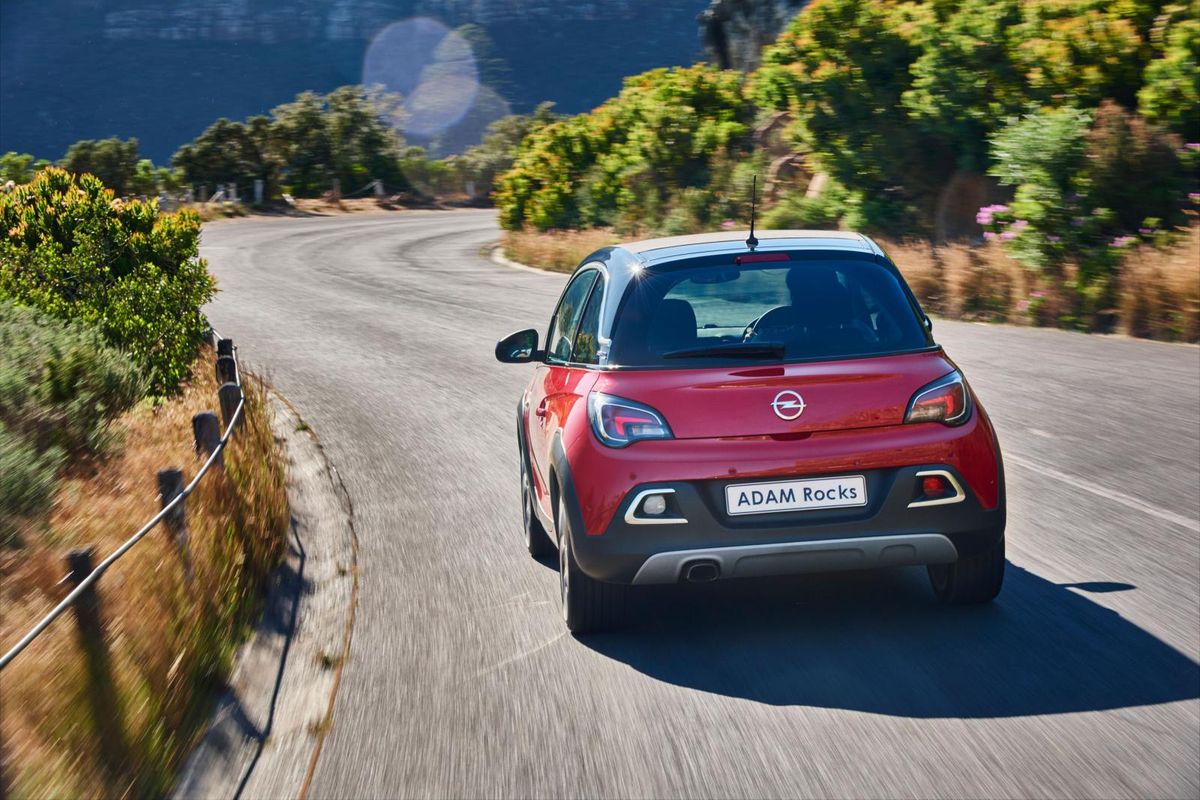
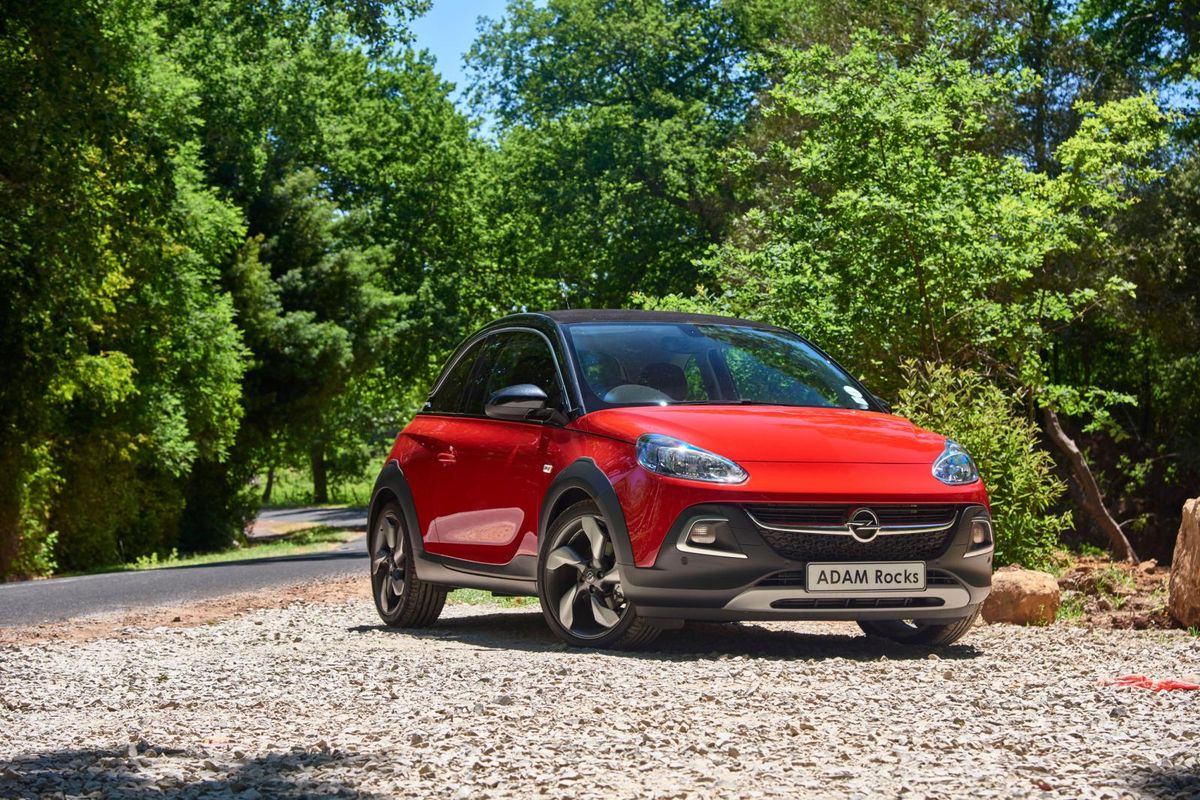
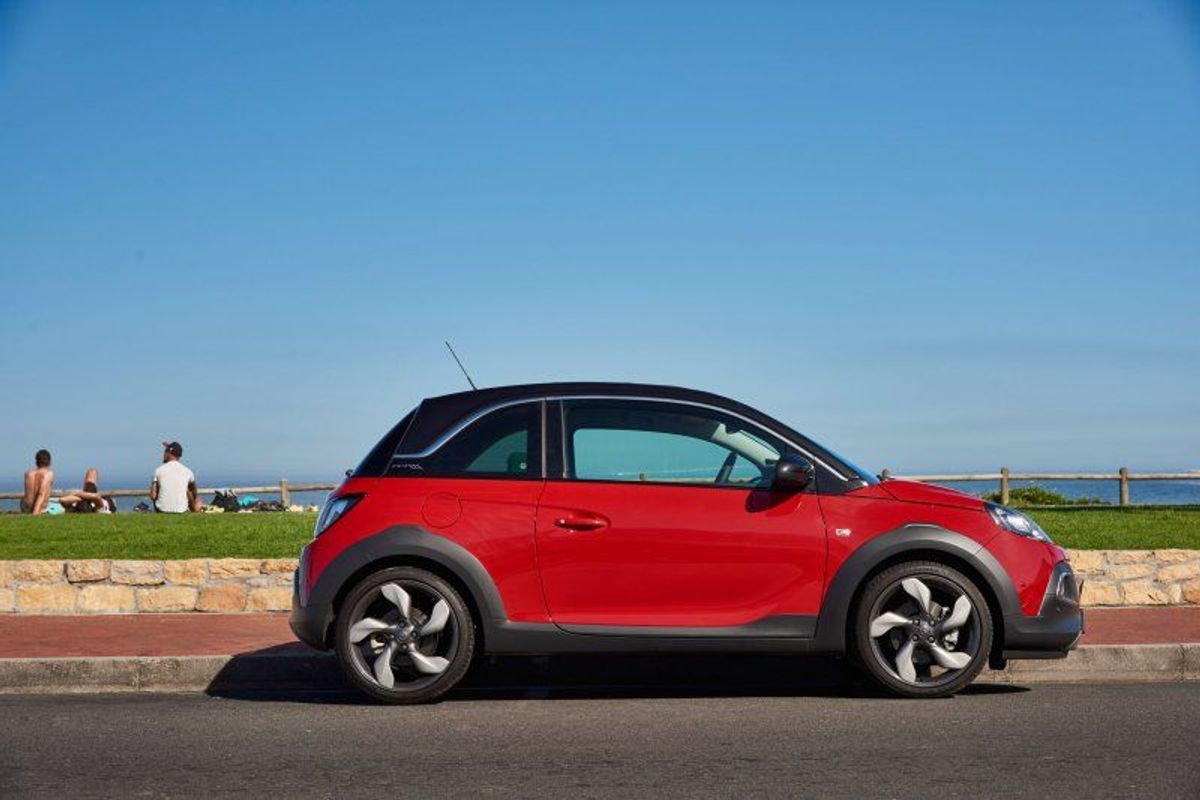
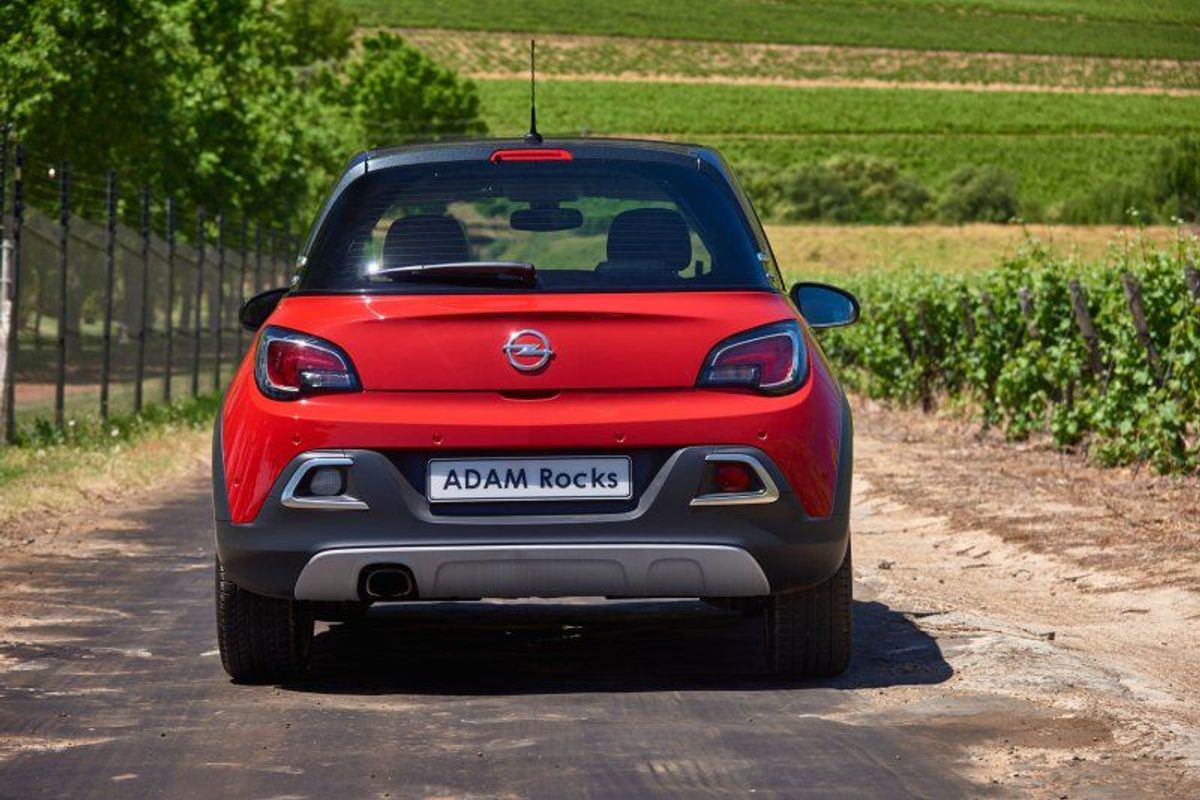
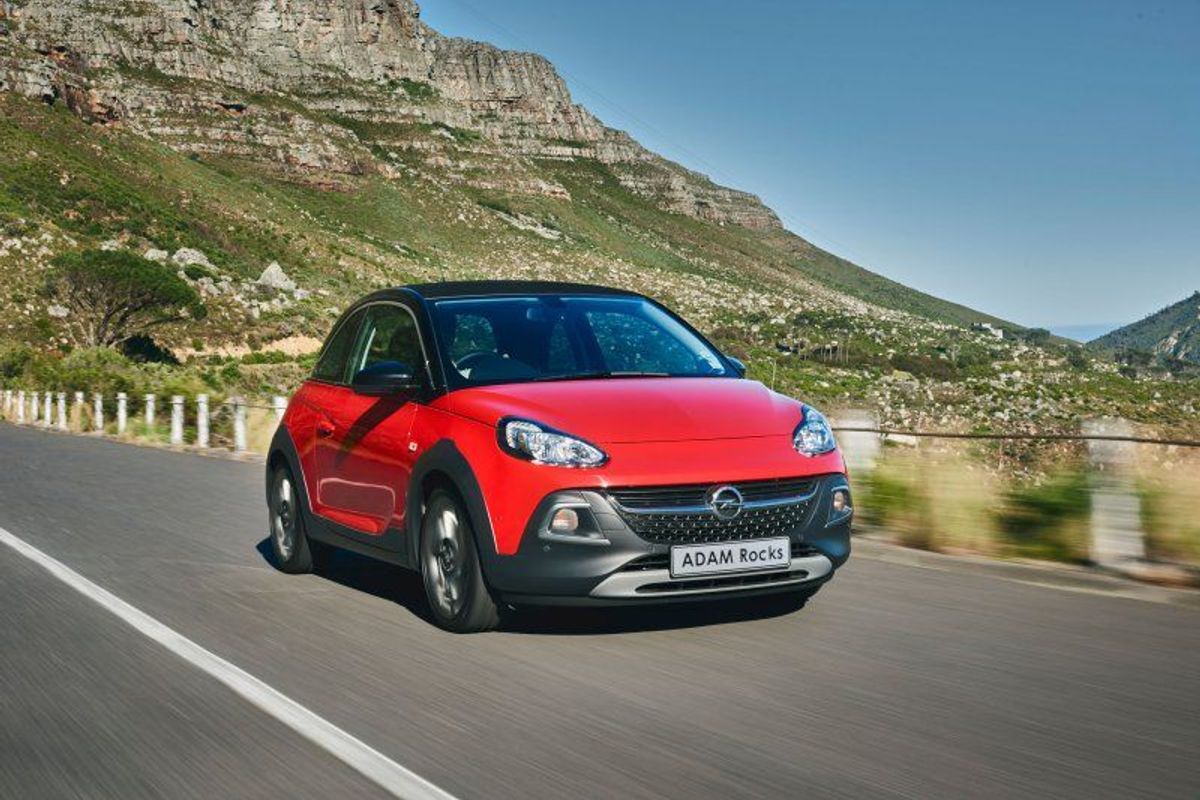
The Adam Rocks takes a standard Adam and raises it 15mm, sticks some fancy cladding on the exterior and has a fancy folding roof. Essentially that’s all that makes it different but there are a few other finer details that make it more interesting. For starters, Opel will only bring in 150 Adam Rocks, in three colour variants. The red and white colours are carry over colours from the standard Adam whilst the Goldbuster colour is unique to the Rocks. Whilst the Adam is already quite a chic and trendy urban runabout, the Adam Rocks takes that to a new level.
The exterior and interior can be personalised beyond reason and the carpet folding roof is a neat addition and adds a bit of exclusivity. The plastic cladding around the outside is the main distinction between the two vehicles and gives the Rocks a bit more of a rugged look. With only 15mm extra ground clearance it’s not going to tame difficult terrain however. The 18-inch wheels really pump up the shoulders of the Rocks. The bigger wheels seem to have lengthened the gear ratios somewhat and made the driving experience a little less peppy.
Power puff
The Adam Rocks is powered by the same engine as the standard Adam. That leaves it with the best 1.0-Litre turbo engine currently available (in our opinion) under its bonnet. 85 kW and 170 Nm are available and its overtaking powers are still impressive despite the lack of capacity. The bigger wheels do take away a bit of that perkiness or initial zip that the Adam always had, but it is still reasonable at dashing from light to light. Opel also claims the Adam Rocks uses just 5L/100km. We achieved 6.9L/100km over our drive that took in more than a few heated starts and brushes with the redline.
Full spec
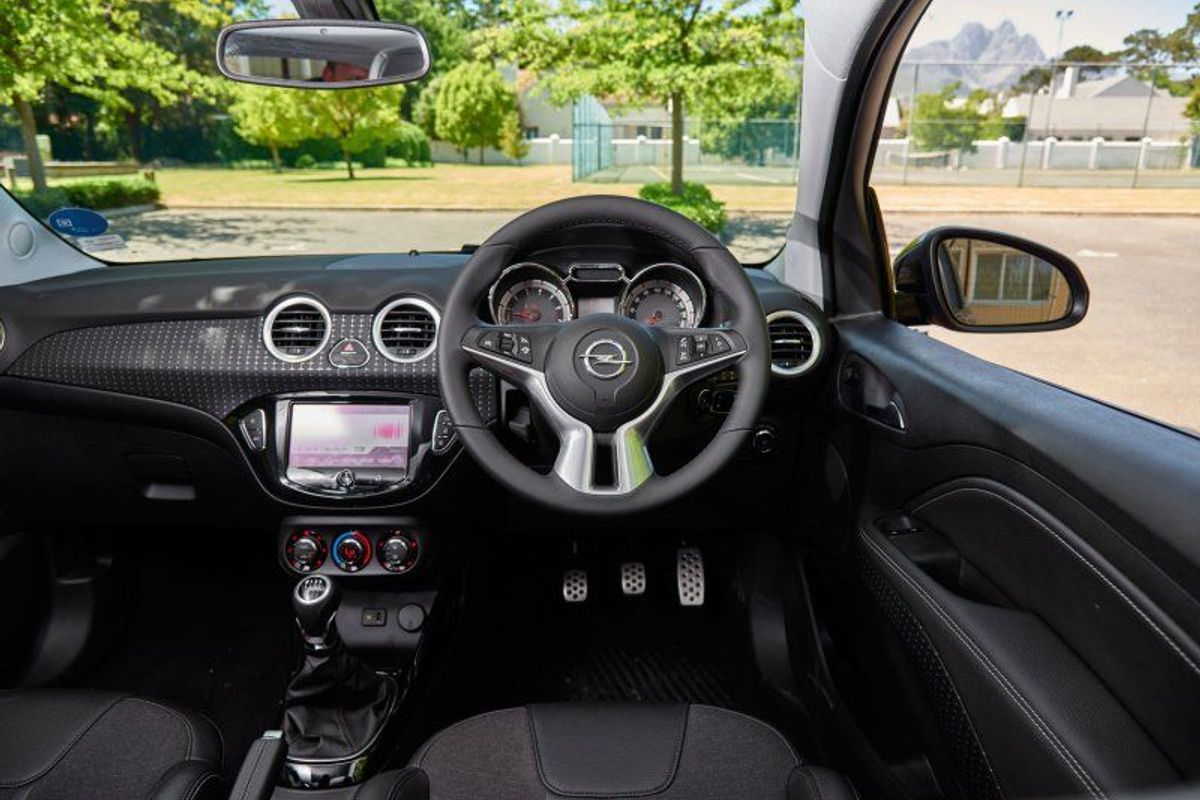
The Adam Rocks has the very top spec Adam Glam features that includes all the connectivity and interactivity with your Smartphone. There’s a seven-inch touch screen to access everything to do with multimedia or applications and it still has a USB port. The Rocks also features Siri Eyes Free, a feature that integrates the Intellilink system with later-generation iPhones and iPads via a USB cable. It activates Apple’s voice control so that you can ask Siri about the weather, where the next fuel station is or set a reminder. As we’ve come to expect from Opel of late, the Adam Rocks is a big hitter on the safety and assistance systems. The Rocks has ESP and the more advanced ESP Plus system, LED lights, ABS and EBD to try and avoid incidents.
Then there’s also premium features available like blind spot detection, the self-parking system and hill-start assist. There are only 150 models to sell so Opel shouldn’t have a hard task pedalling them to customers. The cost is a little more than your top spec Adam but you get the added exclusivity with the limited numbers. Competitors are hard to pick but there’s a few out there like the Fiat 500 or the Audi A1 depending on which way you look at things.
Opel Adam Rocks Pricing
The Opel Adam Rocks will go on sale from R273 400 and includes a 5-year/120 000km warrant and a 3-year/60 000 service plan.
Volvo S60 Polestar (2015) Specs and Pricing
It's taken a while to get to South Africa, but finally the fire-breathing Volvo S60 Polestar is here.
Highlights – Hardcore handling – 258kW T6 engine – Only 25 coming to South Africa
When you think of premium performance sedans, the likes of BMW's M, Audi's RS and Mercedes-AMG come to mind. Volvo is not a brand that you associate with performance, but the performance arm Polestar is trying to change your perceptions. The Volvo S60 Polestar is the flagship S60 and if this wild blue sedan drives as outrageous as it looks, then we could be in for some fun. Previously, the closest we could get to Polestar goodness was through approved dealership plug-in engine upgrades which gave you a little more power through an electronic remap. The Volvo S60 Polestar is a whole lot more than that.
Power comes from a tuned version of Volvo's 3.0-litre T6 engine. Pushing out 258kW and 500Nm, this vehicle is offering a lot of grunt and when compared to other premium performance sedans, it offers on par outputs. Top speed, much like the Germans, is a regulated 250kph. Performance is respectable, with the 0-100kph sprint dispatched in 4.9s thanks to an all-wheel drive setup and it'll hit 200kph in 17.7 seconds. In comparison, the normal Volvo S60 T6 R-Design does the same sprints in 5.9s and 20.9 seconds respectively.
It's not all about straight line performance however. Volvo Polestar has had considerable successes in the motorsport environment and successfully took on the dominant Holden and Ford brands in the Australian Touring Car Champions. To make a great race car, you need quality handling and brakes and Polestar has transferred its knowledge from the track into the road car. There are Öhlins shock absorbers, 80% stiffer springs and upgraded Brembo brakes which should ensure that the Volvo S60 Polestar turns and stops sharply.
We'll be driving the Volvo S60 Polestar at Red Star Raceway in Gauteng next week. Look out for our first impressions as we see if it can provide outright thrills without compromising on premium and luxury.
Volvo S60 Polestar Price in South Africa
The Volvo S60 Polestar will cost R735 000 and comes with a 5 year / 100 000km warranty and maintenance plan as well as a 5 year / unlimited mileage roadside assistance. There are only 25 cars coming to South Africa so we can say easily this is going to be quite a collector's piece.
Video
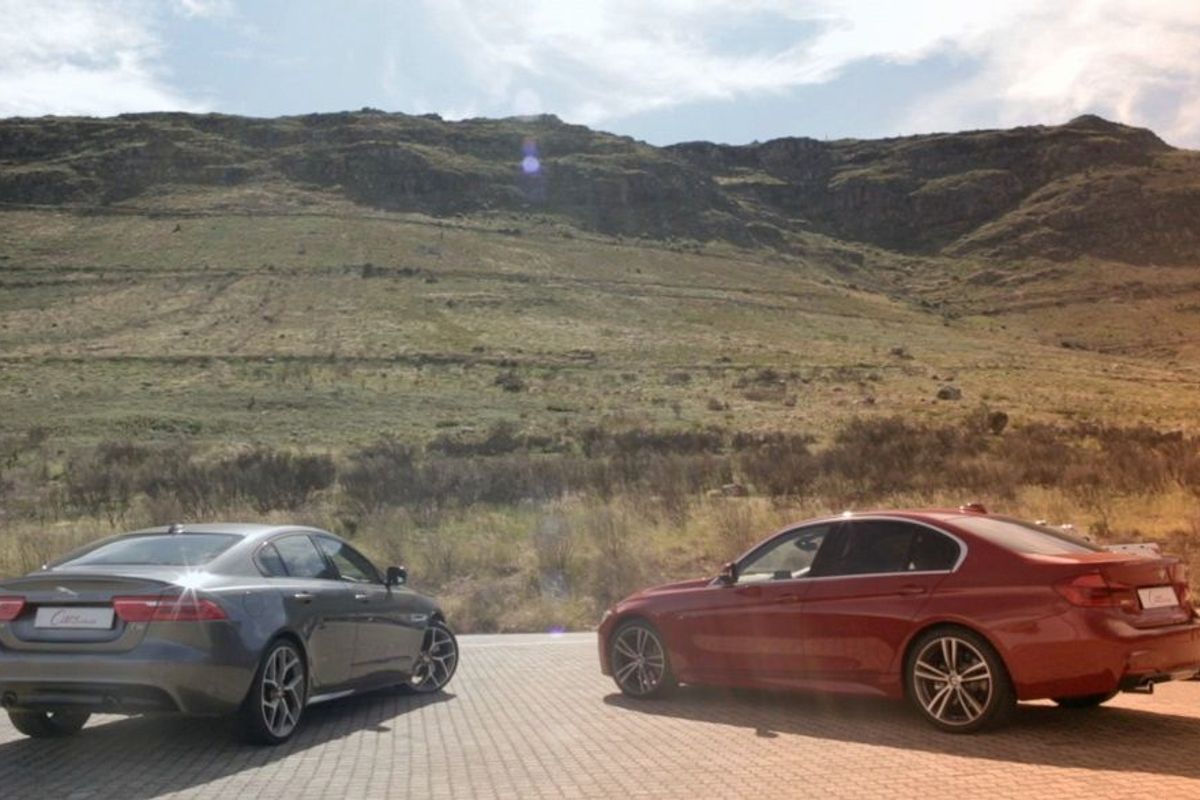
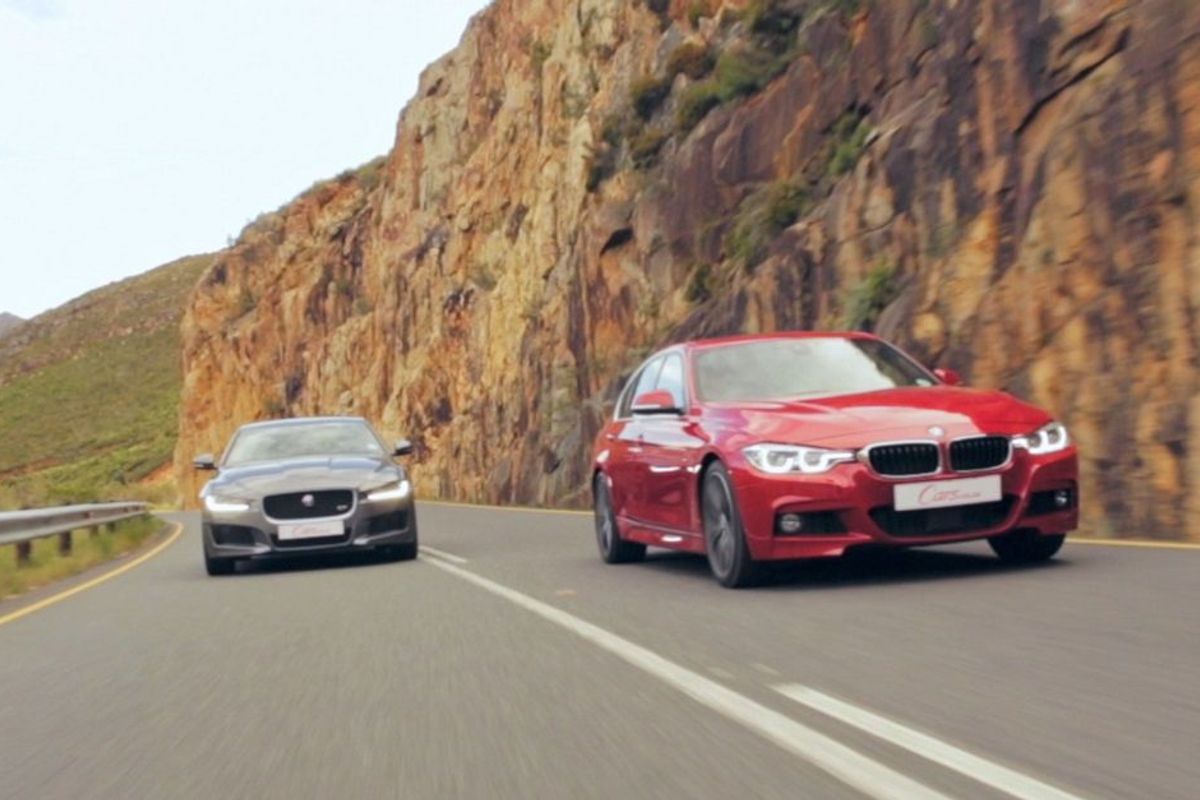
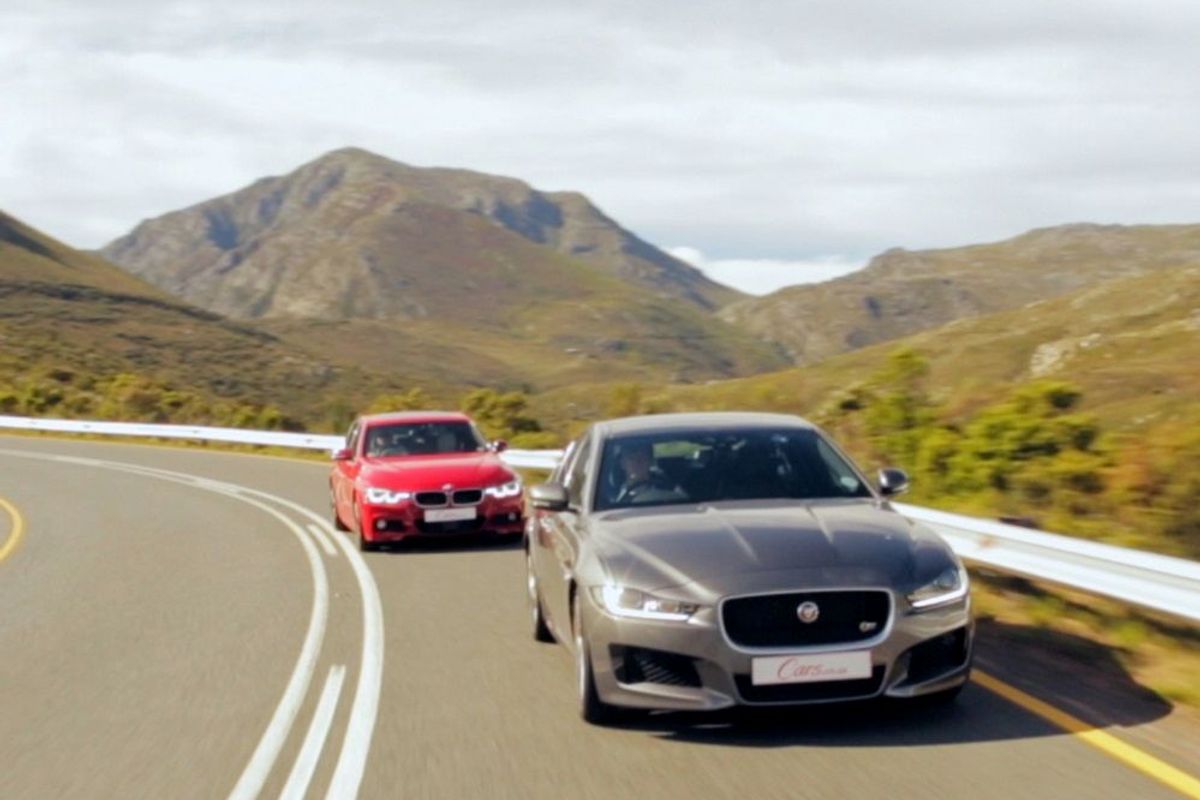
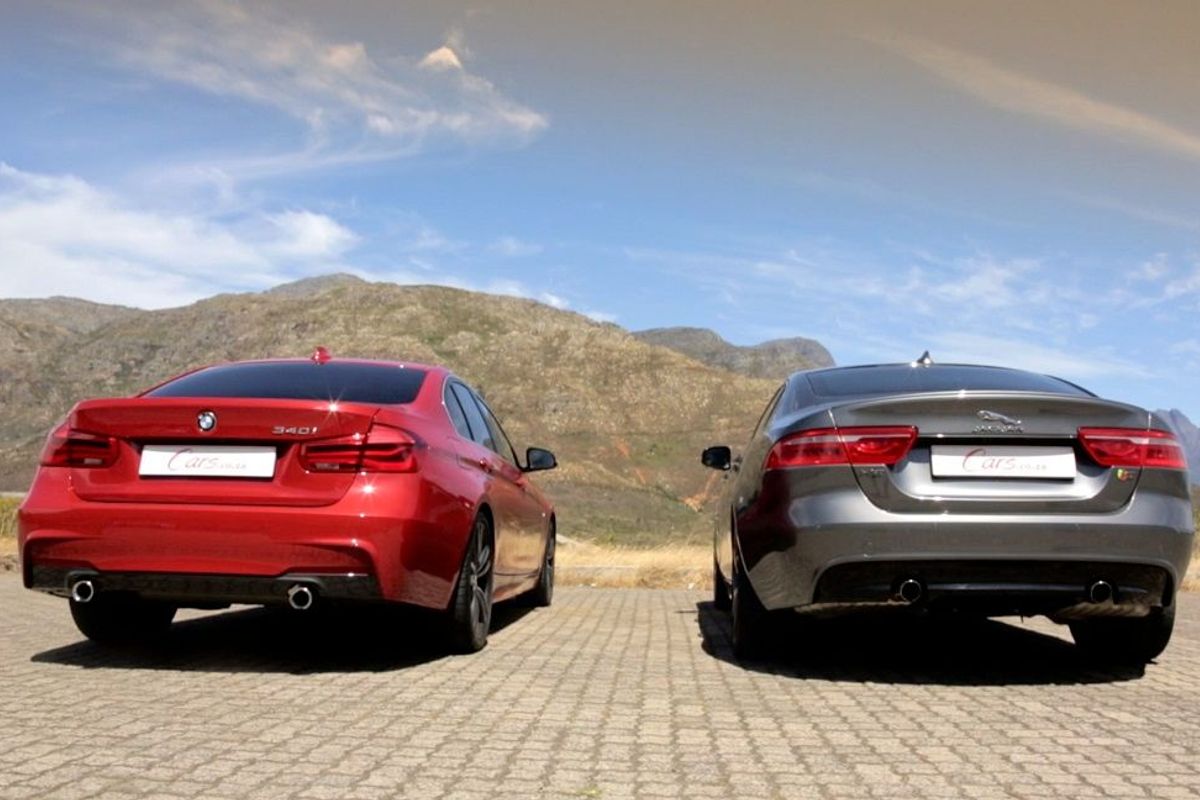
BMW 340i vs Jaguar XE S Driving and Interior Comparison (Video)
The premium sports sedan market has been dominated by the three German manufacturers: BMW, Audi and Mercedes-Benz. For years these three have tussled for top-dog honours and it has been the BMW 3-Series which has emerged as the most dynamic of the three. Fast forward to 2015 and British carmaker Jaguar is trying to muscle in on this segment. The Jaguar XE has been tested by Cars.co.za previously in 2.0-litre diesel guise and while we were impressed with what it offered, it's pricing was fatal.
With the launch of the BMW 3-Series LCI highlighting the top of the range 340i, we thought it would make for a perfect comparison to put the flagship German against the top-of-the-range Jaguar XE S. Upon closer inspection and you'll see in the table below, both of these cars are exceptionally close in terms of engine outputs, performance and size. In terms of pricing, our fully-loaded BMW 340i was closer to the Jaguar XE S, but there was still a gap between the two.
The test consisted of two parts: a dynamic driving test through one of South Africa's finest roads as well as an interior/space comparison as both of these cars still have to cater for passengers. We learnt a lot about both cars and why they're both well balanced and entertaining, but at the end of the day there could only be one winner. Watch the BMW 340i vs Jaguar XE S video above and let us know your thoughts.