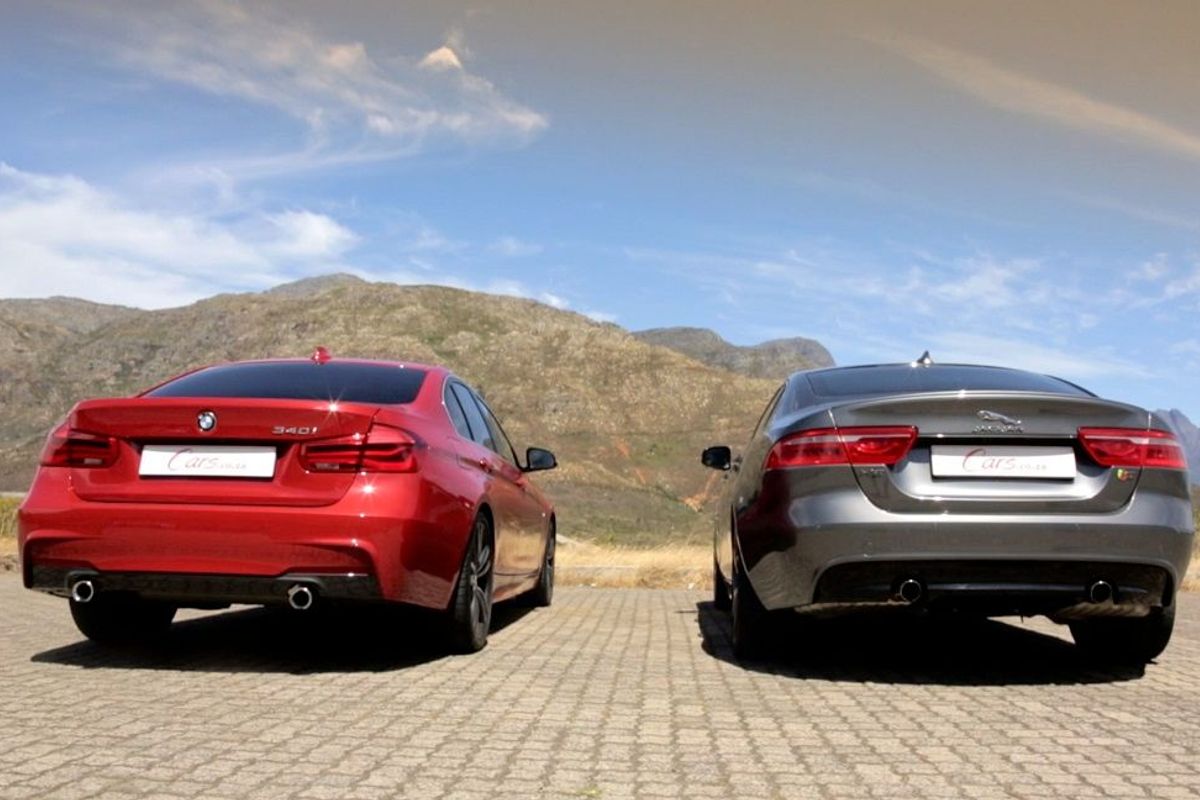
BMW 340i vs Jaguar XE S Driving and Interior Comparison (Video)
The premium sports sedan market has been dominated by the three German manufacturers: BMW, Audi and Mercedes-Benz. For years these three have tussled for top-dog honours and it has been the BMW 3-Series which has emerged as the most dynamic of the three. Fast forward to 2015 and British carmaker Jaguar is trying to muscle in on this segment. The Jaguar XE has been tested by Cars.co.za previously in 2.0-litre diesel guise and while we were impressed with what it offered, it's pricing was fatal.
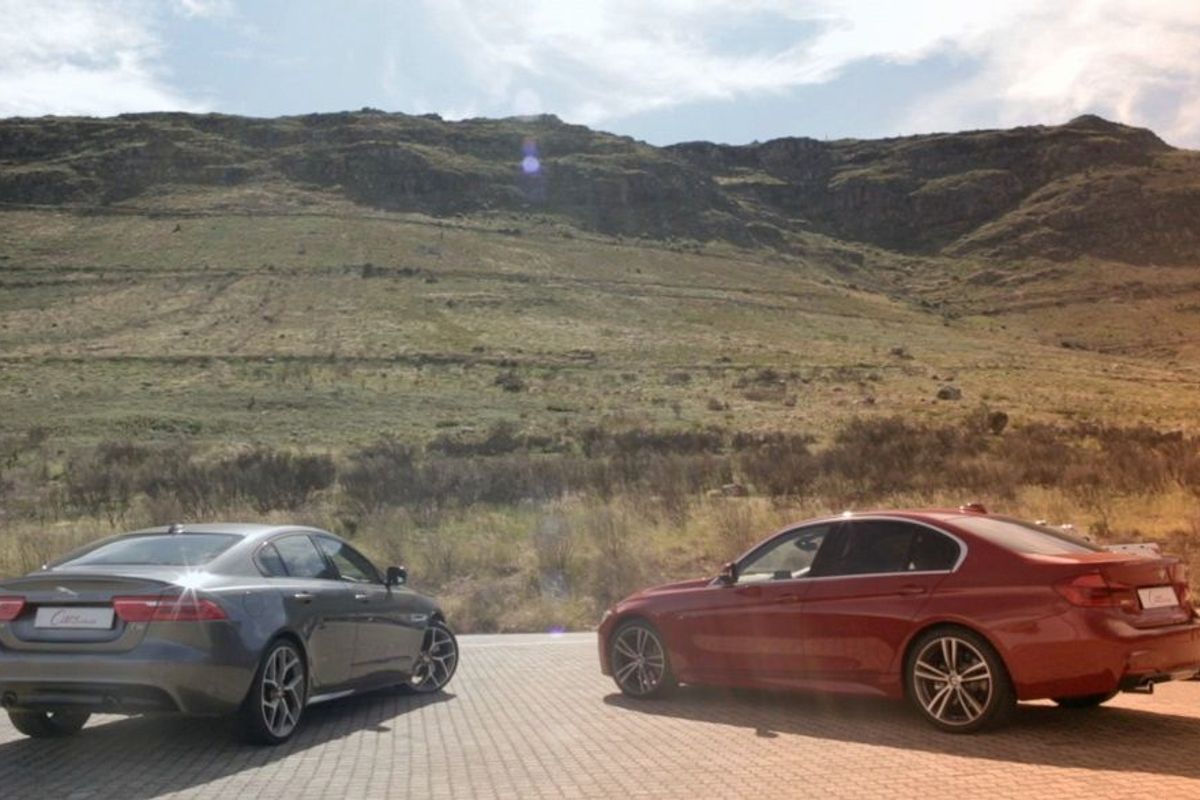
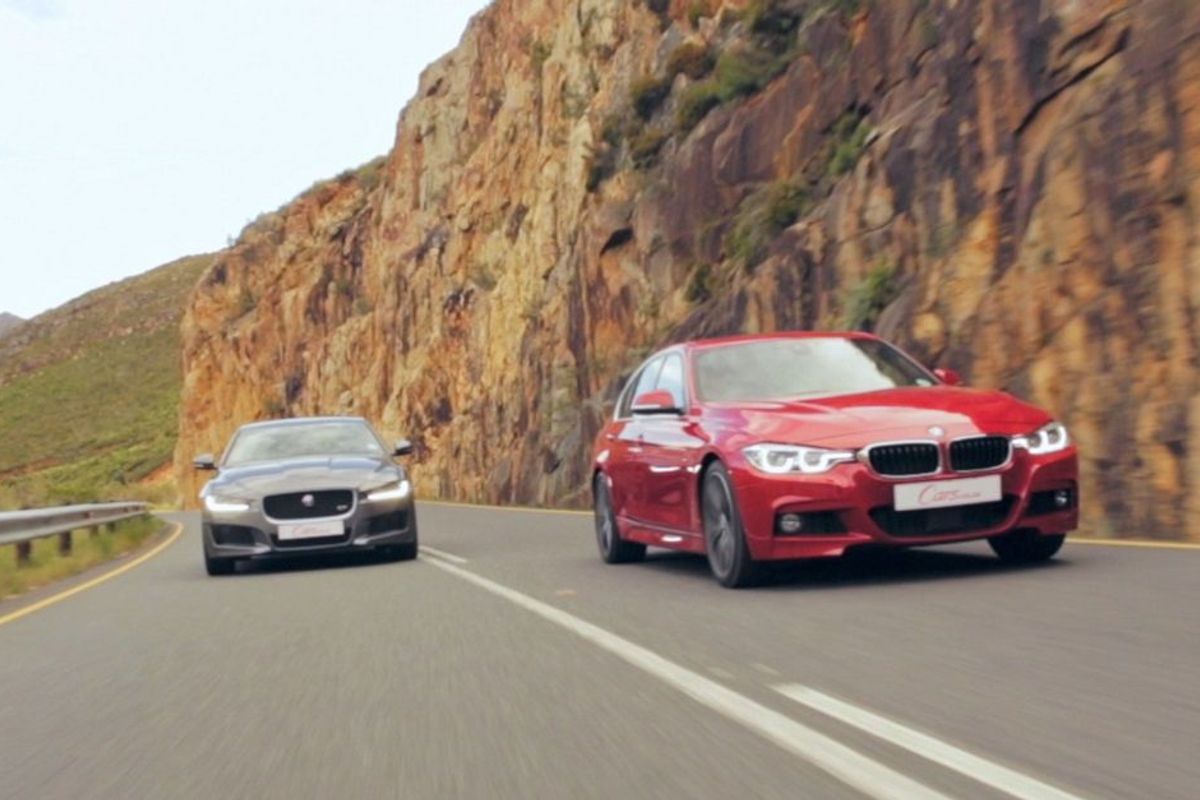
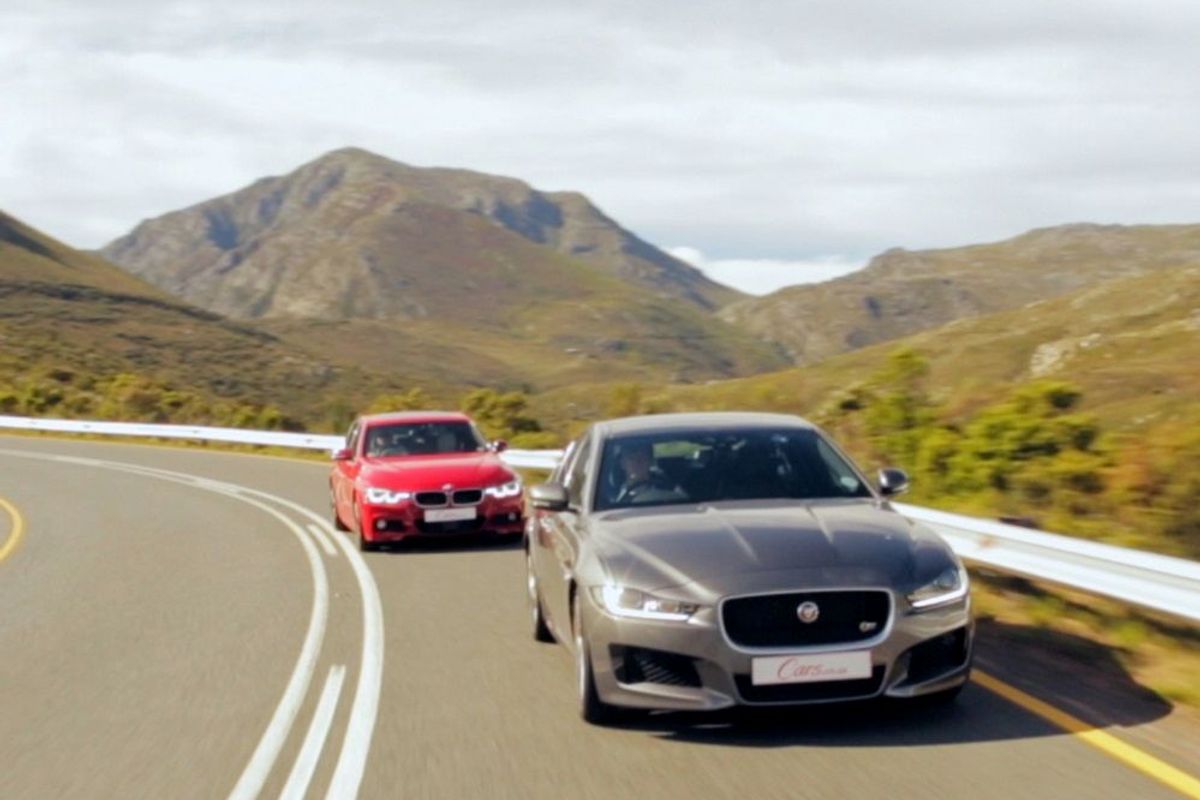
With the launch of the BMW 3-Series LCI highlighting the top of the range 340i, we thought it would make for a perfect comparison to put the flagship German against the top-of-the-range Jaguar XE S. Upon closer inspection and you'll see in the table below, both of these cars are exceptionally close in terms of engine outputs, performance and size. In terms of pricing, our fully-loaded BMW 340i was closer to the Jaguar XE S, but there was still a gap between the two.
The test consisted of two parts: a dynamic driving test through one of South Africa's finest roads as well as an interior/space comparison as both of these cars still have to cater for passengers. We learnt a lot about both cars and why they're both well balanced and entertaining, but at the end of the day there could only be one winner. Watch the BMW 340i vs Jaguar XE S video above and let us know your thoughts.
2016 Lamborghini Huracan Upgraded To Save the Planet
One of our favourite supercars from the past year has received some tweaks and now offers an upgraded interior, but importantly is more fuel economical and kinder to the environment
The main change for the 2016 Lamborghini Huracan LP 610-4 is the addition of cylinder deactivation for the big V10. When you're not using full throttle, the engine switches off half its cylinders to save fuel. It's quite impressive that an engine can deactivate one cylinder bank and run on what's essentially a straight five engine. The system is able to cleverly re-engage all 10 cylinders as the driver applies full throttle. Lamborghini claims this change over is almost impossible to detect by the driver and CO2 emissions are reduced to 283g/km.
Another change to the Huracan is a revision to the electronic all-wheel drive system which is said to improve handling. The car had a bit of a tendency to understeer and this upgrade gives a more neutral driving behaviour. The interior changes include additional leather such as the door handles and upper parts of the console. The air vents are painted in a matte black finish. Lamborghini has thrown in its Ad Personam customisation program which gives you access to an array of interior and exterior options such as matte paints as well as heritage colours. You can also spec the Lamborghini Sensonum audio system which features a 390W RMS setup with ten-channel amplifier as well as ten speakers in Lamb0-style hexagonal shapes. If a loud radio doesn't tickle your fancy then you can opt for the optional sports exhaust which includes high gloss black tailpipes.
While the changes may not be that significant especially on the outside, it's interesting to see that Lamborghini (and parent company Volkswagen) are trying to promote a greener way of doing things, particularly in light of the recent diesel scandal. We'll have local pricing as soon as it becomes available. In the meantime, enjoy this beautiful video of the pre-facelift Lamborghini Huracan which we drove around Cape Town, South Africa.
Lamborghini Huracan Video
New Volkswagen Caddy in SA
The new fourth generation Caddy is available in South Africa!
The new Volkswagen Caddy has launched in South Africa and will be available with three variants to choose from including a Panel Van, Crew Bus and Trendline. Volkswagen says the Caddy Alltrack version, which replaces the existing CrossCaddy, will become available in early 2016.
Both the Panel Van and Crew Bus are more suited for commercial use while the Caddy Trendline is aimed squarely at private customers. The new Caddy has been redesigned inside and out to give it more presence and to broaden its appeal.
Engines On Offer
The new Caddy shares the same engines with the outgoing model and includes a petrol engine and two diesel engines. The 1.6-litre petrol engine is only available for the Panel Van and Crew Bus and has been tweaked to offer 81 kW instead of 75 kW. The two 2.0-litre diesel engines offer 81 kW and 103 kW respectively and are available with all the variants.
The 1.6-litre petrol and 81 kW diesel engine are mated to a 5-speed manual transmission while the 103 kW 2.0-litre diesel is equipped with a 6-speed DSG transmission.
Standard Features
Standard safety features include ABS, ESP, Multi-Collision Braking System and dual front airbags. Hill Hold and Fatigue Detection is standard on the 103 kW version while being optional for the other derivatives.
There’s also a special edition Panel Van Sport derivative on offer from launch and this model benefits from added extras such as painted bumpers, electric windows and side mirrors, 16-inch Fortaleza alloy wheels, Composition Radio with LCD screen and climatic air conditioning. This model also gains the Comfort Package which includes cruise control, front fog lights and a multi-function display.
In Trendline trim, standard features include electric mirrors and windows, Composition Colour CD/Radio with Bluetooth, USB, six speakers, alloy wheels, climatic manual air conditioning, under-seat drawers, leather steering wheel, multi-function display and speed sensitive power steering.
Optional features are available too and choices for the Panel Van and Crew Bus include a tow bar, 15 and 16-inch alloy wheels, park distance control and Radio/CD systems. Optional features for the Trendline model include a multi-function steering wheel, 7-seater package, bi-xenon headlights and a light and sigh package which includes light and rain sensors, cruise control and an auto dimming rear view mirror.
New Volkswagen Caddy Price in South Africa
Panel Van
Caddy Panel Van 1.6i 81kW R229 400
Caddy Panel Van 2.0 TDI 81kW R260 500
Caddy Maxi Panel Van 2.0 TDI 81kW R283 700
Caddy Maxi Panel Van Sport 2.0 TDI 81kW R306 700
Caddy Maxi Panel Van 2.0 TDI 103kW DSG R312 200
Crew Bus
Caddy Crew Bus 1.6i 81kW R222 400
Caddy Crew Bus 2.0 TDI 81kW R265 200
Caddy Crew Bus 2.0 TDI 81kW R296 700
Caddy Crew Bus 2.0 TDI 103kW DSG R325 200
Trendline
Caddy Trendline 2.0 TDI 81kW R344 300
Caddy Maxi Trendline 2.0 TDI 81kW R362 600
Caddy Maxi Trendline 2.0 TDI 103kW DSG R391 600
Alltrack
Caddy Alltrack 2.0 TDI 81kW R358 200
Caddy Alltrack 2.0 TDI 103kW DSG R387 300
Prices for the Caddy Panel Van and Crew Bus come standard with a 2 year/unlimited kilometres warranty and a 3-year/60 000km Automotion Service Plan. The new Caddy Trendline (including Alltrack) comes standard with 3 year/120 000 kilometre manufacturer warranty and a 3-year/60 000km Automotion Service Plan. All models have a 12 year anti-corrosion warranty and 15 000 km service intervals.
Bakkie Taxis of Thailand
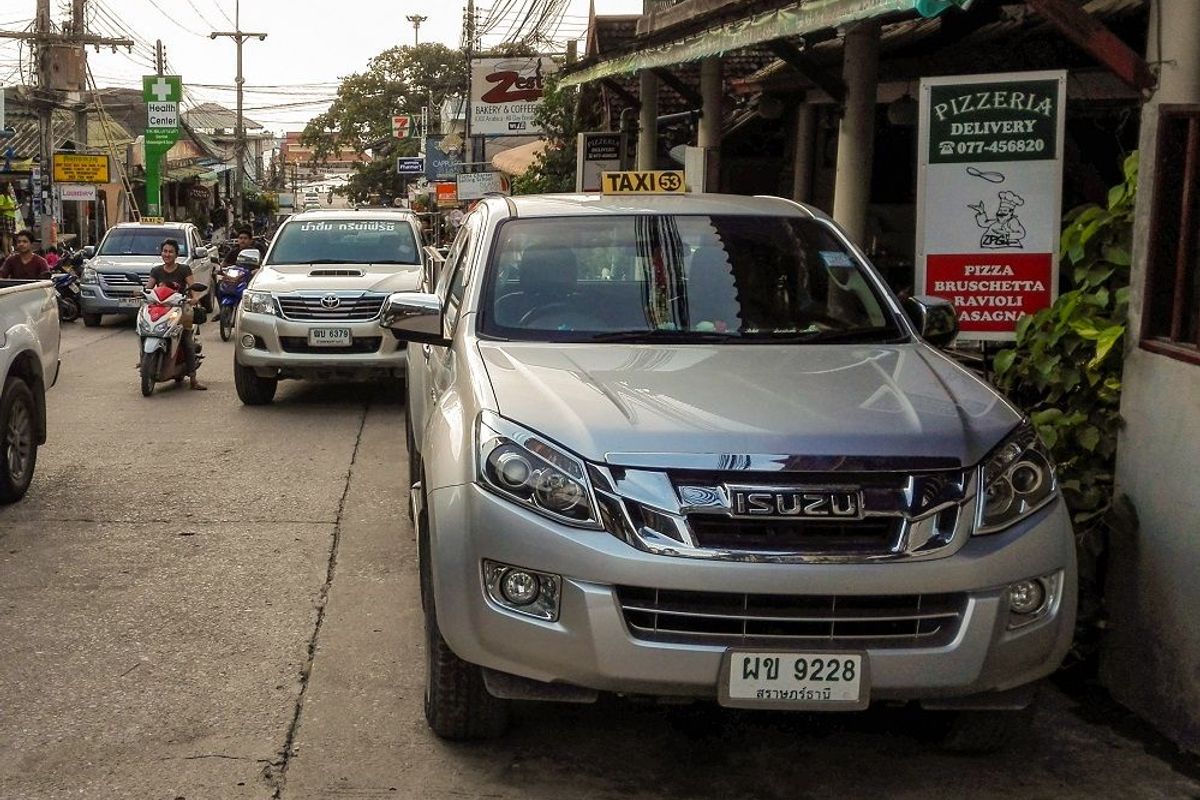
If you thought South Africa had a big bakkie culture, think again. Thailand has taken it to the next level and use bakkies as taxis, as Ciro De Siena found out on his recent trip.
Stepping onto the Koh Tao jetty after a five hour ferry ride is like stepping back in time. Long tail fishing boats are parked in perfectly straight lines parallel to the pier; moored via old scooter tyres to ropes running just under the water's surface.
The dull orange lights of the tiny town barely bother the darkness, creating an amber glow across the bay. It is peaceful, idyllic even. A scene from a movie.
Stumbling into the dimly lit and very basic, wooden ferry terminal, the peace is immediately shattered. What feels like hundreds of taxi operators, baying for the contents of your wallet, shout "Taxi?!" in unison and incessantly, with very little regard for your personal space or general sanity. We've all heard the tales of taxi scams in foreign countries and desperate not to fall victim, we put our modern weaponry to good use: Google Maps. Take that, really annoying taxi guy with no shirt on.
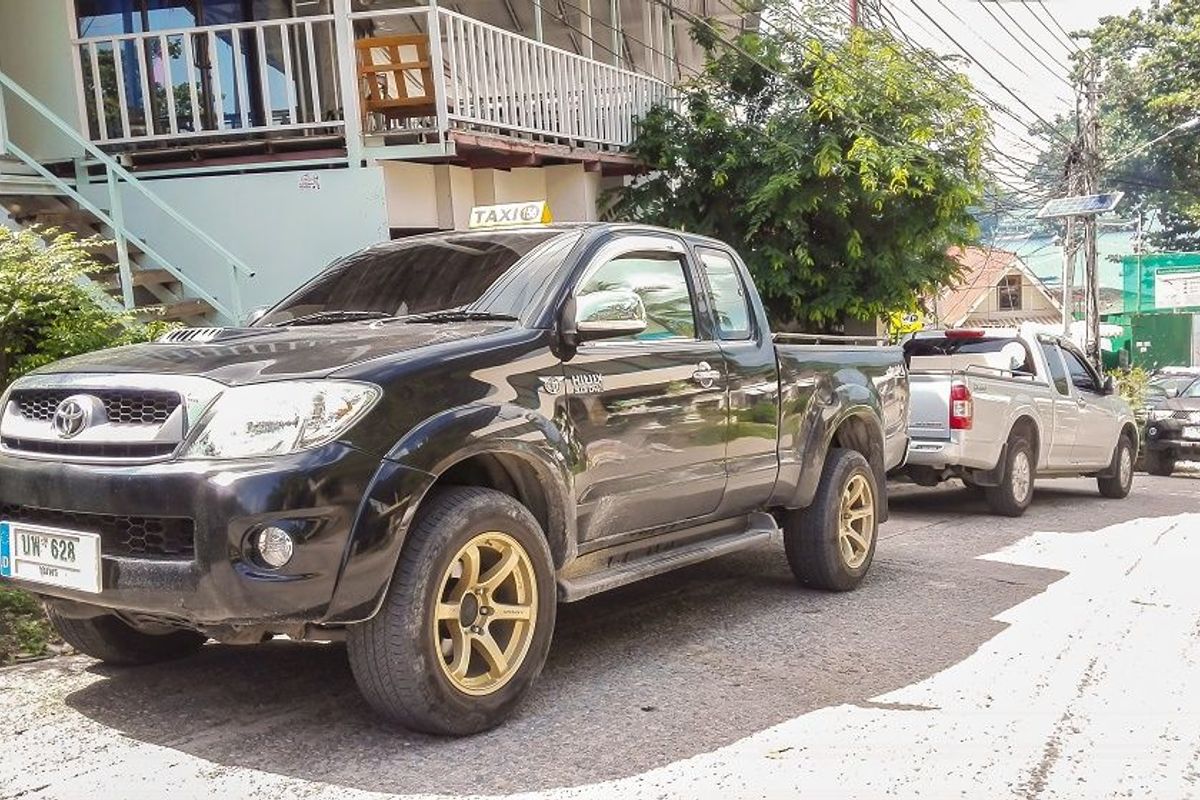
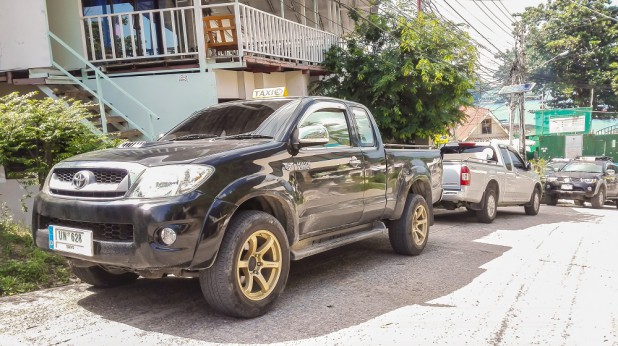
It turns out our hotel is 2km from the terminal. R14.50 in an uber back home. On Koh Tao? R160, or 400 baht. And there's no negotiation whatsoever. In a remarkable case of industry collusion, the taxi operators have collaborated on a pricing structure where everybody wins except the customer. A cheery old man (also shirtless) explains this to us, taking us through the standard Taxi card used across the island, which features a map of this miniscule land mass and the pricing for each route. So, 400 baht it is. In an instant, the shirtless old chap hoists the heaviest of our bags over his shoulder and we're off, down a tiny narrow alley (one of Koh Tao's main strips) to the main road, where he leads us to…a black Toyota Hilux.
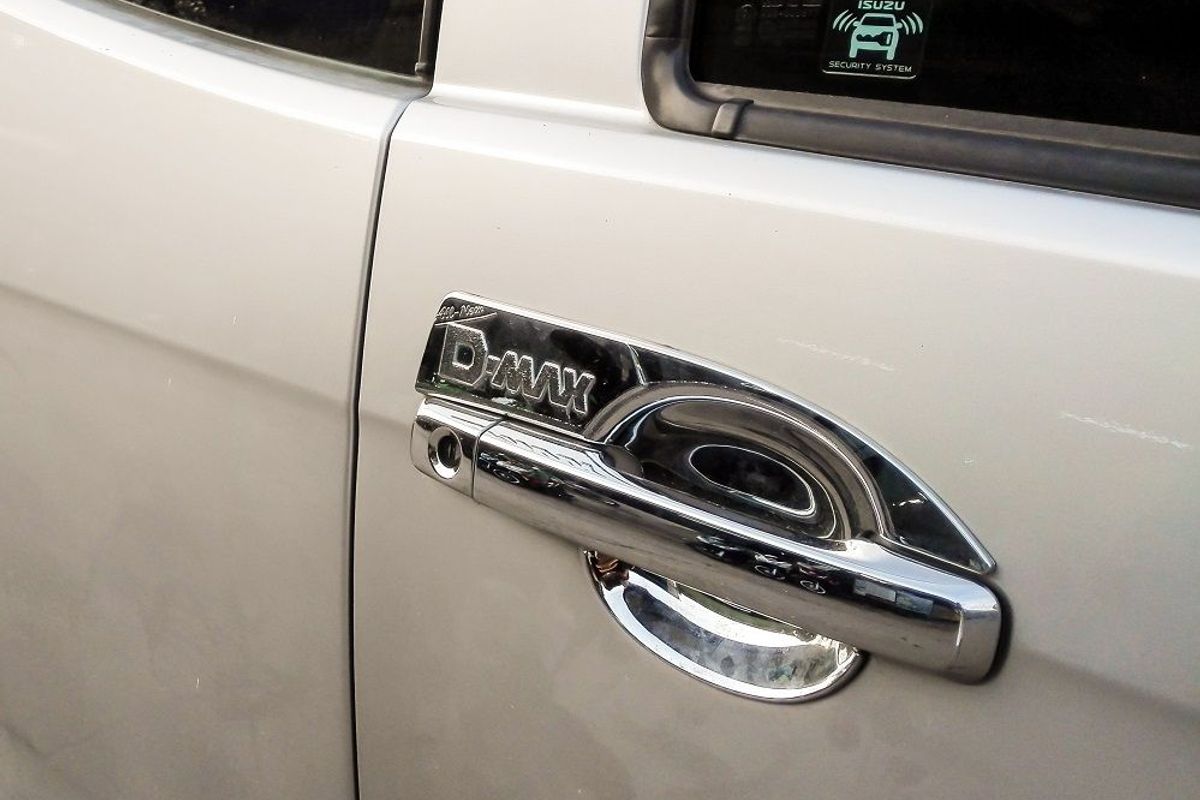
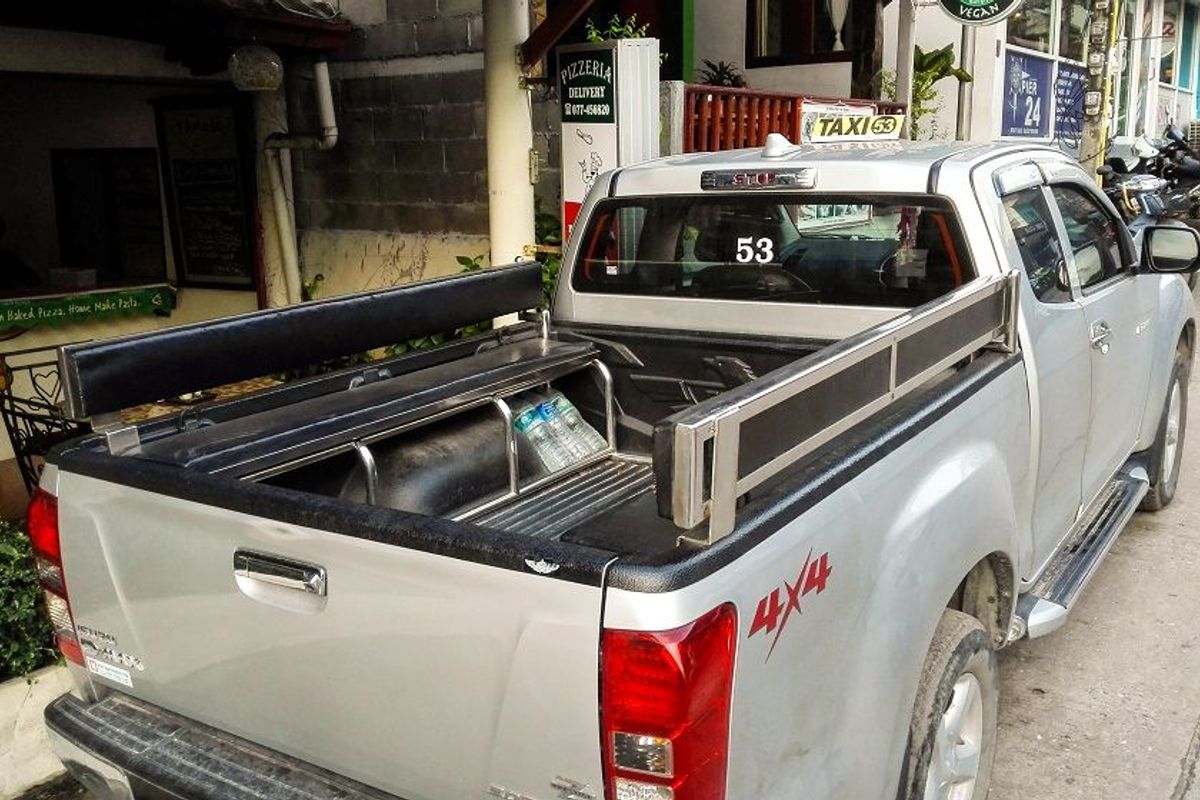
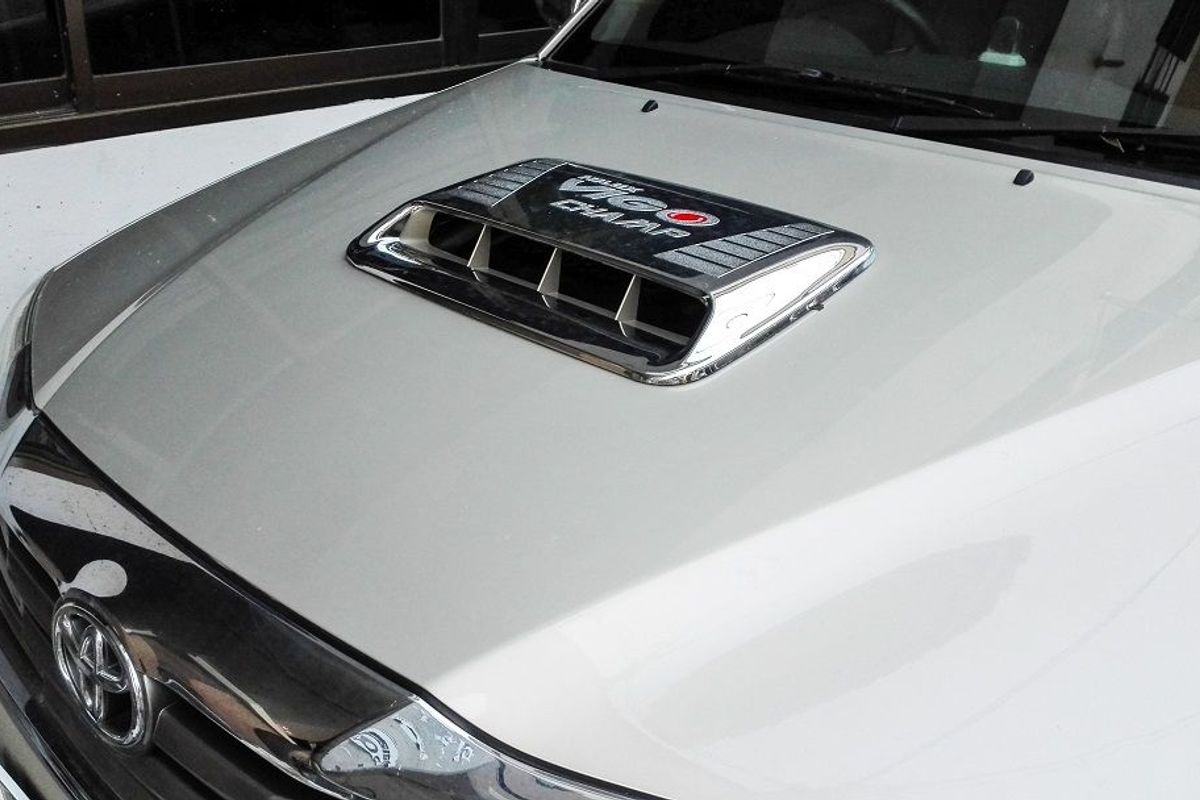
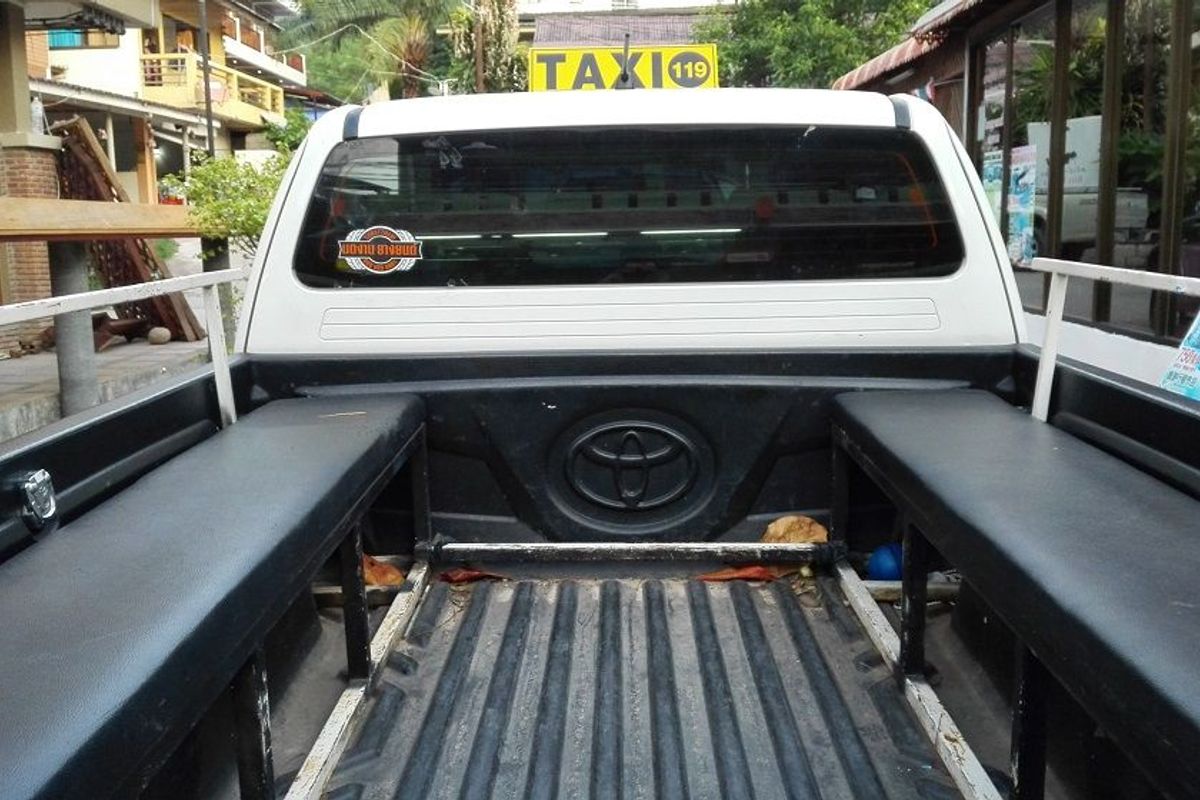
This is our first introduction to the Bakkie Taxis of Koh Tao. They're everywhere, as ubiquitous as the venerable HiAce is in SA. The Hilux and the Isuzu D-Max, sold as the KB in South Africa, are the dominant vehicles, followed by the Ford Ranger, Mazda BT-50 and Chevy Colorado, a good-looking bakkie with the face of what we know as the Chevy Trailblazer. We're helped onto the back of the bakkie, asked to sit on the little benches and hold on. At this point I started wondering why every single bakkie is a 4×4. It wasn't long until we found out. Growing up in South Africa, catching a ride on the back of a bakkie is nothing unusual. In fact, the padded seating and grab handles would be considered a luxury back home – a vast improvement on the status quo.
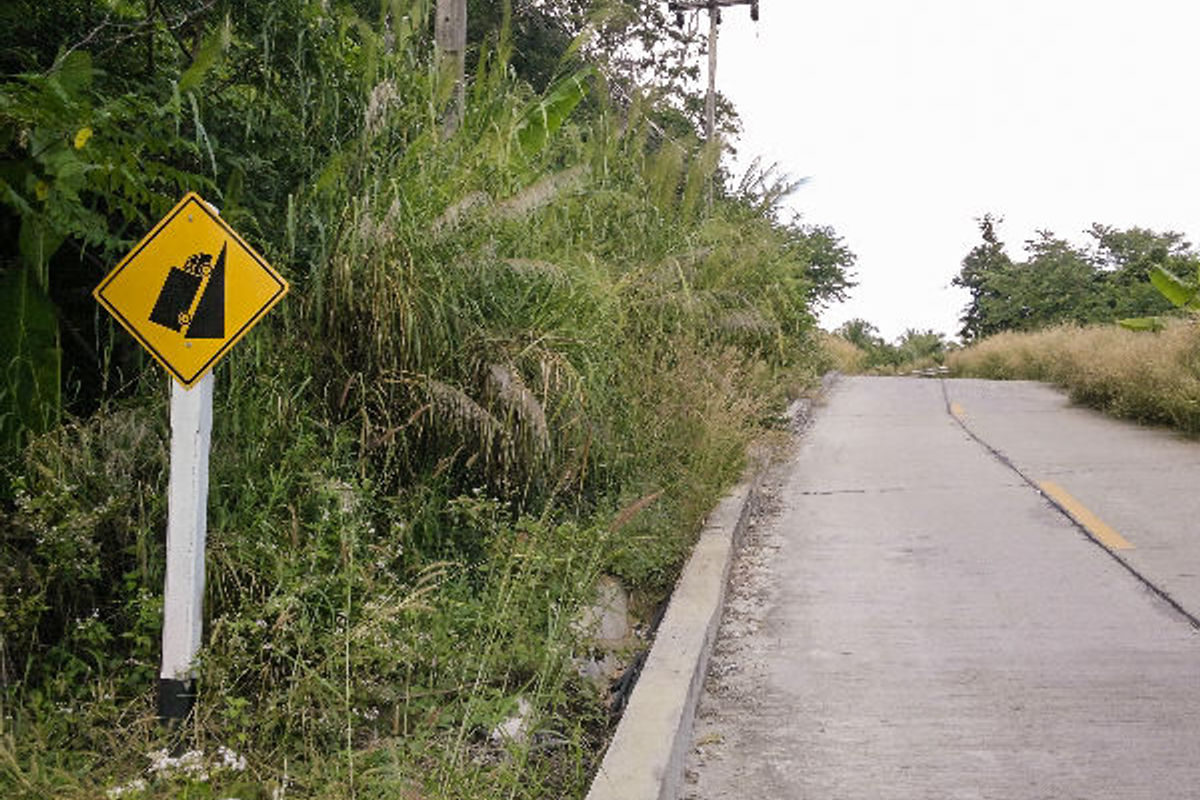
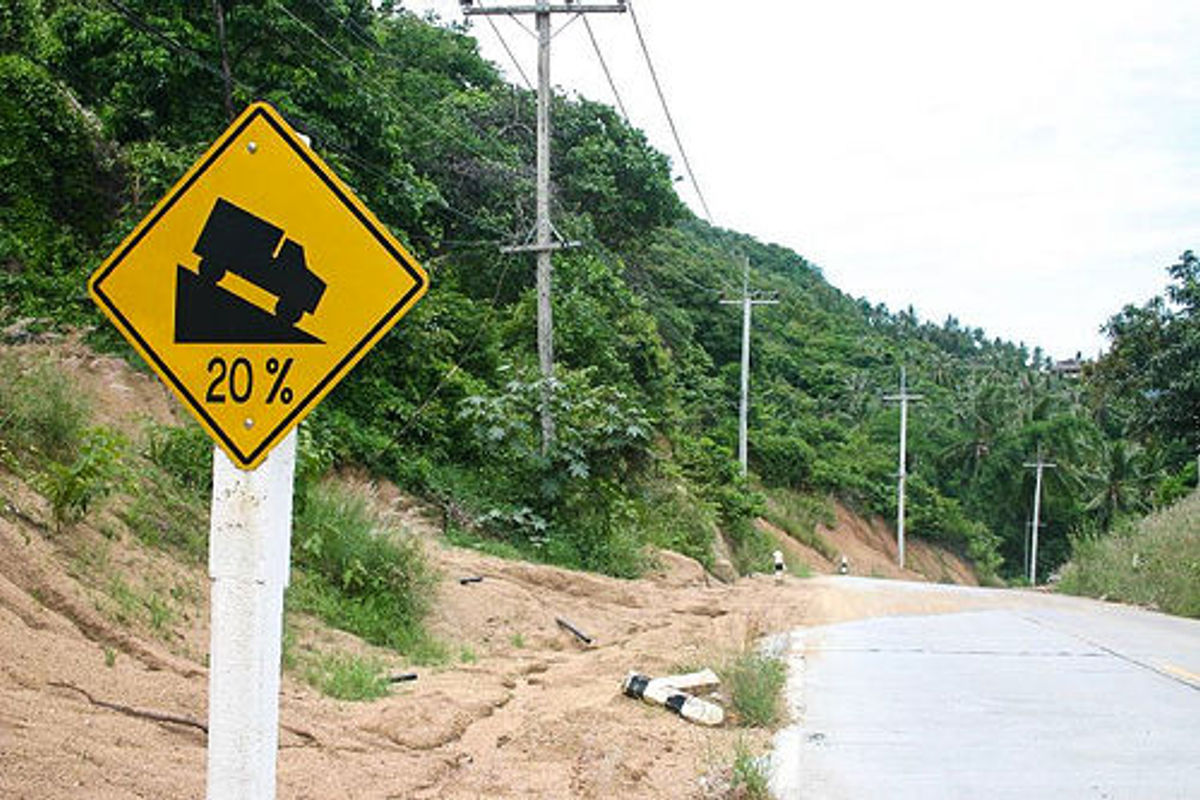
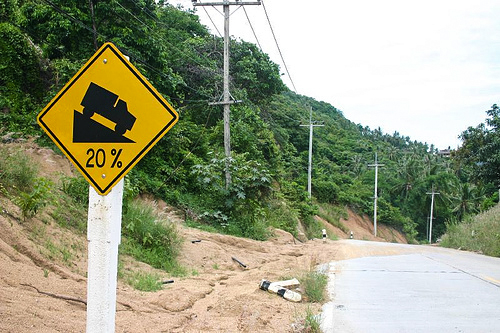
But spare thought for visitors from Britain, for instance, a country where Health & Safety is practically a religion. A country where bakkies might as well not exist. To a member of Her Majesty's Health & Safety brigade, the thought of transporting live humans on the load bed of a pick-up, across a dark and remote island where there is seemingly no word for "helmet", is a stroke-inducing nightmare. To a British tourist, this unique form of taxi must be as curious as it is terrifying. To make matters worse, this is an actual quote from the main guide book available everywhere on the island: "Most of the concrete roads on Koh Tao are quite small, bumpy, rough and steep, with random sand patches for added excitement." Now en route and turning off the main road into what looked like someone's driveway, we started climbing a hill which quickly gave way to badly rutted gravel. The Hilux handled all of this but it was the descent that was bordering on the ridiculous. A road this steep would not only be illegal in South Africa, I think it might not even be possible.
Using low range, our driver eased us down into the hotel parking lot, with barely a chirp from the tyres. We'd made it, and I never thought I'd ever hug a Hilux until that moment. Over the next few days we came to understand why the bakkie (or truck as they're locally known) is so fundamental to life on this island. We hired a brand new scooter (R100 per day) and set about exploring the island, which made us realise that the road to our hotel was essentially a beginners course in on-off-roading. Some of the roads on Koh Tao are absurd.
Veritable concrete rollercoasters filled with blind corners, blind hairpins, no shoulders, exposed drains, sheer drop offs and severely storm-damaged gravel sections. Which, I can proudly say, we navigated without incident on a scooter. It had offroad tyres though, which probably helped a bit. But being overtaken and squeezing passed bakkie after bakkie filled with hotel guests, it becomes obvious that unless the hotels invested in helicopters, this island just wouldn't work without the 4×4 capabilities of Japan's finest pick-ups. There are some hotels which you simply would not reach without them. Goodness knows how they actually built the hotels there in the first place. Google Tanote Bay as an example.
And the pride in the vehicles is extraordinary. Big racing-style wheels are the order of the day, which wouldn't be out of place on a Subaru WRX. As are chromed tail lights, smoked out headlights and massive sound systems. The bakkie culture in Thailand is incredible. Flicking through Thai television, you'll inevitably come across bakkie racing, or even bakkie drag racing. On Koh Samui, the bakkie is used like our minibuses are back home. Hop on, hop off, wherever you please, and please do take a flyer for a strip club on your way out. The shiny aluminium canopies are even fitted with bus-style bells which help you alert the driver that you'd like him to stop. They're called Songthaeaws, and I'm sure they've saved many a reveler from a nights sleep on the pavement.
Bakkies are used as promotional vehicles. Blinged out with giant sound systems, they crawl through Samui's streets blaring advertisements for everything from Muay Thai tournaments, to nightclubs and even the local go-kart circuit. Perhaps island life is a fantasy; a real life theme-park for adults where real-world rules and pesky health and safety regulations can be gently ignored without drastic consequence. But if visiting this isolated emerald isle in the Gulf of Thailand has taught me anything, it's that we don't use our bakkies enough. There's so much untapped potential in these beasts of utility. Check out our bakkie comparisons here.Watch our bakkie drag race here.
Range Rover Evoque Convertible Revealed
The Range Rover Evoque Convertible has been revealed and its coming to South Africa in 2016!
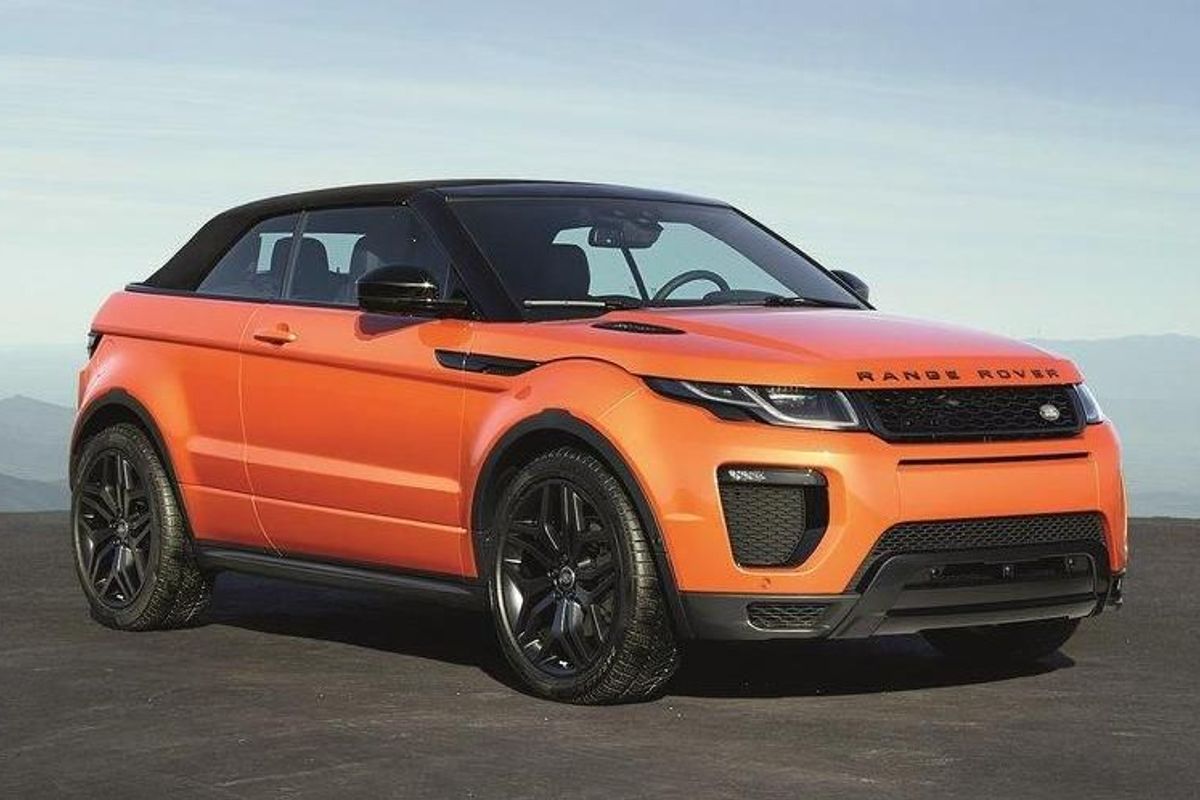
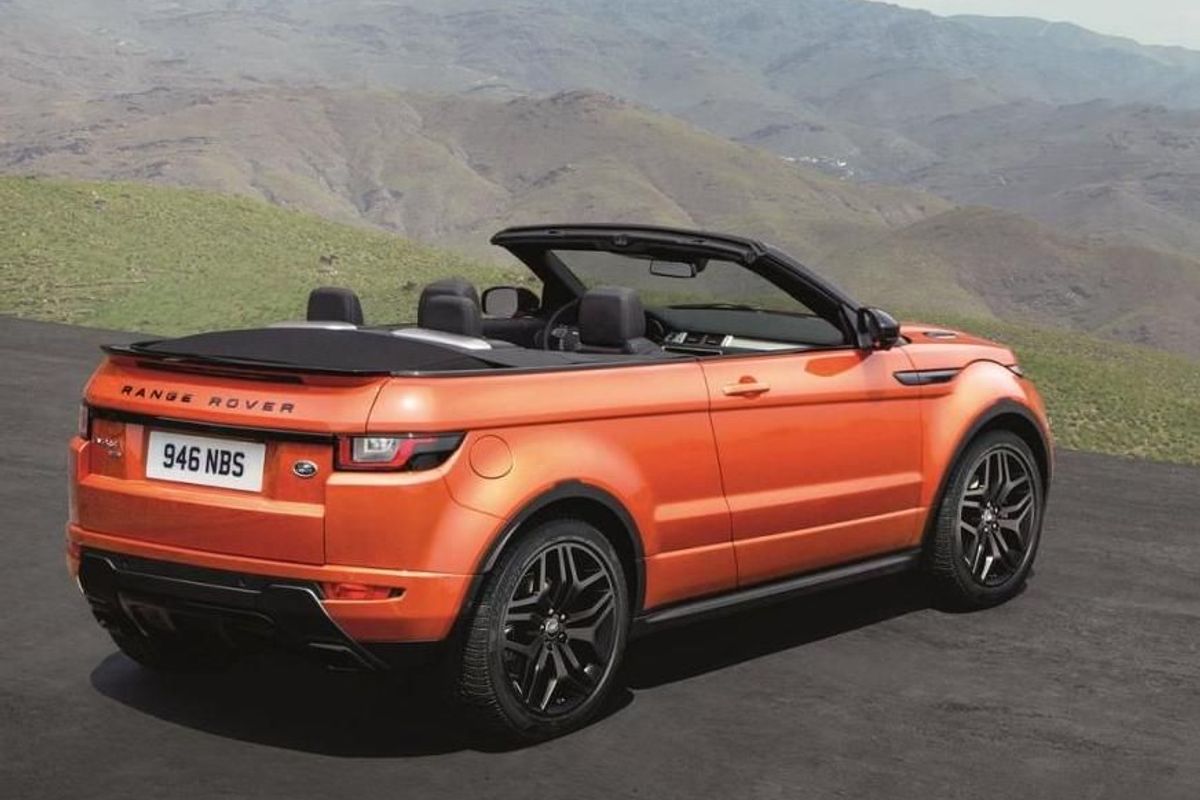
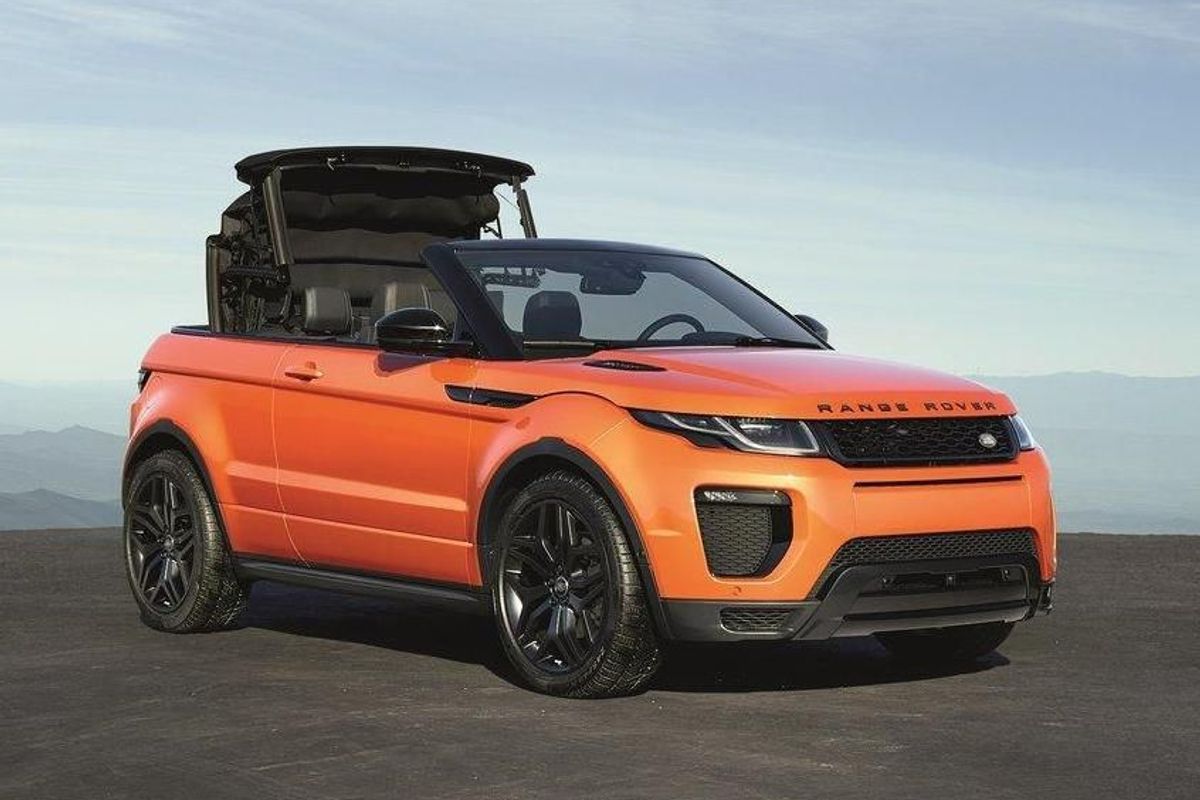
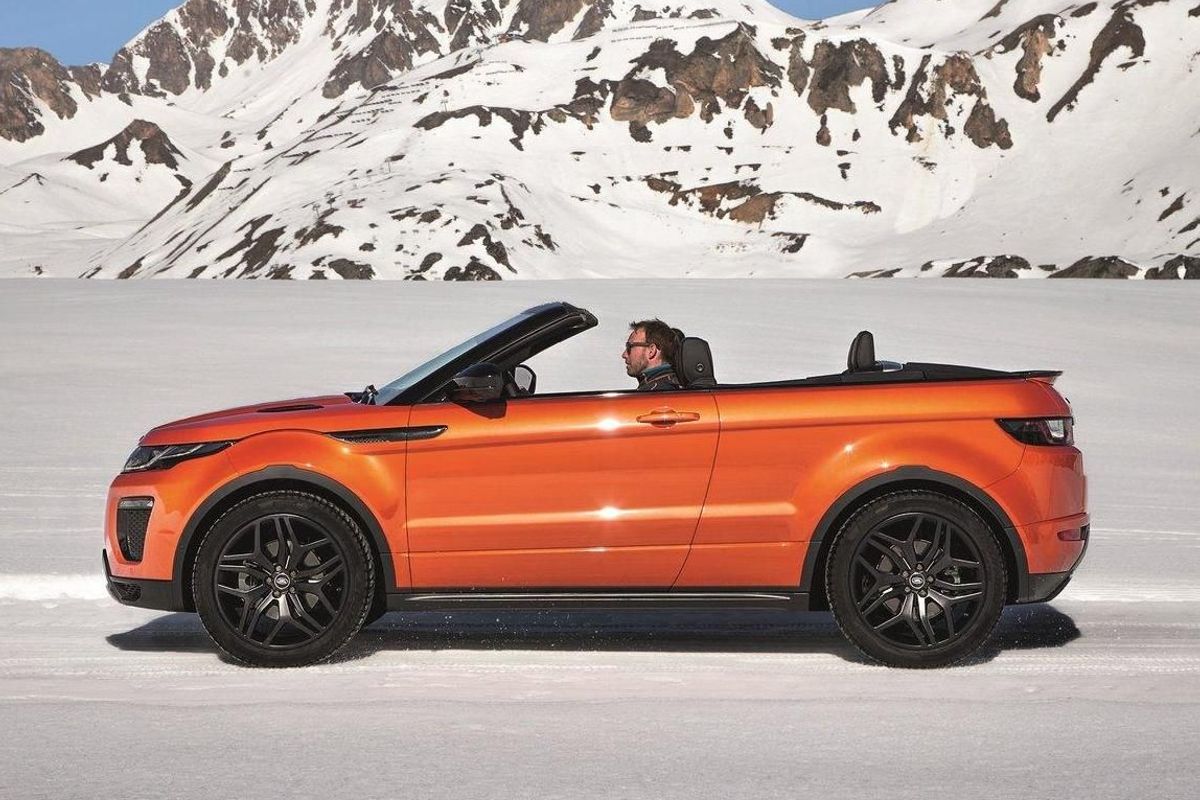
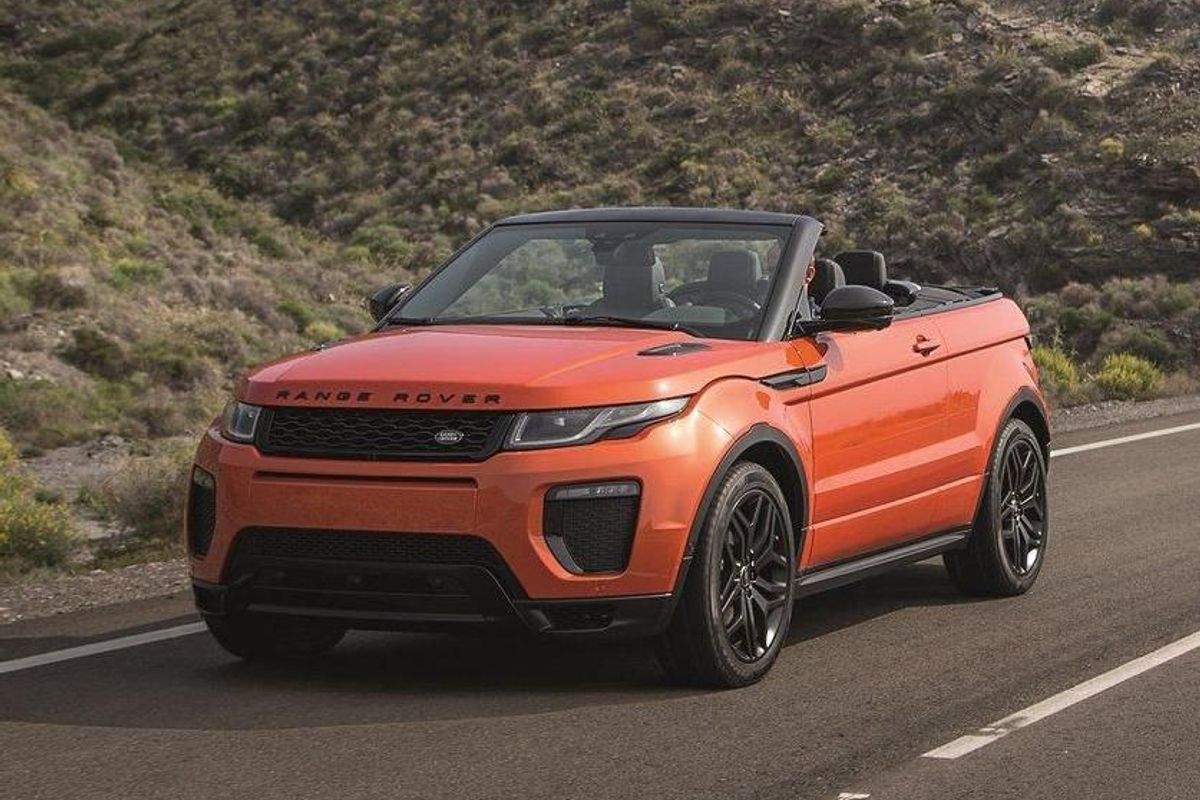
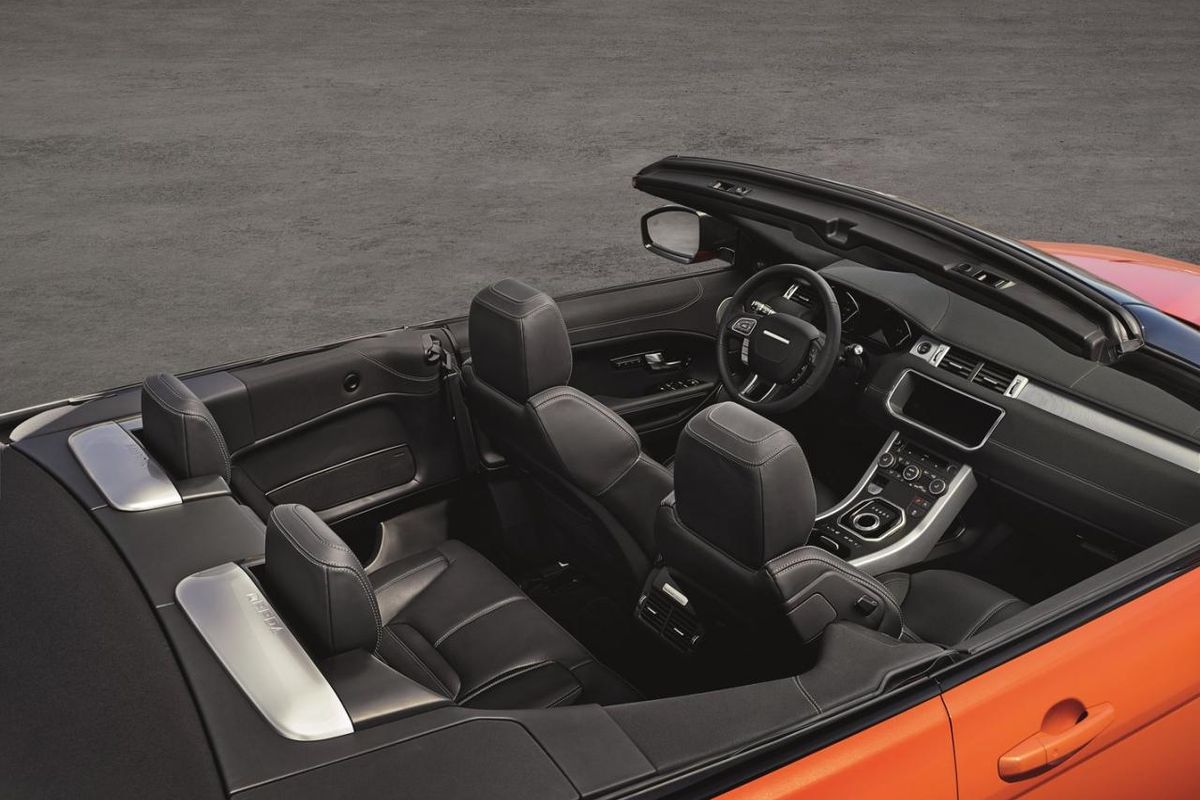
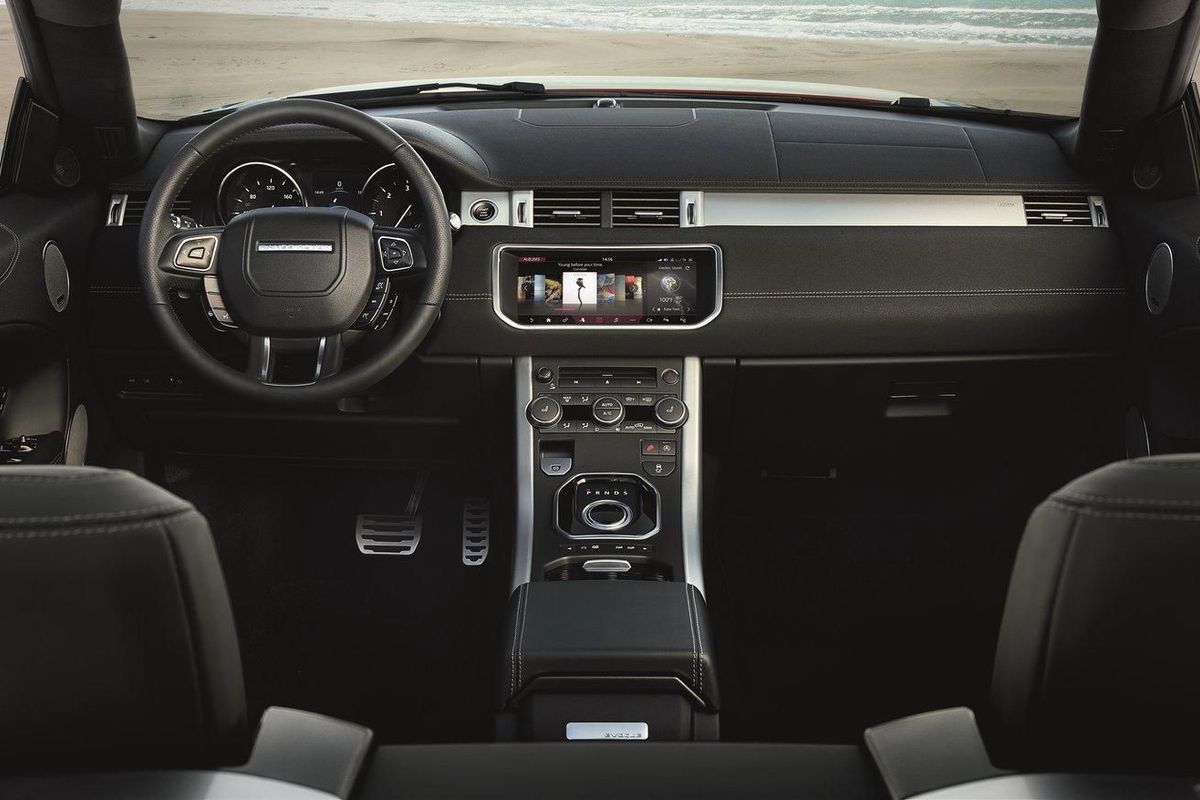
Since its introduction, the Range Rover Evoquehas been a major hit in the SUV market all around the world. Now, the popular Evoque has undergone a major transformation with a fully-automated retractable roof replacing the fixed metal roof, giving rise to a particularly good-looking convertible SUV.
Styling
Much of the Evoque styling remains unchanged in the convertible version and the retractable roof is definitely the star of the show here. The roof is designed to hold its original shape and with a Z-fold mechanism the roof lies flush at the rear for a cleaner look. The roof is operated via a button on the centre console at speeds up to 48kph and takes 18 seconds to fold down and 21 seconds to fold back up. The roof will only be available in black which can be matched to 13 body colours including two new colours, Waitomo Grey metallic and Baltoro Ice.
According to Land Rover, buyers can expect the same level of acoustic comfort found in the standard version thanks to insulation implemented in the convertible model and there’s a rear wind deflector to boost comfort levels even further.
Boot space in a convertible is usually affected to accommodate the roof, but in the Evoque Convertible, space remains the same at 251-litres regardless of the position of the roof. Roll-over protection is provided by a roll-over protection device (RPD) that deploys two aluminium bars from the rear-quarter panel in a roll-over situation, all in just 90 milliseconds.
Much of the features are carried over from the standard Evoque and halogen headlights and LED daytime running lights and tail lights are fitted as standard. Buyers can also upgrade to xenon or full LED highlights.
Engine Power
In terms of engine power, you can expect to see a four-cylinder 2.0-litre turbo petrol doing service in the Evoque convertible and its good for 179kW and 340 Nm of torque. A 9-speed automatic transmission will ensure a 0-100kph sprint time of about 8 seconds with a top speed of 180kph. Diesel engines from the Jaguar Land Rover group are also expected.
The Range Rover Evoque convertible will be available in South Africa in the third quarter of 2016 and will be sold in line with demand.
Watch the video below to see what you can expect from the Range Rover Evoque Convertible.
Datsun Go-Cross Concept Revealed
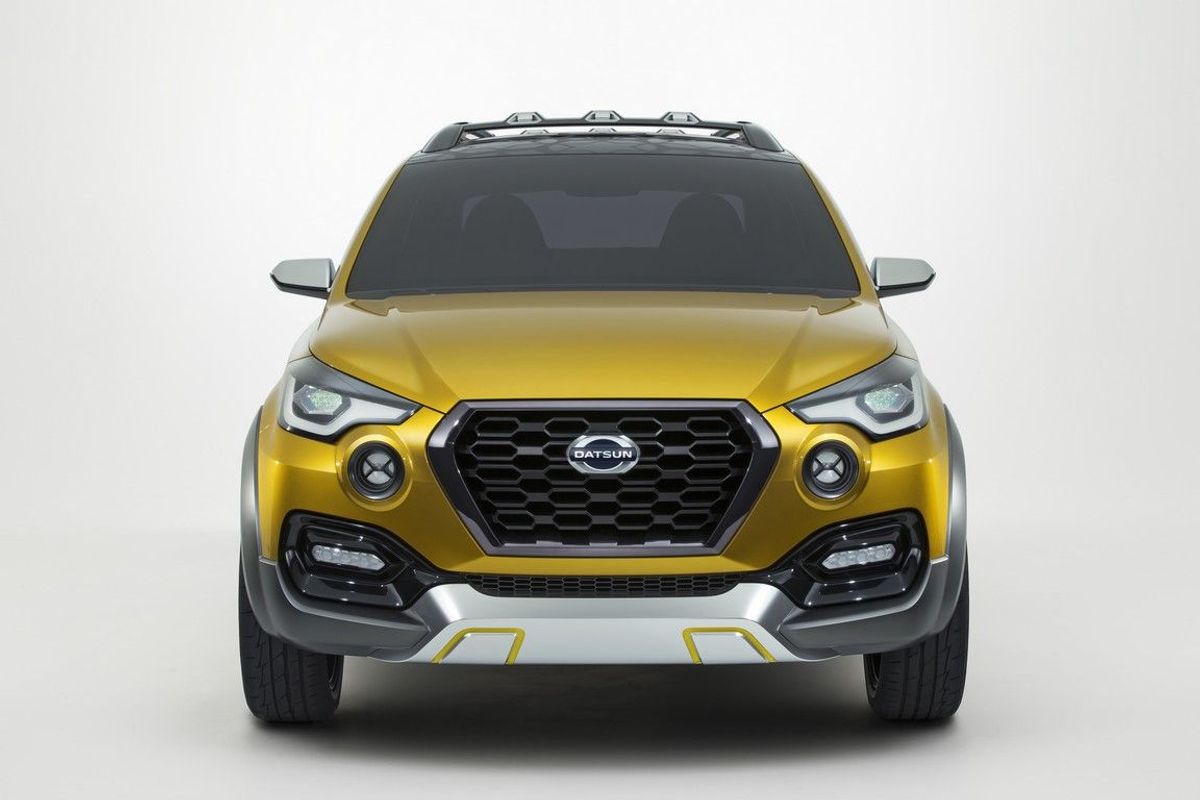
Datsun intends to expand its current range of offerings with a small, keenly-priced crossover. The Go-Cross Crossover concept shows a three-row, slightly raised vehicle built for a slightly more adventurous or outdoorsy buyer.
“The concept shows how we can create something new and different, despite using as much existing hardware as possible. In this way, we can ensure the finished result is within reach of our target audience – optimistic and fun-loving risers who are ready to move to the next stage in their lives. This is the Datsun Way,” said Vincent Cobee, Global Head of Datsun.
G0-Cross details
The Datsun Go-Cross Concept is made unique by wider 4×4-style fenders and extensive body cladding. The cladding extends down both sides of the car and includes underbody guards under the grille at the front and beneath the tailgate at the rear. Other distinctive features include dramatic LED headlights and LED tail lights to lend a high-tech look to the front and rear of the car.
The Go-Cross Concept is not planned to be a 4×4 vehicle but a few off-road mods have been added. The Datsun GO-cross Concept has a higher ground clearance than the Datsun GO to enable it to handle rougher terrain. It also wears 17-inch alloy wheels to help lift the centre of gravity.
Among its practical features is a fully integrated aerodynamic roof rack that sits atop the black painted roof.
Datsun was coy about details on what would power a small crossover but it will likely continue with the 1.2-Litre three-cylinder unit. It’s capable of 50 kW and Nm. Datsun South Africa is definitely interested in the little crossover but it’s too soon in the development stage to say whether it will come to SA.
Mercedes-Benz GLE450 AMG Coupe (2015) Review
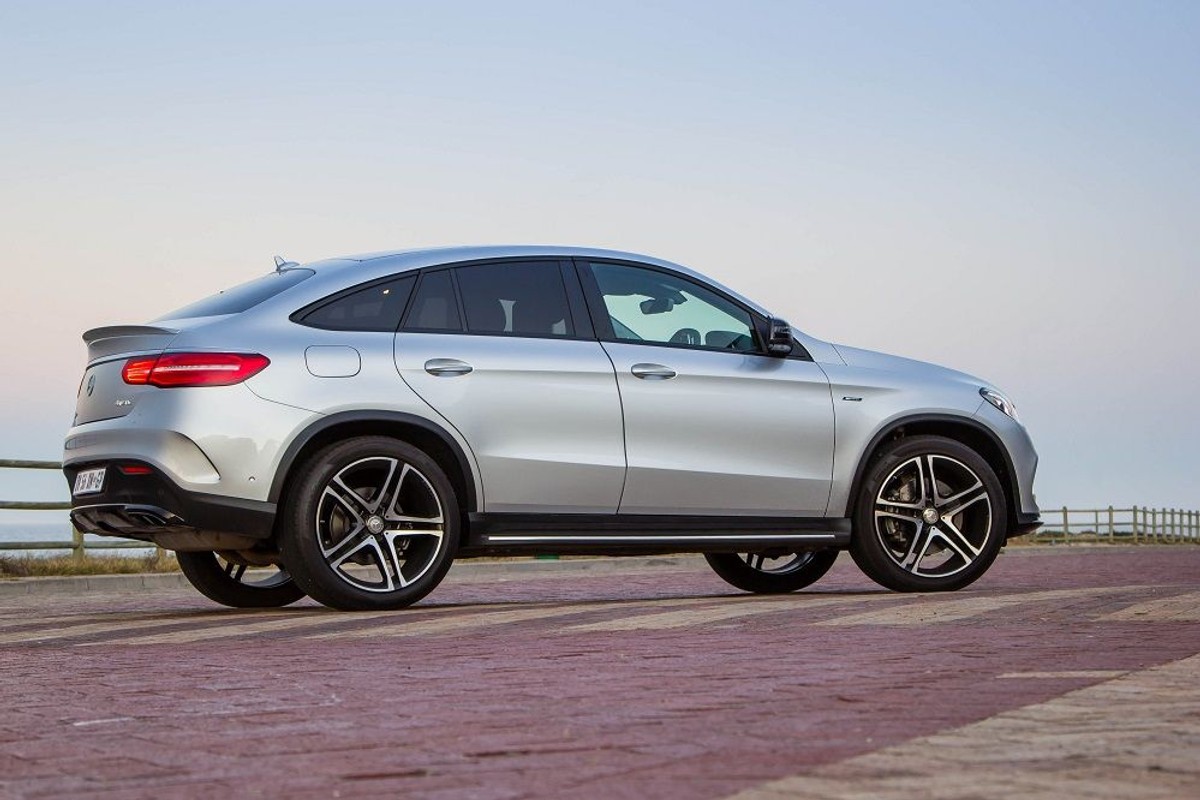
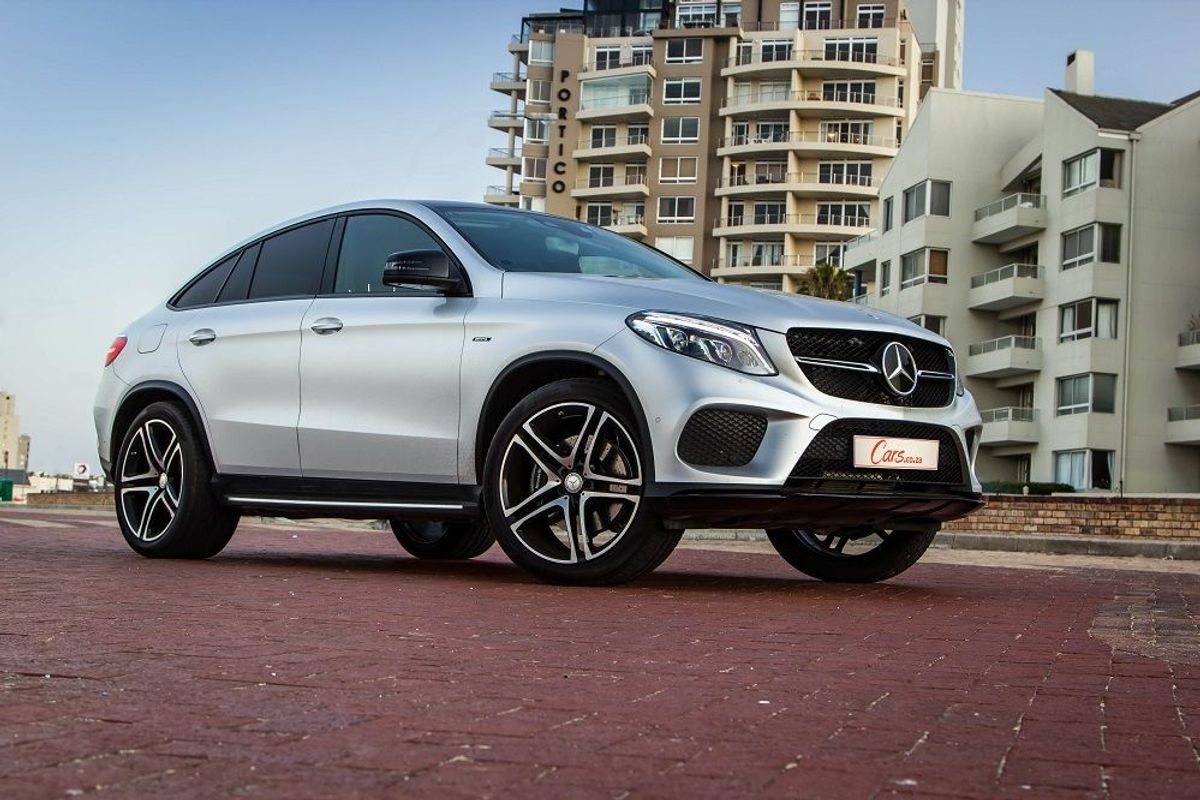
Mercedes-Benz is trying its hand at an entry level AMG line. Think of it as a half AMG, you don’t get the insane power of a full AMG machine but it still employs a host of theatrics to make the experience exciting. The GLE450 AMG is the first of the AMG Sport lineup we have tested and also our first taste of the new 3-Litre V6 biturbo engine that will also be introduced into the C-Class next year.
Where does the GLE450 AMG fit in?
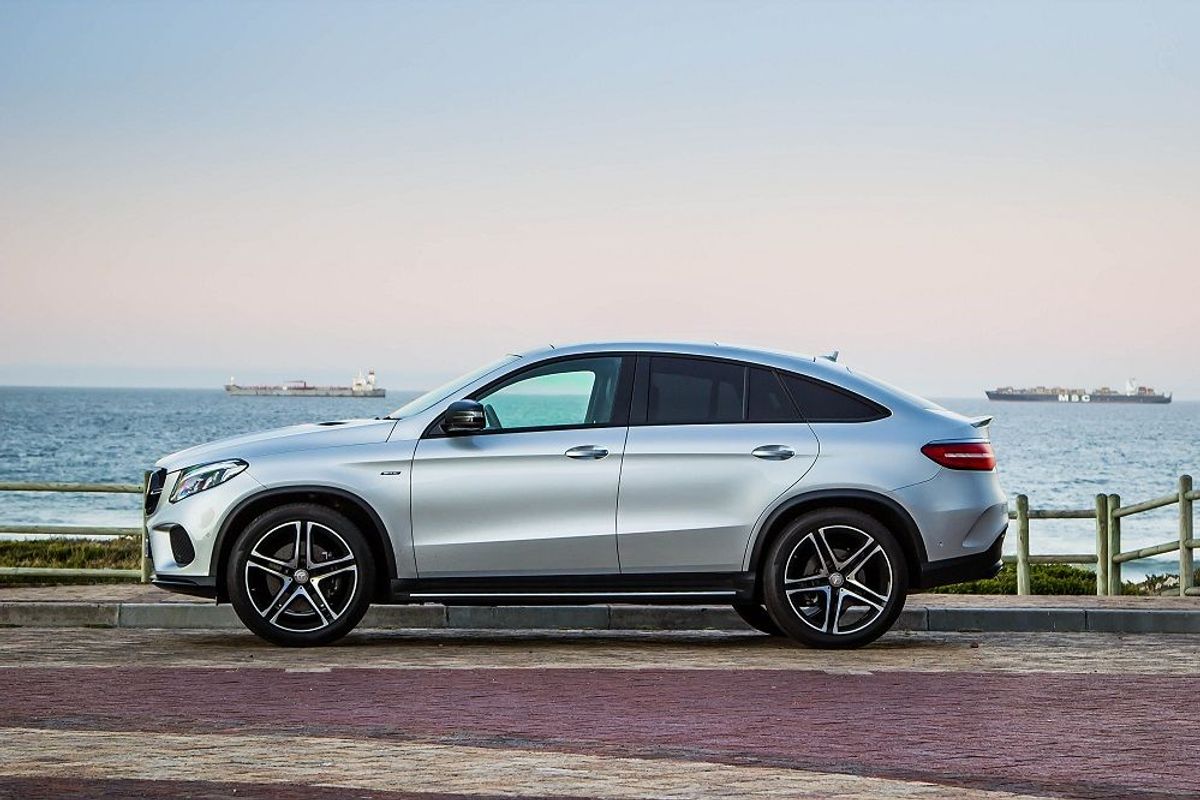
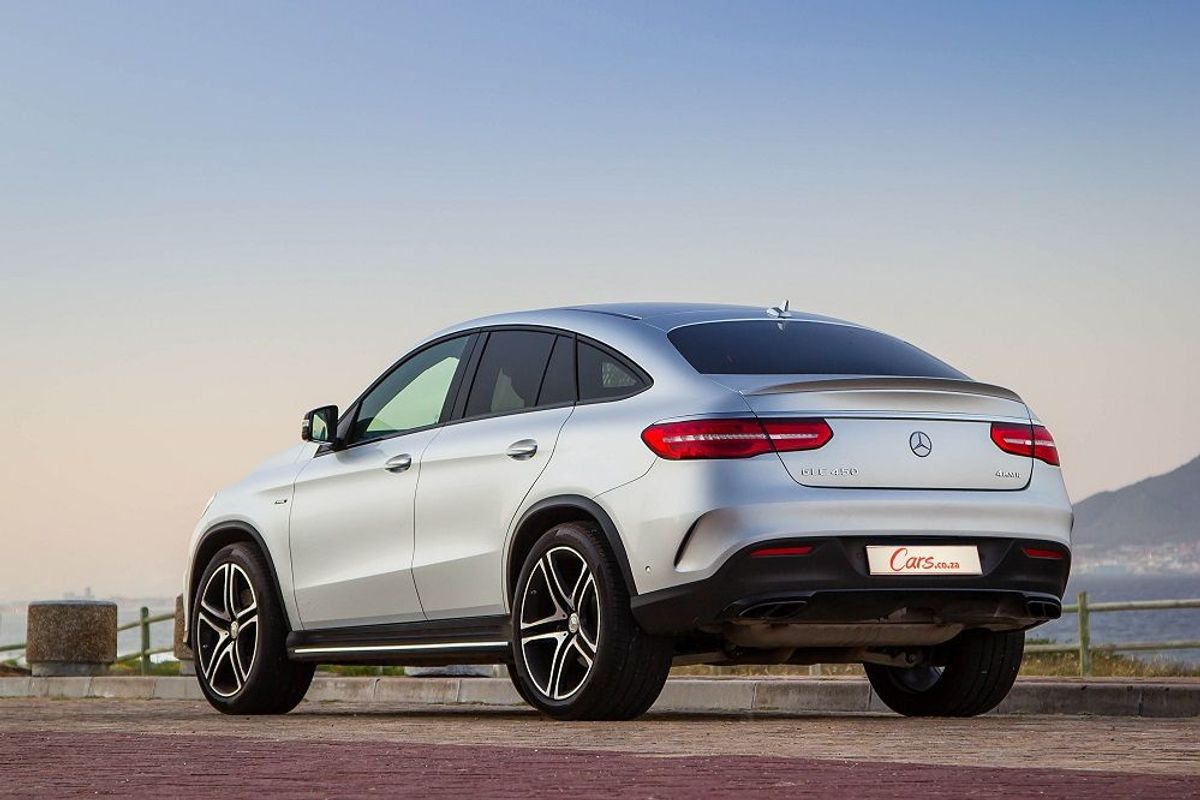
We have had some experience with the GLE Coupe, having road tested the diesel version and drag-raced the 63 AMG S against the BMW X6 M. It’s only fair then that we sample the middle of the range model. It’s certainly makes a statement out on the road, especially with the optional 22-inch wheels you see here – standard fitment is 21-inch. With such big wheels it looks like a decent sized monster truck.
The new engine
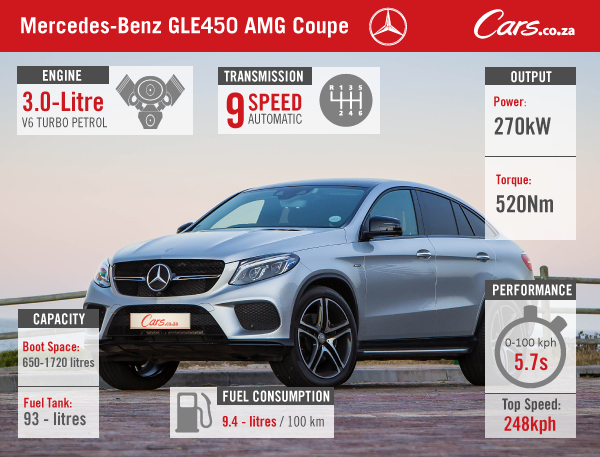
Under the bonnet is the latest and greatest turbo petrol engine from Mercedes-Benz. It’s a 3-Litre V6 biturbo unit with 270 kW and 520 Nm of torque. It makes all the noises you would expect from a full AMG banger and when you switch the drive-select mode to Sport + it ramps it up even further. Come off the throttle pedal and the overrun pops, bangs and gargles its way down the revs. It really is a playful engine and the acceleration it delivers is impressive to boot. It races through the revs and despite having to lug two-tonnes around still feels racy from pull off. The numbers suggest it’s quite rapid with a 0-100kph of 5.7 seconds and a top speed of 248kph. Mercedes also claims the average fuel consumption of this GLE450 AMG to be 9.4L/100km. This is not going to happen! Any time spent on the throttle sends the instantaneous consumption readout over 20L/100km. In fact the best average consumption figure we achieved was 15L/100km.
The mighty (and thirsty) V6 is connected to a nine-speed automatic gearbox. The shifts are quite seamless but the gearbox struggles to choose a gear, sometimes resulting in surprising up and down shifts. Software updates will no doubt improve the shift timings going forward.
Out on the road
Apart from attracting all the attention, the GLE450 AMG Coupe is quite pleasant to drive in comfort mode. Despite the massive wheels it still cushions bumps nicely and smooths out dirt roads. The air suspension setup is aimed more towards comfort than the BMW X6 but the GLE lifts up under acceleration and dives at the nose under braking. It’s by no means floppy out on the road and if you fiddle with the drive select modes and aim for Sport or Sport + it starts to feel more sporty and firm.
Cruising out on the open road and freeways is where the GLE Coupe shines the brightest. The softer setup makes for a comfortable cruiser and with all of Mercedes’ Distronic features, you can let the car get on with eating up the miles whilst you get comfortable. Our GLE450 AMG Coupe was fitted with the Steering Assist system that automatically steers the car if you start to drift lanes. The system is perfect for highway driving as the car takes over the job of speeding up and slowing down as well as keeping you in the lane (provided your hands are at least on the steering wheel).
Living it large
Inside the GLE Coupe, it’s a spacious and lavish place to spend time in. There’s ample space in the front for bits and bobs and the infotainment system is one of the best in the business. The navigation system could be more user friendly but with a sim card inserted, the Google search functionality should improve Point of Interest results. Passengers in the rear have their own climate controls and leg room for even the largest of people is sufficient. The boot is long and reasonably wide, although the sloping roofline of the coupe means you have to pack tall things against the rear seats. From then on you have to ‘pyramid’ pack your way down as the roofline constricts loading height.
Verdict
The GLE450 AMG is a brutish heavyweight with a mighty punch under the bonnet. That punch comes at more of a cost to fuel economy than we expected. As a daily mule it’s comfortable out on the open road and with Mercedes’ tech onboard it can be a pleasure to live with on the long journeys. The GLE Coupe can still be considered practical despite the sloping roofline although other than the subjective styling appeal and the 450 AMG power there’s no definitive advantage over a standard GLE400.
Mercedes-Benz GLE450 AMG Coupe Price in South Africa
The Mercedes-Benz GLE450 AMG Coupe costs R1 110 057 and comes with a two-year/unlimited km warranty and six-year/100 000 km Maintenance plan.
We Like: Blasting power, acoustic theatrics, build quality
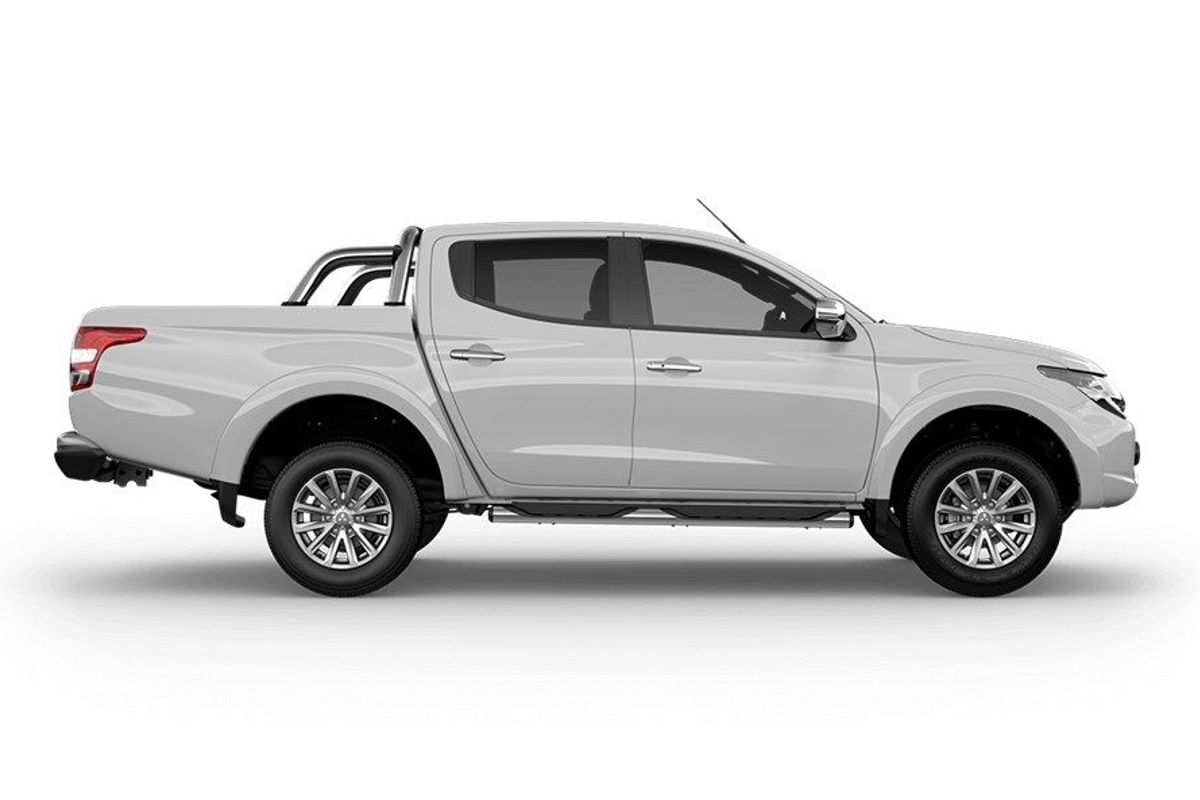
The new Mitsubishi Triton has been confirmed for arrival in South Africa in mid-2016.
Now in its fifth-generation, Mitsubishi refers to the new Tritonas a ‘Sport Utility Truck’ or SUT owing to its SUV-like ride and according to the automaker, it’s their most advanced commercial vehicle to date.
“The new Triton offers a surprisingly quiet ride and cabin comfort reminiscent of a passenger car, while in the new Triton functionality and reliability required for tough working conditions are as present as ever,” says Wynand Pretorius, Chief Operations Officer (COO) of MMSA.
Triton Styling & Features
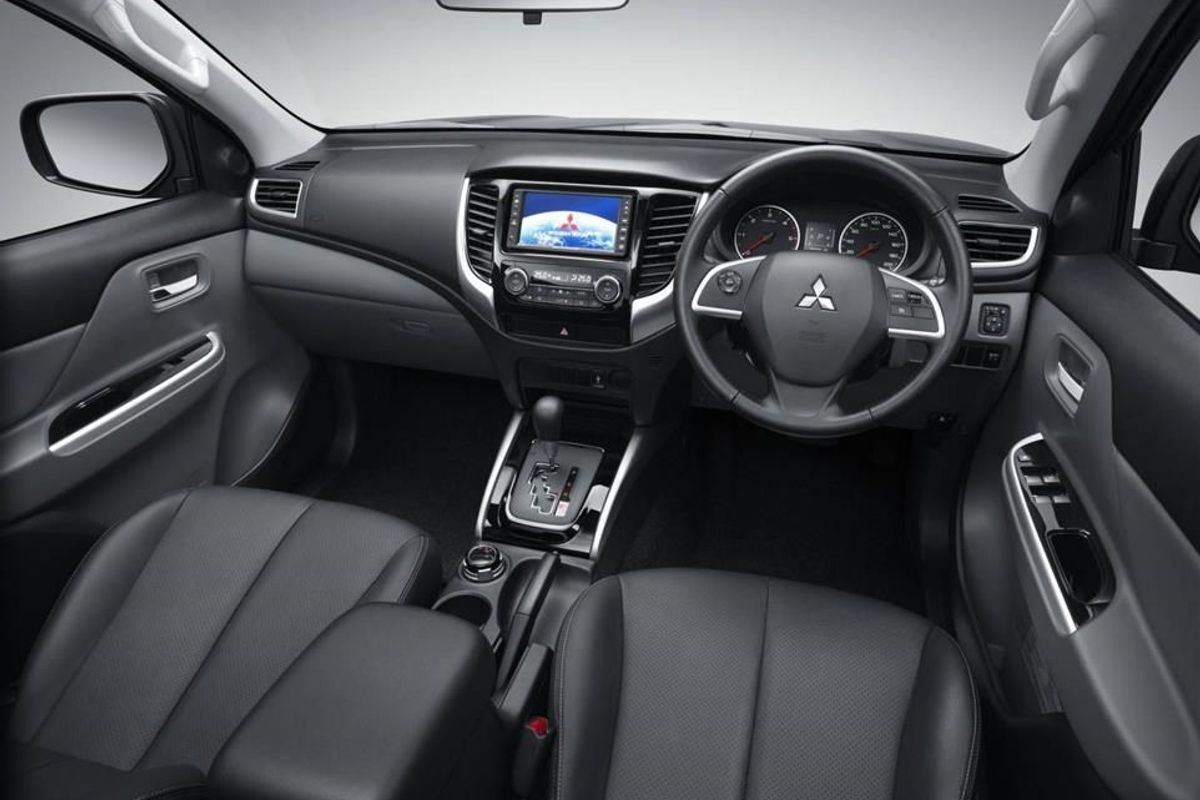
The new Triton features a bold grille flanked by bi-xenon headlights and the J-line design improves interior space, with rear passengers adopting a reclined seating posture. The seating has been updated too with thicker bolstering for added driver comfort. The suspension has also been revised to deliver car-like ride comfort.
Interior features on the top-spec Triton include cruise control, keyless operating system, dual zone automatic air conditioning, reverse camera and a touchscreen navigation system. The driver’s seat is electrically adjustable and the steering wheel is adjustable for rake and reach.
In terms of safety, the new Triton has received a 5-star Australian ANCAP rating and comes fitted with 7-airbags, ISOFIX child seat mounting points and a collapsible steering wheel column. Active safety features include active stability and traction control, adjustable speed limiter and trailer sway control.
Engine Power
The new Mitsubishi Triton is powered by a new-generation 2.4-litre turbodiesel engine. Power is rated at 133 kW and torque at 430Nm, delivered through either a 6-speed manual or 5-speed automatic transmission.
The top-spec Triton 4×4 derivatives come fitted with Super Select II 4WD system which also does service in the Pajero and Pajero Sport ranges. The system offers four modes depending on the driving situation.
“The new Triton was designed to match the ride quality of an SUV without compromising the workhorse qualities that have made double cab bakkies so popular. We believe our engineers have hit their target and that the new Triton Sport Utility Truck will prove as popular in South Africa as in other countries”, concludes Pretorius.
2015 Lexus ES 250 In-Depth Video Review
SCROLL DOWN FOR VIDEO
The Lexus ES has always been a nondescript BMW 5-Series rival. Whilst it has always been particularly well-built and smooth to drive, there has never been anything that gave it wow factor. In order to try and make it more attractive Lexus South Africa has refined the features in order to bring the price to a more enticing figure.
The ES 250 uses a naturally aspirated 2.5-Litre four-cylinder engine. In true Lexus style, it pulls smoothly and wafts its way along to a modest 9.8 second 0-100kph time. Sprinting is not what this sort of Lexus is about however, the ES 250 is about comfortable cruising and silent operation. The ES 250 is unbelievably quiet inside and even the road noise is rejected from entering the cabin. In total there’s 135 kW and 213 Nm of torque available.
The interior of this facelifted Lexus ES has had a slight rejig. In particular, a new, sporty steering wheel has been installed and a rotary knob replaces the ‘haptic mouse’ system for the infotainment system. Navigation has been removed from the system and this has resulted in the facelifted ES being slightly cheaper than before. The space around the cabin, both in the back and the front is impressive. There seems to be loads of space and legroom available and Lexus has even made allowance for a large boot as well. It’s just a pity the rear seats don’t fold down for that added bit of practicality that could add to its arsenal.
As with all Lexus vehicles, there is no options list. Everything that Lexus offers on the ES it crams into it. That initially makes it seem expensive but once you get down to like for like comparisons, pricing favours the Lexus.
Lexus ES 250 EX
Price
R464 200
Engine
2.5-Litre Four-cylinder
Power
135 kW
Torque
235 Nm
0-100kph
9.8 Seconds
Fuel Economy
8.0L/100km
Boot Space
490 Litres
Volkswagen Emissions Scandal: Crisis deepens
Thus far the effects of the Volkswagen emissions scandal, which centres on the manufacturer installing “cheat devices” on certain diesel models to sidestep emissions testing rules, have been hard to gauge. Certainly the company has lost massive market value, and faces paying massive fines, but in terms of actual sales… there has not been a marked slowdown.
But the latest revelations that the manufacturer has also lied about the CO2 emissions and fuel consumption of some 800 000 cars could change all of that. You see, with the emissions scandal thus far centring on NOx emissions, the customer has not experienced any major impact where it tends to hurt most – in the wallet. CO2 and fuel consumption are different animals altogether, and cost-conscious customers may now indeed look elsewhere.
Cars are increasingly purchased based on fuel economy grounds, and if Volkswagen has lied about these figures, then customers’ true running costs will be higher than they had anticipated. Now add the fact that most emissions tax systems are based on CO2, and running costs/taxation will be felt even more severely in the pocket. At this stage it is unclear whether South African models are affected by the latest revelations – it is said that 200 000 of the affected 800 000 vehicles are on European roads. Remember, the South African tax is also based on CO2 emissions.
The consequences of all of this are already being felt in other markets. Germany will retest all Volkswagen Group (VW, Audi, Seat, Skoda) cars, whether they are petrol or diesel, for accurate CO2 and NOx figures. With models powered by the company’s 3.0-litre turbodiesel V6 engine now apparently also included in the cheat scandal, sales of models equipped with that engine have been stopped in the American market. These include vehicles such as the Porsche Cayenne, Volkswagen Touareg and Audi Q5.
Moody's has since downgraded Volkswagen's credit rating to A3/P-2 with a negative outlook due to the latest revelations. Shares in Volkswagen were down another 9,5% on Wednesday, with 3 billion Euros wiped off its market value. Since the scandal broke VW’s has lost a third of its market value (Euro 24 Billion).