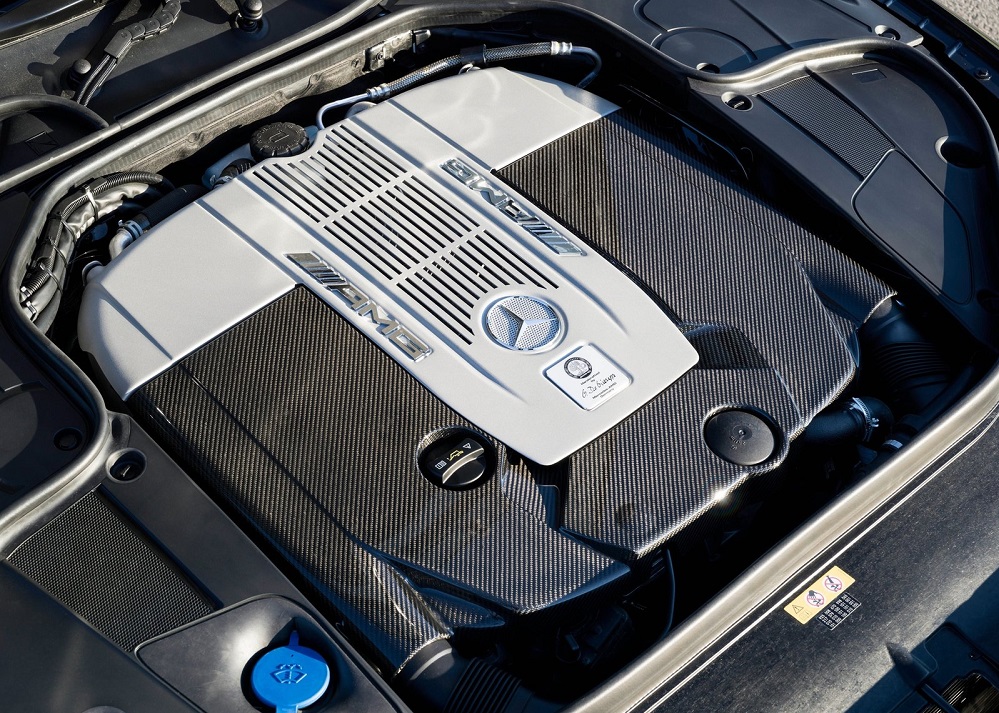
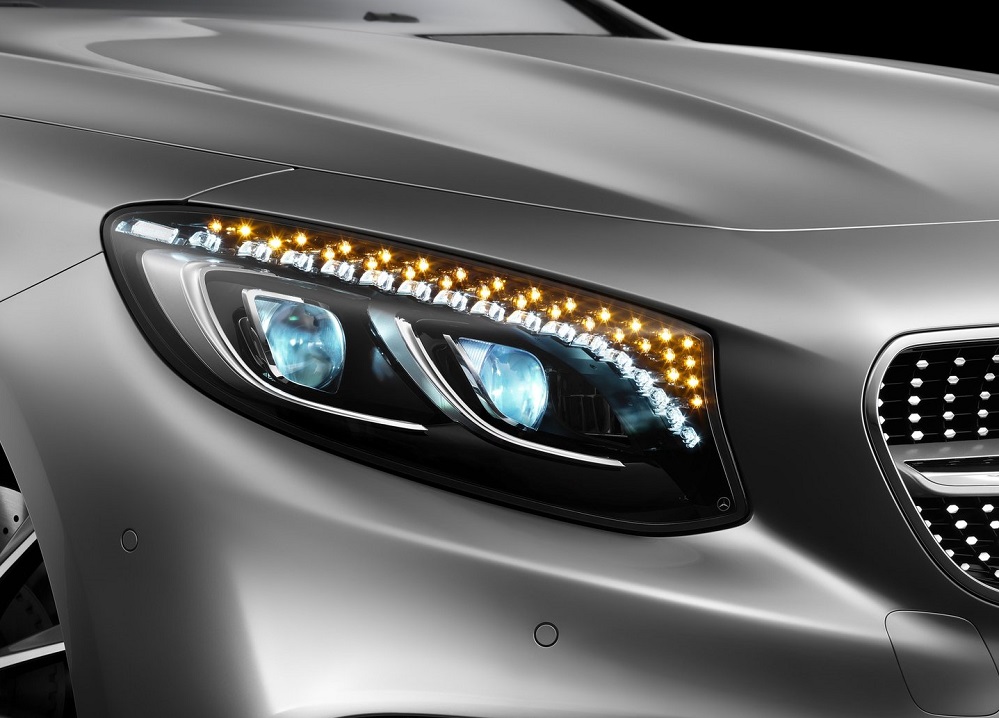
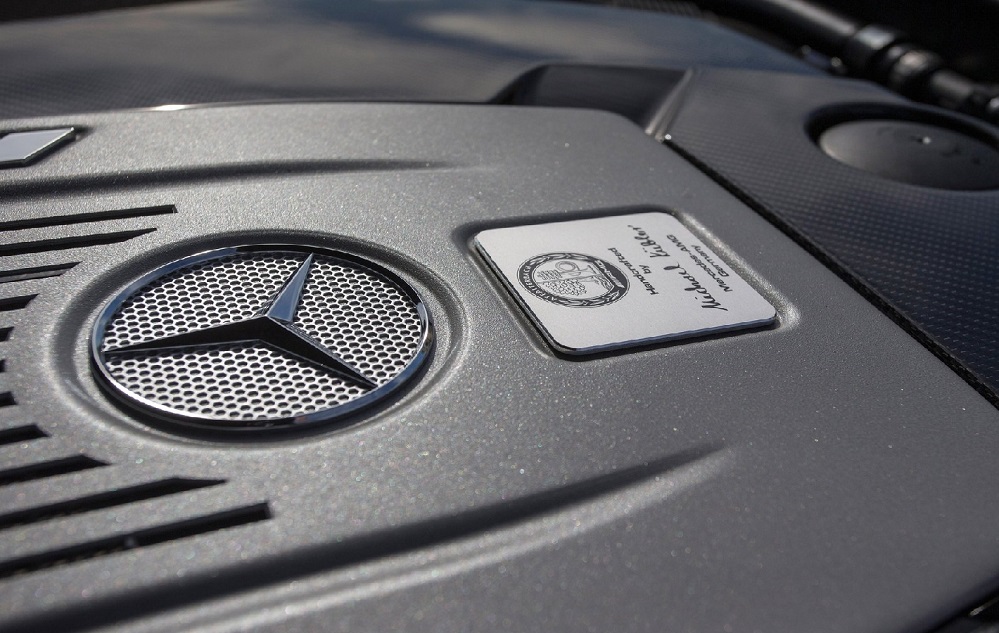
It’s an all Mercedes-Benz affair as the smallest and cheapest model in the AMG range goes up against one of the biggest and most powerful models to date.
The Mercedes-Benz A45 has made the legendary AMG performance a little more accessible due to its price positioning. Usually big, V8-engined AMGs have big price tags attached to them, but the A45 represents a chance to join the power club for a not-too-large investment. The A45 AMG features the world’s most powerful 2.0-litre turbo four-cylinder engine. With 265kW and 450Nm, Mercedes-Benz not only wanted to thrash its hot hatch competition, but annoy larger and more expensive cars too. Thanks to all-wheel drive, it is claimed to achieve a 0-100kph time of 4.6 seconds.
The Mercedes-Benz CLS 63 AMG S on the other hand is the automotive equivalent of a warship. Fast, sleek and armed with a twin-turbocharged 5.5-litre V8, this beast offers eye-watering performance and could easily be a contender for most powerful sedan in the world. How does 430kW and 800Nm grab you?
However, while it may look like the CLS 63 AMG S will walk this race due to its huge power, you must remember the A45 is all-wheel drive whereas the bigger car has rear-wheel drive. On paper these cars are poles apart, but this is the real world where things like road surface, traction and the length of the drag strip come into play.
Well have many more drag race videos coming out over the next few weeks, featuring cars such as the Mercedes CLS 63 AMG and the A45 AMG, Audi S3 and VW Scirocco R. Make sure you dont miss a thing by subscribing to our Youtube channel here
Audi has introduced updated versions of its A6 and A7 Sportback models in South Africa. Besides the expected visual upgrades, the range also gets new engines, transmissions and infotainment systems in a bid to take the fight to the likes of the BMW 5 Series, Mercedes E-Class/CLS, Jaguar XF and Lexus GS more effectively.
The exterior upgrade includes changes to the trademark Audi grille, headlights, air ducts, bumpers, tail lights and even the exhaust outlets. Audi’s eye-catching LED or Matrix LED headlight technology systems are available as optional extras.
Inside, the big news is really the various high-tech info-tainment systems that are offered. The flagship navigation system with its electrically retractable eight-inch screen is based on a new technology platform that uses the Tegra 30 graphics chip from Audi’s tech partner, Nvidia. The Audi connect module, meanwhile, turns the cabin into a Wi-Fi hotspot and makes several on-line services available, too.
In terms of safety Audi offers a vast range of systems, including adaptive cruise control with a stop & go function. There’s also Audi side assist, which uses radar to monitor those pesky blind spots and Audi Active Lane Assist, which was developed to prevent unintended lane changes. A heads-up display feature is offered as an optional extra and the night-vision assistant has been honed to include more features.
Revised engine line-up for Audi A6
Although the engine line-up for the revised A6 will eventually include three TFSI (petrol) units with power outputs ranging from 140 to 331 kW and two TDI (turbodiesel) units, at launch only the 1,8T FSI and S6 will be available. A 160 kW 3,0 TDI S tronic joins the line-up in June and the 2,0T FSI Quattro S tronic comes a month later. The 2,0 TDI S tronic will arrive near the end of the year. An interesting side note is that the Multitronic (CVT) transmission has been replaced by the S tronic on all A6 models.
Audi A6 standard specification
Audi A6 1,8T FSI (140 kW), 2,0 TDI (140 kW) and 3,0 TDI (160 kW):
Audi drive select with efficiency mode
Xenon plus headlights (new)
4-spoke multifunction leather steering wheel
Exterior chrome package for the front grille (new)
USB interface for connecting external media devices (new)
Audi sound system
18-inch, 5-twin spoke, V design alloy wheels (new)
Partial leather
Interior mirror with auto anti-glare action
Parking aid plus (front and rear)
Cruise control
Automatic air conditioning
Bluetooth interface
Electrically adjustable exterior mirrors, heated
Interior lighting package
Sideguard airbag system
Audi A6 2,0T FSI quattro S tronic (185 kW):
The A6 2,0T FSI with 185kW has the same equipment as above but adds the following:
quattro all-wheel drive
Leather-covered, multifunction sports steering wheel, in 3-spoke design with shift paddles
Front electrically operated seats with memory function for both seats (new)
19-inch alloy wheels (new)
Parking system plus with reverse camera (new)
Audi S6 4,0T FSI 331 kW quattro S tronic:
S6 spec level adds the following items:
Full LED headlights (new)
MMI Navigation plus with Audi connect
Inlays in dulled aluminium
Split rear seat
Audi Drive Select with efficiency mode
4 zone air-conditioner
Storage package
Alcantara / leather seat trim on sports front seats
Aluminium exterior mirror housing
4 corner air suspension – sport
3 spoke multi-function steering wheel with S tronic controls
19-inch, 5 parallel “S” design alloy wheels
Audi A6 price in South Africa
Audi A6 1,8T FSI 140 kW S tronic: R 601 000
Audi A6 2,0TDI 140 kW S tronic: R 631 500* (available November 2015)
Audi A6 3,0TDI 160 kW S tronic: R 689 000 (available June 2015)
Audi A6 2,0T FSI 185 kW quattro S tronic: R 749 500 (available July 2015)
Audi S6 4,0T FSI 331 kW quattro S tronic: R 1 054 500
* Indicative pricing
All prices include VAT and the standard Audi Freeway Plan (5 year/100 000km).
Similar changes to A7 Sportback
The stylish A7 Sportback gets similar enhancements but the engine line-up and specification details are subtly different.
The range kicks off with the 3,0 TDI Quattro S tronic (200 kW/580 Nm). Offering a stonking 235 kW, the 3,0-litre bi-turbodiesel engine option sees the A7 rocket to 100 km/h in 5,2 seconds. Still… with a claimed combined cycle consumption figure of 6,1 L/100 it is also remarkably economical. This engine is the only one mated with the brand’s eight-speed tiptronic transmission. All other engines gets the seven-speed S tronic gearbox.
As far as “entry level” petrol engines go, the 4,0T FSI is quite a beast, delivering 331 kW and 550 Nm of torque. Equipped with this engine the A7 Sportback reaches 100 km/h in 4,6 seconds.
Of course, the flagship remains the fearsome RS7 Sportback. With 412 kW and 700 Nm of torque (from 1 750 to 5 500 rpm), the 0-100 km/h dash is completed in only 3,9 seconds. An optional dynamic package allows for a top speed of 305 km/h. The Audi drive select dynamic handling system is, however, standard.
Audi A7 Sportback standard specification
Audi A7 Sportback 3,0 TDI quattro S tronic (200 kW):
In addition to the above, the full-house RS7 adds:
Carbon Fibre inlays
RS-tuned air suspension
Full LED headlights with RS7 specific look
MMI 3G Navigation with connect and MMI touch
Valcona leather upholstery with diamond pattern
Electrically operated glass sunroof
Heads-up display
Night vision with pedestrian detection
Dynamic steering
quattro sports differential
Keyless entry
21-inch light alloy wheels
Aluminium styling package with quattro wording on front bumper
RS-braking system with “wave” design discs
Audi A7 Sportback price in South Africa
Audi A7 Sportback 3,0 TDI quattro S tronic: R 943 500
Audi A7 Sportback 3,0 TDI BiTurbo quattro S tronic: R 1 040 000
Audi S7 Sportback 4,0T FSI quattro S tronic: R 1 176 500
Audi RS7 Sportback 4,0T FSI quattro S tronic: R 1 596 000
Volkswagen Golf GTI Performance Pack Now in SA
Volkswagen has announced that the Golf GTI Performance Pack has arrived in South Africa.
What exactly is the Golf GTI Performance Pack you may ask? Think of this as the ultimate Golf GTI. An extra R20 000 gets you an increase in power, with the Golf GTI Performance Pack now offering 169 kW. Furthermore, there’s also an uprated electronic limited-slip differential.
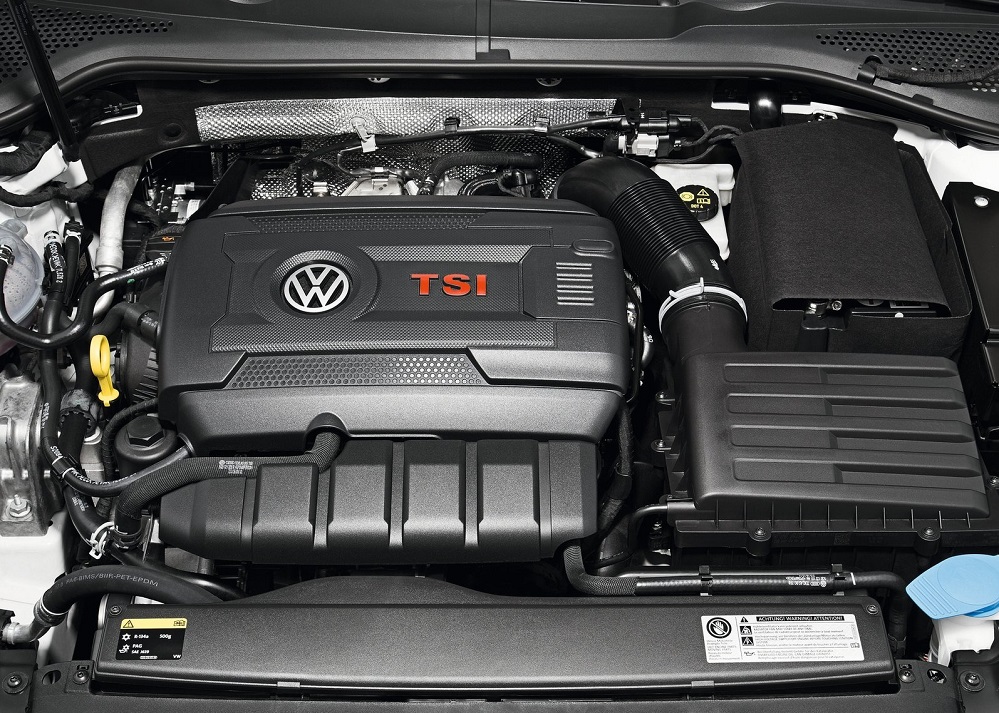
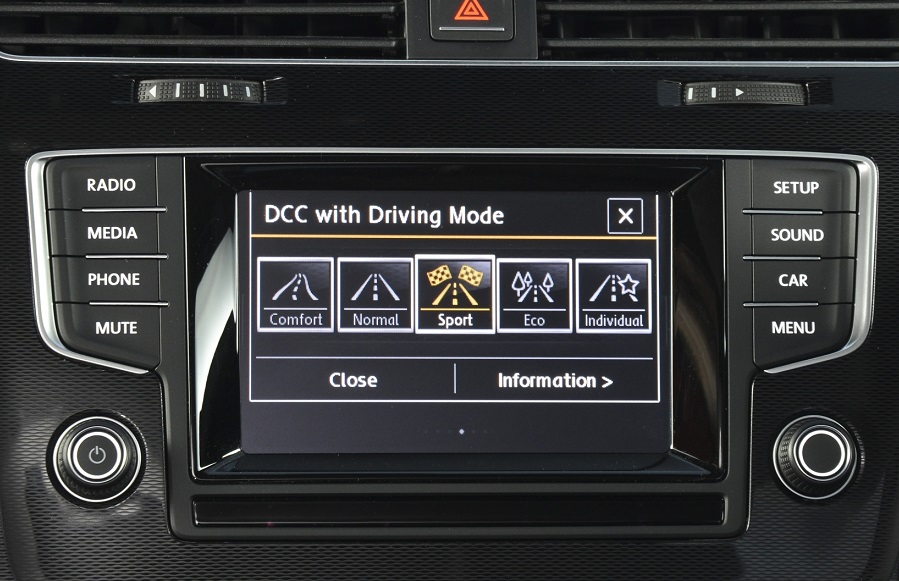
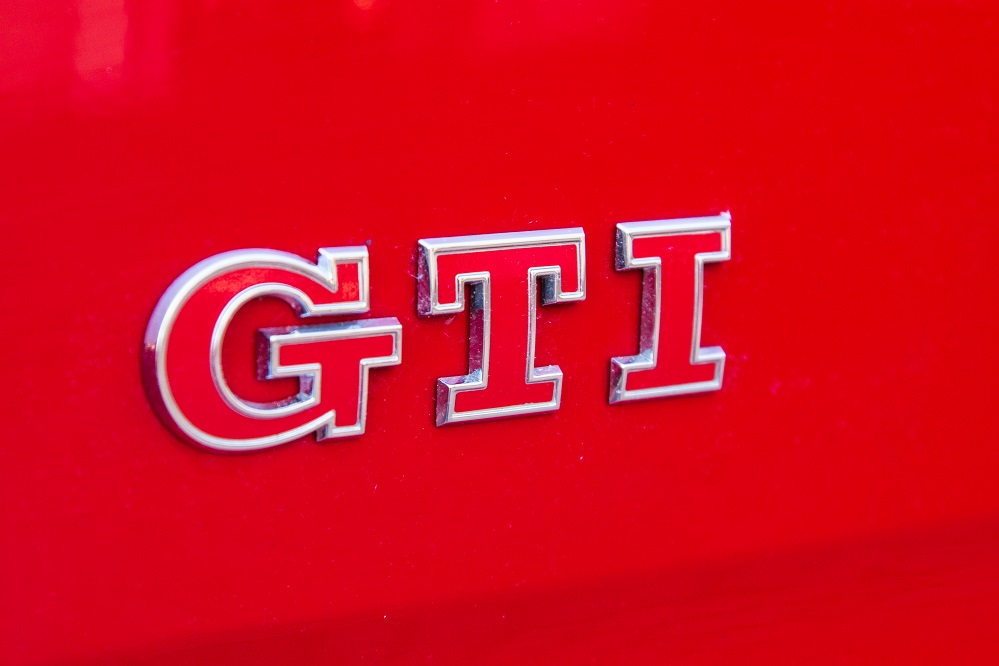
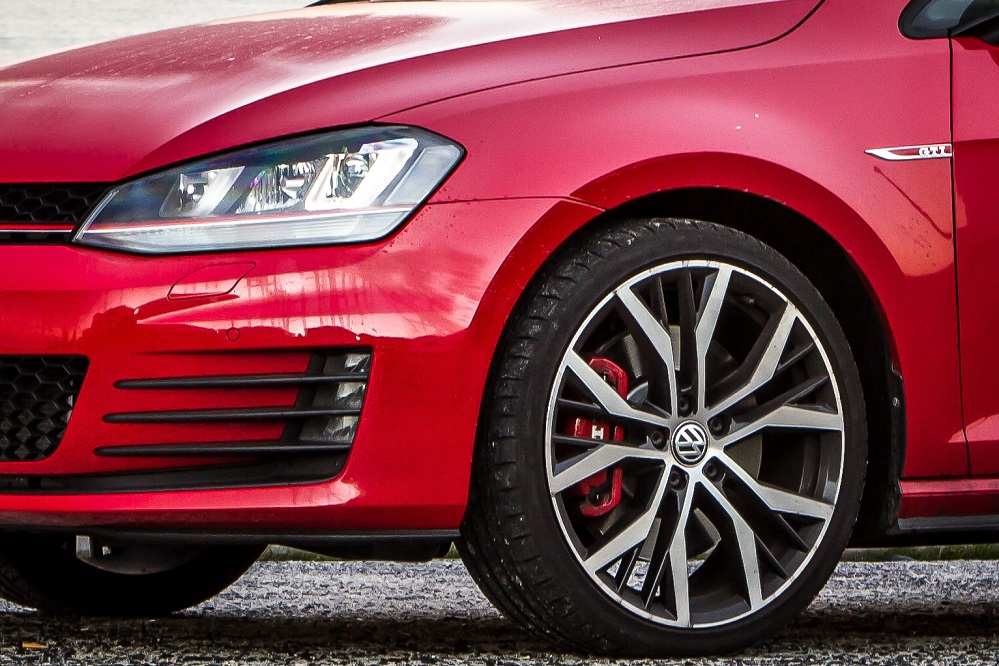
With an extra 7 kW and that limited slip diff, cornering performance has been claimed to have improved considerably. Torque from the 2.0-litre turbo engine remains the same at 350 Nm. The 0-100kph time has improved by 0.1 seconds and now sits at 6.4. The extras don’t stop there. Adaptive chassis control including driving profile selection and an ECO Function has been thrown in and there are also bigger internally ventilated disc brakes (340 mm front and 310 mm rear). Another distinguishing feature of the Golf GTI Performance Pack is the red GTI logo on the rear of the vehicle and the GTI logo on the front brake calipers.
A number of optional features can be chosen to customise your Golf GTI Performance Pack and these include:
Bi-Xenon headlights
Discover Pro Radio with satellite navigation
Light Assist with dynamic beam control
DYNAUDIO Excite sound system
Keyless access
Panoramic tilt sunroof
Mobile device interface
Park Distance Control (front and rear)
Park Assist
Rear Assist
Towbar unit
Volkswagen Golf GTI Performance Pack Price in South Africa
As of 22 April 2015, the Volkswagen Golf GTI Performance Pack retails for R447 800.
Bentley EXP 10 Speed 6 Could Go Into Production
A little while back, Bentley revealed the EXP 10 Speed 6 Concept at the Geneva Motor Show, showing a high performance two-seater sports car. At the time, chairman and chief executive of Bentley Motors, Wolfgang Dürheimer, commented that the “EXP 10 Speed 6 is one vision for Bentleys future a powerful, exquisite and individual concept. The showcar has the potential to be the new pinnacle luxury two-seat sports car. It offers thrilling, driver-oriented performance, complete with trademark modern Bentley luxury and effortlessness. Now, details have emerged, hinting that the EXP 10 Speed 6 may see the the light of production.
Bentley EXP 10 Speed 6 for Production?
The latest development follows an interview with Autocar, where Dürheimer alluded to the possibility of the EXP 10 Speed 6 going into production. The company is currently collecting feedback from markets across the world, and according to Dürheimer, the response to the vehicle has been positive. Once the feedback has been collated, which will take a few months, Bentley will move to explore the possibility of a production version.
The Bentley EXP 10 Speed 6 features a typically large grille with round headlights. The luxurious interior features a narrow center console with driver controls and a 12-inch touch screen. Quilted sports seats offer comfort for the driver and passenger and various materials are used for the interior including copper, leather and wood.
We will keep you updated if any further details emerge. Stay tuned!
Five Best Track Cars Under R500k in SA
If you have some money, some spare time on weekends and an itch to go fast, what are your options for a best track car under R500 000? The criteria for a track car in this price bracket are fun factor, performance and running costs. There’s no point in buying a track car which has tyres that cost a fortune to replace. Also, if you’re a track enthusiast, you should be made aware of increased stresses and strain on the vehicle as it’s pushed to the limit.
That said, track driving is a great way to get your kicks and unwind in a safe environment with like-minded individuals. There are numerous tracks in South Africa to choose from. Cape Town’s Killarney Raceway, Pretoria’s Zwartkops, Johannesburg’s Kyalami and Midvaal, as well as Kwa-Zulu Natal’s Dezzi Raceway and PE’s Aldo Scribante all offer great facilities and opportunities (on the right day) to unleash your inner racer.
Your options here are quite extensive. It’s such a shame the Volkswagen Golf R is just outside the R500k limit. If none of our choices are quite to your taste, you can also consider the Subaru WRX, Ford Focus ST, Opel Astra OPC, Mazda MX-5 and BMW 228i.
The French know a lot about making precision driving weapons. The team at RenaultSport have made laptimes their priority and this is evident in all their products. Both the Megane RS and Clio RS offer great drives, but its the six-speed manual Megane RS that gets the nod. With a 2.0-litre turbocharged motor that pushes out 195 kW and 360 Nm, a limited slip differential and a fantastic chassis, the Megane RS is a potent track tool. There’s an even hotter Trophy version coming to SA soon and it’s this model which currently holds the fastest front-wheel drive crown on the Nurburgring.
And now for something different. These two are remarkably identical, but technical guru Ashley Oldfield assures me there are subtle differences between them. Both follow the same formula: a naturally aspirated 2.0-litre engine with 147 kW and 205 Nm, six-speed manual transmission and rear-wheel drive. If you’re an enthusiast, this is a great recipe for driving fun. The difference between the 86 and the BRZ is that the Subaru is very slightly biased towards track driving, whereas the 86 is great if you’re a fan of sliding the rear everywhere. Either way, these are both highly enjoyable track machines.
Its competition may boast more power, but if it’s sheer fun factor you’re after, you’ll struggle to match the abilities of the Ford Fiesta ST. Its 1.6-litre turbo engine may only have 134 kW and 240 Nm, but the way it drives is just awesome. Few cars offer this much fun at the price.
This little charmer is the cheapest in the list but that doesn’t mean it lacks in the fun department. For something so compact, the Suzuki Swift Sport can really make you smile thanks to its agility. Power comes from a 1.6-litre naturally-aspirated motor which just loves to be revved. There’s 100 kW and 160 Nm available but those numbers only tell half the story. There’s a lovely six-speed manual gearbox and the brakes are brilliant, making this a worthy bang-for-buck best track car.
This is an interesting choice because Mini’s products have become a bit lifestyle orientated. Despite the fashion brigade loving them, the heart of the Mini still pumps for bendy roads and swift cornering. You have two choices here, a 1.5-litre turbo three-cylinder Cooper or a 2.0-litre turbo four-cylinder in the Cooper S. Opt for the manual gearbox and you’re in for a treat around a track.
Suzuki has gradually been expanding its product offering in SA over the last year or so. In the space of a year weve seen the Suzuki Splash, Ertiga and Celerio hit our streets. Much of Suzuki’s models feature in the sub R150k segment, but this new Ciaz is a more premium offering and sits in the sedan market.
Spacious Suzuki Ciaz
The Suzuki Ciaz measure 4 490 mm long and 1 730 mm wide, while the 2 650 mm wheelbase allows for plenty of interior space and load capacity. Boot capacity is 495-Litres and theres a full size spare wheel underneath it. It seems pretty well-specced for a start with a digital multifunction trip computer, electric windows front and rear, and electrically adjustable exterior mirrors with integrated turn indicators as standard. Also on the list are remote central locking, a multifunction steering wheel, automatic climate-control air-conditioning with rear vents, and a six-speaker audio system with CD player and integrated Bluetooth. USB, Aux and a 12V socket are also standard.
Powering the new Suzuki Ciaz is a 1.4-Litre naturally aspirated petrol motor. Its not the most powerful unit around, but it does come with 70 kW and 130 Nm which should get you by. Thankfully the Ciaz is pretty lightweight weighing in at 1020kg for the manual five speed and 1040kg for the four-speed auto. Fuel consumption in typical Suzuki fashion is excellent at 5.4L/100km.
Safety Features
Safety features are pretty decent as the Ciaz is standard with ABS with electronic brake force distribution (EBD) and emergency braking assistance (EBA). Also standard are dual front airbags, inertia reel seatbelts front and rear, and integrated alarm/immobiliser and childproof rear door locks.
The entry spec GL comes with a cloth interior where the GLX upgrades to leather upholstery with a leather steering wheel. The top GLX model also get 16-inch alloys thrown at it and fog lamps bolted onto the front bumper. The GLX also gets a chrome gear shift knob, while additional illumination includes rear reading lights and front footwell lighting.
Lexus went with a big reveal at the 2015 Shanghai motor show for its facelifted Lexus ES. It specifically showcases a new four-cylinder engine, slight style change and some new tech bits.
Lexus has been a little bit behind in terms of smaller capacity engine power so a new 2-Litre unit will be a welcome addition. For now there arent any power or torque figures on the new unit and its only slated for Chinese, Taiwan and Russian markets.
Lexus ES visual updates
A new front grille has been implemented to the design. Accompanying the grille is a pair of newly designed headlights, now equipped with LED projector technology, while L-shaped arrowhead Daytime Running Lights extend outside the headlight element for a distinctive look that links it with other Lexus models. Also, redesigned fog lamps areas have been relocated to the outer lower corners of the front fascia.
Spanning the rear is a re-styled chrome license plate garnish that flows into the clear elements of the lamps. Adding a to the ESs apparent sporty attitude are newly sculpted chrome-tipped rectangular exhaust ports.
Inside theres a larger display screen for the digital instrument panel and a sports steering wheel. The controller that works the infotainment system has also had an update and hopefully is a vast improvement over the current Lexus system.
Lexus is expecting to deliver the new Lexus ES to showrooms later this year, hopefully we can expect a few models by 2016.
Opinion: RIP JIMS
The Johannesburg International Motor Show has been cancelled, causing much dismay and debate. But its cancellation should not have come as a surprise…
There’s much dust in the air following the announcement that the 2015 Johannesburg International Motor Show, or JIMS, for short, was cancelled. Petrolheads are understandably up in arms and some are even suggesting that the death of JIMS was symptomatic of the state of South Africa as a whole. Nonsense. Motor shows are dying all over the world and it's very easy to see why…
During the past decade and a half, I’ve been to most of these events, from Frankfurt to Detroit, Paris and Geneva, and even smaller ones such as Tokyo and Melbourne. Early in the “new” millennium they were jaw-dropping events for a petrolhead such as yours truly, a blur of celebrity infused reveals, spectacular stage displays, wining and dining and business class travel. But as the years went by and media houses started shifting their weight behind digital platforms and social media channels, the sheer extravagance of it all started to make less sense. As time went by and economic woes hit the automotive industry, the British Motor Show dwindled and Tokyo fell from its heady heights. Smaller events such as the Bologna and Melbourne motor shows died. On the other hand, the growth of the Chinese market resulted in a rapid rise in importance attached to shows staged there, but even then there are problems – this year the Shanghai show’s organisers have enforced a strict dress code on the models parading next to the cars, and kids can’t even come in through the doors!
It’s not entirely fair to blame it all on the Internet, however. There are several other factors at play; An article by the Financial Times last year suggests that the top seven car companies spend around $15 million (R180 million) on each of the three biggest international motor shows (Detroit, Geneva and Frankfurt/Paris). It’s not just a case of building a stand and sending some cars. Thousands of employees are involved behind the scenes and it is a logistical nightmare. Then there’s also the fact that the manufacturers want their wares to be seen by as many people as possible, so thousands of journalists have to be flown to these events and put up in decent hotels. Now keep in mind that most local distributors and manufacturers are tied to strict CI and quality guidelines by their international “motherships” and you can understand the pressure is on to not only impress show visitors, but also representatives from headquarters in Stuttgart, Detroit and Tokyo etc.
The cost of exhibiting at JIMS varied greatly in 2013 between the manufacturers/importers. One manufacturer was said to have spent R30 million, while a reasonably presentable stand cost around R6 million. Being at JIMS and trying to do it on the cheap is simply not good PR… The cost impacts directly on marketing budgets. Yes, for the big brands R10 million spent on JIMS is perhaps not the end of the world, but for smaller brands it represents the difference between having a presence on TV (as an example) or not, and in the longer term that is far more valuable than splashing the same money on two weeks in a single geographic location.
So, for the brands that are tied to going to JIMS whether they want to be there or not by their international headquarters, the news that the show has been cancelled will be welcome news. Of course, in some instances the “motherships” will assist with budget, but even when that is done the return on investment is very questionable.
But let’s get back to the traditional core function of motor shows – to showcase new models and inform (through the media) the world about upcoming technologies and launches. For the past ten years or so, the occasions on which a new product or concept had been sneaked onto a stand without anyone catching sight of it before the show, can be counted on one hand. Spy photography, leaked brochures and even teaser images by the car makers themselves have severely damaged the “surprise” element that was once such a given on these events. It could even be argued that the very nature of automotive development has become better suited to events such as the Las Vegas Consumer Electronics Show (CES).
Another issue (yes, there are many) is the competitive environment that a motor show represents. Why spend millions on making a show and dance about your new Lotus concept when fifteen minutes later, on the stand next to yours, Seat has Shakira shaking her booty next to a Leon. Fame is short-lived in this age of Twitter and Instagram. There’s simply far more value in allocating that JIMS budget to a marketing campaign that is targeted to a brand's specific audience.
So… what about the journalists? Is there value there? The reality is that most media houses are in trouble and that page allocations are dwindling. If you have only six pages to play with, then twenty big reveals at a motor show is going to be spread very thinly. Ironically, too, bloggers who are doing their work from their bedroom have a better chance of uploading pics and stories before the traditional journalists walk the halls… And the public show goers? Once more there are big question marks here. Yes, perhaps the numbers look impressive as a whole, but how many of them are kids? How many are just hoping to sit in a Ferrari (which is not allowed, anyway, even if there is one)? How many will steal your display cars’ badges and handbooks? (Yes, this is a real thing) How many will scratch your cars’ door pillars as they get in and out? How many have serious buying intent?
Having been on the manufacturer side I can vouch for the fact that most companies will try their best to come up with clever ways to secure leads for the local dealerships, or just to collect names and telephone numbers to follow up on. Unfortunately the reality is that very few “deals” happen as a consequence of a visit to a motor show. You are always likely to find a large number of (mostly male) enthusiasts in major cities that will take their kids to these events, but this number will also start to go down when the exotics are no longer on display – which has been the trend for years already. In my experience brands such as Porsche, Ferrari and Lamborghini are the reasons why the public come to these events, and when they’re not there the show visitor numbers will decline. You need drawcards at these events, it’s as simple as that. It’s unlikely people will travel and pay to see cars they can see at their local dealership for free.
Overall then, there’s increasingly little justification from a car company’s view to splashing on a presence at a motor show. R30 million can be used very effectively to drive actual sales rather than put up a fan fare for an audience which has no intent on buying. I’m generalising, of course, but in a recent industry trip and interviews with many of the car companies in South Africa, it was clear that JIMS had become “grudge purchase”, even for those who were committed to going.
As a petrolhead, I have some fantastic memories of the motor shows I had attended. When Tokyo was in its prime, it was a sci-fi paradise that gave a real glimpse of a (somewhat wacky) future. Nothing compares to the scale of the Frankfurt Motor Show and the sheer opulence of the Mercedes-Benz display. And Detroit? Well, quite frankly I found it quite awful, not helped by a horrible stench in the dreadful Cobo Center. JIMS, by the way, always compared well with the best, just on a smaller scale. We should be truly proud of the quality of the displays and shows that the locals put up at JIMS of years past. But it came at a cost.
RIP JIMS.
Any views or opinions expressed in this article are solely those of the author and do not represent those of Cars.co.za or its editorial content team.
Chevrolet-FNR Autonomous Concept
The Chevrolet-FNR is an autonomous electric concept vehicle that offers a glimpse at how General Motors sees mobility in the future. It was designed and thought up by a bunch of boffins in Asia.
Chevrolet-FNR Engineering
Engineering, design and electrification teams drew on their past experience developing electric concept vehicles. Their aim was to create a unique, intelligent vehicle for tomorrows younger consumers by utilizing innovative car networking technology.
The Chevrolet-FNR boasts a futuristic capsule design. It has crystal laser headlights and taillights, dragonfly dual swing doors, magnetic hubless wheel electric motors and a wireless auto-charge system.
The Chevrolet-FNR is loaded with intelligent technologies usually seen only in science fiction movies. They include sensors and roof-mounted radar that can map out the environment to enable driverless operation. In order to start the FNR it needs iris recognition from the driver. The Chevrolet-FNR can also serve as a personal assistant to map out the best route to the drivers preferred destination.
In self-driving mode, the vehicle’s front seats can swivel 180 degrees to face the rear seats, creating a more intimate setting. The driver can switch to manual mode through the gesture control feature.
JHB Motor Show 2015 Cancelled
The 2015 Johannesburg Motor Show has been cancelled. There was a lot of doubt around this year’s show as many key manufacturers expressed concerns over costs and return on investment.
A number of manufacturers were absent from the 2013 Johannesburg Motor Show citing lack of product and lack of budget. Volvo, for example, embarked on a countrywide tour to show off its passenger and commercial products instead of partaking in the motor show. I can understand the value for money concerns as its expensive to bring in concept vehicles as well as build the actual stands. Let’s not forget the cost per square metre either.
NAAMSA (National Association of Automobile Manufacturers of SA) official statement:
The costs of automotive exhibitions have risen disproportionately and this has called into question the return on investment for exhibitors. Internationally, in recent years, concerns about affordability and return on investment for exhibitors have led to the cancellation of automotive exhibitions in a number of countries. Additional considerations in the decision not to proceed with this years show include the fact that the event scheduled for October, 2015 clashes with the Rugby World Cup in the United Kingdom and the E-mobility month in Sandton over that time. Moreover, the economic and financial climate in South Africa currently has impacted on trading conditions in the automotive sector and has resulted in substantial pressure on margins throughout the automotive value chain.
The possibility of a show in 2016 will be considered by the end of June this year. South African Shows Messe Frankfurt, the show management company, in consultation with the industrys marketing and sales experts, have been tasked to formulate proposals and a strategic action plan to enhance the value proposition for exhibitors and to increase substantially the return on investment for participants.
In essence, NAAMSA has requested its joint venture partners, South African Shows Messe Frankfurt, to formulate proposals that would ensure a sustainable, financially attractive model for possible future Johannesburg International Motor shows. At this stage, the industry does not intend to provide further comment on these developments.